
Zirconium Veneers in Turkey
Why Get Zirconium Veneers in Turkey
Turkey has become one of the world's leading destinations for zirconium veneers, offering internationally recognized dental expertise, advanced digital smile design, and premium-quality materials at a significantly lower cost than many European countries. At Cinik Dental, every treatment is customized to create a natural-looking, durable smile that complements your facial features while ensuring long-lasting results.
Natural Appearance
Premium Zirconia
Long-Lasting Results
Custom Smile Design
Why Choose Cinik Dental for Zirconium Veneers?
Choosing the right clinic is just as important as choosing the right treatment. At Cinik Dental, we combine experienced cosmetic dentists, advanced digital dentistry, and personalized smile design to deliver natural-looking results trusted by patients from around the world.
| The Cinik Dental Difference | Why It Matters |
|---|---|
| Experienced Cosmetic Dentists | Your smile is designed by professionals with extensive experience in aesthetic dentistry. |
| Premium Zirconia Materials | We use high-quality zirconia for strength, comfort, and natural-looking aesthetics. |
| Digital Smile Design | Preview and personalize your smile before treatment begins. |
| International Patient Care | Dedicated coordinators support you before, during, and after your visit. |
| Modern Dental Technology | Precision equipment helps deliver predictable, comfortable results. |
| Personalized Treatment Plans | Every smile is tailored to your facial features and expectations. |
Excellence at Global Standards


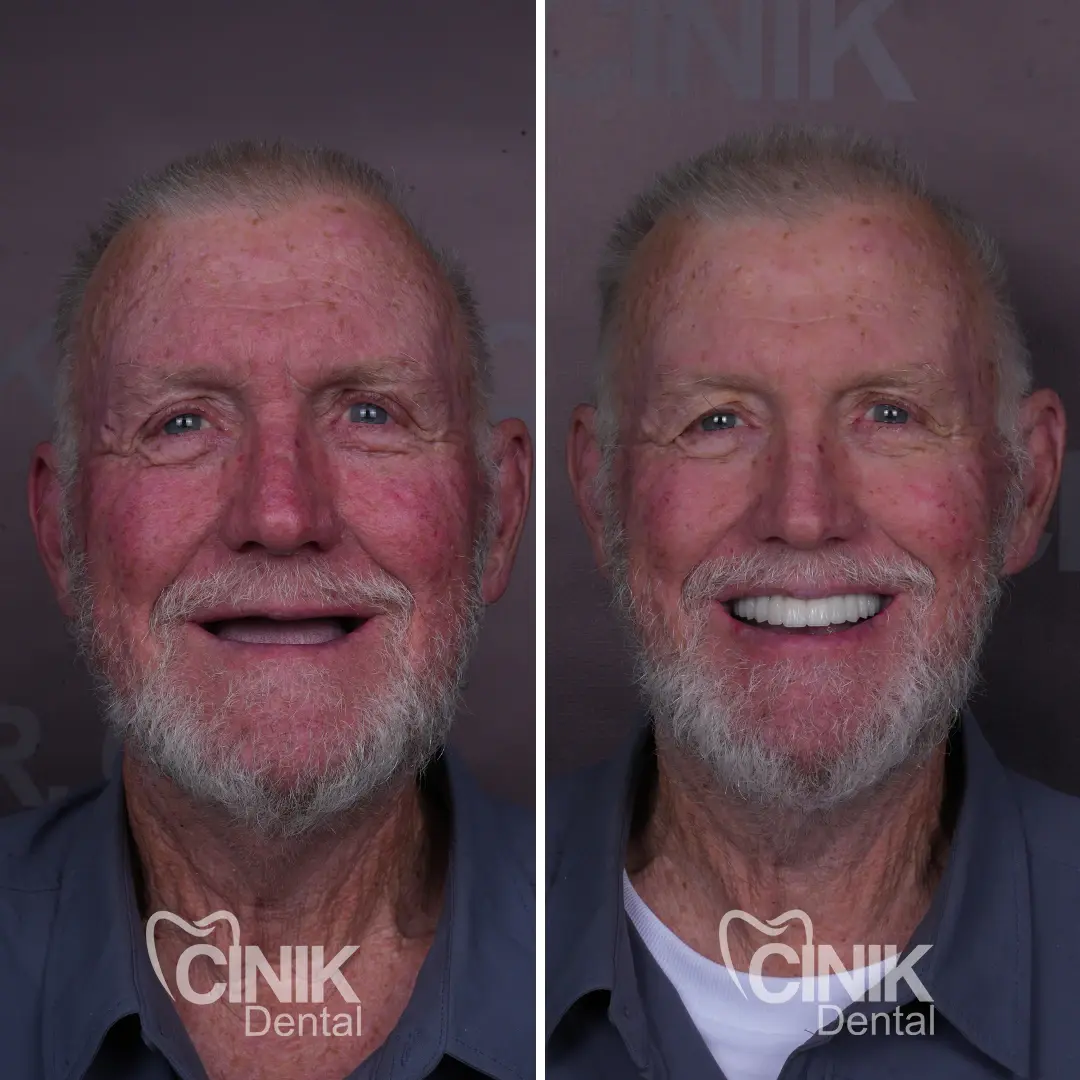
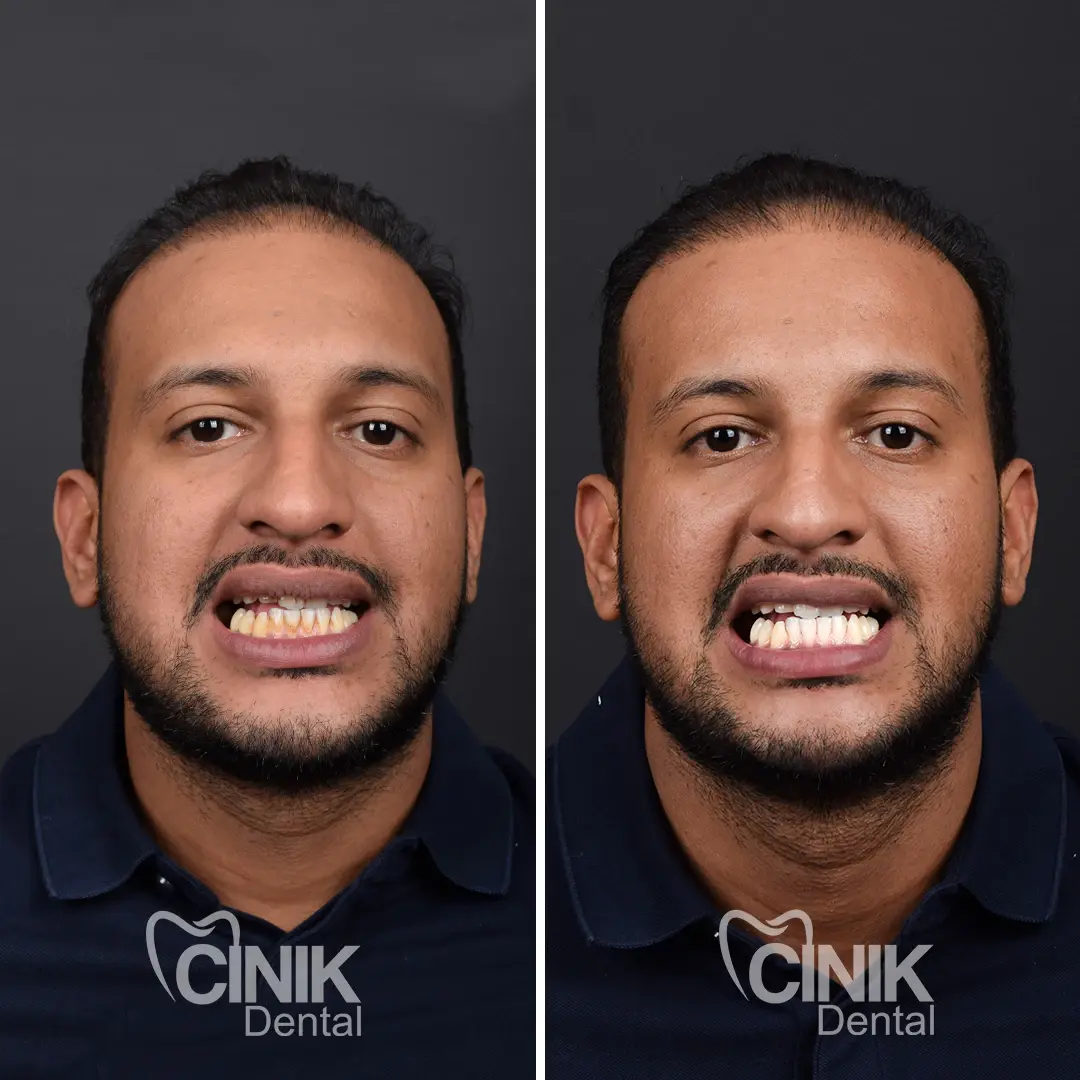
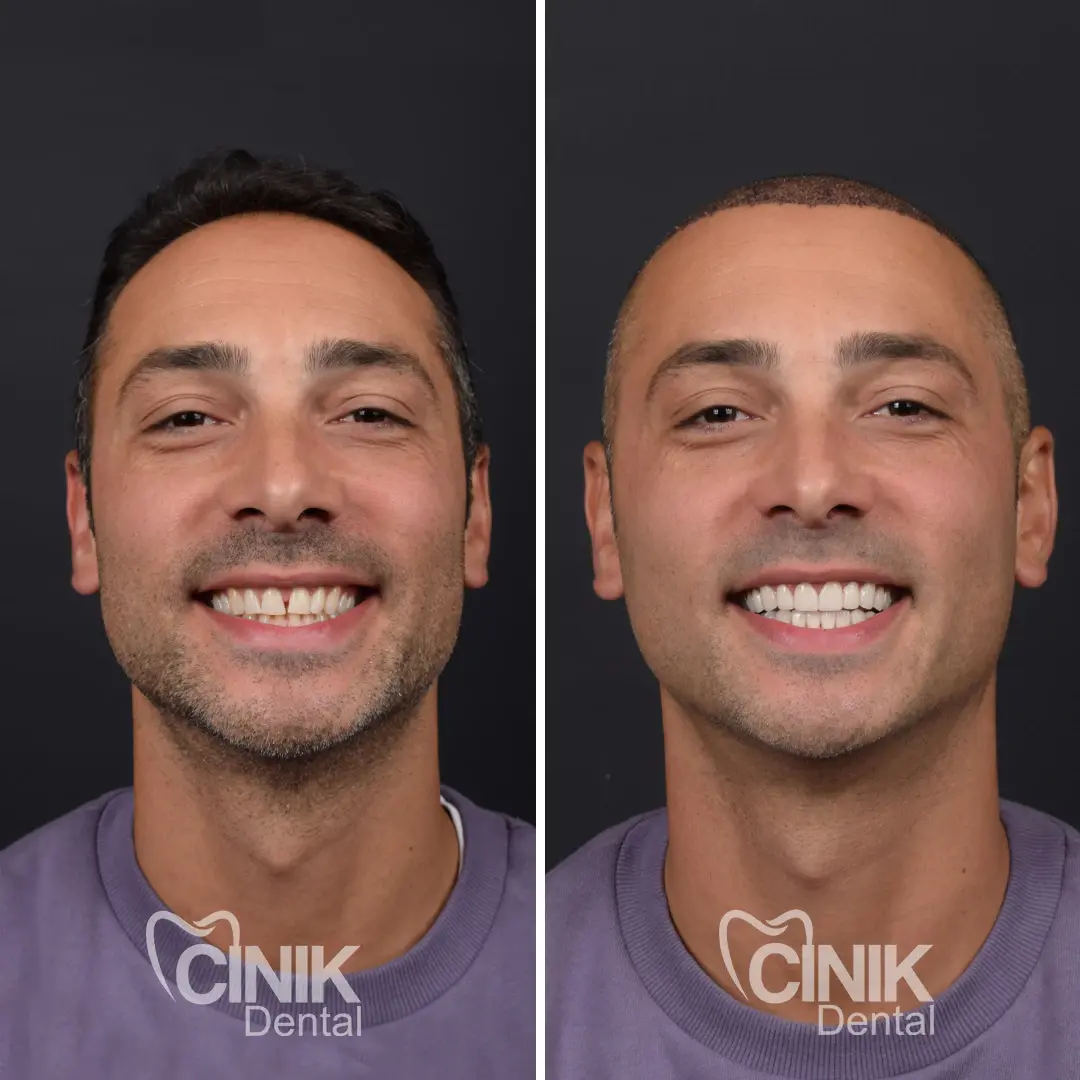
Turkey Teeth Before and AfterReal Patient Results
Dental Veneer Packages & Type Comparison
Crown / Veneer
20 Zirconia Crowns
- 20 Zirconia Crowns
- Root Canal Treatment (if needed)
- Night Guard
- Gingivectomy (Gum Contouring)
- Consultation & X-Ray
- Medication
- Post-op Checkup
Average Cost per Tooth by Country
Turkey
Best value — save ~85%- United States€1,300+€1,100
- United Kingdom€950+€750
- Germany€850+€650
- Italy€450+€250
Types of Dental Veneers: Comparison Table
| Feature | Zirconium (Zirconia) Veneers | Porcelain (Ceramic) Veneers | Composite Veneers |
|---|---|---|---|
| Material | Zirconia-based ceramic | Glass-ceramic / porcelain | Composite resin |
| Appearance | Very natural, slightly more opaque | Highly aesthetic & most natural look | Good but less lifelike than porcelain |
| Tooth Reduction Needed | Minimal to moderate | Minimal | Minimal to moderate |
| Durability | Very strong & fracture-resistant | Strong & long-lasting | Less durable |
| Stain Resistance | Excellent | Excellent | Moderate, may stain over time |
| Lifespan | 10–15+ years | 10–15+ years | 3–7 years |
| Repairability | Limited, often replaced if damaged | Limited, usually replaced | Easier to repair |
| Cost Level | High | High | Lower cost |
| Treatment Time | 2–3 visits | 2–3 visits | 1-2 visits |
| Reversibility | Usually not reversible | Not reversible | Partly reversible |
| Ideal Candidates | Patients needing strength (e.g., strong bite, back teeth) | Patients seeking premium aesthetics for front teeth | Budget-friendly cosmetic improvement |
| Common Uses | Heavy bite, grinders (with protection), molars | Smile design, cosmetic front teeth | Small chips, gaps, minor cosmetic fixes |


Our Modern Clinic
Experience dental care in a calm, luxurious environment designed for your comfort and safety.
.jpg&w=1920&q=75 "Clinic exterior")
.jpg&w=1920&q=75 "Reception area")
.jpg&w=1920&q=75 "Waiting lounge")
.jpg&w=1920&q=75 "Treatment room")


Zirconium Veneers in Turkey Reviews
"I flew to Istanbul for zirconium veneers and it was the best decision I've made. The color match is so natural that my friends can't tell they aren't my real teeth. Dr. Cinik's team explained every step and there was zero pain during the process."
Trustpilot
"After years of hiding my smile I finally got 16 zirconium veneers here. The result looks completely natural - not fake or too white like I feared. Worth every mile of the trip from Ireland."
"The whole experience was seamless from airport pickup to the final fitting. My zirconium veneers feel exactly like natural teeth and the shade is perfect for my face. Highly professional clinic."
"I researched clinics for months before choosing Cinik Dental. The zirconium veneers are strong, the finish is flawless, and the price was a fraction of what I was quoted in the UK. No regrets at all."
Trustpilot
"Painless, fast, and the results speak for themselves. My zirconium veneers have held up perfectly and the gum health is great. The team followed up with me even after I returned home."
"I flew to Istanbul for zirconium veneers and it was the best decision I've made. The color match is so natural that my friends can't tell they aren't my real teeth. Dr. Cinik's team explained every step and there was zero pain during the process."
Trustpilot
"After years of hiding my smile I finally got 16 zirconium veneers here. The result looks completely natural - not fake or too white like I feared. Worth every mile of the trip from Ireland."
"The whole experience was seamless from airport pickup to the final fitting. My zirconium veneers feel exactly like natural teeth and the shade is perfect for my face. Highly professional clinic."
"I researched clinics for months before choosing Cinik Dental. The zirconium veneers are strong, the finish is flawless, and the price was a fraction of what I was quoted in the UK. No regrets at all."
Trustpilot
"Painless, fast, and the results speak for themselves. My zirconium veneers have held up perfectly and the gum health is great. The team followed up with me even after I returned home."
"Painless, fast, and the results speak for themselves. My zirconium veneers have held up perfectly and the gum health is great. The team followed up with me even after I returned home."
"I was nervous about traveling abroad for dental work, but the staff made me feel completely at ease. My zirconium veneers are gorgeous the translucency looks just like natural enamel."
Trustpilot
"Six months later and my zirconium veneers still look brand new. No staining, no sensitivity, and the bite feels perfectly natural. Genuinely life-changing for my confidence."
"From the consultation photos to the final result, everything matched exactly what they promised. The zirconium veneers are metal-free so there are no dark lines at the gums. Absolutely stunning smile."
"Great value and excellent craftsmanship. My zirconium veneers look natural and feel solid. Recovery was quick and the aftercare instructions were very clear. Would recommend to anyone considering veneers in Turkey."
"Painless, fast, and the results speak for themselves. My zirconium veneers have held up perfectly and the gum health is great. The team followed up with me even after I returned home."
"I was nervous about traveling abroad for dental work, but the staff made me feel completely at ease. My zirconium veneers are gorgeous the translucency looks just like natural enamel."
Trustpilot
"Six months later and my zirconium veneers still look brand new. No staining, no sensitivity, and the bite feels perfectly natural. Genuinely life-changing for my confidence."
"From the consultation photos to the final result, everything matched exactly what they promised. The zirconium veneers are metal-free so there are no dark lines at the gums. Absolutely stunning smile."
"Great value and excellent craftsmanship. My zirconium veneers look natural and feel solid. Recovery was quick and the aftercare instructions were very clear. Would recommend to anyone considering veneers in Turkey."
Trusted by Celebrities & Influencers Worldwide
Chosen by Celebrities and Leading Influencers
Zirconium Veneers FAQ
Ready to smile with confidence?
Book your visit today and experience the Cinik difference. New patients receive a complimentary virtual consultation.