Patient question
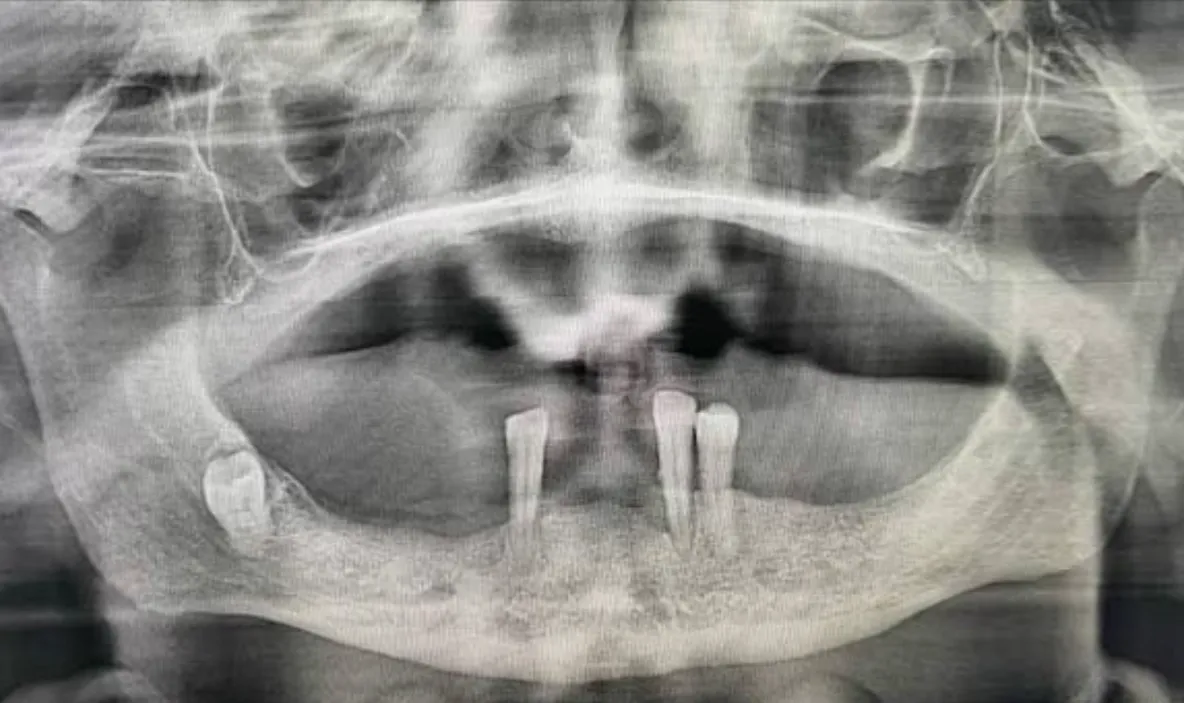
I am missing many teeth. I have almost no teeth remaining in my upper jaw, and only a few tooth roots are left in my lower jaw. I have been wearing removable dentures for approximately two years, but I am very unhappy with them and would prefer a fixed dental solution.
I had an episode of atrial fibrillation two years ago, but apart from this, I am generally in good health. I have been taking 5 mg of Eliquis twice daily for the past two years. I also occasionally take anti-inflammatory medication when I experience back pain.
Can I undergo dental implant treatment with my current medical condition, and which treatment option may be suitable for me?
Verified answer from our dentist
Answered on Aug 4, 2026

Dentist
Based on the current clinical and radiological assessment, the bone volume in your upper jaw does not appear suitable for conventional implant treatment. For this reason, a subperiosteal implant may be considered for the upper jaw, while an All-on-4 implant treatment is planned for the lower jaw.
Approximately three months after implant placement, once the healing process has progressed and the bone and soft tissues are stable, fixed hybrid prostheses may be planned for both the upper and lower jaws.
Recommended treatment plan:
Subperiosteal implant treatment for the upper jaw
All-on-4 implant treatment for the lower jaw
Upper and lower fixed hybrid prostheses after an approximately three-month healing period
Because Eliquis is an anticoagulant medication, the risk of bleeding during and after implant surgery must be carefully evaluated. You should not stop taking Eliquis or change the dosage without instructions from your cardiologist.
Before treatment, written medical clearance from your cardiologist will be required. The cardiology report should ideally include:
The current status of your atrial fibrillation
Whether your heart rhythm is under control
Whether your cardiac function is stable
Your ejection fraction, if available
Instructions regarding the management of Eliquis before and after surgery
Confirmation that sedation or general anaesthesia is medically appropriate
Certain anti-inflammatory pain medications may increase the risk of bleeding when taken together with Eliquis. You should therefore inform both your cardiologist and dental surgeon of the exact medication you use and avoid taking it before surgery unless it has been medically approved.
If your heart rhythm is controlled, your cardiac function is stable, and treatment is approved by your cardiologist and anaesthesiologist, the implant procedure may be performed under local anaesthesia, sedation, or general anaesthesia.
The final treatment plan will be confirmed after a detailed oral examination, three-dimensional dental tomography, blood tests, cardiology clearance, and an anaesthesia assessment.