

Front Tooth Dental Implants: Pricing, Treatment Process, and Patient Comfort
Dental implants for front teeth are a durable, aesthetic, and functional solution for replacing missing visible teeth. Consisting of an implant, abutment, and crown, they closely mimic natural tooth structure while preserving jawbone, facial contours, speech, and bite function. Although the surgical steps are similar to back tooth implants, front tooth restorations demand greater precision due to their visibility and role in communication and appearance. Materials such as titanium or zirconia implants paired with ceramic crowns provide long-term reliability and natural-looking results. With proper planning, hygiene, and clinical expertise, front tooth implants can last decades, offering high comfort and success rates. Costs vary by materials and systems used, typically ranging from €350 to €1,000, making implants a widely favored option over bridges or dentures for front tooth replacement.
1. What Are Dental Implants for Front Teeth?
Quick Answer: Dental implants for front teeth are artificial tooth roots placed in the jawbone to support a natural-looking replacement tooth, consisting of an implant, abutment, and crown.
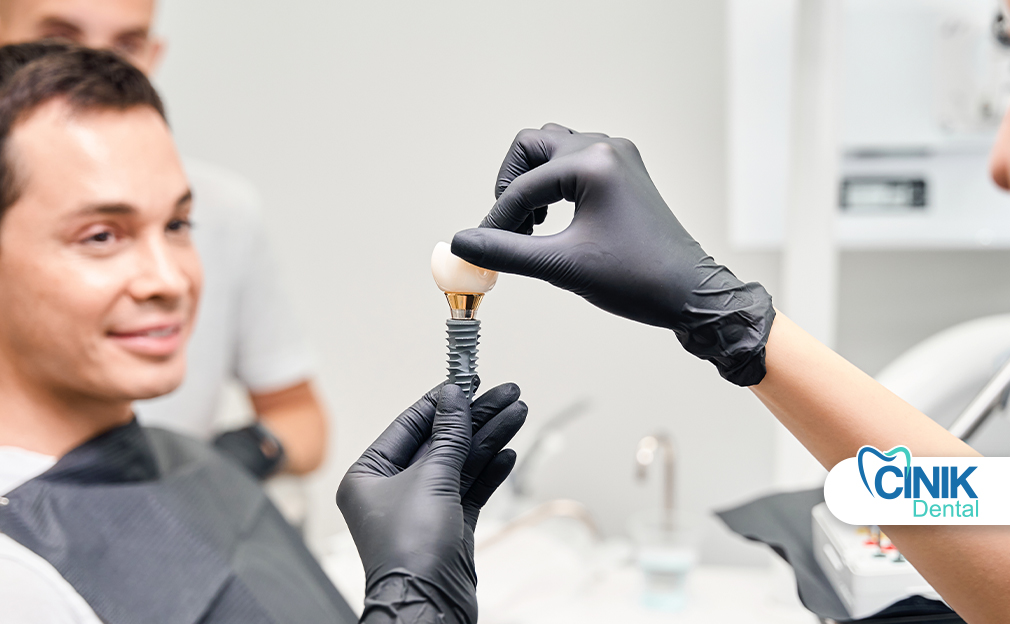
Dental implants are man-made tooth roots implanted in the jawbone to secure replacement teeth, either bridges or prosthetic teeth, in a stable and durable manner (Wakankar et al., 2023). A dental implant consists of three components: the implant, an abutment, and a crown. The implant is the embedded component, delivered as a screw or a cylinder. The abutment is a support part fixed on the implant and protruding outside the gum, supporting the visible crown. The crown replicates the visible part of the natural tooth and contacts adjacent teeth (Zaheer Kola et al., 2015).
Front tooth implants are dental implants made to restore visible front teeth. They require larger diameters than implants for back teeth, as front teeth are less resistant to lateral forces, which enhances stability and prevents fractures. Back tooth implants are typically smaller because they counter fewer lateral loads.
2. Why Are Dental Implants the Best Option for Front Teeth Replacement?
Quick Answer: Dental implants are the best option for front teeth because they replace missing roots, preserve jawbone and facial structure, and provide the most natural, stable, and aesthetic results in the visible smile zone.
Dental implants often represent the best option for replacing lost teeth because they accurately substitute missing roots. They serve multiple functional and aesthetic purposes and maintain jawbone structure, preventing potential damage to mouth and facial appearances when teeth are absent (Sun, 2012). The materials, treatment approach, and subsequent benefits are comparable for front and back teeth. However, front teeth warrant specific attention. The visible nature of front teeth makes their correct shape and colour critical for aesthetic, communicative, and behavioural reasons. Patients seek front tooth implants that blend seamlessly with existing teeth; any mismatch might compromise intangible yet vital aspects of social existence (Losenická et al., 2021). Implants installed in the visible “social zone” should duplicate original teeth precisely as corrective alterations at later stages could be complicated.
Front teeth implants represent an aesthetic commodity, demanding superior quality in selection, production, and installation. Implants in the less-intrusive “functional zone” and “driving zone” retain substantial functional, structural, and aesthetic importance. These areas govern more than half of all tooth-related activities; masticatory, communicative, and social. Consequently, implants in the posterior crowns, premolars, or molars require no spatial separation from anterior restorations employing the same materials and systems. Crowns affixed to the chosen lower incisors complete the frontal assembly and determine the clearly shaped tooth arc.
3. How Does the Front Tooth Dental Implant Procedure Work?
Quick Answer: The front tooth implant procedure places a titanium post into the jawbone to replace the tooth root, followed by an abutment and a crown, with timing based on healing, infection status, and bone condition.
Many people can experience losing a front tooth. A variety of causes, such as an accident, gum disease, or decay, can make a front tooth fall out. Because front teeth are so important for speaking and smiling, it is essential to replace a missing front tooth, preferably as soon as possible after losing it.
A dental implant consists of a small screw-shaped titanium post integrated within the bone of the jaw and cylindrical abutment connecting the post to the crown or prosthetic tooth. The post serves as the root of the missing front tooth. The timing of the procedure will further depend on other factors, such as the presence of any infections in the cavity and the eventual need for bone grafting. The treatment requires a dentist or an oral surgeon specializing in implants. An implant is the best option for replacing a missing front tooth for the minority of cases without significant additional conditions. An additional bridge can be troublesome for patients who need to restore beauty, which is the primary objective to consider.
3.1. Is the Implant Procedure Different for Front Teeth Compared to Back Teeth?
Quick Answer: The implant procedure is largely the same for front and back teeth, with minor adjustments for bite forces and stability, especially in molar regions.
The implant procedure for front teeth versus back teeth involves different considerations. The stability achieved by implants is lower in the posterior region than in front teeth. Molar size and associated load contribute to accelerating the loosening and fracture of implants, making molars the dilemma area of implant therapy. The placement of two single screw-type implants for a molar replacement is recommended, which proved to be more functional and biomechanically acceptable. One of the designs suggested the use of implants that aimed to be like the form of natural roots because it achieves sufficient stability and proper force transmission. However, the natural form is very difficult to manufacture, although finite element analysis shows a favourable biomechanical environment. Other proposals are also under study, such as placing a lower anterior implant in a region with larger diameter and increasing the implant size in that area (Sun, 2012).
The surgical procedures for the front and back teeth follow generally the same steps and only need minor adjustments. The surgical steps performed when inserting implants are identical among treating the anterior, premolar, or molar sites (Wakankar et al., 2023).
4. What Are Front Tooth Dental Implants Made Of?
Quick Answer: Front tooth dental implants use titanium or zirconia implants, titanium or resin abutments, and ceramic or composite crowns, often with surface coatings to enhance bone integration and aesthetics.
Front tooth dental implants consist of three components: an implant that replaces the tooth root, an abutment that connects the implant and the crown, and a crown that mimics a natural front tooth (Eftekhar Ashtiani et al., 2021). Implants can be made from various biocompatible materials. For front teeth, the most common materials are titanium and titanium alloys, although some suppliers offer implants made from zirconium oxides or zirconia ceramics. Abutments can be manufactured from titanium, titanium alloys, stainless steel, or polymers; custom-made resin abutments may be produced for aesthetic purposes. Crowns may consist of metal ceramic, all-ceramic, or composite resin. Metal ceramic is the conventional restorative material and provides long-term durability for front teeth. All-ceramic and composite resin are more aesthetic options but can be less durable and require greater maintenance (Wakankar et al., 2023).
Front teeth implants are usually coated and have many brand options. Surface modifications enhance micro and nano topography, improving cell adhesion, proliferation, and differentiation. Hydroxyapatite, calcium phosphates, cardiolipin, self-assembled biomolecules, and polymers can be applied to the implant surface for desirable biological performance.
5. What Are the Benefits of Dental Implants for Front Teeth?
Quick Answer: Dental implants for front teeth restore a natural-looking smile, preserve facial structure, improve speech and chewing, and provide long-lasting, stable results.
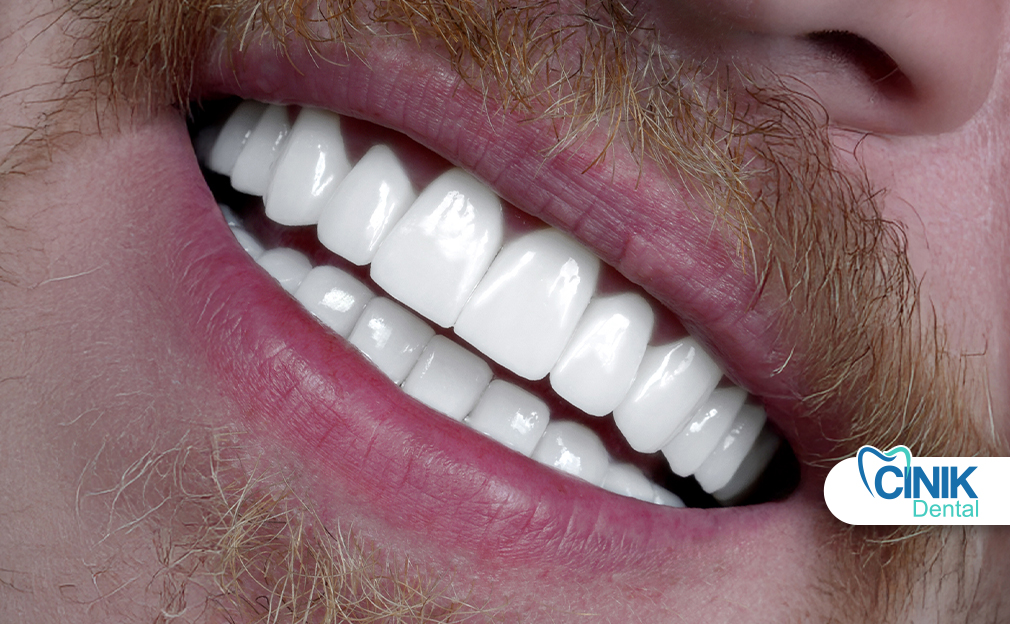
Dental implants have several advantages for patients needing to replace missing front teeth (Losenická et al., 2021). They mimic the natural tooth anatomy in appearance, helping to restore the original smile. Dental implants maintain the contours of the lips and face. They restore the normal bite and eliminate excessive stress on the teeth above and below. They also allow individuals to speak normally. Patients with front tooth implants can chew comfortably, even when biting apples or other hard foods. Longevity is another appealing characteristic. Most dental implants paired with crowns last for at least 15 years, often for much longer, regardless of the number of daily chewing movements (Wakankar et al., 2023).
6. What Are the Risks or Complications of Front Tooth Implants?
Quick Answer: Risks of front tooth implants include infection, implant or screw loosening, nerve damage, crown failure, temporary speech changes, and aesthetic issues with the gum line.
Even with success rates of up to 98% (Borg et al., 2016) , no treatment is without risks. Complications during or after placement of a dental implant may occur. Infection at the implant site is one of the more serious risks. Infection may require removal of the implant before healing is complete. Other potential complications include loosening of the implant post or abutment screw, damage to nearby nerves, fracture of the implant, and failure of the dental crown. These complications are rare, and generally pose less risk than similar complications observed in other forms of dental restoration. Nevertheless, challenges specific to front-tooth implants exist. For instance, front implants may impact speech, particularly at the initial healing stage, and a change in gum tissue appearance can lead to an improvised aesthetic match.
6.1. Do Front Tooth Dental Implants Affect Speech?
Quick Answer: Front tooth implants may temporarily affect speech, but most patients adapt as healing progresses and normal pronunciation returns.
Dental implants situated in front of the mouth can significantly alter speech. Nonetheless, the scope of speech changes varies among individuals.
Dental implants installed in the anterior sections of the mouth sometimes interfere with speech. The front teeth are crucial for producing certain sounds. However, the impact of a front tooth implant on speech varies among individuals, depending on the patient’s articulation, the type of denture, and other criteria. Some people notice changes immediately after the intervention. Others gradually adapt. Sometimes, changes only surface after a more extended period has passed, particularly when switching to new prosthetics (Fonteyne et al., 2019).
6.2. Can Gum Recession Affect the Appearance of Front Tooth Implants?
Quick Answer: Yes, gum recession can expose the implant or surrounding tissue, affecting the appearance of front tooth implants, but grafting and bone-preserving techniques can reduce this risk.
Gum recession can affect the appearance of front tooth implants by exposing the implant or surrounding tissues, which may lead to aesthetic concerns. The alveolar ridge can recede and cause bone loss after tooth loss, especially on the facial side; lateral bone loss is often most evident in ridge height on the buccal side. Residual-bone contour changes follow tooth extraction and may compromise aesthetics by exposing the implant or peri-implant mucosa when tissue thickness is inadequate. Bone loss occurs rapidly in the first few months after extraction, which can affect implant stability and aesthetics (Wakankar et al., 2023).
Sockets with different defect patterns can also predispose the implant to exposure after a restoration because of progressive remodelling. Bone-constructing agents can help prevent this, and grafting materials can successfully augment critical defects (Ankli et al., 2018).
7. How Long Do Dental Implants for Front Teeth Last?
Quick Answer: Front tooth dental implants can last decades or a lifetime with proper placement, good oral hygiene, and regular dental care.
Front tooth implants can last a long time, much longer than other dental restorations. They are a permanent restoration. Natural teeth deteriorate. But even with extensive wear, when damaged, a crown can be replaced without affecting the implant or abutment. In fact, the long-term success of front tooth implants depends mainly on the quality of the dentist’s work and the stability of the patient’s oral hygiene, just like natural teeth (Wakankar et al., 2023).
The lifespan of front tooth implants depends on several factors. Once implanted, careful oral hygiene helps the implant bond to bone. This osseointegration establishes a stable base for the prosthetic tooth (Sun, 2012). Factors that influence longevity include the location of the front tooth implant, condition of adjacent teeth, individual bone structure, type of implant used, and choice of dentist.
8. How Natural Do Front Tooth Dental Implants Look?
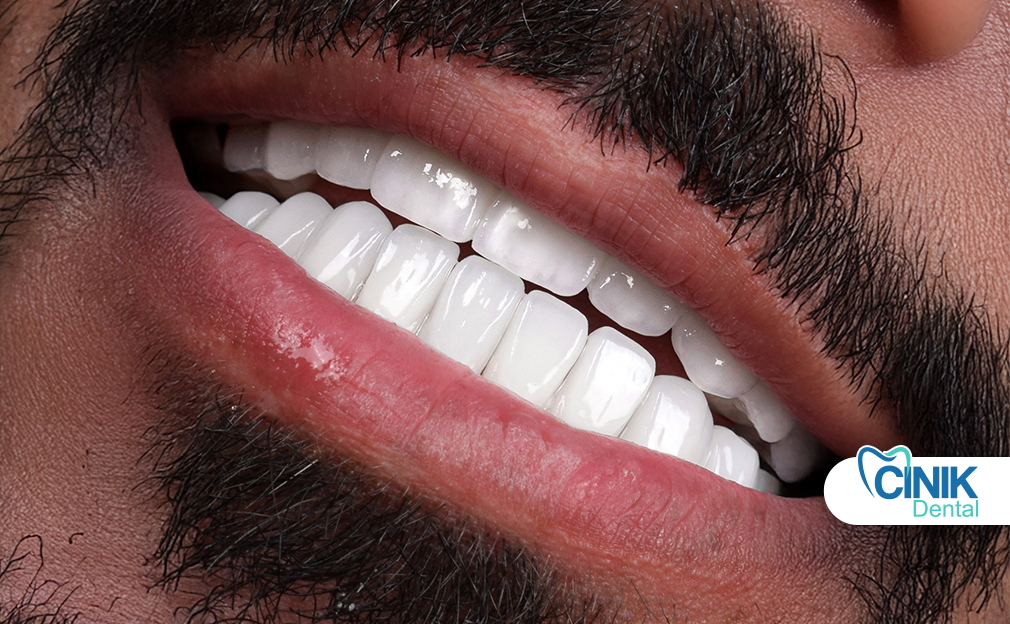
Quick Answer: Front tooth dental implants can look highly natural when precisely planned and placed, closely matching natural tooth shape, position, and gum contours.
Natural-looking front tooth implants should closely imitate the shape of natural roots. Achieving this ideal is challenging, as designs resembling natural roots are difficult to manufacture and require meticulous manual site preparation. Image-guided placement enhances planning and execution by incorporating imaging data such as CT and MRI scans, which facilitate accurate positioning in relation to anatomical features like the maxillary sinus and mandibular nerve. Maintaining appropriate spacing between implants and adjacent teeth is vital for ensuring adequate blood supply and promoting bone health; inter-implant gaps of 3 to 7 mm are advisable (Sun, 2012).
9. How Much Do Dental Implants for Front Teeth Cost?
Quick Answer: Dental implants for front teeth typically cost €350–€600 for standard systems and €600–€1,000 for premium materials, with complete implant–abutment–crown treatments averaging €400–€900.
Front tooth implants are typically done using a single implant. In premium materials and advanced systems, the average treatment price range is €600 to €1,000. A single implant using a standard range of materials and systems costs €350 to €600. Standard materials and systems can be specified upon request.
| Treatment Type | What’s Included | Estimated Price Range (€) | Notes |
| Single Front Tooth Implant (Complete) | Implant + abutment + crown | €400 – €900 | Most common option; aesthetics and gum harmony are critical |
| Single Implant – Standard Range | Implant only (standard system) | €350 – €600 | Abutment and crown priced separately |
| Single Implant – Premium / Advanced Systems | Implant only (premium brands, coatings) | €600 – €1,000 | Includes systems like Straumann or Nobel Biocare |
| Standard Materials (Complete Case) | Implant + abutment + crown | €350 – €600 | Cost-effective, reliable solutions |
| Premium Materials (Complete Case) | Implant + abutment + crown | €600 – €1,000 | Higher aesthetics, advanced materials |
10. Conclusion
Many people decide to go for an implant because they lost their front teeth due to accidents. Missing front teeth may affect not only the smile but also the pronunciation of several words. People who need instant results and tracking longer, durable solutions can satisfactorily settle for dental implants. Some individuals still choose fixed bridges as an option. However, dental implants have made a remarkable difference in attitude toward missing teeth. The concept of missing teeth is rarely brought to the foreground. As a result, it is also on the rise in disability cases and people need immediate restoration of lost teeth. Front teeth, particularly upper incisors, are frequently affected, and immediate replacement is crucial (Losenická et al., 2021).
References:
Wakankar, J., B Mangalekar, S., Kamble, P., Gorwade, N., Vijapure, S., and Vhanmane, P. “Comparative Evaluation of the Crestal Bone Level Around Pre- and Post-loaded Immediate Endoosseous Implants Using Cone-Beam Computed Tomography: A Clinico-Radiographic Study.” 2023. ncbi.nlm.nih.gov
Zaheer Kola, M., H Shah, A., S Khalil, H., Mahmoud Rabah, A., Mohammed H Harby, N., Ali Sabra, S., and Raghav, D. “Surgical Templates for Dental Implant Positioning; Current Knowledge and Clinical Perspectives.” 2015. ncbi.nlm.nih.gov
Sun, X. “Image-Guided Robotic Dental Implantation With Natural-Root-Formed Implants.” 2012. [PDF]
Losenická, J., Gajdoš, O., and Kamenský, V. “Cost-utility analysis of an implant treatment in dentistry.” 2021. ncbi.nlm.nih.gov
Eftekhar Ashtiani, R., Alam, M., Tavakolizadeh, S., and Abbasi, K. “The Role of Biomaterials and Biocompatible Materials in Implant-Supported Dental Prosthesis.” 2021. ncbi.nlm.nih.gov
Borg, P., Puryer, J., McNally, L., and O’Sullivan, D. “The Overall Survival, Complication-Free Survival, and Related Complications of Combined Tooth-Implant Fixed Partial Dentures: A Literature Review.” 2016. ncbi.nlm.nih.gov
Fonteyne, E., Van Doorne, L., Becue, L., Matthys, C., Bronckhorst, E., and De Bruyn, H. “Speech evaluation during maxillary mini‐dental implant overdenture treatment: A prospective study.” 2019. ncbi.nlm.nih.gov
Ankli, V., Ivison Rodrigues Limeira, F., Yamauti, M., and Cançado Melo Sá, T. “Gingival Veneer Used as Prosthetic Solution for Esthetic-Compromised Malpositioned Dental Implant.” 2018. ncbi.nlm.nih.gov
Alshehri, M., Alghamdi, M., and S. Alayad, A. “Anatomical Shaping for Zirconia Custom Implant Abutment to Enhance Anterior Esthetic: A Clinical Technique.” 2020. ncbi.nlm.nih.gov

Leave a Reply