Patient question
I am 57 years old and generally in good health. I currently take medication for anxiety and depression.
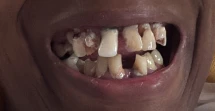
Many of my teeth have become loose and move quite easily, which makes me concerned about their long-term stability. I would like to replace my damaged teeth with a fixed solution that looks natural and allows me to eat comfortably again.
Would All-on-6 dental implants be suitable for me, and what treatment would I need?
Verified answer from our dentist
Answered on Oct 17, 2026

Dentist
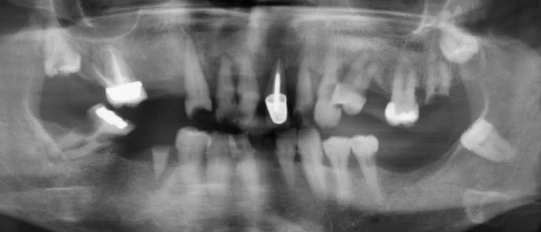
Based on the initial assessment, several of your teeth have significant mobility, which may indicate advanced periodontal disease and loss of supporting bone.
When teeth become severely loose due to reduced bone support, preserving them may not always provide a predictable long-term result.
For this reason, a full-mouth rehabilitation using All-on-6 dental implants may be considered for both your upper and lower jaws.
Proposed Treatment Plan
1. Dental Extractions
The following 20 teeth are provisionally planned for extraction due to their condition and mobility:
11, 12, 13, 16, 18, 21, 22, 23, 24, 26, 27, 32, 33, 34, 35, 37, 42, 43, 44, and 45
2. All-on-6 Implant Treatment
A total of 12 dental implants may be planned to support fixed restorations in both jaws.
Upper jaw – 6 implants: Regions 12, 14, 16, 22, 24, and 26
Lower jaw – 6 implants: Regions 32, 34, 36, 42, 44, and 46
This approach aims to provide stable implant support for fixed full-arch restorations, restoring chewing function and smile aesthetics.
3. Sinus Lift and Bone Grafting
The treatment may also include:
A closed sinus lift procedure on the right side of the upper jaw
Approximately 2 cc of bone graft material, subject to the final surgical assessment
These procedures may be required to improve the available bone support for implant placement.
4. Zirconia Restorations
Following successful implant integration and the required healing period, the final restorative plan may include:
24 zirconia restorations covering the regions of teeth 16–26 and 31–36, 41–46
A custom night guard to help protect the final restorations from excessive bite forces, clenching, or grinding during sleep
The zirconia restorations would be designed to create a natural-looking smile while restoring the function of your upper and lower teeth.
Important Medical Considerations
Although you are generally healthy, we would need to know the exact names and dosages of the medications you take for anxiety and depression before proceeding with surgery.
Some medications may interact with drugs used during dental procedures or affect sedation planning. Your medication history should therefore be reviewed by the dental surgeon and anaesthesia team.
You should not stop or change any prescribed medication without consulting your treating physician.
Because you have several mobile teeth, a detailed periodontal examination and three-dimensional CBCT scan will also be essential to evaluate the extent of bone loss and determine whether the proposed implant positions are suitable.
The final number of extractions, implants, grafting procedures, and restorations may change depending on the available bone, gum condition, and clinical findings.
Our main goal is to provide a stable, functional, and natural-looking fixed smile while ensuring that your treatment is planned safely and with long-term stability in mind.