Patient question
I am 65 years old and have high blood pressure, which is currently under control. I do not take any blood-thinning medication.
In 2004, I had a bone graft in the upper front area, but unfortunately it was unsuccessful and implants could not be placed. Since then, I have been using a bridge in my upper jaw, which I would now like to replace. I also currently wear a partial denture in my lower jaw.
I would like a full-mouth makeover with fixed teeth. What treatment options may be available for me?
Verified answer from our dentist
Answered on Sep 10, 2026

Dentist
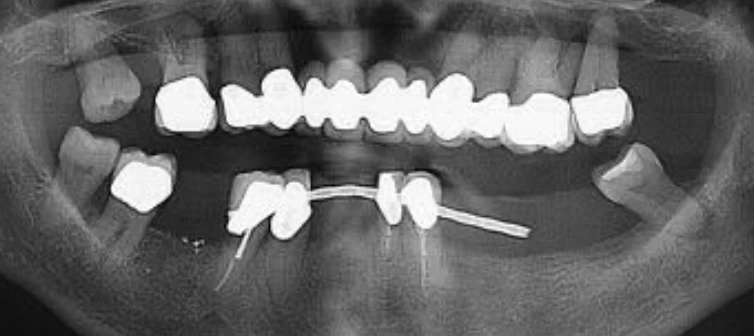
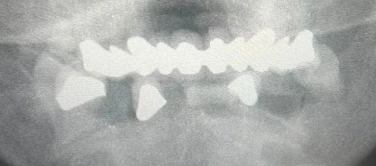
Based on the available information and previous X-ray, there does not appear to be enough bone in the upper jaw for conventional implant treatment.
For patients with severe upper jaw bone loss who are not suitable for standard implants, two alternative treatment options may be considered:
Option 1: Subperiosteal implant treatment
Option 2: Four zygomatic implants
Both approaches are designed for patients with significant bone loss and may allow the upper jaw to be restored with a fixed implant-supported hybrid prosthesis without relying on conventional implant placement alone.
For the lower jaw, the proposed treatment plan may include:
Extraction of teeth 32, 33, 38, 43, 44, and 46
6 dental implants in the regions of teeth 32, 34, 36, 42, 44, and 46
A fixed implant-supported hybrid prosthesis for the lower jaw
For the upper jaw, depending on the current bone condition, either a subperiosteal implant solution or a zygomatic implant-supported treatment may be planned, followed by a fixed hybrid prosthesis.
The overall goal would therefore be to provide:
A fixed hybrid prosthesis for the upper jaw
A fixed hybrid prosthesis for the lower jaw
Since the available X-ray is from last year and you have a history of an unsuccessful bone graft, a new three-dimensional CBCT scan will be essential before confirming the treatment. This will allow the surgeon to evaluate the current bone volume, sinus anatomy, condition of the existing bridge and teeth, and determine whether subperiosteal or zygomatic implants would be the safer and more predictable option.
Your blood pressure should also remain well controlled before surgery, and your current medications and general medical condition will be reviewed as part of the pre-operative assessment.