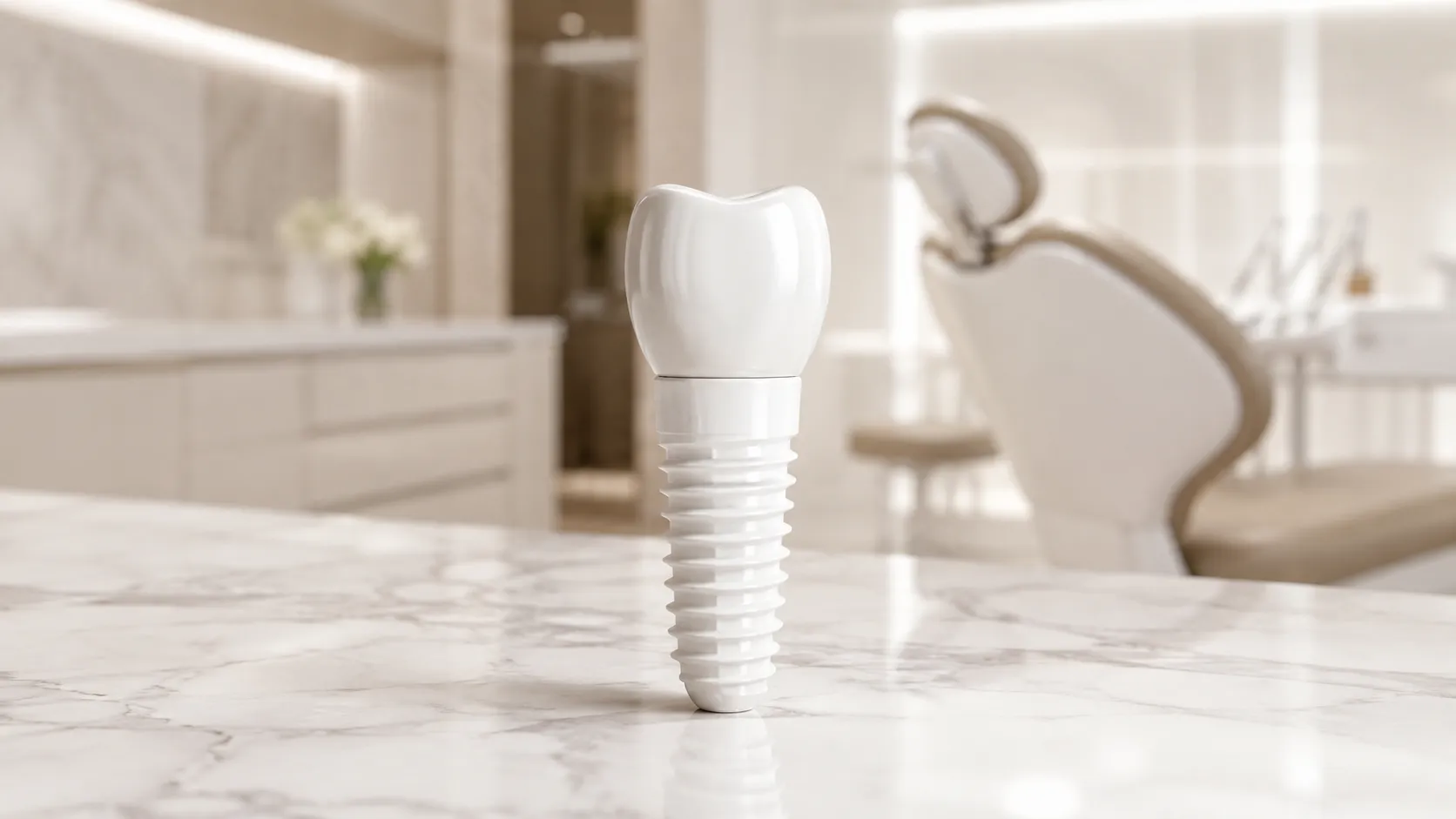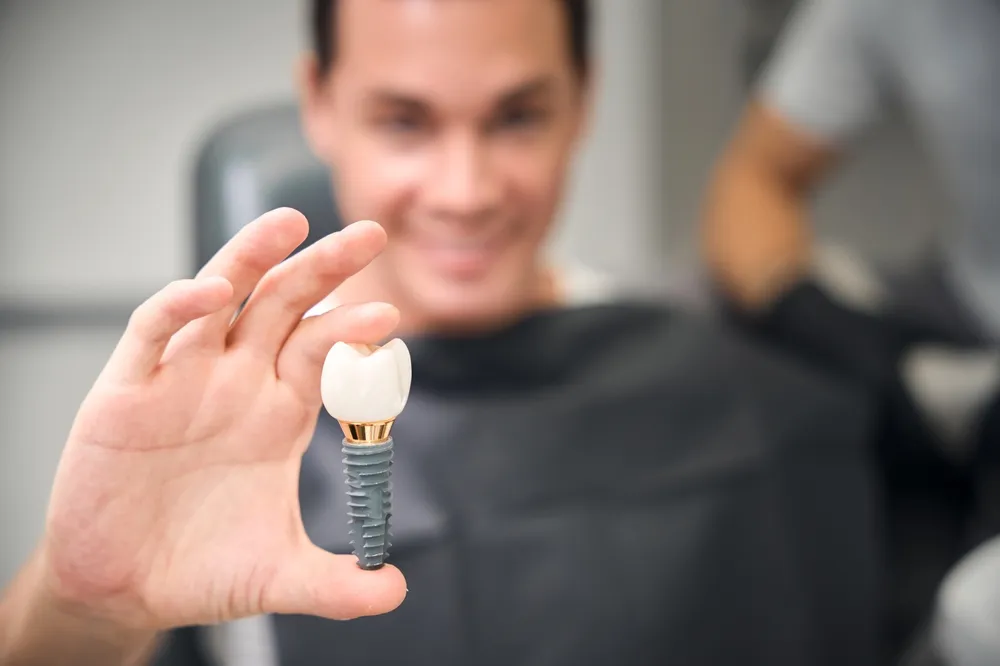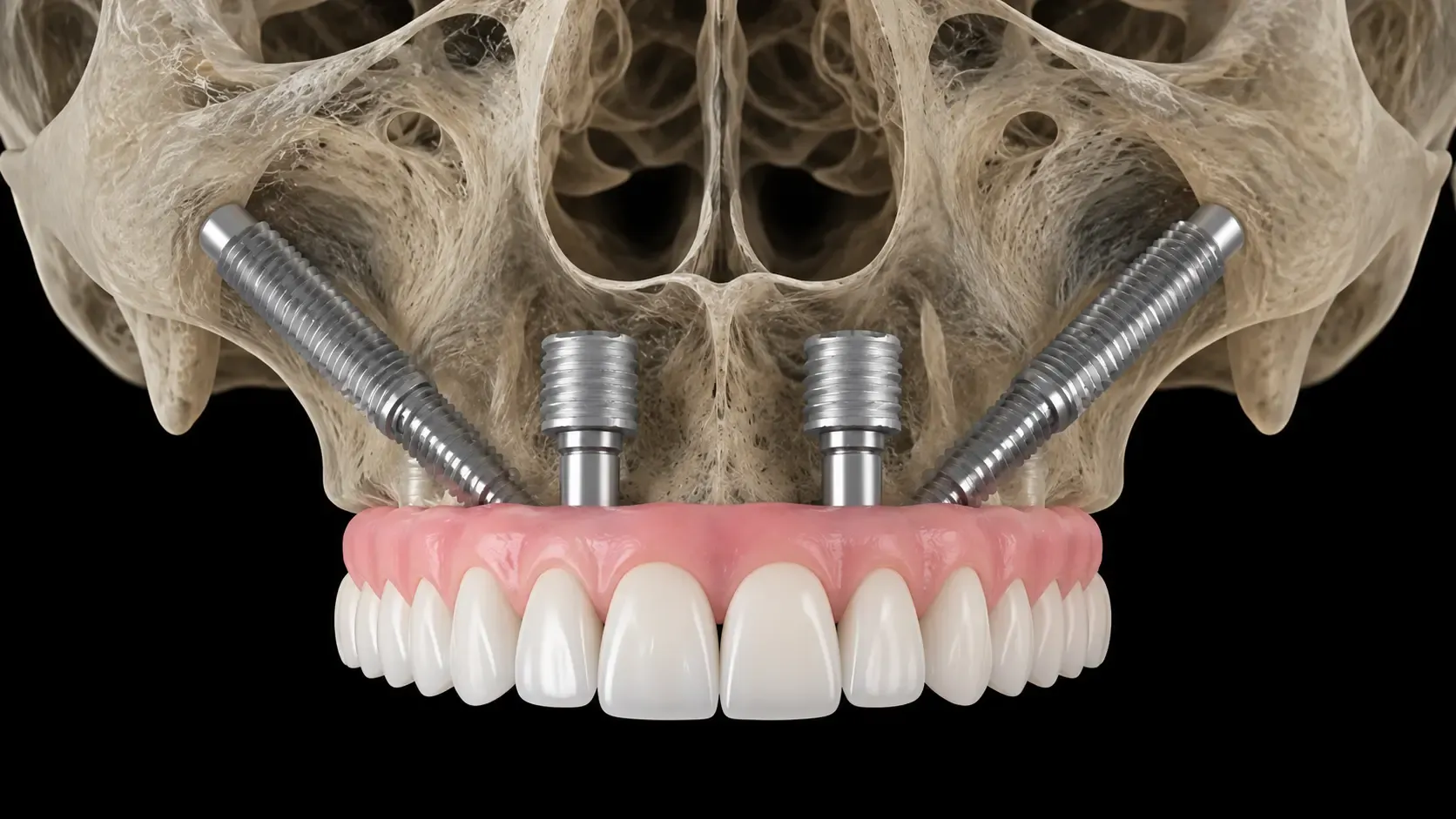
Zygomatic implants give patients with severe maxillary atrophy a real chance at fixed teeth without bone grafting. These specialized implants measure up to 55 millimeters long. They bypass the weakened upper jaw entirely. They anchor directly into the zygomatic bone. This cheekbone offers dense, stable support for immediate prosthetic loading.
Branemark (2004) first introduced the zygomatic fixture concept over two decades ago. Since then, implantology has evolved dramatically. Modern digital planning now guides surgeons through complex anatomy. Immediate loading protocols allow patients to leave surgery with temporary fixed teeth. Dental implant survival rates now exceed 95 percent in most systematic reviews.
Conventional dental implants fail in severely atrophic maxilla because insufficient bone cannot support standard fixtures. Patients with advanced resorption often hear that they need extensive bone grafting. They face sinus lift surgeries. They wait months for healing. Zygomatic implants eliminate these obstacles. They offer graftless full-arch rehabilitation in a single surgical visit.
Demand for this treatment grows each year. More patients seek immediate results. They want to avoid the morbidity of bone harvesting. They want predictable outcomes. Clinicians now recognize that experienced surgical planning and multidisciplinary care produce the best results. Prosthodontists and oral surgeons work together from the first consultation.
What Is a Zygomatic Implant?
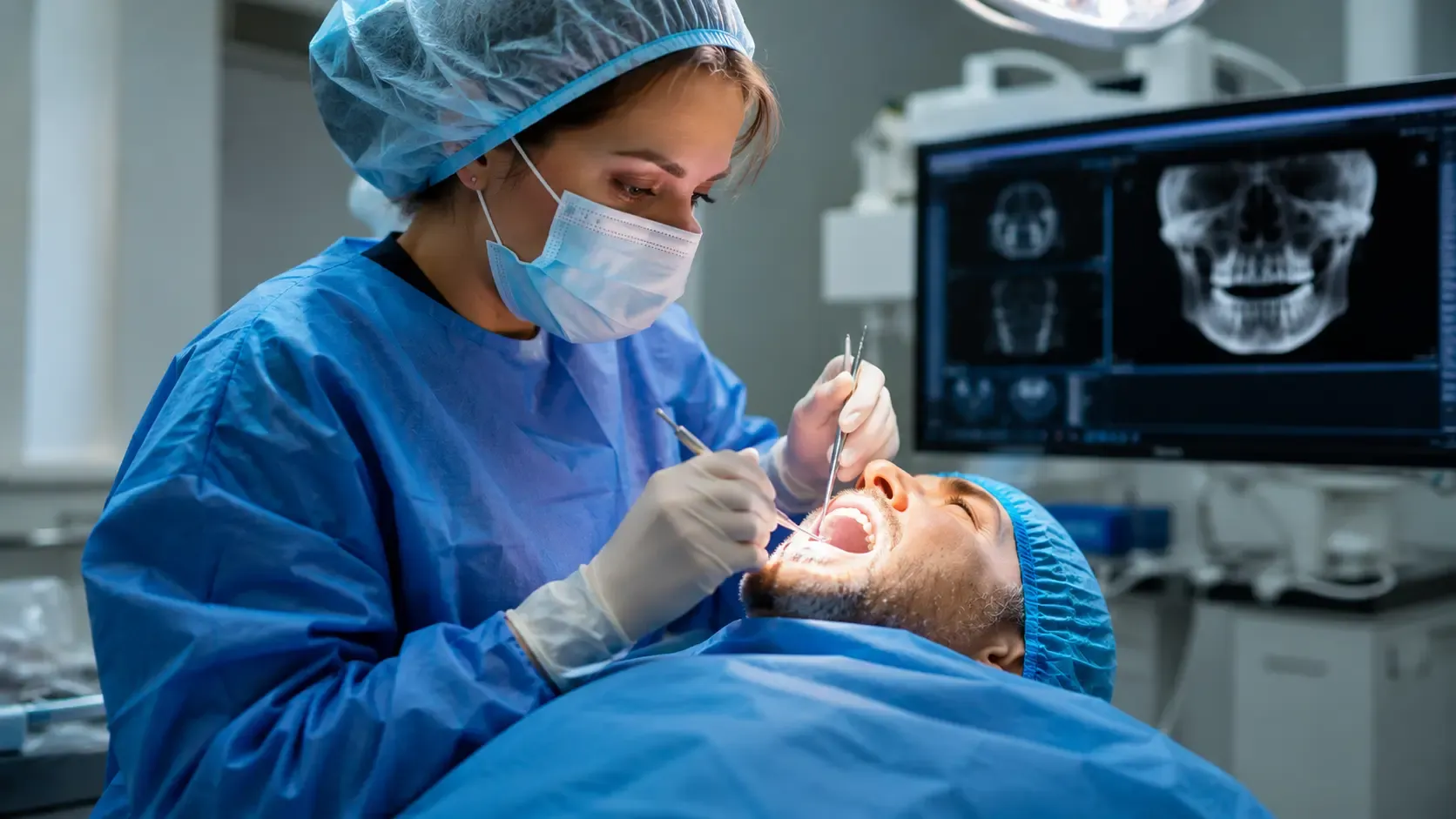
A zygomatic implant is an extra-long dental implant that anchors into the cheekbone. It replaces missing upper teeth in patients who lack enough jawbone for regular implants.
The zygomatic implant differs from standard fixtures in length, trajectory, and anchorage point. Regular implants measure 8 to 15 millimeters. Zygomatic implants measure 30 to 55 millimeters. This extra length allows the implant to cross the maxillary sinus. It engages the dense zygomatic bone. The zygoma provides exceptional stability. It withstands chewing forces immediately.
The zygoma anatomy plays a critical role in implant success. The cheekbone sits lateral to the maxilla. It connects to the frontal, sphenoid, and temporal bones. Its cortical density exceeds that of the maxilla. This density ensures strong primary stability. It supports immediate loading protocols.
Modern zygomatic implants serve patients who previously had no options. Before their invention, patients with severe bone loss needed extensive grafting. They faced lengthy treatments. They endured multiple surgeries. Today, one procedure restores the entire upper arch. Patients receive fixed teeth on the same day.
What Defines a Zygomatic Implant?
A zygomatic implant measures 30 to 55 millimeters in length. It differs from standard implants because it engages the dense zygomatic bone instead of the maxilla.
The body of the implant crosses the maxillary sinus. The head sits in the alveolar ridge. The apex locks into the zygomatic buttress. This design creates a bridge between the jaw and the cheekbone. The implant platform accepts abutments and prosthetic frameworks. It supports full-arch bridges.
Most zygomatic implants use titanium alloy. Some feature surface modifications. These modifications enhance osseointegration. They speed up bone bonding. The thread design varies by manufacturer. Some threads cut aggressively. Others compress bone gently. All designs aim for maximum stability in the zygoma.
The trajectory of the implant matters greatly. It must avoid the orbit above. It must miss the sinus membrane when possible. It must emerge correctly for the final teeth. Digital planning now controls this trajectory precisely. CBCT scans reveal the exact path before surgery begins.
How Does the Zygomatic Bone Support These Implants?
The zygomatic bone provides dense cortical bone that grips the implant tightly. This cheekbone density far exceeds the density of the upper jaw.
The zygomatic bone forms the prominence of the cheek. It articulates with four cranial bones. Its thick cortical plates resist resorption. Unlike the maxilla, it does not shrink after tooth loss. This permanence makes it an ideal anchor.
The implant engages the zygomatic buttress. This buttress is the thick pillar of bone between the maxilla and the zygoma. It contains the densest bone in the midface. Surgeons aim for strong cortical engagement. They want the implant to touch both the inner and outer cortical plates. This grip prevents micromovement. It ensures immediate stability.
The relationship between the zygoma and the maxillary sinus requires careful attention. The sinus sits medial to the zygoma. The implant passes near or through the sinus space. The sinus membrane usually tolerates this passage. However, surgeons must evaluate sinus health before placement. They must check for infections or polyps.
How Have Zygomatic Implants Evolved Over Time?
Branemark (2004) introduced the original zygomatic fixture in Sweden. He adapted his existing osseointegration principles to the cheekbone.
The original technique used an intrasinus path. Surgeons created a window in the sinus wall. They passed the implant through this opening. They anchored it in the zygoma. This method worked well. However, it carried sinus risks. It sometimes caused sinusitis. It occasionally led to soft tissue problems.
Aparicio (2010) pioneered the extrasinus technique. This approach kept the implant body outside the sinus membrane. It reduced sinus complications. It improved prosthetic emergence. The implant head sat in a better position for the final teeth.
Aparicio (2011) later introduced the ZAGA approach. He recognized that every patient has different anatomy. He proposed five anatomical types. Each type requires a different implant path. This personalization improved outcomes dramatically.
Today, digital workflows dominate the field. CBCT guides planning. Surgical navigators track drills in real time. CAD/CAM mills provisional teeth before surgery. These advances make zygomatic implant placement safer and more predictable than ever.
Who Needs Zygomatic Implants?
Patients with severe maxillary atrophy need zygomatic implants when conventional fixtures cannot anchor securely. These patients have lost too much upper jawbone for standard implant therapy.
Severe maxillary atrophy affects millions of adults worldwide. Tooth loss triggers bone resorption. The maxilla shrinks vertically and horizontally. After many years, only a thin ridge remains. Some patients lose their entire alveolar process. They cannot wear conventional dentures comfortably. They suffer from poor nutrition and social isolation.
Traditional solutions demanded bone grafting. Surgeons harvested bone from the hip or chin. They built up the maxilla. Patients waited six to twelve months for graft consolidation. Then they received implants. This process worked but caused significant morbidity. It extended treatment over many months.
Zygomatic implants bypass this entire process. They use existing cheekbone structure. They need no grafts. They need no waiting. Patients receive immediate teeth. This advantage transforms the experience for elderly patients and medically compromised individuals.
What Is Severe Maxillary Atrophy?
Severe maxillary atrophy means the upper jaw has lost most of its original bone volume. Patients with this condition cannot support regular dental implants.
The maxilla resorbs after tooth extraction. The bone melts away slowly. This process accelerates in patients with periodontal disease. It worsens in long-term denture wearers. Some patients lose 10 to 15 millimeters of bone height. The sinus expands into the empty space. The ridge becomes paper-thin.
Doctors classify atrophy using the Cawood and Howell system. Class VI describes the most severe cases. These patients have flat, knife-edge ridges. They have no residual alveolar bone. Standard implants have nothing to grip. Even short implants fail here.
Zygomatic implants solve this problem by reaching beyond the atrophic ridge. They anchor in the zygoma. They do not need maxillary bone for support. This feature makes them the only viable option for Class VI patients who want fixed teeth.
Why Do Some Patients Fail Bone Grafting?
Some patients fail bone grafting because their anatomy cannot support grafts or because grafts do not integrate properly. These failures leave patients without options unless they choose zygomatic implants.
Sinus lift surgery represents the most common grafting attempt. Surgeons elevate the sinus membrane. They pack bone graft material underneath. This procedure succeeds in many cases. However, it fails in patients with severe atrophy. It fails when the sinus membrane is too thin. It fails when the remaining ridge is less than 3 millimeters.
Previous implant failures also disqualify patients from conventional therapy. Failed implants destroy residual bone. They create scar tissue. They compromise blood supply. These patients have even less bone than before. Repeat grafting becomes unpredictable.
Chrcanovic (2016) noted that patients with previous maxillary resections showed lower survival rates. Tumor removal and trauma destroy anatomy. Grafting cannot easily reconstruct these defects. Zygomatic implants offer these patients a direct path to rehabilitation.
Can Oncology and Trauma Patients Use Zygomatic Implants?
Oncology and trauma patients can use zygomatic implants when tumor removal or facial injuries destroy maxillary bone. These implants restore function without requiring extensive reconstruction.
Maxillary defects after tumor resection present extreme challenges. Surgeons remove cancerous bone. They leave large gaps. Traditional reconstruction requires free flaps. These flaps harvest tissue from the leg or forearm. They demand long operations. They carry significant risks.
Zygomatic implants simplify rehabilitation in these cases. They anchor in remaining zygomatic bone. They support fixed bridges or specialized dentures. They restore speech and chewing. They improve facial aesthetics. They let patients return to normal life faster.
Facial trauma also destroys maxillary structure. Fractures, gunshot wounds, and crush injuries shatter the midface. Reconstruction plates stabilize fragments. However, patients still need teeth. Zygomatic implants provide dental rehabilitation even when the maxilla is fragmented. They work alongside orthognathic surgery. They complete the functional restoration.
Who Wants Immediate Teeth Without Bone Grafting?
Patients who want immediate teeth without bone grafting choose zygomatic implants to avoid lengthy treatment timelines and repeated surgeries. These patients value speed and predictability.
Bone grafting extends treatment by many months. Patients first undergo graft surgery. They wait for healing. They then receive implants. They wait again. They finally get teeth. This process takes 12 to 18 months. Many patients cannot wait this long. They have work commitments. They have social lives. They want immediate results.
Graftless full-arch rehabilitation appeals to elderly patients. These patients have limited bone. They also have medical conditions. They cannot endure multiple surgeries. They need one definitive procedure. Zygomatic implants meet this need. They offer same-day teeth. They reduce surgical morbidity. They minimize anesthesia exposure.
Younger patients also demand immediacy. They refuse to live without teeth for months. They research options online. They find zygomatic implant solutions. They travel to specialized centers. They receive fixed teeth within 24 hours. This patient group drives much of the current demand.
What Types of Zygomatic Implant Techniques Exist?
Four main techniques now exist for placing zygomatic implants. Each technique addresses different anatomical situations and prosthetic needs.
The original intrasinus technique still serves many patients. The extrasinus technique reduces sinus involvement. The ZAGA approach personalizes the path. The quad zygoma concept handles the most extreme cases. Surgeons choose the technique based on CBCT anatomy. They consider prosthetic goals. They evaluate sinus health.
The following table compares these four approaches.
Technique | Implant Pathway | Best For | Key Benefit | Main Risk |
Intrasinus | Through maxillary sinus | Standard cases | Long track record | Sinus complications |
Extrasinus | Outside sinus wall | Prosthetic emergence | Reduced sinus issues | Technical difficulty |
ZAGA | Custom anatomy-guided | Individual anatomy | Personalized path | Learning curve |
Quad Zygoma | Four zygomatic implants | Extreme atrophy | No anterior support needed | Complex planning |
Surgeons must master all four techniques. They must adapt to each patient. They cannot force one approach on every anatomy. The ZAGA philosophy emphasizes this flexibility. It teaches surgeons to read anatomy and choose wisely.
What Is the Intrasinus Technique?
The intrasinus technique passes the implant body through the maxillary sinus. Branemark (2004) developed this original approach.
Surgeons create a window in the lateral sinus wall. They visualize the sinus interior. They pass the implant through this opening. The implant head sits in the alveolar ridge. The body crosses the sinus space. The apex engages the zygomatic bone.
This technique offers excellent visibility. Surgeons see exactly where the implant goes. They control the angulation. They verify zygomatic engagement. However, the intrasinus path disrupts sinus physiology. It exposes the implant surface to sinus mucosa. It increases sinusitis risk.
Chrcanovic (2016) identified sinusitis as the most common complication. The intrasinus technique contributes to this risk. Modern modifications reduce the problem. Surgeons now use shorter windows. They preserve more sinus membrane. They seal the sinus opening carefully. Still, many clinicians prefer extrasinus or ZAGA methods for patients with healthy sinuses.
What Is the Extrasinus Technique?
The extrasinus technique keeps the implant body outside the maxillary sinus membrane. Aparicio (2010) popularized this approach.
Surgeons raise a tissue flap that exposes the lateral maxillary wall and the zygomatic buttress. They prepare the osteotomy along the external surface of the sinus. The implant hugs the bone outside the sinus cavity. It never enters the sinus space. This path eliminates sinus membrane perforation. It reduces postoperative sinusitis.
The extrasinus technique also improves prosthetic outcomes. The implant emerges more favorably. The restorative dentist has better access. The final bridge sits in a more natural position. Patients experience less bulk in the palate.
However, this technique demands advanced skill. The surgeon works in a tighter space. The drill path is less visible. Soft tissue management becomes critical. Buccal concavities complicate the approach. Aparicio (2010) specifically designed this technique for patients with pronounced buccal concavities. It solves problems that the intrasinus method cannot address.
What Is the ZAGA Approach?
The ZAGA approach customizes the implant path to each patient's unique anatomy. Aparicio (2011) created this classification system.
ZAGA stands for Zygoma Anatomy-Guided Approach. It recognizes five basic skeletal forms. Each form requires a different implant trajectory. ZAGA 0 uses an intrasinus path. ZAGA 1 and 2 use mixed paths. ZAGA 3 and 4 use extrasinus paths. The surgeon classifies the patient before surgery. He then chooses the appropriate path.
This personalization improves outcomes significantly. It preserves sinus health when possible. It maintains alveolar bone at the implant neck. It reduces soft tissue recession. It ensures optimal prosthetic emergence.
Aparicio (2011) analyzed 200 implant sites. He found that 58 percent of patients showed intra-individual anatomical differences. One side of the face differed from the other. This finding proves that rigid protocols fail. ZAGA teaches flexibility. It adapts to reality. It respects individual variation.
What Is the Quad Zygoma Concept?
The quad zygoma concept uses four zygomatic implants to support a full upper arch. It helps patients who lack bone in both the anterior and posterior maxilla.
Standard zygomatic cases use two zygomatic implants in the posterior maxilla. They combine these with two conventional implants in the anterior region. This hybrid approach works when some anterior bone remains. But some patients have no anterior bone at all. They need four zygomatic implants.
Davó (2013) reported successful outcomes with this approach. He placed four implants entirely in the zygomatic bone. He loaded them immediately. He achieved high survival rates. The prosthesis spanned from one zygoma to the other.
This technique demands exceptional planning. The surgeon must avoid the orbits. He must miss the infraorbital nerves. He must achieve parallel implant paths. He must distribute forces evenly. Digital planning makes this possible. Surgical guides ensure accuracy. The quad zygoma concept represents the ultimate graftless solution for the most desperate cases.
How Does the Zygomatic Implant Procedure Work?
The zygomatic implant procedure follows a clear sequence from consultation to final teeth. Each step requires precision and teamwork.
Patients first undergo comprehensive evaluation. The surgical team studies CBCT images. They plan implant positions. They design the prosthesis. They prepare surgical guides. On surgery day, the patient receives anesthesia. The surgeon places the implants. The restorative team attaches temporary teeth. The patient leaves with a fixed smile.
This streamlined workflow depends on digital technology. It depends on surgical expertise. It depends on prosthetic planning. Every team member plays a vital role. The process transforms lives in a single day.
What Happens During Initial Consultation?
The initial consultation gathers medical history, dental records, and three-dimensional imaging. This information determines whether the patient qualifies for zygomatic implants.
The surgeon asks about previous surgeries. He checks for sinus infections. He reviews medications. He assesses overall health. Diabetic patients need controlled blood sugar. Smokers face higher risks. The team evaluates these factors carefully.
CBCT imaging provides the foundation for planning. The scan reveals maxillary bone height. It shows sinus anatomy. It displays zygomatic density. It maps nerve locations. The surgeon measures exact distances. He identifies the best implant path. He spots anatomical obstacles.
Digital smile design also occurs at this stage. The restorative dentist plans the final tooth positions. He considers lip support. He evaluates speech patterns. He ensures the final result looks natural. This prosthetic-driven approach guides every surgical decision.
How Do Surgeons Plan the Treatment?
Surgeons plan treatment using CBCT data, surgical guides, and prosthetic simulations. This planning prevents surprises in the operating room.
Modern software allows virtual implant placement. The surgeon drags implants into the digital model. He tests different angles. He checks bone engagement. He verifies safe distances from nerves and sinuses. He shares this plan with the restorative team. They approve the implant positions. They confirm that the final teeth will emerge correctly.
Surgical guides translate digital plans into reality. Laboratories print guides from CBCT data. These guides fit over the patient's teeth or bone. They contain channels that direct the drill. They ensure the surgeon follows the planned path exactly.
Some centers use dynamic navigation systems. These systems track the drill in real time. They display its position on a monitor. They alert the surgeon if he deviates. They add an extra layer of safety. They are especially helpful for beginners. They also assist in complex revision cases.
What Occurs During Surgical Placement?
Surgical placement involves anesthesia, tissue flap elevation, osteotomy preparation, and implant insertion. The entire process takes 1 to 2 hours per arch.
The patient receives general anesthesia or deep sedation. Local anesthetic numbs the surgical site. The surgeon makes an incision along the gum line. He lifts the tissue flap. He exposes the maxillary bone and zygomatic buttress.
He then prepares the osteotomy. He uses a sequence of drills. He starts with a small round bur. He progresses to larger twist drills. He irrigates constantly to prevent overheating. He checks depth and angulation repeatedly.
Once the osteotomy is ready, he inserts the implant. He uses a hand ratchet or surgical motor. He engages the zygomatic cortex. He achieves tight primary stability. He verifies torque values. He usually aims for 35 Newton-centimeters or more. This stability supports immediate loading.
He then closes the flap. He sutures the gum tissue. He checks the bite. He ensures the temporary prosthesis fits perfectly. The patient recovers in a quiet room before going home.
Can Patients Get Same-Day Teeth?
Patients can receive same-day teeth with zygomatic implants when primary stability exceeds 35 Newton-centimeters. This immediate loading protocol transforms the patient experience.
Bedrossian (2009) demonstrated the feasibility of immediate loading. He placed provisional prostheses on the same day as surgery. He achieved excellent outcomes. His patients ate soft foods immediately. They smiled confidently. They avoided the embarrassment of removable dentures.
The temporary prosthesis is usually acrylic. It contains 10 to 12 teeth. It attaches to the implants with screws. The laboratory prepares this prosthesis before surgery. The team modifies it chairside if needed. They ensure proper bite. They check aesthetics.
Not every patient qualifies for immediate loading. The surgeon must verify implant stability. He must check prosthetic fit. He must confirm patient compliance. Patients must follow strict dietary restrictions. They must avoid hard foods. They must maintain excellent hygiene. With proper selection, immediate loading succeeds in over 90 percent of cases.
How Long Does Healing Take?
Healing takes 4 to 6 months for full osseointegration. Patients wear temporary teeth during this period.
Osseointegration describes the fusion between bone and implant. The bone grows directly onto the titanium surface. It creates a biological bond. This bond withstands chewing forces. It lasts for decades.
During the first month, the bone remodels rapidly. The implant settles slightly. The gum tissue matures. Patients must protect the implants. They must avoid trauma. They must eat soft foods. They must rinse with antibacterial solutions.
After 4 to 6 months, the surgeon evaluates osseointegration. He takes x-rays. He checks stability. He measures bone levels. If everything looks perfect, he proceeds to the final prosthesis. The final bridge uses stronger materials. It may feature zirconia or porcelain. It offers better aesthetics. It lasts longer than the temporary version.
What Benefits Do Zygomatic Implants Offer?
Zygomatic implants offer four major benefits. They eliminate bone grafting. They provide immediate function. They show high survival rates. They improve quality of life.
These advantages attract patients from around the world. Medical tourism for zygomatic implants grows annually. Patients travel to specialized centers. They seek experienced surgeons. They want predictable results. They value the graftless approach.
The following table summarizes key benefits.
Benefit | Description | Impact |
No grafting | Skips sinus lifts and bone harvesting | Reduces surgery count |
Immediate teeth | Fixed provisional on surgery day | Restores function instantly |
High survival | 95%+ success over 10+ years | Predictable long-term |
Quality of life | Better eating, speech, confidence | Transforms daily living |
Each benefit deserves detailed explanation. Patients should understand exactly what they gain.
Why Can Patients Skip Bone Grafting?
Patients skip bone grafting because zygomatic implants anchor in the cheekbone instead of the atrophic maxilla. This graftless approach changes everything.
Bone grafting adds morbidity. Surgeons harvest bone from the chin, hip, or tibia. Patients feel pain at two sites. They face infection risks. They endure swelling. They need longer recovery. Graftless surgery eliminates these problems.
Sinus lift surgery also disappears from the treatment plan. Surgeons do not need to elevate the sinus membrane. They do not pack bone underneath. They do not wait for graft consolidation. They place implants directly. They load them immediately.
This simplification reduces treatment stages. Patients need fewer appointments. They pay for fewer procedures. They recover faster. They return to work sooner. The graftless protocol represents the biggest advantage of zygomatic implants.
How Fast Can Patients Eat and Smile Again?
Patients eat soft foods and smile confidently within 24 hours of surgery. Immediate loading makes this possible.
The temporary prosthesis looks natural. It fills out the lips. It supports facial muscles. Patients no longer hide their mouths. They speak clearly. They laugh freely. They attend social events without embarrassment.
Chewing function returns gradually. Patients start with soups and yogurt. They progress to soft pasta and fish. They avoid hard nuts and crusty bread for 3 months. After osseointegration, they eat almost anything. The final prosthesis handles steak, apples, and raw vegetables.
This rapid restoration appeals to working professionals. It appeals to parents. It appeals to anyone who cannot afford downtime. The psychological boost is immediate. Patients report less depression and anxiety. They feel like themselves again.
What Do Studies Say About Long-Term Survival?
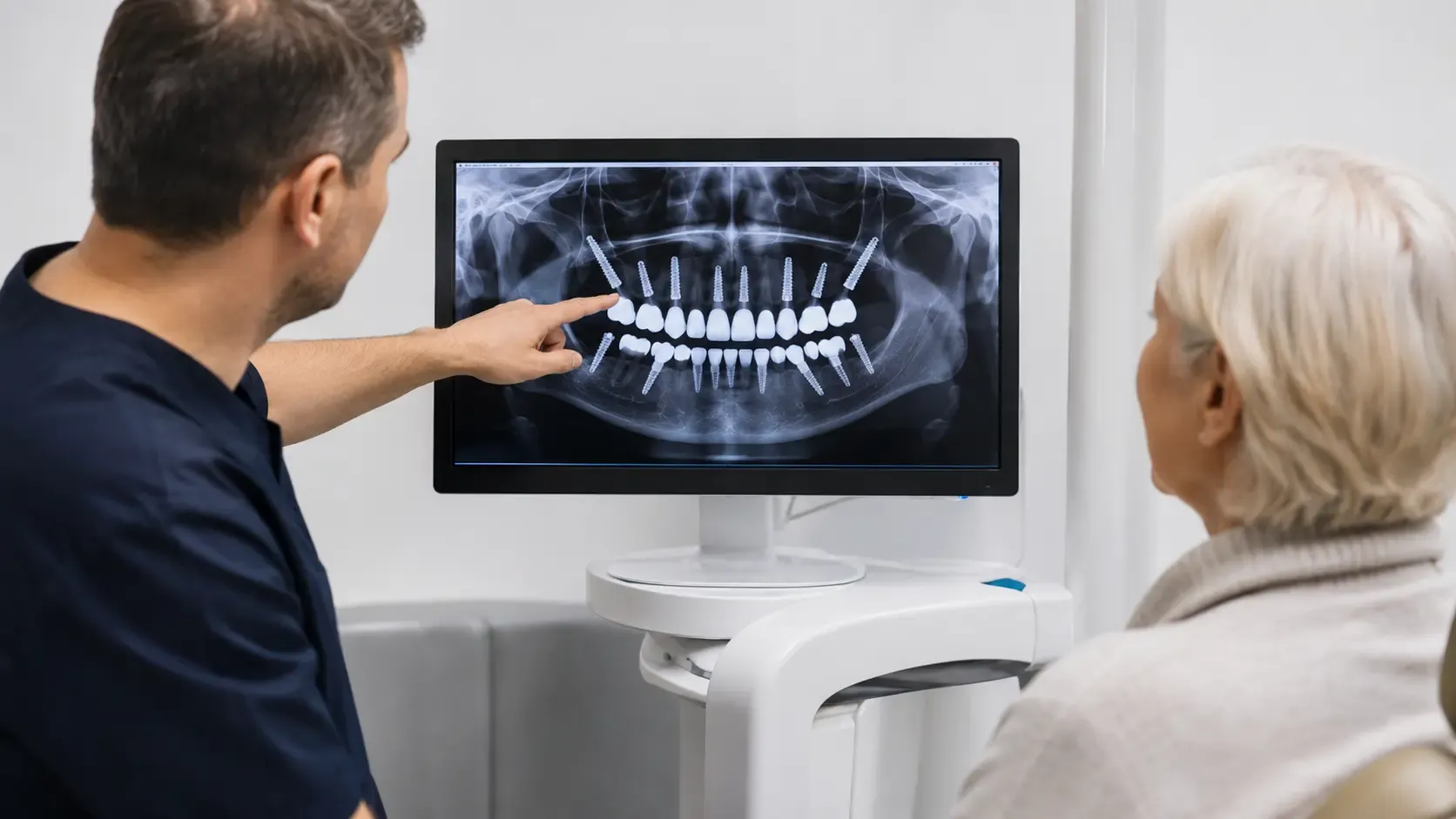
Studies report dental implant survival rates above 95 percent for zygomatic implants. Some systematic reviews show even higher numbers.
Chrcanovic (2012) analyzed 42 clinical studies. He calculated a 12-year cumulative survival rate of 96.7 percent. He reviewed thousands of implants. He found most failures occurred early. Once implants integrated, they rarely failed.
Chrcanovic (2016) updated this review with 68 studies. He reported a 12-year cumulative survival rate of 95.21 percent. He confirmed sinusitis as the main complication. However, he noted that survival remained excellent despite this issue.
Agliardi (2018) followed patients for 5 years. He reported 96.7 percent survival with immediate loading. Sola Perez (2023) conducted a meta-analysis. He found a mean survival rate of 96.2 percent at 6 years. He noted that immediate loading achieved 98.1 percent survival. Delayed loading achieved 95 percent. This finding supports the immediate loading protocol.
Study | Year | Follow-Up | Survival Rate |
Chrcanovic et al. | 2012 | 12 years | 96.7% |
Chrcanovic et al. | 2016 | 12 years | 95.21% |
Sola Perez et al. | 2023 | 6 years | 96.2% |
Agliardi et al. | 2018 | 5 years | 96.7% |
These numbers rival conventional implants. They prove that zygomatic implants offer durable, predictable rehabilitation.
How Do These Implants Improve Daily Life?
Zygomatic implants improve daily life by restoring chewing, speech, and facial aesthetics. Patients regain normal social function.
Chewing efficiency increases dramatically. Patients digest food better. They absorb more nutrients. They enjoy meals again. They no longer avoid restaurants. They eat with family and friends.
Speech improves immediately. The prosthesis supports the palate. It helps form sounds. Patients pronounce consonants clearly. They no longer mumble. They speak with confidence.
Facial aesthetics transform. The teeth support the upper lip. They reduce wrinkles around the mouth. They restore midface volume. Patients look younger. They feel more attractive.
Psychological benefits are equally important. Patients report higher self-esteem. They smile more often. They engage in social activities. They pursue romantic relationships. They advance in their careers. The impact extends far beyond the mouth.
What Risks and Complications Can Occur?
Zygomatic implants carry risks like any surgical procedure. Patients should know these risks before consenting.
Complications fall into five categories. Sinus problems top the list. Soft tissue issues follow. Surgical risks include nerve damage and orbital injury. Prosthetic complications affect the teeth. Implant failures occur in a small percentage of cases.
Most complications are manageable. Surgeons treat sinusitis with antibiotics. They repair soft tissue with grafts. They replace prosthetic screws. They remove failed implants and replace them. Serious complications are rare in experienced hands.
The following sections detail each risk category. Patients deserve honest information. They should not fear these risks. They should respect them.
Can Zygomatic Implants Cause Sinusitis?
Zygomatic implants can cause sinusitis in 2 to 14 percent of cases. This represents the most common biological complication.
Chrcanovic (2016) reported a sinusitis rate of 2.4 percent. However, he warned that many studies underreport complications. Sola Perez (2023) found a higher prevalence of 14.2 percent at 5 years. This discrepancy reflects different diagnostic criteria and follow-up lengths.
Sinusitis occurs when bacteria enter the sinus through the implant site. It causes facial pain. It produces nasal discharge. It creates pressure headaches. It sometimes triggers bad breath.
Most cases respond to antibiotics. Amoxicillin-clavulanate clears many infections. Some patients need sinus surgery. Surgeons create a new drainage path. They clean the sinus cavity. They remove infected tissue. They preserve the implant whenever possible. Prevention starts with careful case selection. Surgeons must treat active sinus infections before implant placement.
What Soft Tissue Problems Might Develop?
Soft tissue problems include mucositis, gum inflammation, and gum recession. These issues affect the tissue around the implant head.
Mucositis causes redness and bleeding. It results from plaque accumulation. Patients with poor hygiene face higher risks. Smokers also suffer more mucositis. The condition is reversible. Better cleaning resolves it.
Gum inflammation looks similar. It produces swollen gums. It sometimes causes discomfort. It rarely threatens the implant itself. However, it signals inadequate maintenance.
Gum recession is more serious. The gum pulls back. It exposes the implant surface. It creates an oral-sinus communication. This complication is more common with the intrasinus technique. The ZAGA approach reduces this risk. Aparicio (2011) showed that preserving alveolar bone at the implant neck protects soft tissue. Surgeons can also perform soft tissue grafts. They can thicken the gum tissue. They can cover exposed surfaces.
What Surgical Risks Should Patients Know?
Surgical risks include orbital penetration, numbness, and oral-sinus holes. These complications are rare but serious.
Orbital penetration is the most feared complication. The eye socket sits above the zygoma. A drill or implant that travels too far upward can enter the orbit. This causes blindness. It damages eye muscles. It requires emergency surgery. Digital planning prevents this error. Navigation systems add extra safety. Experienced surgeons never allow this complication.
Numbness means loss of sensation. The infraorbital nerve runs through the maxilla. It supplies feeling to the cheek, nose, and upper lip. Drill trauma can injure this nerve. Patients feel tingling or numbness. Most cases resolve within months. Some persist permanently.
Oral-sinus holes create a passage between the mouth and the sinus. They cause fluid leakage. They permit infection. They require surgical closure. Proper flap design and suturing prevent this problem.
What Prosthetic Issues Can Happen?
Prosthetic issues include screw loosening and bridge fracture. These mechanical problems affect the final teeth.
Screw loosening occurs when chewing forces exceed the screw's grip. Patients who grind their teeth face higher risks. The prosthetic team must identify grinding before treatment. They must design stronger frameworks. They must use locking screws.
Bridge fracture happens when the material breaks. Acrylic temporary bridges crack more often than zirconia finals. Patients must respect dietary restrictions during the healing phase. They must avoid hard foods. They must not use teeth as tools.
Framework design prevents many issues. The laboratory must use rigid metals. Titanium or cobalt-chrome frameworks resist bending. They distribute forces evenly. They protect individual implants. Regular maintenance catches problems early. The dentist tightens screws. He repairs small cracks. He replaces worn components.
Why Do Some Implants Fail?
Some implants fail because of infection, poor stability, or excessive loading. These failures occur early or late.
Early failure happens within 6 months. The implant never integrates. It remains loose. Infection destroys bone around it. The surgeon removes it. He waits for healing. He replaces it. Chrcanovic (2016) found that most failures occur during this early window.
Late failure happens after years of function. Bone loss around the implant causes problems. Bacteria colonize the implant surface. They trigger inflammation. They destroy surrounding bone. The implant loses support. It becomes mobile. Treatment is difficult. Prevention through hygiene is essential.
Risk factors affect failure rates. Smoking doubles the risk. Diabetes impairs healing. Poor oral hygiene permits infection. Inexperienced surgeons make placement errors. Patients must control these factors. They must choose qualified clinicians. They must commit to maintenance.
How Do Zygomatic Implants Compare to Traditional Dental Implants?
Zygomatic implants and traditional dental implants serve different patient groups. They differ in bone requirements, grafting needs, treatment time, complexity, and longevity.
Traditional implants work best in patients with adequate maxillary bone. They measure 8 to 15 millimeters. They sit entirely within the alveolar ridge. They require 10 millimeters of bone height and 6 millimeters of width. They offer excellent outcomes in suitable candidates.
Zygomatic implants solve cases where traditional implants cannot work. They measure 30 to 55 millimeters. They cross the maxillary sinus. They engage the zygoma. They need almost no maxillary bone. They transform hopeless situations into successful rehabilitations.
The following table compares these options directly.
Factor | Zygomatic Implants | Traditional Implants |
Bone needed | Minimal | 10+ mm height, 6+ mm width |
Grafting required | No | Often yes |
Treatment time | 1-3 days to fixed teeth | 6-18 months |
Surgery complexity | High | Moderate |
Survival rate | 95-98% | 95-98% |
Best candidates | Severe atrophy | Moderate bone |
Both options achieve high success when clinicians select patients properly.
How Much Bone Does Each Option Need?
Zygomatic implants need almost no maxillary bone. Traditional implants need substantial bone volume.
Standard implants require at least 10 millimeters of vertical bone. They need 6 millimeters of horizontal width. They need 1 to 2 millimeters of cortical bone around them. These requirements exclude many elderly patients. Long-term denture wearers rarely have this much bone.
Zygomatic implants bypass these requirements. They need only a small alveolar platform for the implant head. The body crosses the sinus. The apex engages the zygoma. Even patients with Class VI atrophy qualify. The cheekbone provides all the support.
This difference defines candidacy. Patients with moderate bone loss can choose either option. They might prefer traditional implants for simplicity. Patients with severe bone loss have only one choice. They need zygomatic implants unless they undergo grafting.
Which Option Requires Bone Grafting?
Traditional implants often require bone grafting. Zygomatic implants never require bone grafting for anchorage.
Sinus lifts accompany many traditional implant cases. Surgeons add bone below the sinus. They wait for healing. They then place implants. This grafting succeeds in healthy patients. It fails in smokers. It fails in patients with sinus disease. It extends treatment by months.
Block grafts address horizontal deficiencies. Surgeons harvest bone from the chin. They attach it to the maxilla. They wait 4 to 6 months. They then place implants. This process works but causes donor site pain.
Zygomatic implants eliminate all of this. They use the patient's own cheekbone. They need no borrowed bone. They need no waiting. They reduce cost. They reduce morbidity. They simplify the entire experience.
Which Treatment Finishes Faster?
Zygomatic implant treatment finishes in 1 to 3 days. Traditional implant treatment takes 6 to 18 months.
The speed difference is dramatic. Patients with zygomatic implants arrive at the clinic. They undergo surgery. They leave with fixed teeth. They return for final prosthesis after 4 to 6 months. The total active treatment spans two visits.
Traditional implant patients need multiple appointments. They first consult. They then undergo grafting. They wait 6 months. They then receive implants. They wait 3 to 6 months. They then receive final teeth. Some cases need 18 months or longer.
This timeline matters for working patients. It matters for elderly patients. It matters for anyone who wants immediate results. Graftless full-arch rehabilitation offers the fastest path to fixed teeth.
Which Surgery Is More Complex?
Zygomatic implant surgery is more complex than traditional implant surgery. It requires specialized training.
Traditional implant placement is routine. Many dentists offer it. Competition keeps prices moderate. The surgery takes 30 minutes. It needs minimal equipment.
Zygomatic implant placement demands advanced skill. The surgeon navigates near the orbit. He passes near the sinus. He engages the zygoma with limited direct sight in some techniques. He manages soft tissue carefully. He handles immediate loading. He coordinates with the restorative team.
Training programs exist worldwide. The ZAGA centers teach the anatomy-guided approach. They offer hands-on courses. They provide mentorship. Patients should verify their surgeon's credentials. They should ask about case volume. They should request before-and-after photos. Complexity should not deter patients. It should guide them to qualified providers.
Which Option Lasts Longer?
Both options last equally long when placed correctly. Studies show comparable survival rates over 10 to 15 years.
Chrcanovic (2012) reported 96.7 percent survival for zygomatic implants at 12 years. Traditional implant systematic reviews show similar numbers. Both treatments succeed long-term with proper care.
The key factor is maintenance. Patients must clean their implants daily. They must attend professional check-ups. They must avoid smoking. They must control diabetes. They must report problems early.
Prosthetic longevity also matters. The implant may survive, but the teeth may wear out. Acrylic bridges need replacement every 5 to 7 years. Zirconia bridges last 10 to 15 years. The framework may outlast the teeth. Patients should budget for future prosthetic updates.
Who Qualifies for Each Treatment?
Patients with moderate bone loss qualify for traditional implants. Patients with severe maxillary atrophy qualify for zygomatic implants.
The dividing line is bone volume. If the maxilla retains 10 millimeters of height, traditional implants may work. If bone height drops below 5 millimeters, zygomatic implants become necessary. CBCT scans reveal the exact measurements.
Some patients qualify for both. They have enough bone for traditional implants but want immediate results. They might choose zygomatic implants to avoid grafting. They might prefer the speed. The surgeon discusses both options. He recommends the safest path.
Age is not a limiting factor. Healthy 80-year-olds receive zygomatic implants safely. Medical conditions matter more than age. Uncontrolled diabetes, active cancer, and severe heart disease may rule out surgery. The surgeon evaluates each patient individually.
How Do Zygomatic Implants Differ from All-on-4?
Zygomatic implants and All-on-4 both offer full-arch rehabilitation. However, they use different anchorage strategies.
All-on-4 uses four traditional implants. Two sit straight in the anterior maxilla. Two sit angled in the posterior maxilla. This design avoids sinus grafting in some cases. It works well in patients with moderate atrophy.
Zygomatic implants engage the cheekbone. They work in patients with extreme atrophy. They provide support when even All-on-4 cannot anchor securely. They represent the next level of rehabilitation.
Some cases combine both approaches. The surgeon places zygomatic implants posteriorly. He places conventional implants anteriorly. This hybrid design optimizes support. It distributes forces evenly.
The following table highlights differences.
Feature | Zygomatic Implants | All-on-4 |
Anchor bone | Zygoma + anterior maxilla | Anterior maxilla only |
Bone loss suitability | Extreme atrophy | Moderate atrophy |
Grafting needed | Never | Sometimes |
Immediate teeth | Yes | Yes |
Cost | Higher | Moderate |
What Are the Key Differences?
The key differences involve anchorage location, bone requirements, and prosthetic design.
All-on-4 depends entirely on maxillary bone. The posterior implants tilt to avoid the sinus. They need at least some posterior bone. If the posterior maxilla is completely empty, All-on-4 fails.
Zygomatic implants solve this problem. They anchor in the cheekbone. They do not need posterior maxillary bone. They work when the maxilla is entirely resorbed. They provide a safety net for the most severe cases.
Prosthetic design also differs. All-on-4 prostheses often replace 10 to 12 teeth. They may leave posterior gaps. Zygomatic prostheses usually replace all teeth. They restore the full arch. They provide better chewing function.
When Is All-on-4 Not Enough?
All-on-4 is not enough when the posterior maxilla lacks bone for tilted implants. This happens in Class V and Class VI atrophy cases.
The tilted posterior implants in All-on-4 need 4 to 6 millimeters of bone. They need this bone for initial stability. Without it, they wobble. They fail to integrate. The entire prosthesis fails.
Patients who have worn dentures for 30 years often face this situation. Their posterior maxilla has melted away. Their sinus has expanded downward. No bone remains for tilted implants. These patients need zygomatic support.
The surgeon must recognize this limitation. He must not force All-on-4 on unsuitable patients. He must offer zygomatic implants when indicated. He must prioritize long-term success over short-term convenience.
Can Doctors Combine Both Approaches?
Doctors can combine both approaches in hybrid rehabilitation cases. This strategy optimizes support and prosthetic design.
The hybrid approach places zygomatic implants in the posterior maxilla. It places conventional implants in the anterior maxilla. This design mimics natural tooth support. The anterior implants handle cutting forces. The zygomatic implants handle chewing forces.
Stievent (2019) reviewed clinical outcomes of combined approaches. She found high survival rates for both implant types. She noted improved prosthetic stability. She recommended this hybrid design for complex cases.
The hybrid approach requires careful planning. The surgeon must align all implants parallel. He must ensure the prosthesis fits perfectly. He must verify that forces distribute evenly. Digital planning makes this achievable. Surgical guides ensure accuracy.
What Success Rates Do Zygomatic Implants Achieve?
Zygomatic implants achieve success rates comparable to conventional implants. Systematic reviews consistently report survival above 95 percent.
These numbers come from thousands of documented cases. They span multiple countries. They cover various techniques. They include immediate loading and delayed loading. They prove that zygomatic implantology has matured into a predictable science.
The following table summarizes major review findings.
Review | Year | Studies | Implants | Survival |
Chrcanovic et al. | 2012 | 42 | 2,500+ | 96.7% |
Chrcanovic et al. | 2016 | 68 | 4,556 | 95.21% |
Stievent et al. | 2019 | 45 | 3,000+ | 96.0% |
Sola Perez et al. | 2023 | 18 | 1,349 | 96.2% |
These reviews represent the highest level of scientific evidence. They guide clinical practice. They reassure patients.
What Do Systematic Reviews Report?
Systematic reviews report cumulative survival rates between 95 and 98 percent. They analyze data from hundreds of clinical studies.
Chrcanovic (2012) reviewed 42 studies. He included 2,161 patients. He calculated a 12-year cumulative survival rate of 96.7 percent. He found that most failures occurred early. Late failures were rare.
Chrcanovic (2016) updated this work. He added 26 more studies. He confirmed the high survival rate. He quantified complications precisely. He reported sinusitis at 2.4 percent. He reported soft tissue infection at 2.0 percent. He reported numbness at 1.0 percent.
Sola Perez (2023) performed a meta-analysis. He found 96.2 percent survival at 6 years. He noted immediate loading outperformed delayed loading. He confirmed prosthesis survival at 94 percent. These numbers prove long-term predictability.
What Factors Determine Clinical Success?
Four factors determine clinical success. These factors include surgeon experience, implant positioning, prosthetic design, and oral hygiene.
Surgeon experience matters most. Novices face higher complication rates. Experts achieve better outcomes. They manage soft tissue better. They avoid anatomical dangers. They handle emergencies calmly. Patients should choose surgeons with 50 or more zygomatic cases.
Implant positioning affects biomechanics. The implant must engage the zygoma fully. It must emerge correctly for the prosthesis. It must avoid sinus complications. Digital planning ensures ideal positioning.
Prosthetic design distributes forces. Rigid frameworks protect implants. Proper bite prevents overload. The restorative dentist must understand zygomatic biomechanics.
Oral hygiene prevents biological complications. Patients must clean around implants daily. They must use interdental brushes. They must attend professional cleanings every 3 to 6 months.
Does Immediate Loading Work?
Immediate loading works well for zygomatic implants. Studies show survival rates exceeding 95 percent with this protocol.
Bedrossian (2009) demonstrated same-day success. He placed provisional prostheses immediately. He followed patients for years. He achieved excellent outcomes.
Sola Perez (2023) compared loading protocols. He found immediate loading achieved 98.1 percent survival. Delayed loading achieved 95 percent. The difference was statistically significant. It favors immediate loading.
However, immediate loading requires strict criteria. The surgeon must achieve 35 Newton-centimeters of insertion torque. He must verify radiographic position. He must confirm prosthetic fit. The patient must follow dietary restrictions. When these conditions are met, immediate loading is safe and effective.
What Does Recovery Look Like After Surgery?
Recovery after zygomatic implant surgery follows a predictable pattern. Patients experience swelling, discomfort, and dietary restrictions.
The first 72 hours are the most intense. Swelling peaks around day 2. Bruising appears on the cheeks. Patients feel pressure in the sinus area. They manage these symptoms with medication and ice.
After one week, most patients feel comfortable. They return to light activities. They resume work within 3 to 5 days. They avoid strenuous exercise for 2 weeks.
Full healing takes 4 to 6 months. During this period, patients wear temporary teeth. They protect the implants. They follow hygiene protocols. They attend follow-up appointments.
What Happens in the First 24 to 72 Hours?
Patients experience swelling, bruising, and mild bleeding during the first 24 to 72 hours. These symptoms are normal and temporary.
Ice packs reduce swelling. Patients apply them for 20 minutes on and 20 minutes off. They keep their head elevated. They sleep on two pillows. These measures minimize fluid accumulation.
Pain medication controls discomfort. Surgeons prescribe ibuprofen or acetaminophen. They sometimes add stronger painkillers for the first night. Most patients describe the pain as moderate. They compare it to wisdom tooth removal.
Antibiotics prevent infection. Patients take them for 5 to 7 days. They must complete the full course. They must not skip doses. They must report fever or worsening pain immediately.
What Foods Can Patients Eat?
Patients eat soft foods for the first 3 months. They avoid hard, crunchy, or sticky items.
The first week permits liquids and purees. Patients drink smoothies. They eat yogurt. They consume mashed potatoes. They avoid hot liquids. Heat increases bleeding.
Weeks 2 to 4 allow soft solids. Patients eat pasta. They eat fish. They eat scrambled eggs. They cut food into small pieces. They chew gently on the back teeth.
Months 2 to 3 expand the diet. Patients add soft meats. They eat cooked vegetables. They still avoid nuts, seeds, and crusty bread. They avoid chewing ice or hard candy.
After osseointegration, patients eat normally. The final prosthesis handles most foods. Patients should still avoid extreme forces. They should not open bottles with their teeth.
How Should Patients Clean Their Mouth?
Patients clean their mouth with antibacterial rinses and gentle brushing. Good hygiene prevents infection and implant failure.
Chlorhexidine rinse is standard. Patients use it twice daily for the first week. It reduces bacteria. It keeps the surgical site clean. It may stain teeth temporarily. This staining is harmless.
Brushing starts gently after 48 hours. Patients use a soft toothbrush. They avoid the surgical site directly. They clean the remaining teeth and the prosthesis. They use low-abrasion toothpaste.
Interdental cleaning begins after 2 weeks. Patients use superfloss or interdental brushes. They clean under the bridge. They remove plaque from the gum line. They maintain this routine for life.
What Long-Term Care Do Implants Need?
Long-term care includes professional check-ups every 3 to 6 months. These visits ensure implant health and prosthetic function.
The dentist checks implant stability. He measures gum pockets. He takes x-rays. He compares bone levels to baseline. He identifies problems early.
The hygienist cleans the prosthesis. She removes calculus. She polishes the bridge. She instructs the patient on home care. She updates cleaning techniques as needed.
Prosthetic maintenance includes screw tightening. It includes acrylic polishing. It includes bite adjustment. It includes replacement of worn components. Patients should budget for annual maintenance costs. These costs are small compared to the value of a healthy smile.
Who Makes a Good Candidate for Zygomatic Implants?
Good candidates have severe maxillary atrophy and reasonable general health. They want fixed teeth. They accept surgery.
Ideal candidates lost most of their upper jawbone. They failed conventional implant therapy. They refuse bone grafting. They understand the procedure. They commit to aftercare.
Some patients need careful evaluation. Smokers face higher risks. Diabetics need controlled blood sugar. Patients with sinus pathology need preoperative treatment. The surgeon assesses each factor.
Certain conditions rule out surgery. Active sinus infections are an absolute reason to wait. Uncontrolled systemic diseases increase risks. The surgeon must prioritize patient safety.
What Makes an Ideal Candidate?
An ideal candidate has severe upper jaw atrophy, good general health, and realistic expectations. These patients achieve the best outcomes.
Severe atrophy means Class V or VI on the Cawood and Howell scale. These patients have no other options. They need zygomatic implants for fixed rehabilitation. They often wear ill-fitting dentures. They suffer from poor nutrition. They are highly motivated.
Good health means controlled blood pressure. It means stable diabetes. It means no active infections. It means adequate blood clotting. The surgeon reviews medical history carefully. He coordinates with the patient's physician.
Realistic expectations are crucial. Patients must understand the surgery. They must accept temporary dietary limits. They must commit to hygiene. They must attend follow-ups. Motivated patients recover faster. They maintain their implants better.
Which Patients Need Extra Evaluation?
Smokers, diabetics, and patients with sinus pathology need extra evaluation before zygomatic implant surgery.
Smoking impairs healing. It reduces blood flow. It increases infection risk. It raises implant failure rates. Surgeons strongly advise smoking cessation. Patients should quit 4 weeks before surgery. They should remain smoke-free during healing.
Diabetes affects outcomes when poorly controlled. High blood sugar promotes infection. It delays healing. It compromises osseointegration. Patients must show HbA1c levels below 7 percent. They must monitor glucose closely.
Sinus pathology includes chronic sinusitis, polyps, and fungal infections. These conditions increase postoperative complications. Surgeons treat sinus disease before implant placement. They may refer patients to ENT specialists. They may order sinus CT scans.
What Conditions Rule Out This Surgery?
Active sinus infections and uncontrolled systemic diseases rule out zygomatic implant surgery. Patient safety always comes first.
Active sinusitis is an absolute reason to postpone. Bacteria in the sinus spread to the implant site. They cause failure. They create chronic infection. Surgeons must resolve sinus disease first. They use antibiotics. They perform functional endoscopic sinus surgery. They reevaluate after healing.
Uncontrolled diabetes is another reason to wait. HbA1c levels above 8 percent indicate poor control. These patients face infection. They face delayed healing. They face implant failure. The surgeon postpones surgery until the physician optimizes control.
Severe heart disease, active cancer, and bleeding disorders also contraindicate surgery. The surgeon evaluates each case individually. He seeks medical clearance. He prioritizes the patient's overall health.
How Is Digital Technology Changing Zygomatic Implantology?
Digital technology is making zygomatic implant surgery safer, faster, and more predictable. Four innovations lead this change.
CBCT imaging provides three-dimensional anatomy. Surgical guides translate digital plans into reality. CAD/CAM technology produces precise prosthetics. Artificial intelligence now assists planning workflows.
These tools reduce human error. They improve accuracy. They shorten surgery time. They enhance patient outcomes. Digital dentistry has transformed zygomatic implantology from an art into a science.
How Does CBCT Guide Surgical Planning?
CBCT guides surgical planning by revealing exact bone dimensions, sinus anatomy, and nerve positions. This three-dimensional view eliminates guesswork.
Traditional x-rays show flat images. They distort anatomy. They miss critical details. CBCT scans show true spatial relationships. Surgeons measure distances accurately. They identify the best implant path. They avoid dangerous zones.
The CBCT data feeds into planning software. The surgeon virtually places implants. He tests different trajectories. He verifies bone engagement. He checks prosthetic clearance. He exports this plan to a surgical guide.
Radiation exposure is low. Modern CBCT machines use less radiation than medical CT scanners. The diagnostic benefit far outweighs the minimal risk.
What Are Dynamic Navigation Systems?
Dynamic navigation systems track surgical instruments in real time. They display position on a monitor. They guide the surgeon through complex anatomy.
These systems use optical or electromagnetic tracking. They attach sensors to the handpiece and the patient. They register the patient's CBCT data. They create a virtual map. The surgeon watches the drill move through this map.
Navigation prevents dangerous deviations. It alerts the surgeon if the drill approaches the orbit. It warns about sinus proximity. It ensures the implant follows the planned path.
This technology is especially valuable for training. It helps novice surgeons build confidence. It reduces complication rates. It makes complex surgery safer.
How Does CAD/CAM Improve Prosthetics?
CAD/CAM improves prosthetics by enabling precise digital design and automated manufacturing. This technology produces better-fitting teeth.
The restorative dentist scans the patient's mouth. He designs the bridge on a computer. He adjusts tooth shape and color. He verifies bite digitally. He sends the design to a milling machine.
The machine carves the prosthesis from a solid block. It uses titanium, zirconia, or hybrid materials. The result is stronger than hand-waxed versions. It fits more accurately. It looks more natural.
CAD/CAM also speeds up production. Laboratories mill provisional bridges before surgery. They have teeth ready for immediate loading. They mill final bridges within days. Patients receive their permanent teeth faster.
How Does AI Help Digital Workflows?
Artificial intelligence helps digital workflows by automating anatomy recognition and risk assessment. This assistance saves time and reduces errors.
AI algorithms analyze CBCT scans. They identify the zygoma automatically. They suggest optimal implant paths. They flag anatomical dangers. They predict surgical difficulty.
Machine learning models improve with each case. They compare new patients to thousands of previous successes. They recommend techniques based on anatomy. They forecast outcomes.
AI does not replace the surgeon. It augments his judgment. It provides a second opinion. It checks his plan. It ensures consistency. As this technology advances, zygomatic implant surgery will become even more predictable.
What Does Zygomatic Implant Treatment Cost?
Zygomatic implant treatment costs more than conventional implants. However, it often saves money long-term by eliminating grafting and reducing treatment time.
Prices vary by country, clinic, and case complexity. A full upper arch typically requires 2 to 4 zygomatic implants plus a fixed bridge. The surgery uses advanced technology. It demands specialist expertise. These factors increase the initial investment.
Patients should consider total cost, not just implant fees. They should factor in travel, accommodation, and follow-up care. They should ask about warranty terms. They should understand what the price includes.
The following table breaks down cost factors.
Cost Factor | Impact | Typical Range |
Number of implants | High | 2-4 per arch |
Prosthetic material | High | Acrylic vs zirconia |
Surgical guides | Medium | $500-$2,000 |
Clinic expertise | High | Specialist premium |
Geographic location | Medium | Varies globally |
What Factors Affect the Price?
Five factors affect the price. These include implant count, prosthetic materials, surgical guides, clinic expertise, and geographic location.
More implants cost more. A quad zygoma case uses four implants. It costs more than a standard two-implant case. It also requires more planning time.
Prosthetic materials vary widely. Acrylic provisional bridges cost less. Zirconia final bridges cost more. Titanium frameworks fall in the middle. Patients choose based on budget and aesthetics.
Surgical guides add cost. Navigation systems add more. These technologies improve safety. They justify their expense.
Expertise commands a premium. Senior surgeons charge more. They also deliver better outcomes. Patients should not bargain-shop for complex surgery.
Geographic location creates large variations. Treatment in Northern Europe costs more than in Southern Europe. It costs more than in Turkey or Mexico. Patients travel for affordable quality.
Why Does This Treatment Cost More Than Conventional Implants?
This treatment costs more because of surgical complexity, advanced technology, and specialist training.
Conventional implant placement is routine. Many dentists offer it. Competition keeps prices moderate. The surgery takes 30 minutes. It needs minimal equipment.
Zygomatic implant surgery is specialized. Few surgeons master it. Training is expensive. Equipment is advanced. Surgery takes 2 to 3 hours. The team includes an oral surgeon, a restorative dentist, and a laboratory technician.
Implants themselves cost more. Zygomatic implants are longer. They require stronger materials. They use specialized connections. Laboratories charge more for zygomatic prosthetics. The framework must span greater distances. It must resist higher forces.
Despite higher upfront costs, the total investment often equals conventional therapy. Grafting adds expense. Multiple surgeries add expense. Travel adds expense. Zygomatic implants consolidate everything into one efficient package.
Does This Treatment Save Money Long-Term?
This treatment saves money long-term by eliminating bone grafting, reducing surgery count, and shortening treatment time.
Bone grafting adds direct costs. Surgeons charge for graft materials. They charge for donor site surgery. They charge for hospital stays. Patients pay for medications and follow-ups.
Grafting also adds indirect costs. Patients miss work. They travel multiple times. They stay in hotels. They lose income. Zygomatic implants require one surgical trip. Patients return only for the final prosthesis.
Prosthetic longevity affects lifetime cost. Well-maintained zygomatic bridges last 10 to 15 years. They need periodic maintenance. However, they rarely need complete revision. The implants themselves often last a lifetime.
When patients calculate total cost of ownership, zygomatic implants frequently win. They offer better value. They deliver faster results. They require less ongoing intervention.
What Questions Do Patients Ask Most About Zygomatic Implants?
Patients ask many questions before choosing zygomatic implants. This section answers the most common concerns.
These questions cover safety, pain, longevity, smoking, permanence, recovery, failure, and grafting comparisons. Each answer is brief but evidence-based. Patients should discuss personal concerns with their surgeon.
Are Zygomatic Implants Safe?
Zygomatic implants are safe when experienced surgeons place them. Systematic reviews report high survival and manageable complication rates.
Chrcanovic (2016) analyzed 4,556 implants. He found a 12-year survival rate of 95.21 percent. He reported sinusitis in 2.4 percent of cases. He reported serious complications in under 1 percent. These numbers prove safety.
The key is surgeon selection. Patients must choose clinicians with extensive training. They must verify case volume. They must review complication management protocols. Safety depends on expertise.
How Painful Is the Surgery?
The surgery causes moderate pain that most patients manage with standard painkillers. Discomfort lasts 3 to 5 days.
Surgeons use general anesthesia or deep sedation. Patients feel nothing during the procedure. After surgery, ibuprofen and acetaminophen control pain. Some patients need stronger medication for the first night.
Swelling contributes to discomfort. Ice packs and head elevation reduce this. Most patients describe the experience as similar to wisdom tooth extraction. They return to normal activities within a week.
How Long Do Zygomatic Implants Last?
Zygomatic implants last 10 to 20 years or longer with proper care. The prosthesis may need replacement before the implants.
The titanium implant fuses with bone permanently. It does not decay. It does not wear out. However, the acrylic or ceramic teeth above it may chip. They may stain. They may wear down.
Patients should expect to replace the prosthesis every 7 to 10 years. They should maintain the implants with regular check-ups. With this care, the underlying implants often last a lifetime.
Can Smokers Get Zygomatic Implants?
Smokers can get zygomatic implants, but they face higher risks. Surgeons strongly recommend quitting before surgery.
Smoking reduces blood flow to the bone. It impairs healing. It increases infection risk. It raises failure rates. Studies show smokers experience more complications.
Patients should stop smoking at least 4 weeks before surgery. They should remain smoke-free during healing. This commitment improves outcomes significantly. Some surgeons refuse to operate on heavy smokers. They prioritize long-term success.
Are Zygomatic Implants Permanent?
Zygomatic implants are permanent fixtures in the bone. They become part of the skeleton through osseointegration.
The titanium surface bonds with bone. This bond is biological and mechanical. It lasts indefinitely. Patients do not remove implants for cleaning. They remain fixed forever.
However, the prosthetic bridge is not permanent. It attaches with screws. Dentists remove it for maintenance. They replace it when worn. The implants themselves usually stay for life.
What Is the Recovery Time?
Recovery time is 3 to 5 days for normal activities and 4 to 6 months for full osseointegration.
Patients resume work within a week. They avoid strenuous exercise for 2 weeks. They eat soft foods for 3 months. They wear temporary teeth during healing.
After 4 to 6 months, the dentist places the final prosthesis. Patients then return to completely normal function. They eat what they want. They live without restrictions.
Can Zygomatic Implants Fail?
Zygomatic implants can fail, but failure rates are low. Most studies report failure below 5 percent.
Early failure occurs when the implant does not integrate. Infection or poor stability causes this. The surgeon removes the implant. He replaces it after healing.
Late failure occurs years later. Bone loss around the implant or mechanical overload causes this. Regular maintenance prevents most late failures. Good hygiene is essential.
Are They Better Than Bone Grafting?
They are better than bone grafting for patients with severe atrophy who want immediate results. They eliminate graft morbidity. They shorten treatment. They reduce costs.
However, bone grafting remains valid for younger patients with moderate bone loss. These patients may prefer traditional implants. They may want to avoid zygomatic surgery.
The surgeon recommends the best option for each patient. He considers bone volume, age, health, and preferences. He does not push one solution on everyone.
What Does the Future Hold for Graftless Full-Arch Rehabilitation?
The future of graftless full-arch rehabilitation looks bright. Innovations continue to improve predictability. Patient demand continues to grow.
Digital technology leads this evolution. Artificial intelligence will plan cases automatically. Robotic surgery will place implants with micron precision. New materials will improve osseointegration. These advances will make complex surgery routine.
The field also faces challenges. It needs standardized reporting. It needs long-term data beyond 15 years. It needs universal training standards. Professional organizations are addressing these needs.
How Predictable Are These Treatments Becoming?
These treatments are becoming highly predictable. Survival rates now match conventional implants.
Sola Perez (2023) confirmed 96.2 percent survival at 6 years. Immediate loading achieved 98.1 percent. These numbers will improve further. Better implant designs will enhance stability. Improved surface treatments will speed osseointegration.
Digital planning eliminates guesswork. Navigation prevents errors. Prosthetic simulation ensures ideal outcomes. The combination of these tools produces extraordinary consistency.
Why Does Clinician Expertise Matter So Much?
Clinician expertise matters because zygomatic implant surgery is technique-sensitive. Small errors cause big problems.
The surgeon must know midface anatomy intimately. He must manage complications calmly. He must coordinate with the restorative team seamlessly. He must select cases wisely.
Training programs are expanding. ZAGA centers teach anatomy-guided approaches. Universities add zygomatic modules to their curricula. As more surgeons gain expertise, outcomes will improve globally.
How Does Patient-Centered Planning Improve Outcomes?
Patient-centered planning improves outcomes by aligning treatment with individual needs, anatomy, and expectations.
The ZAGA approach exemplifies this philosophy. It does not force one technique on all patients. It adapts to each anatomy. It respects individual variation.
Digital smile design also puts patients first. It designs teeth that suit their face. It considers lip position. It evaluates speech. It ensures the final result matches the patient's vision.
What Is the Long-Term Prognosis for Patients?
The long-term prognosis for patients is excellent. Most patients enjoy fixed teeth for decades.
Implant survival exceeds 95 percent at 10 years. Prosthesis survival exceeds 90 percent. Complications are manageable. Maintenance is straightforward.
Patients must commit to hygiene. They must attend check-ups. They must avoid smoking. With this commitment, they can expect lifelong function. They can eat, speak, and smile without worry.
References
Agliardi, Enrico L., et al. "Immediate Full-Arch Rehabilitation of the Edentulous Maxilla Using Zygomatic Implants: A 5-Year Prospective Study." Clinical Implant Dentistry and Related Research, vol. 20, no. 4, 2018, pp. 573-580.
Aparicio, Carlos. "A Proposed Classification for Zygomatic Implant Patient Based on the Zygoma Anatomy Guided Approach (ZAGA): A Cross-Sectional Survey." European Journal of Oral Implantology, vol. 4, no. 3, 2011, pp. 269-275.
---. "Extrasinus Zygomatic Implants: Three Year Experience From a New Surgical Approach for Patients With Pronounced Buccal Concavities in the Edentulous Maxilla." Clinical Implant Dentistry and Related Research, vol. 12, 2010, pp. 55-61.
Bedrossian, Edmond, et al. "Immediate Loading of the Edentulous Maxilla with Provisional and Definitive Prostheses Using the Zygomatic Concept." The Journal of Prosthetic Dentistry, vol. 101, no. 3, 2009, pp. 187-193.
Branemark, Per-Ingvar, et al. "Zygoma Fixture in the Management of Advanced Atrophy of the Maxilla: Technique and Long-Term Results." Scandinavian Journal of Plastic and Reconstructive Surgery and Hand Surgery, vol. 38, no. 2, 2004, pp. 70-85.
Chrcanovic, Bruno Ramos, et al. "Survival and Complications of Zygomatic Implants: A Systematic Review." Journal of Oral and Maxillofacial Surgery, vol. 70, no. 11, 2012, pp. 2492-2504.
"Survival and Complications of Zygomatic Implants: An Updated Systematic Review." Journal of Oral and Maxillofacial Surgery, vol. 74, no. 10, 2016, pp. 1949-1964.
Davó, Rubén, et al. "Immediate Loading of Four Zygomatic Implants in the Maxilla: A 3-Year Prospective Study." International Journal of Oral and Maxillofacial Implants, vol. 28, no. 4, 2013, pp. 1070-1075.
Sola Perez, Aleix, et al. "Long-Term Treatment Outcomes with Zygomatic Implants: A Systematic Review and Meta-Analysis." International Journal of Implant Dentistry, vol. 9, no. 1, 2023, pp. 1-15.
Stievent, Caroline, et al. "Zygomatic Implants: A Systematic Review of Clinical Outcomes." International Journal of Oral and Maxillofacial Implants, vol. 34, no. 2, 2019, pp. 393-401.