Yes, zirconia implants are safe. Clinical studies show they achieve high survival rates and excellent biocompatibility. However, titanium implants still hold more long-term evidence. The right choice depends on your individual needs and your dentist's expertise.
Dental implants have changed how dentists replace missing teeth. For decades, titanium dominated this field. Now, zirconia implants offer a metal-free alternative. Patients ask one question more than any other: are these ceramic implants truly safe? This guide answers that question with scientific evidence. You will learn how zirconia implants work, what research says about their safety, and whether they fit your specific situation.
What Are Zirconia Dental Implants?
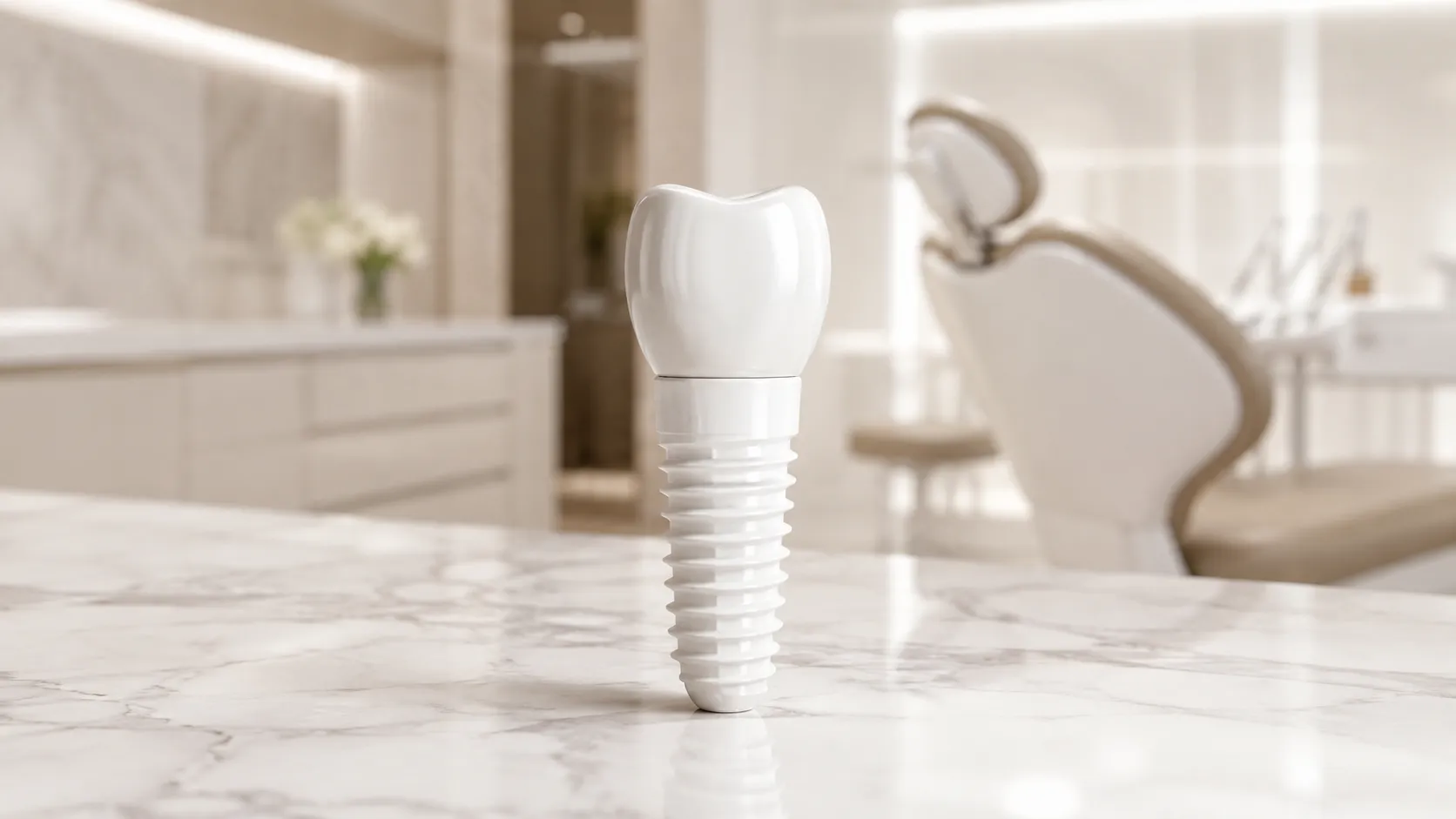
Zirconia dental implants are artificial tooth roots made from zirconium dioxide, a ceramic material. They support crowns, bridges, or dentures without using any metal.
How Are Zirconia Implants Made?
Manufacturers create zirconia implants from yttria-stabilized tetragonal zirconia polycrystals (Y-TZP). They shape medical-grade ceramic into implant forms through high-temperature sintering and precision milling.
Zirconia implants start as zirconium dioxide powder. Technicians add yttrium oxide to stabilize the crystal structure. This process creates Y-TZP, which stands for yttria-stabilized tetragonal zirconia polycrystals. Y-TZP gives zirconia its remarkable strength (Piconi and Maccauro, 1999).
The manufacturing process involves several steps. First, technicians press the powder into the desired implant shape. Then, they heat the material to extremely high temperatures in a process called sintering. This fuses the particles together. Finally, precision milling machines carve the exact dimensions. The result is a dense, strong ceramic implant that resists cracking under normal chewing forces.
Medical-grade ceramic materials must meet strict standards. Regulatory bodies require biocompatibility testing before approval. Manufacturers test every batch for purity, strength, and dimensional accuracy. This quality control ensures each implant performs reliably in the human body.
How Do Zirconia Implants Work?
Zirconia implants work by fusing directly with the jawbone through osseointegration. This process creates a stable foundation for artificial teeth.
Once a dentist places a zirconia implant into the jawbone, the healing process begins. Bone cells grow onto the implant surface. Over several months, the bone and implant bond together. Dentists call this process osseointegration. It works with zirconia just as it works with titanium (Sennerby and Meredith, 2008).
After osseointegration completes, the dentist attaches a crown or other restoration. The implant now functions like a natural tooth root. It transfers chewing forces to the surrounding bone. This stimulation helps maintain bone density and prevents the bone loss that often follows tooth extraction.
Zirconia implants come in one-piece or two-piece designs. One-piece designs combine the implant root and the abutment into a single unit. Two-piece designs separate these components, similar to titanium implants. One-piece designs dominate the current market because they offer simpler placement and fewer connection points where bacteria might accumulate.
What Makes Zirconia Different from Titanium Implants?
Zirconia differs from titanium in color, composition, and surface properties. Zirconia looks white like natural teeth. Titanium looks metallic gray. Zirconia contains no metal. Titanium is a metal alloy.
The most obvious difference is appearance. Zirconia implants are white or tooth-colored. Titanium implants are dark gray. This matters especially for patients with thin gums or gum recession. A titanium implant might show a gray line at the gum margin. A zirconia implant blends in naturally.
The materials also differ in how they interact with oral tissues. Zirconia shows lower bacterial adhesion than titanium. Studies demonstrate that plaque accumulates less on zirconia surfaces (Rimondini et al., 2002). This property may reduce the risk of peri-implantitis, an inflammatory condition that can lead to implant failure.
Both materials achieve osseointegration, but the bone response differs slightly. Research shows that zirconia promotes direct bone contact without fibrous tissue intervention. Titanium also achieves excellent bone integration, but the biological mechanisms involve different protein interactions at the surface level.
Are Zirconia Implants Safe According to Scientific Research?
Yes, scientific research supports the safety of zirconia implants. Multiple clinical studies confirm their biocompatibility, osseointegration capability, and favorable survival rates over five-year periods.
What Does Biocompatibility Mean?
Biocompatibility means a material performs its intended function without causing harmful reactions in the body. A biocompatible implant integrates with living tissue safely.
Biocompatibility is not just about avoiding allergic reactions. It encompasses how a material interacts with cells, tissues, and the immune system. A truly biocompatible implant supports normal cell function. It does not release toxic substances. It does not trigger chronic inflammation.
The International Standards Organization (ISO) sets biocompatibility testing protocols. These tests evaluate cytotoxicity, genotoxicity, and sensitization potential. Zirconia passes all these tests. It ranks among the most biocompatible materials in modern dentistry (Garvie and Nicholson, 1972).
How Does the Body Respond to Zirconia?
The body responds to zirconia with normal bone healing and soft tissue integration. Immune cells do not attack zirconia surfaces. Fibrous encapsulation rarely occurs.
When bone encounters a zirconia implant, osteoblasts (bone-forming cells) attach directly to the surface. These cells deposit bone matrix proteins. Then, mineralization follows. The result is direct bone-to-implant contact without an intervening soft tissue layer.
Soft tissue also responds well. Gingival fibroblasts attach to zirconia through hemidesmosomes, the same cellular structures that attach gums to natural teeth. This attachment creates a biological seal that protects the underlying bone from bacterial invasion (Degidi et al., 2006).
Macrophages, the immune cells that patrol tissues for foreign invaders, show minimal activation around zirconia. They do not mount a sustained inflammatory response. This tolerance explains why zirconia implants rarely fail due to immune rejection.
What Do Clinical Studies Reveal About Long-Term Safety?
Clinical studies reveal five-year survival rates between 92% and 98% for zirconia implants. Osseointegration succeeds in most cases. Marginal bone loss remains minimal. Soft tissue health stays stable.
Researchers have tracked zirconia implant outcomes since the early 2000s. A landmark systematic review by Cionca et al. (2017) analyzed data from multiple clinical trials. They found that one-piece zirconia implants achieved survival rates comparable to titanium in the anterior region and in patients with adequate bone volume.
Osseointegration rates for zirconia implants typically exceed 95% in controlled studies. This means the implant successfully bonds with bone in nearly all properly selected cases. The process follows a predictable timeline: initial stability at placement, progressive bone remodeling over 3-6 months, and functional loading thereafter.
Bone stability around zirconia implants shows favorable results. Marginal bone loss averages less than 1.5 mm during the first year. This falls within the acceptable range defined by the European Association for Osseointegration. Long-term bone levels remain stable when patients maintain good oral hygiene.
Soft tissue response also impresses researchers. Studies measuring peri-implant pocket depth and bleeding indices show healthy tissue parameters around zirconia implants. The white color of zirconia eliminates the aesthetic concern of grayish tissue discoloration sometimes seen with titanium.
Five-year clinical outcomes now show results comparable to titanium in selected indications. However, researchers acknowledge that titanium implants have a longer track record. Titanium data spans 40+ years. Zirconia data spans roughly 20 years. For this reason, clinicians still consider titanium the gold standard for long-term predictability, while recognizing zirconia as a safe, evidence-based alternative for appropriate cases.
Why Are Zirconia Implants Considered Biocompatible?
Zirconia implants earn their biocompatible status through inert chemical behavior, absence of metal ions, and positive cellular responses. They do not corrode, they do not trigger allergies, and they support healthy gum tissue.
Do Zirconia Implants Contain Metal?
Zirconia implants contain zirconium, which is a metal element in the periodic table. However, the final ceramic form (zirconium dioxide) behaves as a ceramic, not a metal. It does not conduct electricity or release metal ions.
This question confuses many patients. Zirconium is indeed a transition metal on the periodic table. But zirconia implants use zirconium dioxide (ZrO2), an oxide ceramic. The material properties completely change during oxidation. The resulting ceramic is electrically insulating, thermally stable, and chemically inert.
Think of the difference between iron and rust. Iron is a metal. Rust (iron oxide) is a ceramic. Similarly, zirconium metal differs from zirconium dioxide ceramic. The implant you receive is the ceramic form. It contains no metallic titanium, no nickel, no chromium, and no other metal alloys.
Can Zirconia Trigger Allergic Reactions?
Zirconia implants almost never trigger allergic reactions. True zirconia allergies are virtually unknown in the medical literature. Patients with metal allergies choose zirconia specifically for this reason.
Metal hypersensitivity affects a small percentage of the population. Nickel allergy is the most common, affecting about 10-15% of people. Titanium allergies are rare but documented. Some patients experience localized or systemic reactions to titanium implants.
Zirconia offers these patients a safe alternative. The ceramic surface does not release ions that the immune system might recognize as allergens. Case reports of zirconia allergy are virtually nonexistent. This makes zirconia the material of choice for patients with documented metal sensitivities (Siddiqi et al., 2011).
Do Zirconia Implants Corrode Inside the Mouth?
No, zirconia implants do not corrode inside the mouth. They resist chemical degradation in the acidic, saline environment of the oral cavity.
Corrosion is a major concern with metal implants. Saliva contains chloride ions, which can attack metal surfaces over time. Acids from food, drinks, and bacterial metabolism also challenge implant materials. Titanium forms a protective oxide layer that resists corrosion, but this layer can break down under certain conditions.
Zirconia faces none of these challenges. As a ceramic, it is already fully oxidized. No further chemical reaction occurs. The material maintains its integrity indefinitely in the oral environment. This corrosion resistance contributes to the long-term stability of zirconia implants.
How Do Zirconia Implants Affect Gum Health?
Zirconia implants support healthy gum tissue. The white color eliminates metallic show-through. The surface promotes good soft tissue attachment. Studies show stable gingival margins around zirconia implants.
Gum health depends partly on the material beneath the tissue. When gums are thin or translucent, a dark titanium implant can create a gray shadow. This affects smile aesthetics and may cause patient dissatisfaction. Zirconia eliminates this problem entirely.
Beyond aesthetics, the biological interaction matters. Research by Zembic et al. (2013) demonstrated that soft tissue adapts well to zirconia abutments. The connective tissue fibers organize similarly to natural tooth attachment. This biological seal helps prevent bacterial penetration along the implant surface.
Do Zirconia Implants Attract Less Plaque?
Yes, zirconia implants attract less plaque than titanium implants. Studies show reduced bacterial adhesion on zirconia surfaces. This may lower the risk of peri-implantitis.
Plaque is a bacterial biofilm that forms on all oral surfaces. However, different materials attract different amounts of bacteria. Research by Scarano et al. (2004) found significantly lower bacterial colonization on zirconia compared to titanium after identical exposure times.
The reason lies in surface chemistry. Zirconia carries a different surface charge and energy profile than titanium. Oral bacteria adhere less readily to this surface. Less plaque accumulation means less inflammation around the implant. Reduced inflammation translates to better long-term stability of both the implant and the surrounding bone.
What Are the Benefits of Zirconia Dental Implants?
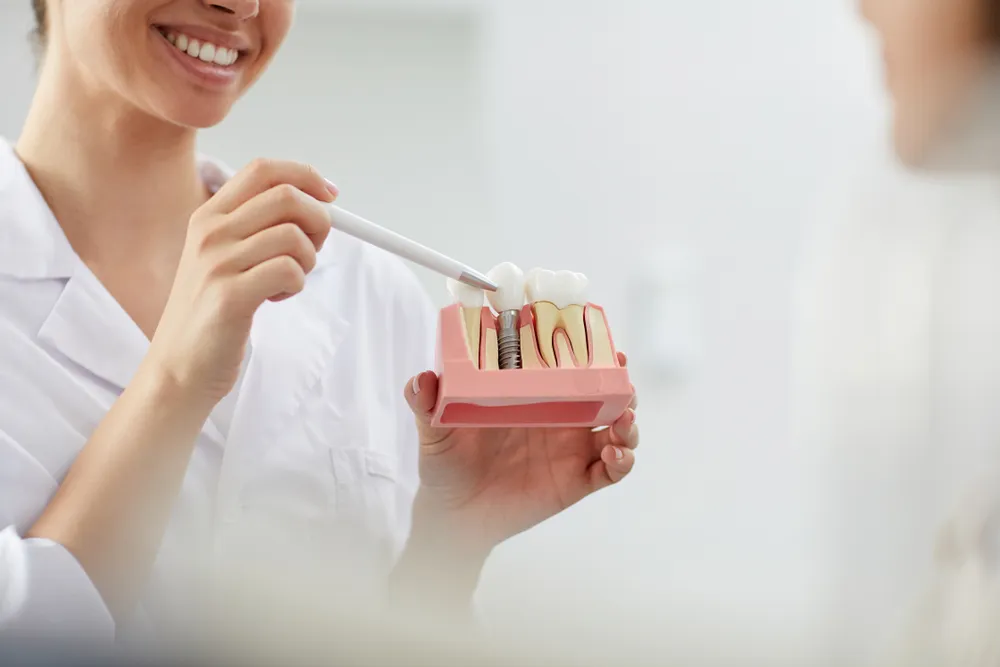
Zirconia dental implants offer natural aesthetics, metal-free composition, high strength, corrosion resistance, and reduced bacterial adhesion. They work especially well for front teeth and patients with metal sensitivities.
Do Zirconia Implants Offer Natural Tooth-Colored Appearance?
Yes, zirconia implants are white or ivory-colored. They mimic the appearance of natural tooth roots. This makes them virtually invisible beneath the gums.
The aesthetic advantage of zirconia is immediately obvious. When a patient smiles, the gum tissue may be thin or slightly transparent. With titanium, a gray shadow sometimes appears at the gumline. With zirconia, the implant blends seamlessly. Even if gum recession occurs later, the white implant remains discreet.
This benefit extends beyond the implant itself. Zirconia abutments and crowns also maintain a natural color. The entire restoration from root to crown can achieve a monolithic, tooth-like appearance. For patients who value aesthetics, this is a compelling advantage.
Are Zirconia Implants Excellent for Front Teeth?
Yes, zirconia implants excel for front teeth. The high aesthetic demands of the anterior region match perfectly with zirconia's tooth-colored properties.
Front teeth require the highest aesthetic standards. Patients show these teeth when they talk, laugh, and smile. Any metallic discoloration is unacceptable in this zone. Zirconia implants meet these demands without compromise.
The anterior maxilla also presents thin bone and soft tissue. These anatomical features make titanium show-through more likely. Zirconia eliminates this risk. Additionally, the emergence profile of zirconia implants can be shaped to mimic natural tooth emergence from the gum tissue. This creates restorations that look indistinguishable from natural teeth.
Do Zirconia Implants Offer High Strength and Durability?
Yes, modern zirconia implants offer high strength. Y-TZP zirconia reaches flexural strengths of 900-1200 MPa. This exceeds the demands of normal chewing function.
Early ceramic implants suffered from brittle fracture. Modern Y-TZP zirconia changed this. The tetragonal crystal structure undergoes a transformation when stressed. This transformation toughening mechanism actually makes the material stronger under load. Cracks that start to form trigger local crystal changes that resist further propagation.
Clinical studies confirm this strength translates to real-world durability. Implant fracture rates are low in properly selected cases. The material withstands normal masticatory forces without failure. However, zirconia still requires more careful handling during placement than titanium. The material does not tolerate extreme bending or torque during surgical insertion.
Do Zirconia Implants Resist Corrosion?
Yes, zirconia implants resist corrosion completely. They do not degrade in the acidic, wet environment of the mouth.
As discussed earlier, corrosion resistance is a fundamental property of ceramic materials. Zirconia does not rust, pit, or ionize. It maintains its structural and surface integrity for decades. This stability ensures that no degradation products enter the surrounding tissue. The implant remains dimensionally stable, which is critical for the precision fit of the final restoration.
Do Zirconia Implants Avoid Galvanic Reactions?
Yes, zirconia implants avoid galvanic reactions because they are electrically insulating. They do not create electrical currents when contacting other metals in the mouth.
Galvanic corrosion occurs when two different metals contact each other in an electrolyte solution. Saliva acts as an electrolyte. If a titanium implant contacts a gold crown or an amalgam filling, a small electrical current can flow. This may cause metallic taste, tissue irritation, or accelerated corrosion.
Zirconia is an electrical insulator. It cannot participate in galvanic couples. Patients with mixed restorations (some metal crowns, some zirconia implants) face no risk of galvanic reactions at the implant site. This electrical neutrality adds another layer of biological safety.
Do Zirconia Implants Show Reduced Bacterial Adhesion?
Yes, research confirms reduced bacterial adhesion on zirconia surfaces. This property may contribute to better peri-implant tissue health over time.
We discussed plaque resistance earlier, but this benefit deserves emphasis. Peri-implantitis is the leading cause of late implant failure. It is an inflammatory disease driven by bacterial biofilm. Any material that reduces biofilm formation offers a protective advantage.
Studies by Lim et al. (2012) compared bacterial colonization on various implant materials. Zirconia consistently showed lower biofilm mass and fewer pathogenic species. While good oral hygiene remains essential, the material itself provides a head start in the battle against peri-implant disease.
Do Zirconia Implants Provide a Metal-Free Restoration Option?
Yes, zirconia implants provide a completely metal-free restoration option. This appeals to patients seeking holistic or metal-free dentistry.
The demand for metal-free dentistry has grown. Some patients worry about systemic metal exposure. Others follow holistic health principles. Zirconia implants satisfy all these preferences. No other implant material offers a metal-free alternative.
A fully metal-free restoration includes a zirconia implant, a zirconia abutment, and a zirconia or lithium disilicate crown. This all-ceramic reconstruction eliminates every metal component. For patients committed to metal-free treatment, zirconia is the only viable implant option.
Are There Any Risks or Limitations of Zirconia Implants?
Yes, zirconia implants have limitations. They can fracture under extreme loads. They are not ideal for every patient. Surgical precision matters more than with titanium. Two-piece designs lack long-term evidence. Inadequate planning leads to complications.
Can Zirconia Implants Fracture?
Yes, zirconia implants can fracture. The risk is low but real. Fracture occurs more often with narrow implants, improper placement, heavy grinding, or inadequate bone support.
Zirconia is strong but brittle compared to titanium. Titanium bends before it breaks. Zirconia does not bend; it fractures suddenly when overloaded. This property demands careful case selection and precise surgical technique.
Most zirconia implant fractures occur in the posterior region under heavy occlusal load. They also occur when the implant is placed in soft bone without adequate primary stability. Narrow-diameter zirconia implants carry higher fracture risk than standard diameters.
The good news: fracture rates in well-selected cases are low. Studies report implant fracture in less than 2% of cases. Proper treatment planning, adequate implant diameter, and controlled occlusal forces minimize this risk.
Are Zirconia Implants Suitable for Every Patient?
No, zirconia implants are not suitable for every patient. Complex cases, severe bone loss, and heavy grinders may need titanium instead.
Case selection determines success. Zirconia implants work best in straightforward situations: single-tooth replacement, adequate bone volume, normal bite forces, and good oral hygiene. Complex cases challenge zirconia more than titanium.
Full-mouth rehabilitation with multiple implants requires flexibility in implant positioning and angulation. Titanium two-piece systems offer more options for angled abutments and custom connections. Zirconia one-piece designs limit these modifications.
Patients with severe bone atrophy may need bone grafting before zirconia placement. In some cases, narrow zirconia implants must be used, which increases fracture risk. Titanium implants come in more sizes and configurations, making them more adaptable to challenging anatomy.
Why Is Surgical Precision Important?
Surgical precision is critical because zirconia implants tolerate less deviation than titanium. The osteotomy must match the implant exactly. Excessive force during placement can crack the implant.
Titanium implants are forgiving. If the osteotomy is slightly undersized, the titanium implant compresses bone and adapts. Zirconia does not compress. An undersized osteotomy creates stress concentration points. The implant may fracture during insertion or develop microcracks that fail later.
Dentists must use sharp, dedicated drills and follow the manufacturer's protocol exactly. They must achieve primary stability without over-tightening. They must place the implant at the correct depth and angle on the first attempt because zirconia one-piece implants do not allow angle correction through abutment selection.
This precision requirement means not every dentist should place zirconia implants. Experience with the specific system matters. Patients should seek clinicians who have completed dedicated training in zirconia implant surgery.
Are Two-Piece Zirconia Implants Supported by Sufficient Evidence?
No, two-piece zirconia implants lack the extensive evidence that one-piece designs have. Most long-term studies focus on one-piece zirconia implants.
One-piece zirconia implants dominate the scientific literature. They have 15+ years of clinical data. Two-piece zirconia implants are newer. The connection between the implant and abutment presents engineering challenges in ceramic materials.
The screw connection in two-piece titanium implants relies on metal elasticity. Ceramics lack this elasticity. Early two-piece zirconia designs showed connection failures. Newer designs use Morse taper connections or cement retention, but long-term data remains limited.
Patients considering two-piece zirconia should understand that the evidence base is still growing. One-piece designs offer more predictable outcomes based on current research.
What Complications May Occur if Treatment Planning Is Inadequate?
Inadequate planning leads to implant fracture, poor positioning, nerve injury, sinus perforation, and aesthetic failure. These complications are avoidable with proper diagnostics and experienced surgeons.
Every implant requires careful planning. This starts with three-dimensional imaging (CBCT scans). The dentist assesses bone volume, bone density, nerve positions, and sinus locations. They plan the implant size, position, and angulation before surgery.
Skipping these steps invites disaster. An implant placed without CBCT guidance might hit the inferior alveolar nerve, causing permanent numbness. It might perforate the maxillary sinus. It might emerge in the wrong position, creating an uncorrectable aesthetic problem.
With zirconia, the stakes are higher because the implant is less forgiving. A misplaced titanium implant can sometimes be salvaged with a custom abutment. A misplaced one-piece zirconia implant offers no such correction. The dentist must remove it and start over.
Zirconia vs Titanium Implants: Which Material Is Safer?
Both materials are safe when used appropriately. Titanium has more long-term evidence. Zirconia offers better aesthetics and metal-free benefits. Safety depends on proper case selection and surgical execution, not just the material itself.
How Do Zirconia and Titanium Compare in Biocompatibility?
Both materials show excellent biocompatibility. Titanium has a longer track record. Zirconia offers advantages for metal-sensitive patients. Neither material triggers rejection in normal circumstances.
Titanium has served as the gold standard for decades. Millions of titanium implants function successfully worldwide. The body accepts titanium through osseointegration. Bone cells attach directly to the titanium oxide surface.
Zirconia matches this biocompatibility. Studies show equivalent bone-to-implant contact percentages. Both materials achieve successful integration in healthy patients. The difference emerges in patients with metal allergies. Here, zirconia is clearly safer.
How Do Zirconia and Titanium Compare in Strength?
Titanium offers superior toughness and resistance to bending. Zirconia offers higher compressive strength but lower fracture toughness. Titanium withstands overload better. Zirconia requires more careful force management.
Titanium alloys (grade 4 or grade 5) exhibit high tensile strength and remarkable toughness. They bend rather than break. This property makes titanium ideal for posterior teeth and heavy biters.
Zirconia has higher compressive strength but behaves more brittle. It resists crushing forces well but fractures under impact or excessive bending. For anterior teeth and normal occlusal loads, zirconia strength is adequate. For posterior teeth in heavy grinders, titanium offers a wider safety margin.
How Do Zirconia and Titanium Compare in Long-Term Clinical Evidence?
Titanium holds 40+ years of evidence. Zirconia holds roughly 20 years. Titanium data is more extensive for all indications. Zirconia data is strong for anterior single-tooth replacement.
The quantity of evidence favors titanium dramatically. Systematic reviews of titanium implants include thousands of patients with 10, 15, and 20-year follow-ups. Zirconia reviews include fewer patients and shorter follow-up periods.
However, the quality of zirconia evidence is good within its scope. Five-year survival rates match titanium in anterior sites with adequate bone. The gap in evidence is mainly for complex cases, posterior sites, and long-term (10+ year) outcomes.
How Do Zirconia and Titanium Compare in Aesthetics?
Zirconia wins on aesthetics. Its white color blends with natural teeth and gums. Titanium may show a gray line at the gum margin, especially in patients with thin tissue.
Aesthetics is the primary reason patients choose zirconia. No amount of titanium excellence can change its metallic color. For front teeth, thin gingival biotypes, and high-smile lines, zirconia is the clear aesthetic choice.
Titanium can be masked with zirconia abutments and crowns, but the implant body remains gray. If tissue recession exposes the implant collar, the metallic color becomes visible. Zirconia eliminates this risk entirely.
How Do Zirconia and Titanium Compare in Soft Tissue Response?
Both materials support healthy soft tissue. Zirconia may show slightly less inflammation and better tissue color match. Titanium shows excellent long-term gingival stability.
Research comparing soft tissue around both materials shows generally healthy outcomes for either choice. Some studies favor zirconia for peri-implant mucosal health. Others find no significant difference. The consensus is that both materials allow healthy soft tissue integration when plaque is controlled.
The aesthetic aspect of soft tissue response favors zirconia. Even healthy gum tissue can appear slightly gray over titanium. Over zirconia, the tissue maintains a natural pink color.
How Do Zirconia and Titanium Compare in Corrosion Resistance?
Zirconia offers absolute corrosion resistance. Titanium offers excellent but not absolute resistance. In rare cases, titanium corrosion occurs. Zirconia corrosion is theoretically impossible.
Titanium relies on a passive oxide layer for corrosion protection. This layer is highly stable but can be compromised by fluoride, extreme pH, or mechanical damage. While titanium corrosion in the mouth is rare, case reports exist.
Zirconia cannot corrode because it is already fully oxidized. No chemical process in the oral environment can degrade zirconium dioxide further. This gives zirconia a theoretical advantage in long-term chemical stability.
How Do Zirconia and Titanium Compare in Plaque Accumulation?
Zirconia accumulates less plaque than titanium. This difference is statistically significant in research studies. In practice, oral hygiene habits matter more than material choice.
Multiple in vitro studies confirm lower bacterial adhesion on zirconia. However, the clinical significance of this difference is debated. A patient with excellent oral hygiene will maintain healthy implants regardless of material. A patient with poor hygiene will develop peri-implantitis with either material.
The plaque resistance of zirconia offers a modest advantage. It may benefit patients who struggle with perfect plaque control. It should not replace good oral hygiene habits.
Which Implant Material Lasts Longer?
Titanium implants have proven longevity beyond 30 years. Zirconia implants show excellent five-year outcomes but lack equivalent long-term data. For patients seeking the longest possible track record, titanium remains the safer bet.
Longevity depends on many factors: material, placement quality, patient habits, and biological response. Titanium has demonstrated 30+ year survival in documented cases. Zirconia has not yet reached this milestone in clinical practice.
This does not mean zirconia will fail sooner. It simply means we have less data. The five-year data looks promising. Ten and twenty-year data will clarify whether zirconia matches titanium's legendary durability.
Summary Comparison Table
Feature | Zirconia Implants | Titanium Implants |
Color | White/tooth-colored | Metallic gray |
Biocompatibility | Excellent; ideal for metal allergies | Excellent; gold standard |
Corrosion Resistance | Absolute | Excellent |
Clinical History | ~20 years | 40+ years |
Plaque Accumulation | Lower | Higher |
Ideal Indications | Anterior teeth, thin gums, metal-free preference | All indications, especially complex cases |
Fracture Risk | Low but present | Very low |
Aesthetics | Superior | Good with masking |
Evidence Volume | Growing | Extensive |
Cost | Higher | Standard |
Who Is an Ideal Candidate for Zirconia Implants?
Ideal candidates include patients wanting metal-free dentistry, those with thin gums, patients with high aesthetic demands, people with metal sensitivities, and those replacing front teeth.
Do Patients Seeking Metal-Free Dentistry Benefit from Zirconia?
Yes, patients seeking metal-free dentistry find zirconia implants the only viable permanent tooth replacement option. Zirconia provides a completely ceramic solution from root to crown.
The metal-free dentistry movement grows each year. Some patients worry about potential systemic effects of metal ions. Others follow holistic health principles. Zirconia implants align perfectly with these preferences. No other implant material offers a metal-free alternative.
Do Patients with Thin Gum Tissue Benefit from Zirconia?
Yes, patients with thin gum tissue benefit significantly. Zirconia eliminates the risk of metallic gray show-through that can occur with titanium implants.
Gingival biotype varies among patients. Some have thick, fibrous gums. Others have thin, delicate tissue. Thin tissue is more translucent. A titanium implant beneath thin gums often creates a gray shadow. This aesthetic compromise is permanent and uncorrectable without tissue grafting.
Zirconia implants solve this problem. The white color reflects light similarly to a natural tooth root. Even thin gums maintain a natural pink appearance over zirconia.
Do Patients with High Aesthetic Expectations Benefit from Zirconia?
Yes, patients with high aesthetic expectations benefit from zirconia. Actors, models, public speakers, and anyone who shows their teeth frequently prefer the natural appearance of ceramic implants.
Aesthetics is subjective but important. For some patients, a hint of gray at the gumline is unacceptable. They want their dental work to be completely invisible. Zirconia delivers this level of aesthetic perfection. The emergence profile, the color match, and the tissue response all contribute to an ideal result.
Do Patients Concerned About Metal Sensitivity Benefit from Zirconia?
Yes, patients with metal sensitivity or allergy benefit from zirconia. Zirconia contains no metal ions that could trigger an allergic response.
Metal hypersensitivity is a real clinical condition. Patch testing can identify specific metal allergies. Patients allergic to nickel, cobalt, or even titanium should avoid metal implants. Zirconia provides a safe, effective alternative for these individuals.
Do Patients Replacing Anterior Teeth Benefit from Zirconia?
Yes, patients replacing anterior teeth benefit most from zirconia. The aesthetic demands of the smile zone match zirconia's strengths perfectly.
Front teeth are the most visible teeth in the mouth. Any compromise in color or tissue appearance is immediately noticeable. Zirconia implants in the anterior maxilla achieve results that rival natural teeth. The white implant body, the natural emergence profile, and the stable soft tissue margins create restorations that patients love.
Who May Not Be a Suitable Candidate?
Some patients should avoid zirconia implants. Complex rehabilitations, severe bone loss, heavy bruxism, cases needing extreme angulation, and situations requiring titanium's flexibility may contraindicate zirconia.
Should Patients with Complex Full-Mouth Rehabilitations Avoid Zirconia?
Yes, complex full-mouth rehabilitations often require titanium's versatility. Multiple implants, angled placements, and custom connections are easier with titanium systems.
Full-mouth reconstruction involves replacing all teeth with implant-supported prostheses. These cases require precise implant positioning, often at different angles. Titanium two-piece systems allow angled abutments, multi-unit connections, and screw-retained restorations that simplify complex rehabilitation.
Zirconia one-piece implants offer less flexibility. The implant and abutment are fixed. If the bone anatomy requires an angled emergence, the dentist cannot correct it with an angled abutment. This limitation makes zirconia less suitable for complex cases.
Should Patients with Severe Bone Loss Avoid Zirconia?
Yes, severe bone loss often contraindicates zirconia. These cases may need bone grafting first. Even then, the limited implant sizes and designs may not suit atrophic ridges.
Severe bone atrophy narrows the available bone width. Dentists must use narrow-diameter implants or perform bone augmentation. Narrow zirconia implants have higher fracture risk. Bone grafting adds cost, time, and surgical complexity.
Titanium implants come in diameters as small as 3.0 mm and lengths up to 18 mm. They also offer tapered designs and self-tapping features that improve stability in compromised bone. Zirconia options are more limited.
Should Patients with Heavy Bruxism Avoid Zirconia?
Yes, heavy bruxism (teeth grinding) increases fracture risk for zirconia implants. Titanium better withstands the extreme, repetitive forces of bruxism.
Bruxism generates forces far exceeding normal chewing. Nighttime grinding can produce hundreds of pounds of pressure. While zirconia is strong, the brittle nature of ceramic makes it less tolerant of these overloads. Titanium's toughness and flexibility absorb these forces better.
Patients with bruxism who want zirconia must commit to wearing a night guard. Even then, the dentist may recommend titanium for posterior teeth where grinding forces concentrate.
Should Patients Requiring Extensive Implant Angulation Avoid Zirconia?
Yes, cases requiring extensive implant angulation are better suited to titanium. Zirconia one-piece implants do not allow angle correction through abutment selection.
Sometimes bone anatomy forces the dentist to place an implant at an angle. With titanium, the dentist selects an angled abutment to correct the emergence path. The crown then sits straight despite the angled implant.
With one-piece zirconia, the abutment is fixed. If the implant is angled, the abutment is angled. The final restoration must accommodate this angle, which may compromise aesthetics or function. Two-piece zirconia systems offer some correction, but the evidence base for these is limited.
Do Cases Exist Where Titanium Offers Greater Flexibility?
Yes, titanium offers greater flexibility in almost every aspect: implant sizes, connection types, restorative options, and surgical protocols. This flexibility makes titanium the safer choice for complex or non-standard cases.
Titanium implant systems have evolved over 40 years. Manufacturers offer hundreds of variations: different diameters, lengths, thread designs, surface treatments, and connection types. This variety allows dentists to match the implant to almost any clinical situation.
Zirconia systems are fewer and less varied. The material properties limit certain design features. For straightforward cases, this limitation is irrelevant. For complex cases, it may be decisive.
What Is the Success Rate of Zirconia Dental Implants?
Zirconia dental implants show success rates between 92% and 98% over five years. Short-term success exceeds 95% in well-selected cases. Clinician experience significantly influences outcomes.
What Are the Short-Term Success Rates?
Short-term success rates (1-3 years) for zirconia implants typically exceed 95%. Osseointegration succeeds in the vast majority of properly selected and placed cases.
Short-term success means the implant integrates with bone and supports a functional restoration without complications. Studies tracking zirconia implants for 1-3 years report high success. Failures in this period usually result from surgical errors, poor bone quality, or uncontrolled risk factors like smoking.
What Are the Five-Year Survival Rates?
Five-year survival rates for zirconia implants range from 92% to 98%. This approaches titanium's documented rates in comparable patient populations.
The five-year mark is a standard benchmark in implant dentistry. By this point, early healing failures have already occurred or been resolved. Late failures from peri-implantitis or mechanical problems begin to appear.
Cionca et al. (2017) reviewed multiple studies and found five-year survival rates between 92% and 98% for one-piece zirconia implants. Titanium implants in similar conditions show rates of 95% to 99%. The difference is small but real. As zirconia systems improve and dentists gain experience, this gap may narrow further.
What Factors Influence Implant Longevity?
Bone quality, oral hygiene, smoking habits, bite forces, and systemic health all influence how long zirconia implants last. Patient factors often matter more than material choice.
Implant longevity is not just about the material. It is about the patient, the surgeon, and the maintenance. Good bone quality provides better initial stability. Excellent oral hygiene prevents peri-implantitis. Not smoking improves healing and long-term tissue health. Controlled bite forces prevent mechanical overload. Good systemic health (no uncontrolled diabetes, no immunosuppression) supports normal healing.
Why Does Clinician Experience Matter?
Clinician experience matters because zirconia implants demand precise surgical technique. Experienced dentists achieve better outcomes through proper case selection, accurate osteotomy preparation, and correct force management.
Zirconia is less forgiving than titanium. A dentist who places 100 titanium implants per year but only 5 zirconia implants may lack the specific skills for optimal zirconia outcomes. The drilling protocol, the insertion torque, and the depth control all require dedicated attention.
Patients should ask their dentist about their zirconia experience. How many have they placed? What is their success rate? Have they handled complications? An experienced zirconia implantologist offers the best chance of long-term success.
How Long Do Zirconia Implants Last?
Zirconia implants can last 10-15 years or longer with proper care. However, long-term data beyond 10 years is still accumulating. Maintenance and patient habits determine actual lifespan.
What Is the Expected Lifespan?
The expected lifespan of zirconia implants is 10-15 years based on current evidence. Some may last 20+ years, but we need more data to confirm this confidently.
Implant dentistry aims for lifetime solutions. Titanium has proven this is possible. Zirconia is on that path but has not yet reached the same milestone. The ceramic material itself is durable. The question is whether the implant design, the bone integration, and the soft tissue seal remain stable for decades.
Current five-year data is strong. Ten-year data is emerging. Fifteen and twenty-year data will determine whether zirconia truly matches titanium's legendary longevity.
What Factors Affect Durability?
Material quality, surgical precision, occlusal forces, oral hygiene, and regular maintenance all affect zirconia implant durability.
Not all zirconia is equal. High-quality Y-TZP from reputable manufacturers performs better than lower-grade ceramics. The manufacturing process, the sintering temperature, and the quality control all influence the final product.
Surgical precision prevents microcracks that could propagate over time. Controlled occlusal forces prevent overload. Good oral hygiene prevents inflammatory bone loss. Regular dental visits catch problems early.
What Maintenance Do Zirconia Implants Require?
Zirconia implants require the same maintenance as natural teeth: daily brushing, flossing or interdental cleaning, and regular professional cleanings. Patients should also wear night guards if they grind their teeth.
Maintenance is straightforward but essential. Patients should brush twice daily with a soft brush. They should clean between implants using floss, interdental brushes, or water flossers. They should visit their dentist every six months (or as recommended) for examination and professional cleaning.
The dentist will check implant stability, measure peri-implant pocket depths, and assess bone levels through periodic X-rays. Early detection of problems allows early intervention, which preserves the implant.
How Can You Improve the Success of Zirconia Implants?
You can improve zirconia implant success through excellent oral hygiene, regular dental visits, professional cleanings, smoking cessation, and bite force management.
Does Proper Oral Hygiene Improve Success?
Yes, proper oral hygiene is the single most important factor you control. Daily plaque removal prevents peri-implantitis, the leading cause of late implant failure.
Plaque causes gingivitis around natural teeth. It causes peri-implantitis around implants. This inflammatory disease destroys the bone supporting the implant. Once bone loss progresses, the implant loosens and fails.
Brushing, flossing, and using antiseptic mouthwashes keep plaque under control. Patients with implants should be even more diligent than those with only natural teeth. The stakes are high, and the solution is simple: clean your teeth thoroughly every day.
Do Regular Dental Checkups Improve Success?
Yes, regular dental checkups allow early detection of problems. Your dentist can spot peri-implant inflammation, bone loss, or mechanical issues before they become serious.
Professional monitoring complements home care. Dentists use probes to measure pocket depths. They take X-rays to assess bone levels. They check the occlusion to ensure forces are distributed properly. They examine the restoration for wear or looseness.
These checks should happen every six months for most patients. Those with a history of gum disease may need more frequent visits. Early intervention saves implants.
Do Professional Cleanings Improve Success?
Yes, professional cleanings remove calculus and plaque that home care misses. Dental hygienists use specialized instruments that clean implant surfaces without scratching them.
Implant surfaces are smooth but can still accumulate hard deposits (calculus). Regular scaling by a hygienist keeps these surfaces clean. Hygienists use plastic or titanium scalers around implants to avoid scratching the surface. Scratches would increase plaque accumulation.
Does Avoiding Smoking Improve Success?
Yes, avoiding smoking dramatically improves implant success. Smokers experience higher failure rates with both zirconia and titanium implants. Quitting before surgery is one of the best things you can do.
Smoking reduces blood flow to the gums and bone. It impairs healing after surgery. It increases the risk of infection. It promotes peri-implantitis. Studies consistently show that smokers have 2-3 times higher implant failure rates than non-smokers.
Patients who smoke should quit before implant surgery. Those who cannot quit should understand that their risk is elevated and commit to extra vigilant maintenance.
Does Managing Bite Forces Improve Success?
Yes, managing bite forces protects zirconia implants from overload. Night guards for bruxers, balanced occlusion, and avoiding hard foods all help.
Every implant has a load limit. Normal chewing stays well within this limit. Abnormal forces, grinding, clenching, chewing ice, biting nails, push the implant toward its failure point.
A night guard absorbs grinding forces while you sleep. Your dentist can adjust your bite to ensure even force distribution. Avoiding extremely hard foods (hard candy, ice, unpopped popcorn kernels) prevents impact damage.
Common Myths About Zirconia Implants
Many myths surround zirconia implants. They are not experimental. They are not fragile. They do not always outperform titanium. Not every patient should choose them. Metal-free does not automatically mean better.
Is It True That Zirconia Implants Are Experimental?
No, this is false. Zirconia implants are not experimental. They have 20 years of clinical use and peer-reviewed research supporting their safety and efficacy.
The "experimental" label might have applied in the 1990s. Today, zirconia implants have FDA clearance (in the United States), CE marking (in Europe), and extensive clinical documentation. They are a standard treatment option, not an experimental procedure.
Is It True That Ceramic Implants Are Fragile?
No, this is false for modern zirconia. Early ceramics were fragile. Y-TZP zirconia is strong and fracture-resistant under normal conditions. It is not fragile like porcelain dishes.
The confusion comes from older ceramic materials. Dental porcelain is brittle. Early alumina implants were brittle. Modern Y-TZP zirconia is a different material entirely. Its transformation toughening mechanism makes it remarkably strong. It withstands normal chewing forces without problem.
Is It True That Zirconia Implants Always Outperform Titanium?
No, this is false. Zirconia does not always outperform titanium. Each material has strengths and weaknesses. Titanium excels in complex cases and long-term predictability. Zirconia excels in aesthetics and biocompatibility for sensitive patients.
Marketing sometimes presents zirconia as universally superior. This is misleading. The best material depends on the patient, the clinical situation, and the treatment goals. A skilled dentist selects the material based on evidence, not hype.
Is It True That Every Patient Should Choose Zirconia?
No, this is false. Not every patient should choose zirconia. Complex cases, posterior teeth in heavy grinders, and situations requiring restorative flexibility may favor titanium.
Patient selection is critical. Zirconia is ideal for some patients and suboptimal for others. A dentist who recommends zirconia for every patient is not practicing evidence-based dentistry. Individualized treatment planning is essential.
Is It True That Metal-Free Automatically Means Better?
No, this is false. Metal-free does not automatically mean better. Titanium is one of the most successful biomaterials in medical history. Millions of patients live healthy lives with titanium implants. "Metal-free" is a preference, not a universal upgrade.
The metal-free movement has value for patients with allergies or strong preferences. But it is not a scientific imperative. Titanium's safety record is extraordinary. Patients should choose based on their specific needs, not on the assumption that metal-free is inherently superior.
Frequently Asked Questions About Zirconia Implant Safety
This section answers the most common questions patients ask about zirconia implant safety, approval status, durability, and candidacy.
Are Zirconia Implants FDA-Approved?
Yes, specific zirconia implant systems have received FDA clearance in the United States. Not all brands have FDA approval, so patients should verify the specific product their dentist uses.
The FDA evaluates medical devices for safety and effectiveness. Several zirconia implant manufacturers have completed the FDA clearance process. Patients can ask their dentist for the FDA 510(k) clearance number or check the FDA database directly. European brands may carry CE marking instead.
Can Zirconia Implants Break?
Yes, zirconia implants can break, but this is rare. Fracture risk is highest with narrow implants, improper placement, heavy grinding, or inadequate bone support.
Implant fracture is a serious complication. It usually requires removal of the remaining implant piece and replacement with a new implant. The risk is low in well-selected cases but not zero. Following your dentist's recommendations minimizes this risk.
Can the Body Reject Zirconia Implants?
True rejection of zirconia implants is virtually unknown. The body does not mount an immune response against zirconia. Failures usually result from infection, overload, or poor integration, not immunological rejection.
"Rejection" is a term patients use, but it is not medically accurate for zirconia. The immune system does not recognize zirconia as foreign in the way it might reject an organ transplant. Implant failure is a biological or mechanical event, not an allergic rejection.
Are Zirconia Implants Better for Allergies?
Yes, zirconia implants are better for patients with metal allergies. They contain no metal ions that could trigger allergic reactions. Patients with titanium or nickel allergies should strongly consider zirconia.
Metal hypersensitivity is a valid reason to choose zirconia. Patch testing can confirm specific allergies. For patients with confirmed metal sensitivity, zirconia offers a safe, effective path to tooth replacement.
Do Zirconia Implants Last as Long as Titanium?
We do not yet know if zirconia implants last as long as titanium. Titanium has 40+ year data. Zirconia has strong five-year data but lacks equivalent long-term evidence. Early indicators are promising.
This is an honest answer based on current evidence. Zirconia may eventually prove equally durable. For now, patients prioritizing the longest possible track record may prefer titanium. Patients prioritizing aesthetics and metal-free benefits may accept the shorter evidence base.
Are Zirconia Implants Safe for Front Teeth?
Yes, zirconia implants are very safe for front teeth. The anterior region is actually where zirconia performs best. Aesthetics and biocompatibility both favor zirconia in the smile zone.
Front teeth experience lower chewing forces than back teeth. The aesthetic demands are highest. The bone is often adequate for standard implant diameters. All these factors make the anterior region ideal for zirconia implants.
Can Smokers Receive Zirconia Implants?
Smokers can receive zirconia implants, but their success rates are lower. Dentists strongly recommend quitting smoking before implant surgery. Smokers who proceed must commit to exceptional maintenance.
Smoking is a risk factor for all implants, not just zirconia. It impairs blood flow, delays healing, and increases infection risk. Smokers considering implants should view this as an opportunity to quit. The health benefits extend far beyond dental implants.
How Much Do Zirconia Implants Cost?
Zirconia implants typically cost 20-50% more than titanium implants. The exact price varies by region, dentist, and case complexity. Patients should consider the total treatment cost, not just the implant itself.
The higher cost reflects material processing, manufacturing precision, and the specialized training required for placement. Some patients find the aesthetic and health benefits justify the premium. Others may choose titanium for cost reasons. A detailed cost estimate from your dentist will clarify the financial aspect.
Conclusion: Are Zirconia Implants Safe?
Yes, zirconia implants are safe for properly selected patients. Scientific evidence supports their biocompatibility, osseointegration, and clinical performance. However, they are not the best choice for every patient. Individualized treatment planning and an experienced dentist are essential.
After reviewing the evidence, we can answer the central question with confidence. Zirconia implants are safe. They integrate with bone. They support functional restorations. They maintain healthy surrounding tissue. They achieve survival rates that approach titanium in appropriate cases.
However, safety does not mean universal suitability. Zirconia implants work best in straightforward cases: single-tooth replacement, adequate bone, normal forces, and anterior or premolar sites. Complex cases, heavy grinders, and situations requiring restorative flexibility may still favor titanium.
The benefits of zirconia are real. The natural white color eliminates aesthetic concerns. The metal-free composition serves patients with allergies. The reduced plaque adhesion may improve long-term tissue health. The corrosion resistance ensures chemical stability.
The limitations are also real. The evidence base, while growing, is shorter than titanium's. The material requires more precise surgical technique. The fracture risk, though low, exceeds titanium's. The design options are fewer.
The key to success is individualized treatment planning. No material is perfect for every patient. An experienced implant dentist evaluates your bone, your bite, your aesthetic needs, your health history, and your personal preferences. Then, they recommend the material that gives you the best chance of long-term success.
Do not choose zirconia based on marketing claims. Do not reject it based on outdated fears. Make your decision based on a thorough consultation with a qualified dentist who has experience with both materials. Ask about their success rates. Ask about their complication management. Ask why they recommend one material over the other for your specific case.
Zirconia implants represent a genuine advance in dental implantology. They give patients a safe, aesthetic, metal-free option that did not exist decades ago. For the right patient, placed by the right dentist, maintained with proper care, zirconia implants can provide years of healthy, beautiful function.
References
Cionca, Norbert, et al. "Zirconia Dental Implants: A Clinical, Radiographic, and Microbiologic Evaluation up to 5.5 Years." International Journal of Oral and Maxillofacial Implants, vol. 32, no. 1, 2017, pp. 121-30.
Degidi, Marco, et al. "Bacterial Adhesion on Surgically Touched Titanium and Zirconia Abutments: An In Vivo Human Study." Journal of Periodontology, vol. 77, no. 7, 2006, pp. 1159-64.
Garvie, R. C., and P. S. Nicholson. "Phase Analysis in Zirconia Systems." Journal of the American Ceramic Society, vol. 55, no. 3, 1972, pp. 152-57.
Lim, Hyun-Pil, et al. "Marginal Bone Loss and Soft Tissue Status of Titanium and Zirconia Abutments: A Randomized Clinical Trial." Journal of Periodontal and Implant Science, vol. 42, no. 5, 2012, pp. 204-10.
Piconi, C., and G. Maccauro. "Zirconia as a Ceramic Biomaterial." Biomaterials, vol. 20, no. 1, 1999, pp. 1-25.
Rimondini, Lia, et al. "Bacterial Colonization of Zirconia Ceramic Surfaces: An In Vitro and In Vivo Study." International Journal of Oral and Maxillofacial Implants, vol. 17, no. 6, 2002, pp. 793-98.
Scarano, Antonio, et al. "Bacterial Adhesion on Titanium and Zirconia Ceramic Surfaces." Journal of Periodontology, vol. 75, no. 4, 2004, pp. 556-60.
Sennerby, Lars, and Neil Meredith. "Implant Stability Measurements Using Resonance Frequency Analysis: Biological and Biomechanical Aspects and Clinical Implications." Periodontology 2000, vol. 47, no. 1, 2008, pp. 51-66.
Siddiqi, Alla, et al. "Titanium Allergy: Awareness and Research in Dental Implantology." Journal of Oral Implantology, vol. 37, no. 6, 2011, pp. 735-41.
Zembic, Anja, et al. "Five-Year Results of a Randomized Controlled Clinical Trial Comparing Zirconia and Titanium Abutments Supporting Single-Tooth Implants in the Maxillary Anterior Region." Clinical Implant Dentistry and Related Research, vol. 15, no. 4, 2013, pp. 572-80.