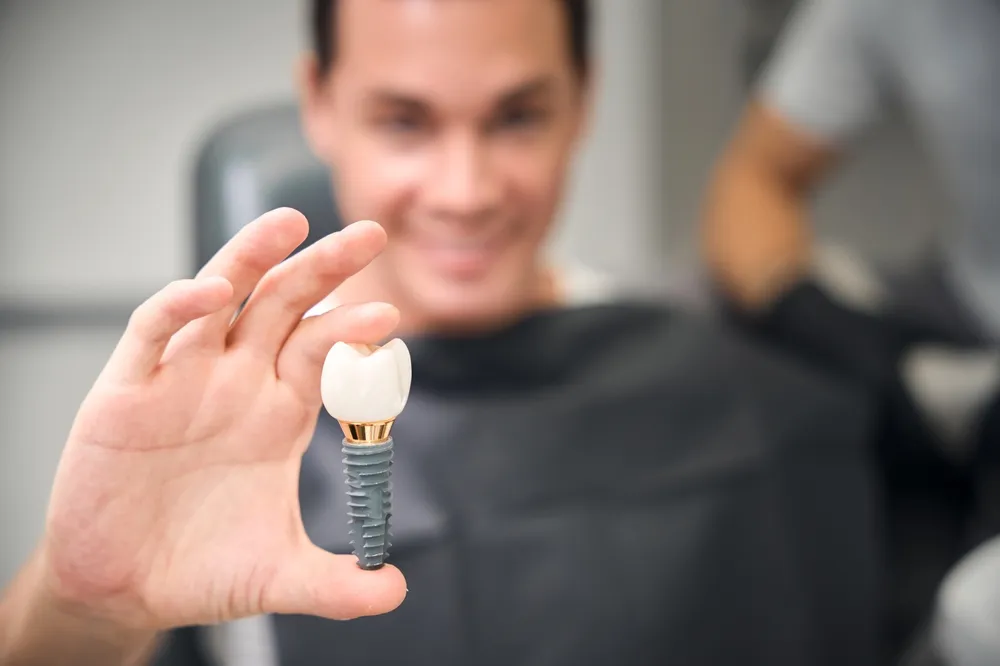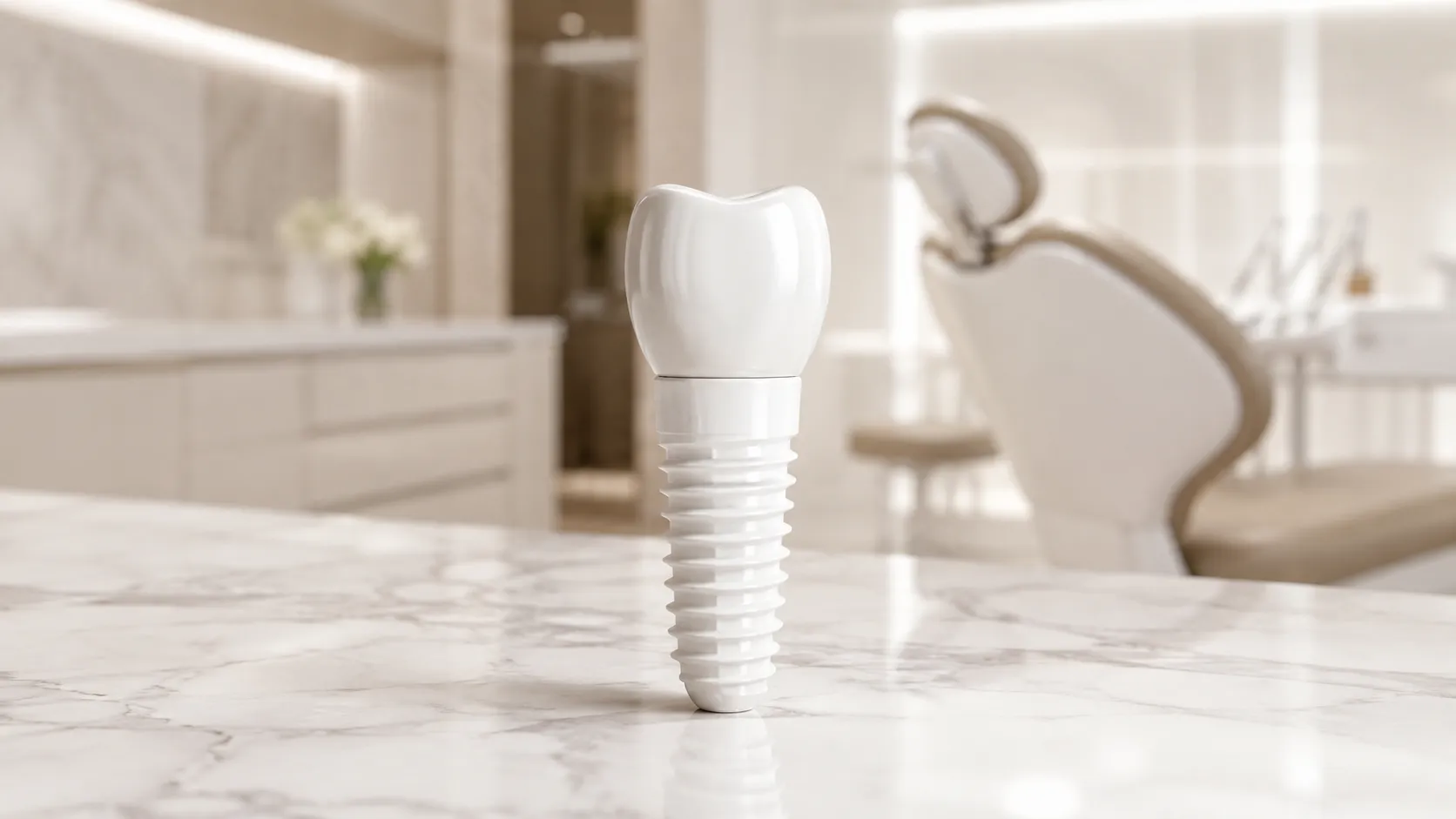
More patients now ask for metal-free dental implants. They want solutions that look natural, feel safe, and match their holistic health goals. Zirconia has emerged as the leading material in this field. This article explains what metal-free implants are, why zirconia leads the market, how it compares to titanium, and what the future holds for ceramic implantology.
What Are Metal-Free Dental Implants?
Metal-free dental implants are tooth root replacements made entirely from non-metallic materials. They restore missing teeth without using titanium, stainless steel, or any metal alloy.
Patients seek metal-free alternatives for several reasons. Some worry about metal allergies. Others prefer holistic approaches. Many want white implants that match natural teeth. A growing number simply distrust long-term metal exposure in the body.
Common materials in metal-free implantology include zirconia, other ceramic-based biomaterials, and emerging polymer-based materials. Among these, zirconia dominates clinical practice. It offers the best balance of strength, biocompatibility, and aesthetics. Dentists worldwide now consider zirconia the clinical standard for ceramic implants.
What Is Zirconia and Why Is It Used in Dental Implants?
Zirconia is zirconium dioxide, a ceramic compound. Manufacturers stabilize it with yttrium oxide to create Y-TZP, or yttria-stabilized tetragonal zirconia polycrystal. This form delivers exceptional mechanical properties.
Zirconia shows high fracture resistance. It withstands chewing forces without breaking. Its flexural strength reaches approximately 900 to 1200 megapascals. This makes it stronger than many other ceramics used in medicine. It also resists wear. The material does not degrade under constant pressure from opposing teeth.
Biologically, zirconia excels. It demonstrates excellent biocompatibility. Human bone and soft tissue accept it readily. Studies confirm strong tissue compatibility. The material supports osseointegration, the process where bone fuses directly to the implant surface (Albrektsson and Wennerberg 2019).
Optically, zirconia offers clear advantages. It has a tooth-colored appearance. It does not create a gray shine-through effect on thin gums. This makes it ideal for patients with thin gingival biotypes, especially in the front of the mouth.
Why Is Zirconia Considered the Future of Dental Implants?
The demand for metal-free dentistry grows every year. Patients read more about holistic health. They question what goes into their bodies. This drives interest in ceramic solutions.
Advances in ceramic biomaterials continue to improve zirconia performance. New formulations increase toughness and reduce the risk of low-temperature degradation. Manufacturing technologies have evolved too. Modern CAD/CAM systems produce zirconia implants with micron-level precision.
Surface engineering has advanced significantly. Researchers now apply sandblasting, acid etching, and laser treatments to zirconia surfaces. These modifications speed up osseointegration. Hydrophilic surfaces attract blood proteins and bone cells faster than older smooth designs (Roehling et al. 2018).
Clinical evidence supporting zirconia implants increases steadily. Long-term studies now track patients for over ten years. Survival rates approach those of titanium in many indications. This growing body of research convinces more clinicians to adopt zirconia.
How Do Zirconia Implants Compare with Titanium Implants?
Zirconia and titanium serve the same purpose but differ in key ways. The table below summarizes these differences.
Feature | Zirconia Implants | Titanium Implants |
Material composition | Zirconium dioxide (Y-TZP) | Titanium or titanium alloy |
Color | White, tooth-colored | Metallic gray |
Biocompatibility | Excellent | Excellent |
Corrosion resistance | Very high | High, but potential ion release exists |
Plaque accumulation | Lower | Higher |
Soft tissue response | Favorable, less inflammation | Generally good |
Osseointegration | Strong, improving with surface tech | Well-documented, gold standard |
Long-term evidence | Growing, 10+ year data available | Extensive, 40+ years of research |
Esthetics | Superior, no gray line | May show gray shadow in thin gums |
Metal-free status | Yes | No |
Different patients need different materials. Patients with thin gums or high aesthetic demands often prefer zirconia. Patients needing complex full-mouth restorations may still benefit from titanium's flexibility. The best choice depends on individual anatomy, health status, and personal preferences.
What Are the Main Advantages of Zirconia Dental Implants?
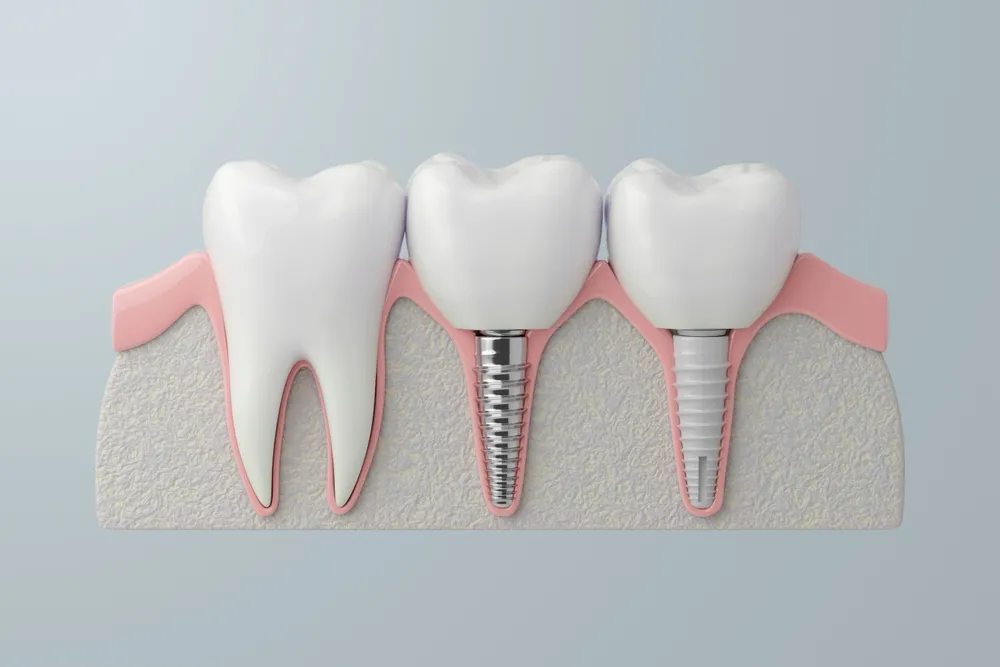
Zirconia implants offer excellent esthetics. Their natural white color blends with surrounding teeth. No metallic gray line appears at the gum margin.
The material shows reduced plaque accumulation. Smoother surfaces resist bacterial adhesion better than titanium. This supports healthier soft tissue response.
Zirconia resists corrosion. It does not release ions into surrounding tissue. No galvanic reactions occur in the mouth. This matters for patients with multiple restorations.
Patients with metal sensitivity find relief with zirconia. It provides a completely metal-free solution. This appeals to individuals pursuing holistic dentistry or biological dentistry.
Long-term biological performance remains favorable. Studies report high patient satisfaction. Gums stay healthier around zirconia in many cases. The material supports stable peri-implant health over time (Cionca et al. 2017).
Are Zirconia Implants Safe?
Zirconia implants are safe. Multiple implant systems have received FDA clearance and CE marking. Regulatory bodies have evaluated their biocompatibility and mechanical performance.
Clinical safety evidence continues to accumulate. Systematic reviews analyze data from thousands of placed implants. Survival rates for one-piece zirconia implants often exceed 95 percent over five to ten years (Payer et al. 2012).
Bone integration succeeds reliably. Zirconia forms direct bone contact without fibrous tissue interference. Current research findings support its use as a predictable alternative to titanium in properly selected cases.
How Does Osseointegration Work with Zirconia Implants?
Osseointegration begins immediately after placement. Blood clots form around the implant. Inflammatory cells arrive first. Then bone-forming cells called osteoblasts migrate to the surface.
Bone remodeling follows. The body removes old bone and builds new bone around the implant. This process takes weeks to months. Zirconia supports this process effectively.
Surface characteristics strongly affect bone attachment. Rougher surfaces provide more area for bone contact. They create mechanical interlocking between implant and bone.
Modern surface treatments enhance this process. Sandblasting creates micro-roughness. Acid etching adds nano-scale features. Laser treatment modifies surface chemistry and topography. Hydrophilic surfaces improve early blood interaction and protein adsorption. These technologies help zirconia achieve faster and stronger osseointegration (Roehling et al. 2018).
Why Do Zirconia Implants Show Lower Plaque Accumulation?
Zirconia surfaces are smoother at the microscopic level. This smoothness reduces bacterial adhesion. Fewer bacteria stick to the implant surface.
Bacterial adhesion directly affects peri-implant tissue health. Less plaque means less inflammation. Healthier gums surround the implant.
This lower plaque accumulation may help prevent peri-implant diseases. Peri-implant mucositis and peri-implantitis remain major concerns in implant dentistry. Zirconia's plaque-resistant properties offer a protective advantage (Siddiqi et al. 2021).
Who Is an Ideal Candidate for Metal-Free Dental Implants?
Patients with high esthetic expectations make ideal candidates. They want front teeth that look completely natural. They refuse any risk of gray gum lines.
Individuals with thin gum tissue benefit greatly. Thin biotypes reveal titanium's metallic color. Zirconia eliminates this problem.
Patients seeking holistic dentistry or biological dentistry prefer metal-free options. They want treatments aligned with their overall health philosophy.
Patients with suspected metal hypersensitivity need alternatives. Zirconia provides a safe pathway for these individuals.
Single tooth replacement represents a common indication. Multiple missing teeth can also be restored with zirconia. Selected cases of full-mouth rehabilitation now use zirconia implants successfully.
Who May Not Be a Suitable Candidate?
Not everyone qualifies for zirconia implants. Patients with severe bruxism may face higher fracture risk. Grinding forces exceed normal chewing pressures.
Inadequate bone volume creates challenges. Zirconia implants often require specific bone dimensions. Bone grafting may be necessary first.
Heavy smoking impairs healing. Smokers show lower success rates with all implant types, including zirconia.
Uncontrolled diabetes affects bone metabolism. Poor glycemic control delays healing and increases failure risk.
Untreated periodontal disease must be resolved first. Active gum disease threatens implant survival regardless of material.
What Is the Treatment Process for Zirconia Dental Implants?
The process begins with an initial consultation. The dentist reviews medical history and examines the mouth. Digital imaging follows. Cone beam computed tomography (CBCT) scans reveal bone dimensions in three dimensions.
Treatment planning uses this data. The dentist selects implant size and position. Surgical guides may be fabricated using CAD/CAM technology.
Implant placement occurs under local anesthesia. The dentist creates a small opening in the gum and bone. The zirconia implant seats precisely into the prepared site.
A healing period follows. Bone integrates with the implant surface. This typically takes three to six months for jawbone integration.
Prosthetic restoration completes the process. The dentist attaches a zirconia crown to the implant. Follow-up care ensures long-term health. Regular checkups monitor bone levels and gum condition.
What Is the Difference Between One-Piece and Two-Piece Zirconia Implants?
One-piece zirconia implants combine the implant root and abutment into a single unit. Two-piece systems separate these components. The dentist connects them after placement.
One-piece systems offer simplicity. No microgap exists between implant and abutment. This reduces bacterial hiding places. However, they limit restorative flexibility. The angle and position are fixed.
Two-piece systems allow more customization. Dentists can choose different abutment angles and heights. This helps in complex cases. But the connection interface requires precise engineering.
Current trends favor improved two-piece designs with better connection stability. Manufacturers continue refining both systems to maximize clinical outcomes.
How Long Do Zirconia Dental Implants Last?
Clinical survival rates for zirconia implants remain strong. Studies report survival rates between 90 and 98 percent over five to ten years. Some studies show even higher rates in ideal conditions.
Multiple factors affect longevity. Oral hygiene stands as the most important factor. Patients must brush and floss daily. Bite forces matter too. Patients who clench or grind need protective night guards.
Bone quality influences long-term stability. Dense bone provides better support than soft bone. Smoking reduces implant lifespan significantly. Regular maintenance appointments help detect problems early.
Scientific evidence on durability continues to grow. Longer follow-up periods strengthen confidence in zirconia as a permanent solution (Gahlert et al. 2013).
Are There Any Limitations of Zirconia Implants?
Zirconia implants carry some limitations. Long-term evidence remains less extensive than titanium's forty-year track record. Most zirconia studies cover five to fifteen years.
Technique sensitivity matters. Zirconia requires precise surgical placement. Less flexibility exists for angle correction compared to titanium.
Some cases show limited restorative flexibility. One-piece designs restrict prosthetic options. The material's brittleness, while improved, still concerns some clinicians under extreme loads.
Treatment cost often runs higher than titanium. Manufacturing zirconia implants demands advanced technology. Fewer producers exist in the market.
Ongoing innovation continues to address these challenges. New materials, better designs, and improved manufacturing reduce limitations every year.
What Innovations Are Shaping the Future of Zirconia Implants?
Implant surface modifications continue to improve. Researchers test new roughening protocols. They aim for optimal bone attachment without compromising strength.
Nanotechnology enters the field. Nano-scale surface features may further enhance cell response. Bioactive coatings promise faster integration. These coatings release ions that stimulate bone formation.
Digital implant workflows transform planning. Intraoral scanners capture precise data. CAD/CAM systems mill implants with extraordinary accuracy. AI-assisted treatment planning analyzes bone quality and predicts outcomes.
Next-generation ceramic biomaterials are under development. Some researchers explore alumina-toughened zirconia. Others test composite ceramics. These materials may combine the best properties of multiple compounds.
Frequently Asked Questions About Metal-Free Dental Implants
Are zirconia implants completely metal-free?
Yes. Zirconia is zirconium dioxide, a ceramic oxide. It contains no metallic titanium, nickel, or other metals. The name "zirconium" refers to the element, but the implant material is a ceramic compound.
Do zirconia implants look more natural?
Yes. Their white color matches natural teeth. They eliminate the gray shadow that sometimes shows through thin gums with titanium implants.
Are zirconia implants stronger than titanium?
No. Titanium shows higher fracture toughness overall. However, Y-TZP zirconia offers sufficient strength for most dental applications. It withstands normal chewing forces reliably.
Can zirconia implants replace all titanium implants?
Not yet. Zirconia works excellently for many cases. However, titanium still offers more versatility for complex full-mouth reconstructions and certain bone conditions.
Are zirconia implants suitable for front teeth?
Yes. Front teeth demand the highest esthetics. Zirconia's tooth-colored appearance makes it ideal for incisors and canines.
Do zirconia implants require special care?
No. Patients care for them like natural teeth. Regular brushing, flossing, and dental checkups maintain implant health.
How successful are zirconia implants?
Very successful. Studies report survival rates above 90 percent over ten years in properly selected patients.
Are zirconia implants more expensive?
Yes. They typically cost more than titanium implants. Advanced manufacturing and smaller production scale drive the higher price.
Can smokers receive zirconia implants?
Smokers can receive them, but success rates drop. Dentists strongly recommend quitting smoking before implant surgery.
How long is the healing period?
Healing typically takes three to six months. Lower jawbone often heals faster than upper jawbone. Individual healing varies by patient health and bone quality.
Conclusion: Is Zirconia the Future of Dental Implantology?
The scientific evidence supports zirconia as a viable, safe, and increasingly popular alternative to titanium. Ceramic implantology continues to grow. More dentists train in zirconia placement. More patients request metal-free treatment.
The benefits of metal-free treatment are clear. Zirconia offers superior esthetics. It supports healthy soft tissue. It resists plaque. It satisfies patients who reject metal exposure.
Individualized treatment planning remains essential. Not every patient needs zirconia. Not every patient qualifies for it. Dentists must evaluate bone quality, bite forces, aesthetic demands, and medical history.
The future outlook for zirconia implants appears bright. Ongoing clinical research extends follow-up periods. Manufacturing innovations reduce costs and improve designs. Surface technologies enhance osseointegration. As evidence accumulates, zirconia will likely claim an even larger share of the implant market. For patients seeking metal-free dental implants, zirconia already represents the future.
References
Albrektsson, Tomas, and Ann Wennerberg. "On Osseointegration in Relation to Implant Surfaces." Clinical Implant Dentistry and Related Research, vol. 21, no. S1, 2019, pp. 4–7.
Cionca, Norbert, et al. "Zirconia Dental Implants: Where Are We Now, and Where Are We Heading?" Periodontology 2000, vol. 73, no. 1, 2017, pp. 241–58.
Gahlert, Michael, et al. "A Prospective Clinical Study to Evaluate the Performance of Zirconium Dioxide Dental Implants in Single-Tooth Gaps." Clinical Oral Implants Research, vol. 24, no. 10, 2013, pp. 1154–59.
Jemat, Azlina, et al. "Surface Modifications and Their Effects on Titanium Dental Implants." BioMed Research International, vol. 2015, 2015, Article 791725.
Kohal, Ralf-Joachim, et al. "Zirconia Implants: An Overview of the Current State." Oral and Maxillofacial Surgery, vol. 24, no. 1, 2020, pp. 1–10.
Osman, Reham B., et al. "Cadmium as an Alternative to Titanium in Dental Implants: A Review." Materials, vol. 14, no. 3, 2021, p. 678.
Payer, Michael, et al. "Zirconia Dental Implants: A Clinical and Radiographic Evaluation." Clinical Oral Implants Research, vol. 23, no. 10, 2012, pp. 1152–58.
Roehling, Stefan, et al. "Zirconia Dental Implant Surface Modification and Osseointegration." Materials, vol. 11, no. 12, 2018, p. 2487.
Sanz-Martin, Ignacio, et al. "Peri-Implant Tissue Health and Plaque Accumulation on Zirconia and Titanium Implants: A Systematic Review." Journal of Clinical Periodontology, vol. 48, no. 4, 2021, pp. 556–68.
Siddiqi, Aziz, et al. "Current Status and Future Directions of Dental Implants." Journal of Dental Research, vol. 100, no. 3, 2021, pp. 231–40.