Australian patients can expect a two-visit treatment journey, digital planning with CBCT imaging, clinically documented ceramic implant systems, and total costs often 50–70% lower than equivalent treatment in Australia. Success depends on evidence-based planning, not price alone.
More Australians now travel overseas for dental treatment than ever before. High private fees and long waiting lists push patients to look beyond local options. Turkey has become a leading destination for dental tourism from Australia. Turkish clinics offer advanced implant dentistry, digital workflows, and internationally trained teams.
Within this market, zirconia implants attract growing attention. Patients who want a metal-free, highly aesthetic solution increasingly choose ceramic dental implants over conventional titanium. Research supports this interest. Studies show that modern zirconia implants achieve strong osseointegration and good mid-term survival rates (Roehling 2019).
This guide explains the complete patient journey. It covers consultation, travel, surgery, healing, prosthetics, and long-term follow-up. Every step matters. Successful outcomes depend on careful patient selection, digital planning, experienced clinicians, and structured aftercare. Cost savings alone never guarantee a good result.
Why Are More Australian Patients Choosing Turkey for Zirconia Implants?
Australians choose Turkey because treatment costs run 50–70% lower, clinics use modern digital technology, and dental teams hold strong international experience with complex implant cases.
What drives rising dental costs in Australia?
Limited public coverage, high private practice overheads, and laboratory fees push Australian implant prices to some of the highest levels worldwide.
Australian patients pay AUD 5,000–7,000 for a single implant with a crown. Full-arch rehabilitation often exceeds AUD 25,000 per arch. Medicare does not cover dental implants. Private health insurance covers only a small portion. These figures push many patients to explore dental tourism in Turkey.
What advanced implant dentistry does Turkey offer?
Turkish clinics use CBCT imaging, guided surgery software, CAD/CAM restorations, and implant systems from established European and Swiss manufacturers.
Turkey treats over one million international health travellers each year. Clinics that serve this market invest in digital infrastructure. They follow sterilization and quality protocols aligned with European standards. Many implantologists complete postgraduate training in Germany, Switzerland, or the United States.
How do clinics support international patients?
Dedicated coordination teams manage airport transfers, hotels, translation, scheduling, and remote follow-up, so patients focus on treatment rather than logistics.
Clinics assign a patient coordinator to each case. This person handles bookings, transport, and communication before and after the trip. This structured approach reduces stress for Australian dental tourists who face a 14,000-kilometre journey.
Why does digital treatment planning matter?
Digital planning with CBCT and surgical guides improves implant position accuracy and shortens chair time (Tahmaseb 2014).
Computer-guided workflows let the surgeon plan implant depth, angle, and position before surgery. This reduces surprises and improves prosthetic outcomes.
How do clinics balance affordability and quality?
Lower labour and facility costs allow Turkish clinics to offer premium materials at lower prices; patients should still verify credentials, implant brands, and aftercare terms.
The table below compares typical price ranges.
Treatment | Australia (AUD) | Turkey (AUD) | Typical saving |
Single zirconia implant + crown | 5,500–7,500 | 2,000–3,200 | 50–60% |
3-unit implant bridge | 14,000–18,000 | 5,500–8,000 | 55–60% |
Full-arch zirconia restoration | 25,000–35,000 | 10,000–16,000 | 55–65% |
Bone graft (per site) | 800–1,500 | 350–700 | 50–55% |
Prices vary by clinic, case complexity, and implant brand. Always request a written, itemised quote.
What Are Zirconia Dental Implants?
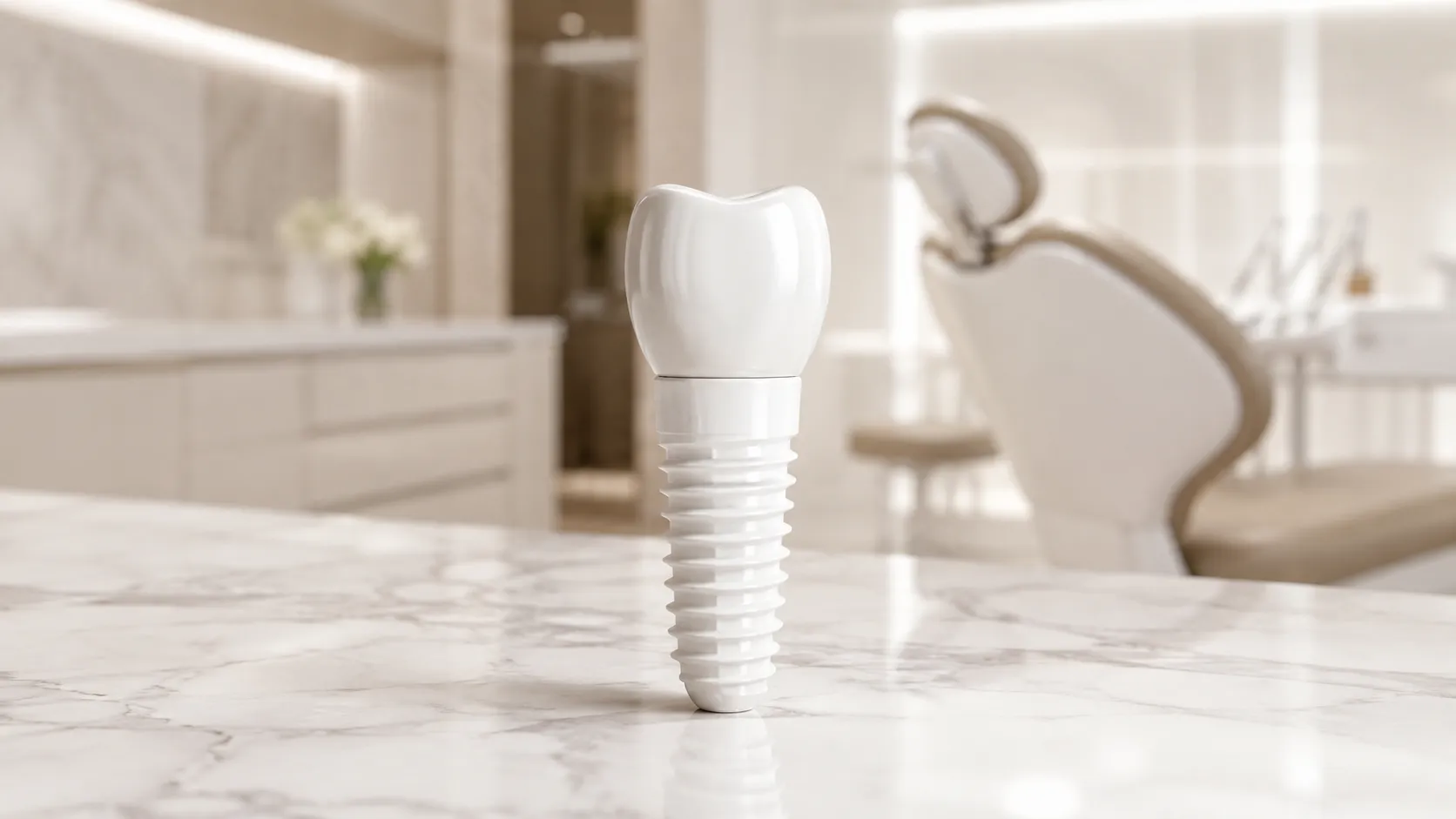
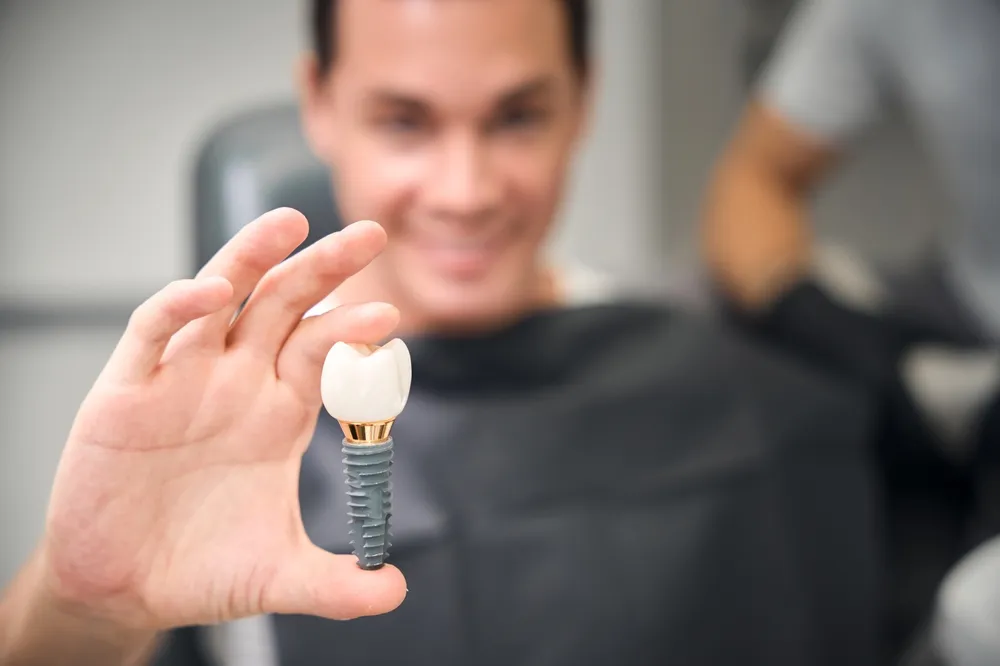
Zirconia implants are metal-free ceramic implants made from yttria-stabilised zirconium dioxide. They replace tooth roots and support crowns or bridges.
What exactly defines a zirconia implant?
A zirconia implant is a root-form implant manufactured from zirconium dioxide ceramic, designed to integrate with jawbone like titanium.
Manufacturers shape the implant from high-purity zirconia powder. They then sinter it at high temperature. The result is a white, tooth-coloured implant body with high fracture strength.
How do zirconia and titanium implants differ?
Titanium offers the longest clinical track record and flexible two-piece designs; zirconia offers superior aesthetics, metal-free composition, and lower plaque retention.
Feature | Titanium implant | Zirconia implant |
Colour | Grey | Tooth-white |
Clinical data | 50+ years | 15–20 years |
Typical design | Two-piece | One- or two-piece |
Biocompatibility | Excellent | Excellent |
Plaque adhesion | Higher | Lower (Scarano 2004) |
Grey line at gum | Possible | Avoided |
Long-term survival | 95%+ at 10 years | 90–95% in current data (Roehling 2019) |
Why is ceramic composition important for biocompatibility?
Zirconium dioxide shows excellent tissue tolerance. Animal and human studies confirm direct bone-to-implant contact without adverse reactions (Ichikawa 1992).
Zirconia does not corrode. It releases no metal ions into surrounding tissue. This makes it attractive for patients who want biocompatible dental implants without any metallic content.
What is the difference between one-piece and two-piece systems?
One-piece implants combine fixture and abutment in a single unit; two-piece systems allow separate abutment placement and greater prosthetic flexibility.
One-piece designs reduce micro-gaps and bacterial leakage. Two-piece designs allow angled correction and easier restoration. Randomised trials show both designs can perform well when clinicians follow strict protocols (Payer 2015).
What are the scientific advantages and limitations?
Advantages include aesthetics, biocompatibility, and low plaque accumulation; limitations include less long-term data, higher material brittleness, and narrower indications than titanium (Sivaraman 2018).
Zirconia suits single-tooth replacement and aesthetic zones best. Complex full-arch cases with heavy bite forces may still favour titanium.
Who Is a Good Candidate for Zirconia Implant Treatment?
Good candidates have healthy gums, adequate bone volume, controlled general health, and realistic expectations. Heavy smokers and patients with uncontrolled bruxism need extra assessment.
Can a single missing tooth receive a zirconia implant?
Yes. Single-tooth replacement in the aesthetic zone is the strongest indication for zirconia implants.
The white implant body avoids grey shadows at the gum margin. This produces a natural-looking result, especially with thin gum tissue.
Can patients with multiple missing teeth use zirconia implants?
Yes, provided bone volume supports implant placement and the prosthetic plan respects material strength limits.
Clinicians often combine zirconia implants with zirconia or ceramic-fused bridges for a fully metal-free result.
Can zirconia implants support full-mouth rehabilitation?
Yes, in selected cases. However, full-arch zirconia protocols require experienced teams and careful occlusal planning.
What about patients with metal sensitivities?
Zirconia offers a fully metal-free option for patients with confirmed or suspected titanium hypersensitivity.
True titanium allergy remains rare. Clinical studies document hypersensitivity reactions in a small subset of implant patients (Sicilia 2008). Zirconia eliminates this concern.
Why do aesthetic-focused patients choose zirconia?
The tooth-coloured material blends with natural dentition and soft tissue, even if the gum recedes slightly over time.
How do bone quality and general health affect candidacy?
Adequate bone density and volume are essential. Uncontrolled diabetes, heavy smoking, and active periodontal disease raise complication risk (Klokkevold 2007).
Clinicians assess bone with CBCT imaging. They review medical history, medications, and lifestyle factors before approving treatment.
How Does the Consultation Process Begin for Australian Patients?
The process starts online. Patients send X-rays or CBCT scans, complete a medical history form, and receive a preliminary treatment plan with a transparent cost estimate.
How does online consultation work before travelling?
Patients contact the clinic by email or video call. The dental team reviews the case remotely and proposes an initial plan within days.
Why does the medical and dental history review matter?
Conditions such as diabetes, osteoporosis, or blood-thinner use affect healing and surgical planning.
The clinic asks for medication lists, past surgeries, and previous dental records. Honest, complete information protects the patient.
What imaging should patients share?
A recent panoramic X-ray is the minimum. A CBCT scan gives the planning team three-dimensional bone data and improves accuracy.
What is a digital smile assessment?
Dentists analyse photos and scans digitally to plan tooth position, proportion, and gum contours before any surgery begins.
How is the personalised treatment plan created?
The team defines the number of implants, need for grafting, visit schedule, total cost, and warranty terms in a written plan.
What belongs on the travel preparation checklist?
Item | When to arrange |
Passport valid 6+ months | Before booking flights |
Travel and medical insurance | Before departure |
Recent dental records and X-rays | 2–4 weeks before travel |
Medication list and supply | 2 weeks before travel |
Leave from work (7–10 days) | When booking |
Payment method and currency | 1 week before travel |
What Happens After Arriving in Turkey?
The clinic greets the patient at the airport, completes a full clinical examination with CBCT imaging, and confirms the final treatment plan before any procedure.
How do transfers and accommodation work?
Most clinics include airport pickup and hotel arrangements in the treatment package. Patients confirm details with their coordinator before flying.
What happens at the initial clinical examination?
The dentist examines soft tissues, remaining teeth, bite, and gum health, then compares findings with the remote plan.
Why is comprehensive CBCT imaging essential?
CBCT reveals bone height, width, nerve positions, and sinus anatomy in three dimensions. It forms the foundation of safe implant planning (Bornstein 2014).
What does the oral health evaluation cover?
The team checks for decay, gum disease, and infection. Any active infection receives treatment before implant placement.
How is the final treatment plan confirmed?
The dentist and patient review the digital plan together, adjust details, and sign informed consent before surgery.
How are expected outcomes discussed?
The team explains realistic results, healing timelines, risks, and maintenance duties. Transparent communication at this stage prevents disappointment later.
What Is the Step-by-Step Zirconia Implant Procedure?
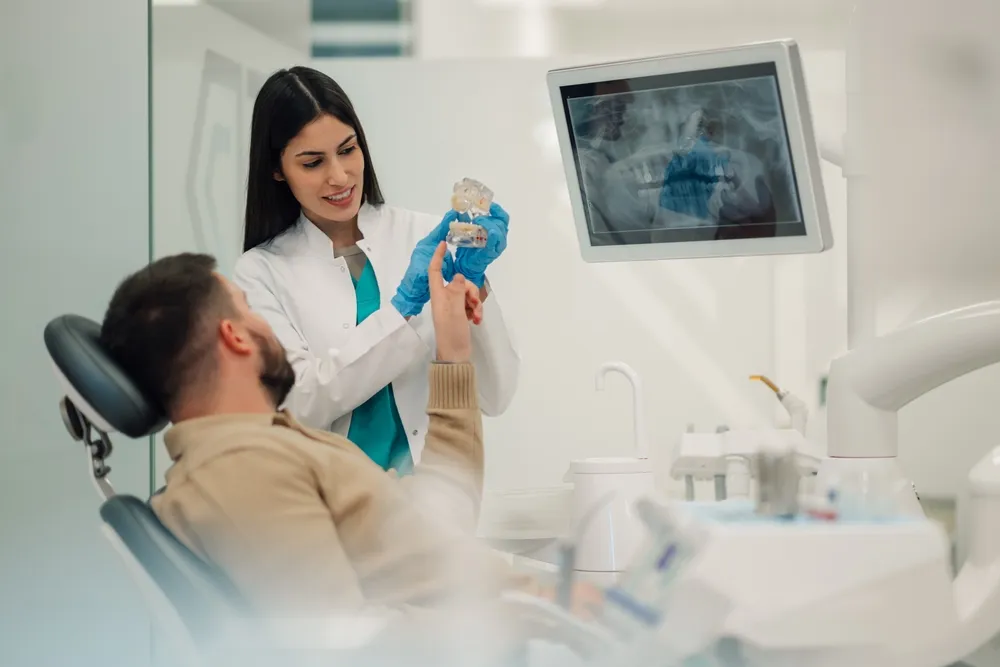
The procedure involves anaesthesia, possible extraction, optional grafting, site preparation, implant placement, and often a temporary restoration. A single implant takes about 30–60 minutes.
Which anaesthesia options are available?
Local anaesthesia suits most cases. Conscious sedation helps anxious patients or longer full-mouth procedures.
When is tooth extraction necessary?
Non-restorable teeth come out first. In suitable bone, the surgeon places the implant immediately after extraction.
When does bone grafting become required?
Grafting builds volume where bone has resorbed. Minor grafts often happen during implant placement; larger defects need a separate healing phase.
How does the surgeon prepare the implant site?
The surgeon drills the site in graduated steps, often through a printed surgical guide, to reach the planned position with minimal trauma.
How are zirconia implants placed?
The surgeon inserts the ceramic implant at controlled torque and verifies primary stability, which supports early bone integration.
When is immediate temporary restoration possible?
If the implant achieves strong primary stability, the team can fit a temporary crown out of bite contact on the same day.
How long does surgery take, and how comfortable is it?
Single implants take 30–60 minutes; full-arch cases take several hours. Most patients report pressure rather than pain during the procedure.
What Should Patients Expect During the Healing Phase?
Osseointegration takes 3–6 months. Mild swelling and soreness last a few days. Good oral hygiene, a soft diet, and no smoking protect the healing implant.
What is the osseointegration process?
Bone cells grow onto the implant surface and anchor it mechanically. This biological bond carries all future chewing forces (Brånemark 1977).
Studies on zirconia surfaces show bone-to-implant contact values comparable to titanium in animal and clinical models (Roehling 2019).
How does soft tissue heal around zirconia?
Gums typically heal within 1–2 weeks. Zirconia's smooth, biocompatible surface supports healthy soft-tissue attachment.
Which postoperative symptoms are normal?
Mild swelling, light bruising, and soreness for 2–4 days are normal. Pain that worsens after day three is not.
How is pain managed?
Over-the-counter analgesics control discomfort in most cases. The clinic provides a clear medication schedule before discharge.
What oral hygiene routine supports healing?
Gentle brushing around the site, antiseptic mouthrinse for the first week, and no aggressive rinsing on day one.
What dietary restrictions apply?
Soft, cool foods for the first week. Patients avoid chewing on the implant side until the dentist confirms integration.
Which warning signs need professional evaluation?
Persistent pain, pus, fever, implant mobility, or gum recession over the implant all require immediate contact with the clinic.
How Long Should Australian Patients Stay in Turkey?
Plan 7–10 days for the first visit and 5–7 days for the second visit, separated by a 3–6 month healing period at home.
How long does the first visit take?
Seven to ten days covers examination, surgery, early checks, and suture removal.
How long is the healing period between visits?
Three months for the lower jaw and up to six months for the upper jaw or grafted sites.
When does the second visit happen?
After radiographic and clinical confirmation of osseointegration, usually at the 3–6 month mark.
What happens during final prosthetic restoration?
The team takes digital impressions, designs the final crowns with CAD/CAM software, fits them, and adjusts the bite.
Which situations require extended stays?
Extensive grafting, full-mouth rehabilitation, or complications can extend either visit by several days. Patients should keep flight bookings flexible.
What Technology Improves Treatment Accuracy?
CBCT imaging, digital impressions, CAD/CAM fabrication, guided surgery, and digital smile design work together to improve precision and predictability.
How does CBCT imaging improve planning?
It provides sub-millimetre 3D data on bone and anatomy, reducing surgical risk (Bornstein 2014).
What do digital impressions offer?
Intraoral scanners capture precise models without uncomfortable impression material. Digital files move instantly between clinic and laboratory.
How do CAD/CAM restorations help?
Computer-milled zirconia crowns fit accurately and match natural tooth colour with high consistency.
What is computer-guided implant surgery?
The surgeon uses a 3D-printed guide to place implants exactly where the digital plan specifies. Systematic reviews link guided surgery to higher positional accuracy (Tahmaseb 2014).
How does 3D treatment planning work?
The team merges CBCT data with digital impressions to plan the implant and the final crown position at the same time.
What does digital smile design add?
It lets patients preview their future smile and approve the aesthetic plan before treatment starts.
What Are the Advantages of Zirconia Implants?
Zirconia implants deliver natural aesthetics, metal-free biocompatibility, low plaque adhesion, and corrosion resistance, with survival rates now approaching titanium in medium-term data.
How good are the aesthetics?
Excellent. The white material avoids grey shine-through and mimics natural tooth roots under thin gum tissue.
Why does a metal-free solution matter?
Some patients prefer or medically require implants without metallic components. Zirconia meets this need completely.
How biocompatible is zirconia?
Very high. Clinical and preclinical research confirms stable soft- and hard-tissue integration with minimal inflammatory response (Ichikawa 1992; Sivaraman 2018).
Does zirconia reduce plaque accumulation?
Yes. In vivo research shows lower bacterial adhesion on zirconia surfaces than on titanium (Scarano 2004). Lower plaque load supports healthier gums around the implant.
How natural does the gum appearance look?
The ceramic's colour supports pink, healthy-looking gingiva without the grey halo that titanium can create.
Does zirconia resist corrosion?
Fully. Ceramic does not undergo electrochemical corrosion in the oral environment.
Why do holistic dentistry patients prefer zirconia?
Patients seeking biocompatible dental implants aligned with holistic principles value the material's inert, metal-free nature.
What Are the Potential Risks and Limitations?
Risks include infection, failed osseointegration, and fracture under extreme load. Titanium still suits some complex cases better. Realistic expectations remain essential.
What surgical risks apply to all implants?
Bleeding, infection, nerve irritation, and sinus complications apply to every implant surgery, regardless of material.
Which healing complications can occur?
Early implant loss, delayed healing, and peri-implant inflammation occur in a small percentage of cases. Smoking and uncontrolled diabetes raise the risk (Klokkevold 2007).
How real is implant failure risk?
Modern implants show high success. Long-term meta-analyses report titanium survival above 95% at ten years; zirconia data show roughly 90–95% over shorter follow-up (Howe 2019; Roehling 2019).
When does bone grafting become unavoidable?
Severely resorbed ridges need grafting before or during placement. This adds time and cost to the treatment plan.
How does bruxism affect zirconia implants?
Heavy grinding increases mechanical load and complication risk (Zhou 2016). Night guards and careful occlusal design protect the restoration.
When is titanium still preferable?
Angled placements, severe bone deficits, and full-arch cases with heavy functional load may benefit from titanium's longer evidence base and design flexibility.
Why do realistic expectations matter?
No implant guarantees lifetime function. Maintenance, hygiene, and regular reviews determine long-term success as much as the surgery itself.
How Can Australian Patients Prepare Before Travelling?
Complete a dental check-up at home, obtain medical clearance if needed, arrange insurance, organise work leave, and prepare all documents and medications in advance.
Why get a dental examination at home first?
A local check-up confirms the diagnosis and provides records that improve the overseas treatment plan.
Who needs medical clearance?
Patients with heart conditions, diabetes, osteoporosis treatment, or immunosuppression should obtain written clearance from their physician.
What about travel insurance?
Choose a policy that covers medical travel and trip changes. Standard policies often exclude elective treatment abroad.
How much leave should patients organise?
Ten to fourteen days covers the first visit comfortably, including travel and rest days.
How should patients plan medications?
Carry regular medicines in original packaging, plus a copy of prescriptions. The clinic will advise on any needed antibiotics or pain relief.
Which medical documents are required?
Recent X-rays or CBCT files, medical history summary, medication list, and any physician clearance letters.
What Questions Should Australian Patients Ask Their Clinic?
Ask about dentist qualifications, implant brand, sterilization standards, planning technology, success rates, warranty terms, aftercare, and emergency support after returning home.
Dentist qualifications: Which degrees, specialisations, and implant certifications does the treating dentist hold?
Implant system and manufacturer: Which zirconia implant brand will you use, and can I receive the documentation?
Sterilization standards: Which protocols and audits govern instrument sterilization?
Digital planning protocol: Will you plan my case with CBCT and guided surgery software?
Success rates: What are your documented implant survival rates, and how do you track them?
Warranty policy: What does the warranty cover, for how long, and under which conditions?
Aftercare arrangements: Who manages my case if a problem appears after I return to Australia?
Emergency support: Do you offer remote consultations and coordination with Australian dentists?
How Does Follow-Up Care Continue After Returning to Australia?
Follow-up combines remote video consultations, local dental reviews, professional hygiene visits, and annual X-rays. Long-term maintenance protects the implant investment.
How do remote consultations work?
Patients send photos and join video calls with the treating team for assessment and advice.
What clinical reviews should be scheduled?
A local review at 1 week, 3 months, and then every 6–12 months keeps the implant under professional supervision.
How does coordination with Australian dentists work?
The clinic shares treatment records, implant details, and radiographs so a local dentist can manage routine care.
What does long-term implant maintenance involve?
Daily brushing, interdental cleaning, professional hygiene twice a year, and bite checks.
Why do professional hygiene appointments matter?
Hygienists remove deposits that home care misses. This reduces peri-implant disease risk.
Why are annual radiographic evaluations important?
X-rays reveal bone levels around the implant. Early detection of bone loss allows early intervention and protects long-term stability (Pjetursson 2012).
How Can Patients Choose a Safe and Reputable Clinic in Turkey?
Verify dentist credentials, check Ministry of Health licensing, read reviews critically, request implant documentation, and never choose on price alone.
How do you verify dentist credentials?
Request registration details and confirm specialisation in oral surgery, periodontology, or prosthodontics with implant training.
Why check Ministry of Health licensing?
Licensed clinics meet national standards for facilities, equipment, and staffing. International patient units require specific authorisation.
How should patients read testimonials?
Look for detailed, verifiable reviews across independent platforms. Consistent patterns matter more than single stories.
Why request implant brand documentation?
Reputable clinics provide the implant passport with brand, model, and lot number. This document supports warranty claims and future maintenance anywhere in the world.
What should the treatment package include?
A written breakdown of surgery, materials, imaging, transfers, accommodation, and follow-up. Vague packages hide costs.
Why avoid the lowest price?
Very low quotes often signal lower-grade materials or limited aftercare. Research links treatment quality to long-term survival, not initial price (Jung 2012).
Why do communication and consent matter?
Transparent, documented communication and genuine informed consent form the foundation of ethical, safe treatment abroad.
Frequently Asked Questions About Zirconia Implant Treatment in Turkey
Are zirconia implants as strong as titanium implants?
Zirconia offers high fracture strength, but titanium retains the strongest long-term data under heavy load. Current evidence places zirconia survival slightly below titanium beyond ten years (Sivaraman 2018).
How many trips from Australia are usually required?
Two trips in most cases: one for surgery, one for final crowns. Immediate-load cases may need only one longer trip.
Is the procedure painful?
Surgery happens under anaesthesia, so patients feel pressure rather than pain. Post-operative discomfort is usually mild and short-lived.
How long do zirconia implants last?
With good hygiene and maintenance, clinical data support function well beyond ten years for most patients (Roehling 2019).
Can smokers receive zirconia implants?
Yes, but smoking raises failure and complication risk significantly. Clinics strongly advise stopping before and after surgery (Klokkevold 2007).
Are zirconia implants suitable for full-mouth restoration?
In selected cases with experienced teams, yes. Complex full-arch cases still often use titanium for design flexibility.
What foods should patients avoid after surgery?
Hard, crunchy, sticky, and very hot foods for the first week, plus chewing on the implant side until cleared.
Can Australian dentists maintain implants placed in Turkey?
Yes. With full documentation and an implant passport, any qualified dentist can perform routine maintenance.
How much healing time is necessary before final crowns?
Typically three months in the lower jaw and up to six months in the upper jaw or grafted sites.
What documents should patients receive after treatment?
Implant passport, treatment summary, radiographs, warranty certificate, and care instructions, all in English.
Conclusion
Zirconia implant treatment in Turkey offers Australian patients a clinically credible, aesthetically excellent, and cost-effective path to restoring missing teeth. The journey follows a clear structure: remote consultation, digital planning, precise surgery, protected healing, high-quality prosthetics, and organised long-term follow-up.
The science supports cautious optimism. Modern ceramic implants achieve strong osseointegration and survival rates that now approach titanium in medium-term research (Roehling 2019). At the same time, titanium holds the deeper evidence base, and some complex cases still favour it. Honest clinics explain this distinction clearly.
Successful outcomes never depend on cost alone. They depend on careful patient selection, comprehensive digital planning, experienced clinicians, evidence-based protocols, and disciplined maintenance over years. Patients who evaluate clinic credentials, implant systems, aftercare arrangements, and overall quality of care before travelling place themselves in the strongest position for a lasting, natural result.
References
Al-Amleh, Basil, et al. "Clinical Trials in Zirconia: A Systematic Review." Journal of Oral Rehabilitation, vol. 37, no. 8, 2010, pp. 641–652.
Bornstein, Michael M., et al. "Cone Beam Computed Tomography in Implant Dentistry: A Systematic Review Focusing on Guidelines, Indications, and Radiation Dose Risks." The International Journal of Oral & Maxillofacial Implants, vol. 29, suppl., 2014, pp. 55–77.
Brånemark, Per-Ingvar, et al. "Osseointegrated Implants in the Treatment of the Edentulous Jaw: Experience from a 10-Year Period." Scandinavian Journal of Plastic and Reconstructive Surgery, suppl. 16, 1977, pp. 1–132.
Howe, Matthew S., et al. "Long-Term (10-Year) Dental Implant Survival: A Systematic Review and Sensitivity Meta-Analysis." Journal of Dentistry, vol. 84, 2019, pp. 9–21.
Ichikawa, Yuji, et al. "Tissue Compatibility and Stability of a New Zirconia Ceramic In Vivo." The Journal of Prosthetic Dentistry, vol. 68, no. 2, 1992, pp. 322–326.
Jung, Ronald E., et al. "Systematic Review of the Survival Rate and the Incidence of Biological, Technical, and Aesthetic Complications of Single Crowns on Implants Reported in Longitudinal Studies with a Mean Follow-Up of 5 Years." Clinical Oral Implants Research, vol. 23, suppl. 6, 2012, pp. 2–21.
Klokkevold, Perry R., and Tian J. Han. "How Do Smoking, Diabetes, and Periodontitis Affect Outcomes of Implant Treatment?" The International Journal of Oral & Maxillofacial Implants, vol. 22, suppl., 2007, pp. 173–202.
Payer, Michael, et al. "All-Ceramic Restoration of Zirconia Two-Piece Implants - A Randomized Controlled Clinical Trial." Clinical Oral Implants Research, vol. 26, no. 4, 2015, pp. 371–376.
Pjetursson, Bjarni E., et al. "A Systematic Review of the Survival and Complication Rates of Implant-Supported Fixed Dental Prostheses (FDPs) after a Mean Observation Period of at Least 5 Years." Clinical Oral Implants Research, vol. 23, suppl. 6, 2012, pp. 22–38.
Roehling, Stefan, et al. "Performance and Outcome of Zirconia Dental Implants in Clinical Studies: A Meta-Analysis." Clinical Oral Implants Research, vol. 30, suppl. 17, 2019, pp. 135–153.
Scarano, Antonio, et al. "Bacterial Adhesion on Commercially Pure Titanium and Zirconium Oxide Disks: An In Vivo Human Study." Journal of Periodontology, vol. 75, no. 2, 2004, pp. 292–296.
Sicilia, Alberto, et al. "Titanium Allergy in Dental Implant Patients: A Clinical Study on 1,500 Consecutive Patients." Clinical Oral Implants Research, vol. 19, no. 8, 2008, pp. 823–835.
Sivaraman, Karthik, et al. "Is Zirconia a Viable Alternative to Titanium for Oral Implant? A Critical Review." Journal of Prosthodontic Research, vol. 62, no. 2, 2018, pp. 121–133.
Tahmaseb, Ali, et al. "Computer Technology Applications in Surgical Implant Dentistry: A Systematic Review." The International Journal of Oral & Maxillofacial Implants, vol. 29, suppl., 2014, pp. 25–42.
Zhou, Yanmin, et al. "Does Bruxism Contribute to Dental Implant Failure? A Systematic Review and Meta-Analysis." Clinical Implant Dentistry and Related Research, vol. 18, no. 2, 2016, pp. 410–420.