E.max veneers offer unmatched strength, natural beauty, and minimal tooth preparation. These lithium disilicate glass-ceramic restorations give patients a durable, stain-resistant smile that looks completely real.
Cosmetic dentistry keeps evolving. Patients want results that look natural and last for years. E.max veneers meet both demands. Dentists worldwide now recommend these thin ceramic shells for smile makeovers. The material behind them, lithium disilicate glass-ceramic, delivers a rare combination of beauty and toughness. This article explores every major benefit of E.max veneers. You will learn how they work, why they outperform other materials, and how to keep them looking great for decades.
What Are E.max Veneers Exactly?
E.max veneers are ultra-thin ceramic shells made from lithium disilicate glass-ceramic. Dentists bond them to the front surfaces of teeth to improve color, shape, and alignment.
E.max stands for IPS E.max, a brand developed by Ivoclar Vivadent. The name refers to a specific type of lithium disilicate glass-ceramic. This material has changed how dentists approach cosmetic restorations. Unlike older ceramics, lithium disilicate offers both high strength and excellent light transmission. That means E.max veneers look like real enamel while resisting chips and cracks.
How Does IPS E.max Technology Work?
IPS E.max uses lithium disilicate glass-ceramic. Labs create these veneers through pressing or CAD/C milling. The material contains no metal.
The core of every E.max veneer is lithium disilicate. This compound forms during a controlled heat treatment process. Technicians start with a glass-ceramic ingot. They heat it until lithium disilicate crystals grow inside the glass matrix. These crystals give the material its strength. The final product contains about 70% crystalline structure. This high crystal content explains why E.max veneers resist fractures so well.
Manufacturers produce E.max veneers using two main methods. The first is the press technique. Technicians heat a ceramic ingot and press it into a mold. The second method uses CAD/CAM technology. A computer-guided mill carves the veneer from a pre-crystallized block. Both methods produce precise, consistent results. The metal-free construction eliminates any gray lines near the gums. Patients with metal allergies face no risk.
How Do E.max Veneers Differ from Traditional Porcelain Veneers?
E.max veneers use lithium disilicate glass-ceramic. Traditional porcelain veneers use feldspathic porcelain. E.max offers greater strength and better light transmission.
Traditional porcelain veneers rely on feldspathic porcelain. This material looks beautiful but breaks more easily. Feldspathic porcelain has a flexural strength of about 90 to 120 MPa. E.max lithium disilicate reaches 360 to 400 MPa. That difference matters when you bite into an apple or chew steak.
The optical properties also set these materials apart. Feldspathic porcelain looks opaque in some lighting. E.max transmits light like natural enamel. This translucency creates depth and vitality. Your smile looks alive, not flat or artificial.
Traditional porcelain veneers also require thicker preparation. Dentists must remove more enamel to make room for the restoration. E.max veneers work at 0.3 to 0.5 millimeters thick. That thin profile preserves more of your natural tooth.
What Are the Top Benefits of E.max Veneers?
E.max veneers deliver natural aesthetics, outstanding strength, conservative preparation, stain resistance, long-term durability, and biocompatibility. These benefits make them a leading choice in cosmetic dentistry.
Why Do E.max Veneers Look So Natural?
E.max veneers mimic natural enamel through superior light transmission, translucency, and individual shade customization.
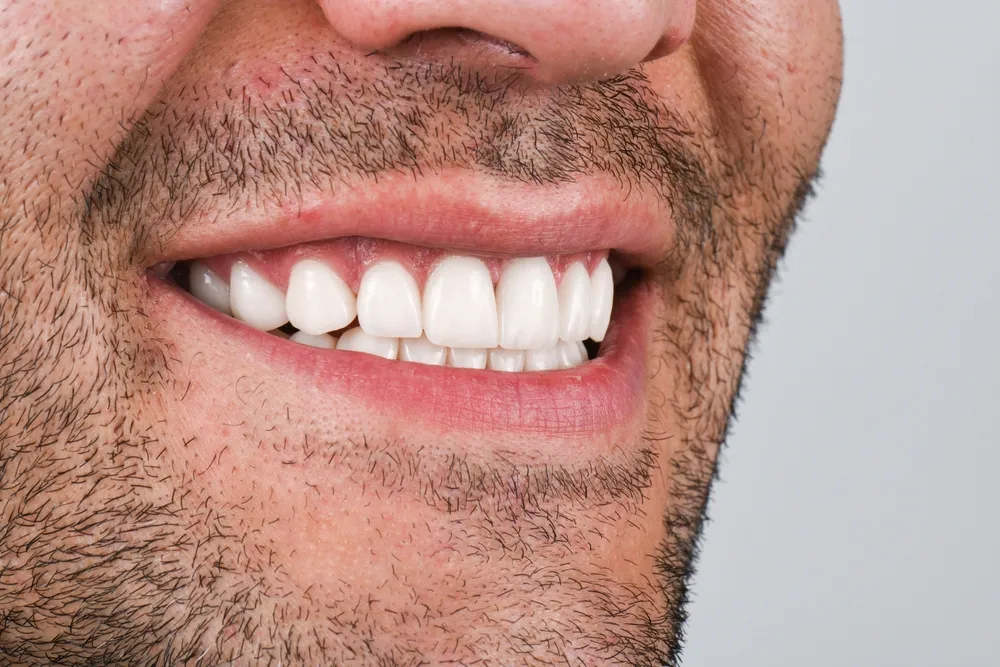
Natural enamel is not a solid color. It lets light pass through and bounce off the dentin beneath. This interaction creates depth and luster. E.max veneers replicate this effect. The lithium disilicate glass-ceramic transmits light in a way that matches real teeth.
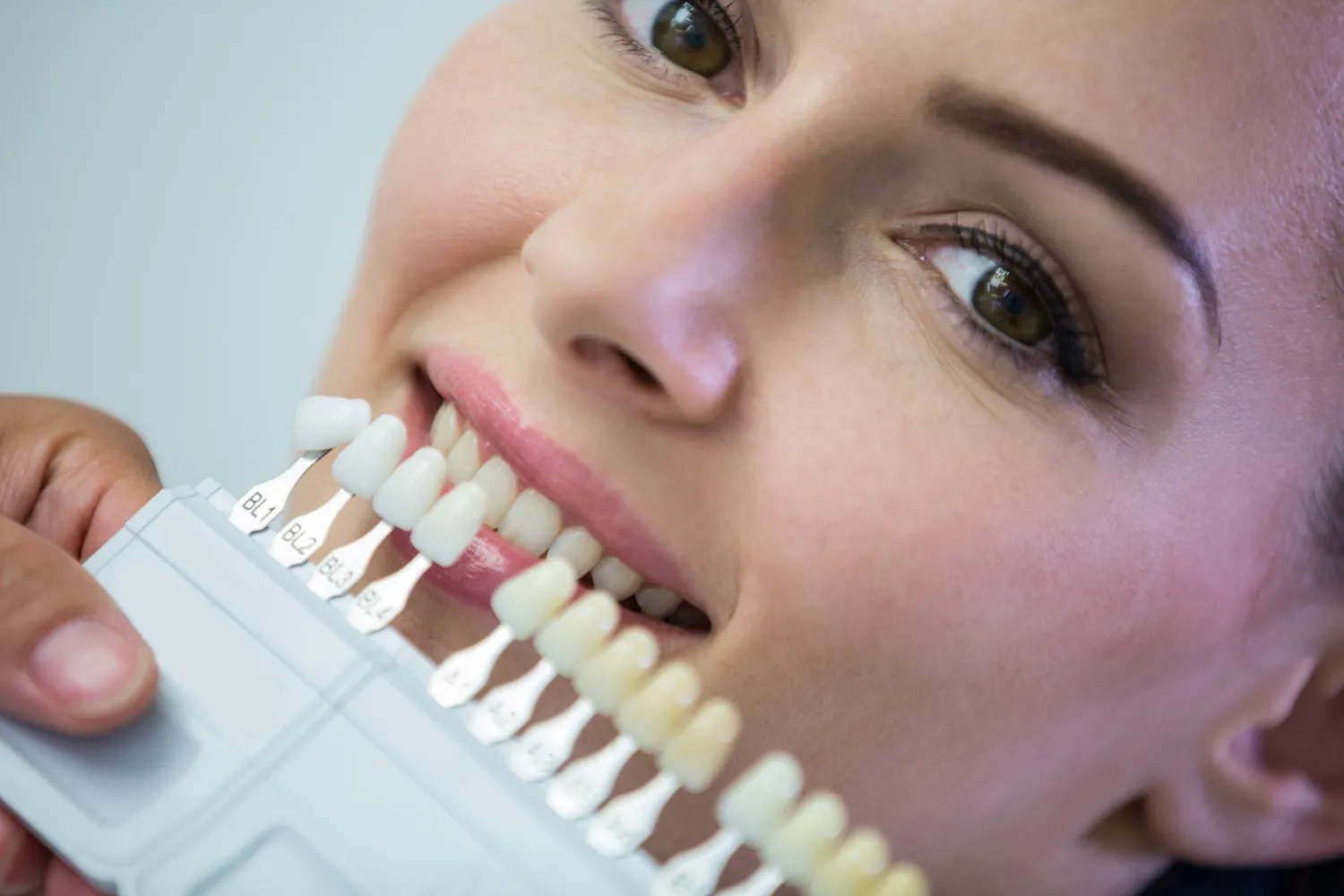
Dentists can customize the shade, translucency, and surface texture of each veneer. Labs add subtle color gradients. They create incisal translucency at the biting edge. They add opalescence to mimic the way natural teeth glow in certain light. The result blends seamlessly with surrounding teeth. Even under bright sunlight, E.max veneers look authentic.
How Strong Are E.max Veneers Despite Their Thin Design?
E.max veneers reach 360 to 400 MPa in flexural strength. This strength resists fractures and handles daily biting forces.
Strength and thinness rarely go together in dental materials. E.max breaks that rule. The lithium disilicate crystal structure gives these veneers exceptional fracture resistance. Patients can eat normally without fearing chips or cracks.
Clinical studies support this claim. Fradeani and Redemagni reported survival rates above 95% for lithium disilicate restorations over ten years (Fradeani and Redemagni 2002). The material handles anterior biting forces with ease. Dentists place E.max veneers on incisors and canines confidently. The thin design does not sacrifice durability.
How Conservative Is the Tooth Preparation for E.max Veneers?
E.max veneers require minimal enamel removal. Dentists preserve most of the healthy tooth structure.
Conservative dentistry saves natural tooth. Every millimeter of enamel matters. E.max veneers need only 0.3 to 0.5 millimeters of space. Some cases need even less. This minimal preparation keeps the tooth strong and vital.
Crowns require removing up to 2 millimeters of tooth structure from all sides. Veneers cover only the front surface. E.max takes this conservation further because the material itself is so strong at thin dimensions. Patients keep more enamel. They keep more dentin. The tooth remains healthier over the long term.
How Do E.max Veneers Improve Smile Aesthetics?
E.max veneers correct discoloration, reshape teeth, close small gaps, fix minor asymmetry, and create a harmonious smile design.
Cosmetic concerns vary. Some patients have stained teeth that whitening cannot fix. Others have chipped edges or uneven shapes. Small gaps between teeth bother many people. E.max veneers address all these issues simultaneously.
The dentist designs each veneer to fit the patient's facial features. They consider lip line, gum symmetry, and tooth proportions. The result is a balanced, natural-looking smile. The veneers create harmony between teeth, gums, and facial structure.
How Well Do E.max Veneers Resist Stains?
E.max veneers resist coffee, tea, wine, and tobacco stains. Their glazed surface stays bright for years.
Surface staining ruins many dental restorations. Composite veneers absorb pigments from food and drink. They yellow over time. E.max veneers behave differently. The dense glass-ceramic surface does not absorb stains. The glaze applied during fabrication creates a barrier.
Patients who drink coffee every morning maintain bright smiles. Red wine does not leave permanent marks. Even tobacco users see better color stability with E.max than with composite alternatives. Of course, good oral hygiene still matters. But the material itself fights discoloration.
How Long Do E.max Veneers Last?
E.max veneers last 10 to 15 years on average. Some cases exceed 20 years with proper care.
Longevity depends on multiple factors. The skill of the dentist matters. The quality of the bonding cement matters. Patient habits matter too. Clinical research shows impressive survival rates. Edelhoff and Sorensen found that lithium disilicate restorations maintain excellent function over extended periods (Edelhoff and Sorensen 2002).
Regular dental visits help dentists catch problems early. Professional polishing removes surface deposits. Night guards protect veneers from grinding forces. With attention to these details, E.max veneers serve patients well for well over a decade.
How Comfortable Do E.max Veneers Feel?
E.max veneers feel natural and lightweight. Their smooth surface and thin profile make adaptation easy.
Some patients worry that veneers will feel bulky or foreign. E.max veneers eliminate this concern. At less than half a millimeter thick, they add negligible weight. The tongue adapts within days. The smooth ceramic surface feels pleasant against soft tissues.
Patients report that E.max veneers feel like their own teeth. They forget the restorations are there. This comfort comes from precise fabrication and expert bonding. A well-made E.max veneer becomes part of the tooth.
Why Is Biocompatibility Important for E.max Veneers?
E.max veneers contain no metal. They are gum-friendly and reduce allergy risks.
Metal allergies affect some dental patients. Nickel and other alloys cause reactions in sensitive individuals. E.max veneers avoid this problem entirely. The lithium disilicate glass-ceramic is inert and biocompatible.
Gum tissue responds well to E.max. The smooth surface does not trap plaque. The margin between veneer and tooth stays clean with normal brushing. Healthy gums frame the smile beautifully. Biocompatibility supports both oral health and aesthetics.
What Functional Benefits Do E.max Veneers Offer Beyond Cosmetics?

E.max veneers protect worn enamel, cover minor chips, and reinforce weakened front teeth. They also boost confidence and improve quality of life.
How Do E.max Veneers Protect Teeth?
E.max veneers cover worn enamel, shield minor chips, and reinforce weakened anterior teeth.
Enamel does not regenerate. Once it wears away, the underlying dentin becomes exposed. E.max veneers act as protective shields. They cover compromised enamel and prevent further wear. A chipped tooth gains structural support from the bonded veneer. The ceramic distributes biting forces across the tooth surface.
This protective function benefits patients with enamel erosion from acid reflux or aggressive brushing. The veneer seals the tooth and guards against additional damage.
How Do E.max Veneers Improve Confidence and Psychological Well-Being?
E.max veneers improve smile confidence, enhance social interactions, support professional appearance, and raise overall quality of life.
Your smile affects how you feel about yourself. Studies link dental aesthetics to self-esteem. Patients who hide their smiles in photos feel self-conscious. They avoid laughing in public. They cover their mouths when speaking.
E.max veneers change this behavior. Patients smile freely. They speak with confidence. They make better first impressions in job interviews and social settings. The psychological benefit extends beyond the mirror. A confident smile improves mental health and social connections.
What Clinical Advantages Do E.max Veneers Provide for Dentists and Patients?
E.max veneers bond strongly to enamel, offer predictable results, and deliver high patient satisfaction through precision manufacturing.
How Strongly Do E.max Veneers Bond to Natural Enamel?
E.max veneers use adhesive cementation for reliable retention. This bonding supports conservative restorative philosophy.
Adhesive dentistry has transformed veneer placement. Modern resin cements create powerful chemical bonds between ceramic and enamel. Etching prepares the tooth surface. Bonding agents penetrate the enamel. The cement polymerizes under light. The result is a seal stronger than the enamel itself.
This strong bond means dentists can be conservative. They do not need to remove large amounts of tooth to create mechanical retention. The adhesive does the holding. This philosophy preserves tooth structure while ensuring the veneer stays put.
How Predictable Are the Clinical Results with E.max Veneers?
Precision manufacturing and accurate fit produce highly predictable outcomes with excellent patient satisfaction.
CAD/CAM technology mills E.max veneers to micron-level accuracy. The fit at the margin is precise. There are no gaps for bacteria to enter. The occlusion meets exact specifications. Patients experience minimal adjustment after placement.
Predictability matters in cosmetic dentistry. Patients want to know what their smile will look like before treatment begins. Digital smile design software shows previews. The final E.max veneers match these previews closely. This predictability builds trust between patient and dentist.
How Do E.max Veneers Compare with Other Veneer Materials?
E.max veneers outperform traditional porcelain in strength, surpass zirconia in translucency, and exceed composite in longevity and stain resistance.
How Do E.max Veneers Compare to Traditional Porcelain Veneers?
E.max veneers offer greater strength, better aesthetics, longer lifespan, and require less tooth preparation than traditional feldspathic porcelain veneers.
Feature | E.max Veneers | Traditional Porcelain Veneers |
Material | Lithium disilicate glass-ceramic | Feldspathic porcelain |
Flexural Strength | 360–400 MPa | 90–120 MPa |
Translucency | Excellent | Moderate |
Tooth Preparation | Minimal (0.3–0.5 mm) | Moderate to aggressive |
Stain Resistance | Excellent | Good |
Expected Lifespan | 10–15+ years | 7–10 years |
Fracture Risk | Low | Moderate |
E.max wins on nearly every metric. The only area where traditional porcelain competes is in the hands of master ceramists who create stunning feldspathic work. But for most clinical situations, E.max provides superior performance with less tooth reduction.
How Do E.max Veneers Compare to Zirconia Veneers?
E.max veneers offer better translucency and natural appearance. Zirconia offers slightly higher strength but looks more opaque.
Feature | E.max Veneers | Zirconia Veneers |
Material | Lithium disilicate | Yttria-stabilized zirconia |
Flexural Strength | 360–400 MPa | 900–1200 MPa |
Translucency | High | Low to moderate |
Natural Appearance | Excellent | Good |
Best Use | Anterior aesthetics | Posterior strength |
Biocompatibility | Excellent | Excellent |
Zirconia is stronger than E.max. But that extra strength comes with opacity. Zirconia blocks light rather than transmitting it. This makes zirconia veneers look less natural on front teeth. Dentists typically reserve zirconia for crowns on back teeth. E.max dominates the anterior aesthetic zone.
How Do E.max Veneers Compare to Composite Veneers?
E.max veneers offer better color stability, wear resistance, and lifespan than composite veneers. Composite veneers cost less but require more maintenance.
Feature | E.max Veneers | Composite Veneers |
Material | Lithium disilicate glass-ceramic | Resin composite |
Color Stability | Excellent | Prone to staining |
Wear Resistance | Excellent | Moderate |
Lifespan | 10–15+ years | 5–7 years |
Maintenance | Low | Higher |
Cost | Higher | Lower |
Preparation | Minimal | Minimal to none |
Composite veneers appeal to budget-conscious patients. But they stain, chip, and wear down faster. E.max veneers cost more upfront. Over a lifetime, they often prove more economical because they last longer and need fewer replacements.
Who Benefits Most from E.max Veneers?
Ideal candidates have healthy teeth and gums, cosmetic concerns, mild alignment issues, discoloration, small fractures, or worn enamel.
What Makes Someone an Ideal Candidate for E.max Veneers?
Good candidates have healthy teeth, healthy gums, cosmetic concerns, mild alignment problems, tooth discoloration, small fractures, or worn teeth.
E.max veneers work best for patients with fundamentally sound oral health. The teeth underneath must be strong. The gums must be free from disease. Candidates should have realistic expectations about what veneers can achieve.
Specific situations that respond well include:
Teeth stained by tetracycline or fluorosis that whitening cannot fix
Slightly crooked teeth that do not need braces
Small gaps between front teeth
Chipped or worn edges
Teeth that are too short or poorly shaped
Minor asymmetry in the smile
When Might Another Restoration Work Better Than E.max Veneers?
Severe bruxism, extensive tooth loss, large existing restorations, or significant structural damage may require crowns or other treatments instead.
Veneers are not universal solutions. Patients who grind their teeth severely may fracture even strong E.max veneers. Night guards help but cannot eliminate all risk. Teeth with large fillings or extensive decay need crowns for full coverage. Missing tooth structure requires more support than a veneer provides.
Dentists evaluate each case individually. Sometimes orthodontic treatment makes more sense than veneers. Sometimes a combination of treatments gives the best result. Honest assessment prevents disappointment.
How Long Do the Benefits of E.max Veneers Actually Last?
E.max veneers typically last 10 to 15 years. Some last over 20 years. Survival rates exceed 95% at ten years in clinical studies.
What Is the Average Lifespan of E.max Veneers?
Clinical studies report 10 to 15 years as the average lifespan. Long-term survival rates surpass 95% at the decade mark.
Research by Fradeani and Redemagni demonstrated that lithium disilicate restorations maintain excellent performance over extended periods (Fradeani and Redemagni 2002). Another study by Edelhoff and Sorensen confirmed the material's durability in anterior applications (Edelhoff and Sorensen 2002). These findings give patients confidence in their investment.
What Factors Influence How Long E.max Veneers Last?
Oral hygiene, diet, night guards, and regular dental visits all affect veneer longevity.
Good habits extend veneer life. Poor habits shorten it. Patients who brush twice daily and floss once daily keep the margins clean. They prevent decay at the veneer edge. A balanced diet reduces acid exposure. Avoiding hard foods like ice and unpopped popcorn kernels prevents chips.
Patients who grind their teeth need night guards. These acrylic appliances absorb grinding forces. They protect both veneers and natural teeth. Regular dental check-ups every six months allow dentists to monitor veneer condition. Professional cleanings remove tartar that home care misses.
How Can Patients Maximize the Benefits of E.max Veneers?
Daily brushing and flossing, avoiding harmful habits, and maintaining regular professional care maximize E.max veneer benefits.
What Daily Care Tips Keep E.max Veneers Looking Great?
Brush twice daily, floss once daily, and use non-abrasive toothpaste.
Caring for E.max veneers resembles caring for natural teeth. A soft-bristled toothbrush cleans the surface without scratching. Non-abrasive toothpaste preserves the glaze. Abrasive pastes create microscopic scratches. These scratches collect stains over time.
Flossing removes plaque from between teeth. It prevents gum inflammation at the veneer margin. An antiseptic mouthwash adds extra protection against bacteria. These simple habits take minutes but add years to veneer life.
What Habits Should Patients Avoid with E.max Veneers?
Avoid nail biting, ice chewing, opening packages with teeth, and excessive grinding.
Ceramic is strong but not indestructible. Nail biting directs sideways forces onto veneer edges. Ice chewing creates impact stress. Using teeth as tools risks chips. These habits damage natural teeth too. Patients with veneers must be especially mindful.
Grinding deserves special attention. Bruxism generates enormous forces. Even E.max veneers can fail under constant grinding pressure. Night guards are essential for grinders. Stress management techniques also help reduce grinding frequency.
How Important Is Professional Maintenance for E.max Veneers?
Routine check-ups, professional cleanings, and occlusal evaluation every six months protect veneer investment.
Dentists see things patients miss. They check for early signs of veneer wear. They evaluate the bite to ensure even force distribution. They polish the veneer surface to restore luster. They clean areas that home care cannot reach.
Professional maintenance catches problems before they become serious. A small chip might be repairable. A loose margin might be resealed. Without regular visits, minor issues become major failures. The cost of a dental check-up is small compared to replacing a veneer.
What Do Patients Frequently Ask About E.max Veneer Benefits?
Patients commonly ask about strength, appearance, lifespan, staining, cost, preparation requirements, placement locations, and repair options.
Are E.max Veneers Stronger Than Porcelain Veneers?
Yes. E.max veneers reach 360 to 400 MPa in flexural strength. Traditional porcelain reaches only 90 to 120 MPa.
The lithium disilicate crystal structure gives E.max its superior strength. This strength allows thinner designs without sacrificing durability. Patients get strong restorations with minimal tooth reduction.
Do E.max Veneers Look More Natural Than Other Options?
Yes. E.max veneers offer superior translucency and light transmission. They mimic natural enamel better than zirconia or composite.
The optical properties of lithium disilicate glass-ceramic create depth and vitality. Light passes through the veneer and reflects off the underlying tooth structure. This interaction produces a lifelike appearance that flat materials cannot match.
How Long Do E.max Veneers Usually Last?
E.max veneers last 10 to 15 years on average. With excellent care, some last over 20 years.
Clinical studies support these numbers. Fradeani and Redemagni reported survival rates above 95% at ten years (Fradeani and Redemagni 2002). Proper maintenance and professional placement extend these results.
Can E.max Veneers Stain Over Time?
E.max veneers resist staining very well. Their glazed surface does not absorb pigments like composite does.
Coffee, tea, wine, and tobacco rarely cause permanent discoloration. However, the cement margin and natural tooth structure nearby can stain. Good oral hygiene and regular cleanings keep everything looking bright.
Are E.max Veneers Worth the Investment?
Yes. E.max veneers offer excellent long-term value through durability, aesthetics, and minimal maintenance.
The initial cost exceeds composite veneers. But E.max lasts twice as long or longer. It resists stains and chips better. Over a decade, the total cost often favors E.max. The aesthetic quality also surpasses cheaper alternatives.
Do E.max Veneers Require Shaving Healthy Teeth?
E.max veneers require minimal preparation. Dentists remove only 0.3 to 0.5 millimeters of enamel. They preserve most healthy tooth structure.
This conservative approach distinguishes veneers from crowns. Some cases need no preparation at all. The dentist decides based on tooth position and desired outcome. Either way, E.max allows more preservation than most alternatives.
Are E.max Veneers Suitable for Front Teeth Only?
Dentists primarily use E.max veneers on front teeth. They can place them on premolars in some cases. Molars typically need stronger restorations.
The anterior region places the highest aesthetic demands. E.max excels here. Premolars visible when smiling can also receive E.max veneers. Molars handle the heaviest chewing forces. Zirconia crowns work better for these back teeth.
Can Damaged E.max Veneers Be Repaired?
Small chips can sometimes be repaired with composite resin. Large fractures usually require veneer replacement.
The repairability depends on the damage extent. A tiny chip at the edge might be polished or filled. A crack through the veneer compromises its integrity. Replacement becomes necessary. Prevention through good habits remains the best strategy.
What Is the Final Verdict on E.max Veneer Benefits?
E.max veneers combine unmatched aesthetics, exceptional strength, conservative preparation, and biocompatibility. They represent one of the best options in modern cosmetic dentistry.
E.max veneers have earned their place at the top of cosmetic dentistry. The lithium disilicate glass-ceramic material delivers what patients want: a beautiful smile that looks real and lasts for years. The benefits extend across every dimension that matters.
The natural appearance comes from superior light transmission and translucency. The strength comes from a dense crystalline structure. The conservative preparation preserves healthy tooth structure. The stain resistance maintains brightness without extra effort. The biocompatibility ensures gum health and safety.
Success requires three elements. First, appropriate patient selection. Not everyone needs veneers. Not everyone qualifies for them. Second, an experienced clinician. Fabrication and bonding demand skill and precision. Third, proper maintenance. Daily care and regular dental visits protect the investment.
Patients who meet these conditions enjoy transformative results. They smile with confidence. They eat without worry. They maintain their veneers for well over a decade. The benefits of E.max veneers are not just theoretical. They are real, measurable, and life-changing.
References
Edelhoff, Dieter, and Jan Sorensen. "Tooth Structure Removal Associated with Various Preparation Designs for Anterior Teeth." Journal of Prosthetic Dentistry, vol. 87, no. 5, 2002, pp. 503–09.
Fradeani, Mauro, and Massimo Redemagni. "An 11-Year Clinical Evaluation of Leucite-Reinforced Glass-Ceramic Crowns: A Retrospective Study." Quintessence International, vol. 33, no. 7, 2002, pp. 503–10.
Guess, Petra C., et al. "Strength and Reliability of IPS E.max ZirCAD and IPS E.max CAD." Journal of Prosthodontics, vol. 19, no. 2, 2010, pp. 128–33.
Heintze, Siegward D., and Volker Rousson. "Survival of Zirconia and Metal Supports for Veneered Dental Prostheses: A Systematic Review." Dental Materials, vol. 32, no. 10, 2016, pp. 1207–22.
Sorensen, John A., et al. "A Standardized Method for Determination of Crown Margin Fit." Journal of Prosthetic Dentistry, vol. 64, no. 1, 1990, pp. 20–24.
Tinschert, J., et al. "Reliability and Properties of Ground Y-TZP-Zirconia Ceramics." Journal of Dental Research, vol. 79, no. 2, 2000, pp. 671–76.
Zarone, Fernando, et al. "From Porcelain-Fused-to-Metal to Zirconia: Clinical and Experimental Considerations." Dental Materials, vol. 27, no. 1, 2011, pp. 83–96.