More patients than ever want brighter smiles. Cosmetic dentistry continues to grow, and dental veneers stand out as one of the most popular treatments. People choose veneers to fix chips, gaps, and discoloration. But one question comes up again and again. Can veneers be whitened? This article answers that question with scientific facts. You will learn how veneers work, why whitening fails, and what you can do to keep your smile bright. We cover porcelain veneers, composite veneers, professional cleaning, polishing, and replacement options. Every section uses real research. You deserve clear answers about your dental restorations.
What Are Dental Veneers and How Do They Work?
What Are Dental Veneers?
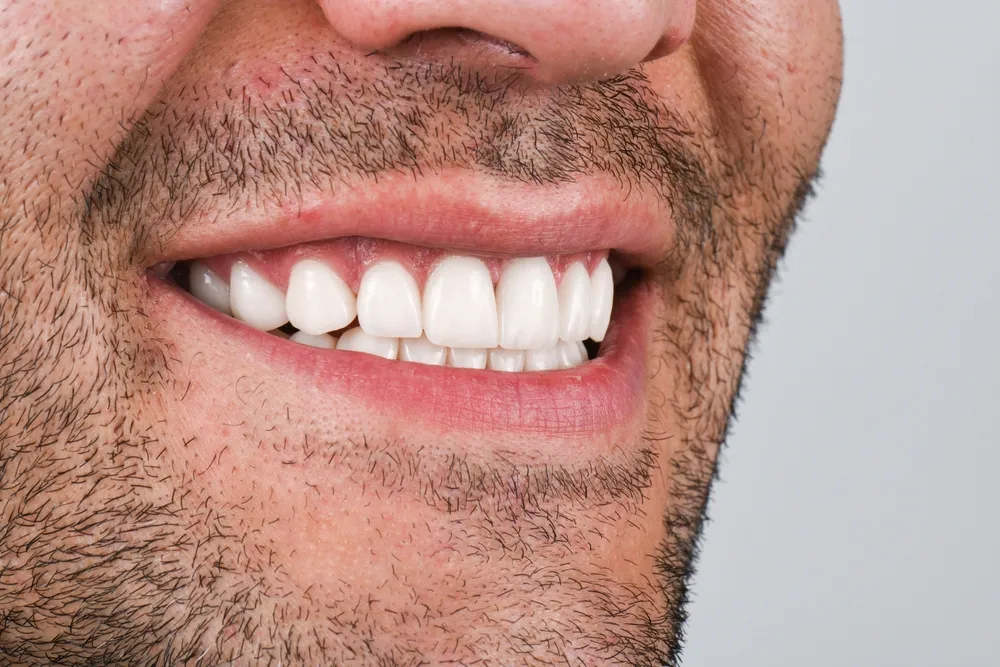
Dental veneers are thin shells that dentists bond to the front surfaces of teeth. These shells cover imperfections and create a uniform appearance. Veneers fix stained enamel, minor misalignment, chipped edges, and small gaps. They also protect worn tooth surfaces. A cosmetic dentist prepares the tooth, takes impressions, and works with a dental lab to create custom shells. The dentist then bonds the veneer to the tooth using resin cement. This process transforms smiles without major surgery.
Veneers serve both cosmetic and functional purposes. They improve dental aesthetics and add strength to weakened enamel. Patients who want smile makeovers often choose veneers because they deliver fast, predictable results. The treatment falls under restorative dentistry and cosmetic dentistry. It requires careful shade matching, precise preparation, and expert bonding.
What Types of Dental Veneers Exist?
Dentists offer three main types of dental veneers. Each type uses different materials and techniques.
Porcelain veneers are the most common option. Technicians craft these shells from dental porcelain in a laboratory. Porcelain veneers resist stains, mimic natural enamel, and last many years. They require slight tooth reduction before placement.
Composite resin veneers use tooth-colored resin. Dentists apply this material directly to the tooth or fabricate it indirectly in a lab. Composite veneers cost less and require less preparation. However, they stain more easily and have a shorter lifespan.
No-prep and ultra-thin veneers need minimal or no enamel removal. These options suit patients who want reversible treatments. They are thinner than traditional porcelain veneers but may not mask severe discoloration as effectively.
How Do Veneers Get Their Color?
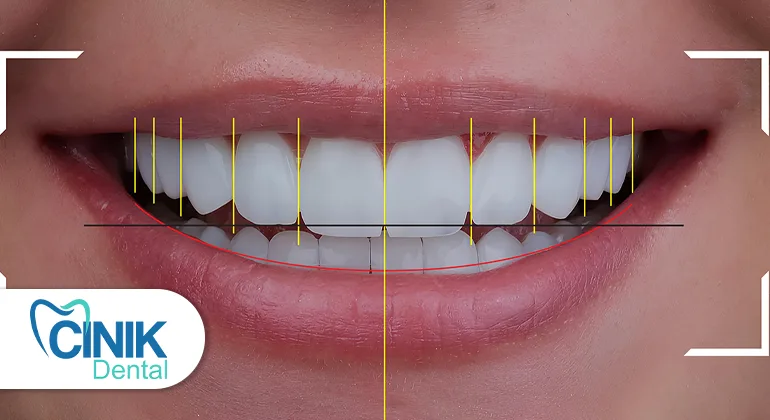
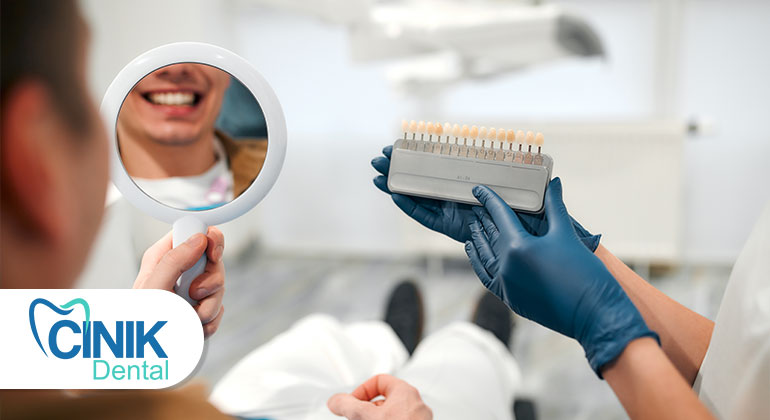
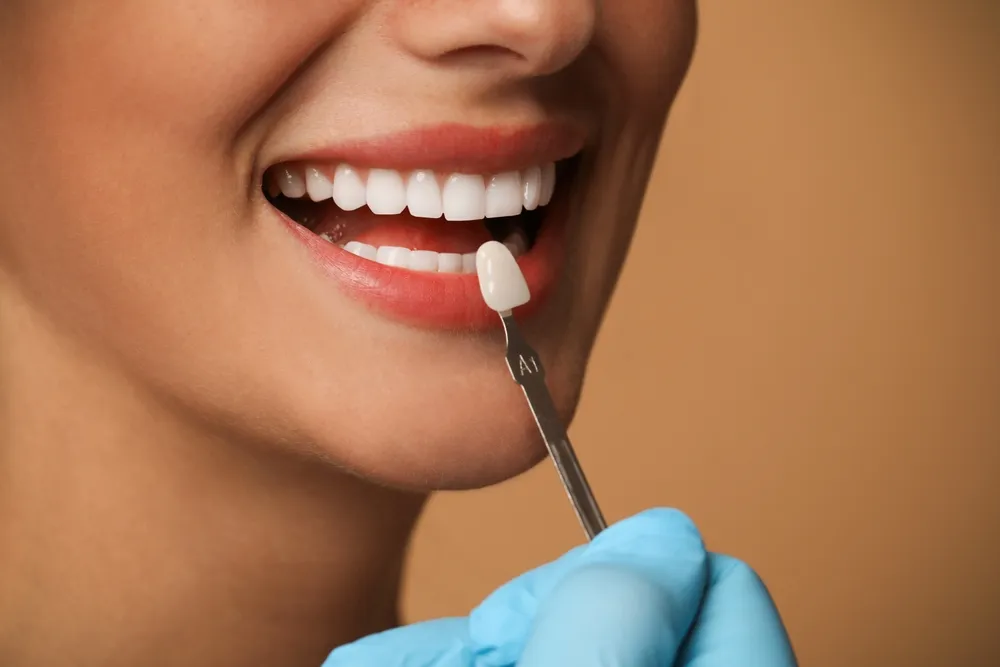
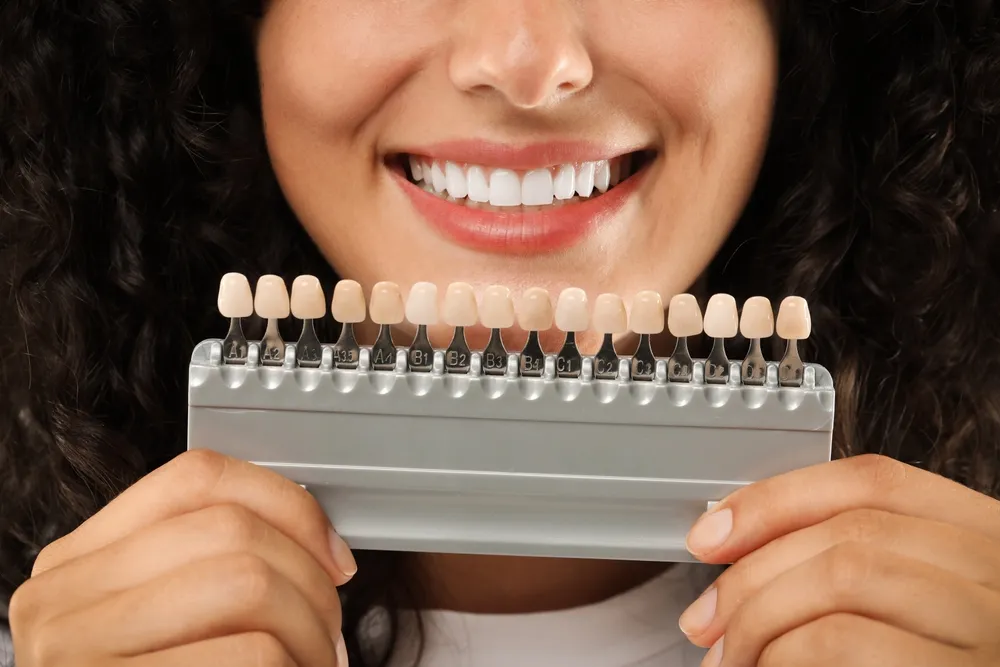
Technicians custom-make veneers using shade guides. The dentist selects a tooth shade that matches the patient's preferences and surrounding teeth. The lab then layers porcelain or tints composite resin to achieve the exact hue. This process happens before the dentist bonds the veneer to the tooth.
Veneer color remains stable because the material does not contain living tissue. Natural teeth change color as enamel ages and dentin yellows. Veneers do not undergo this process. Their color stays locked in from the day of fabrication. This stability is both an advantage and a limitation. Patients enjoy long-lasting shade consistency, but they cannot alter the color later with bleaching agents.
Can Veneers Be Whitened?
What Is the Short Answer?
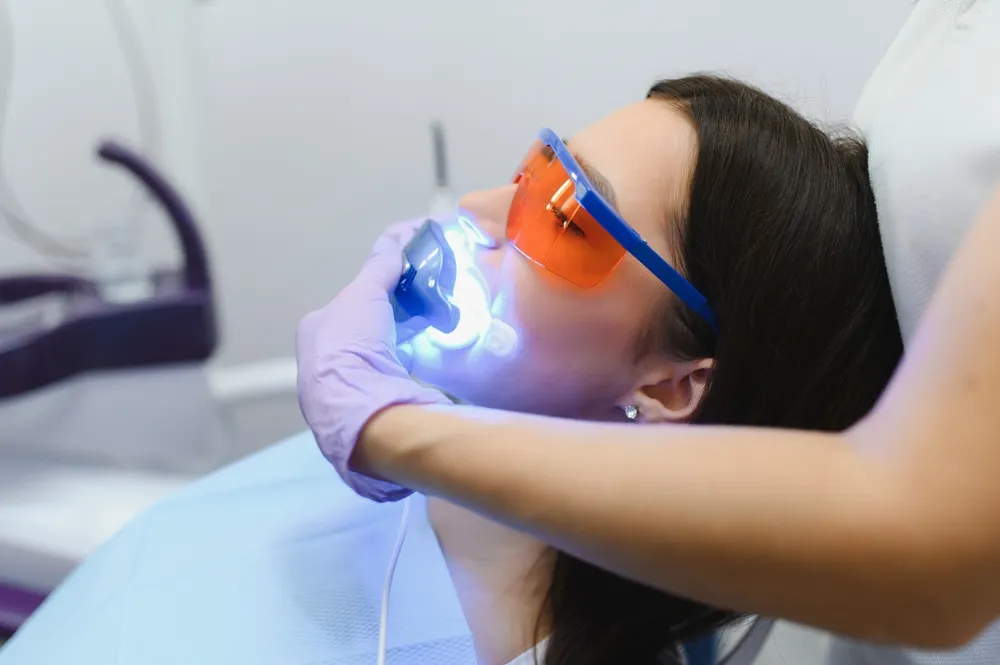
No. Veneers do not respond to traditional whitening agents. Bleaching products change the color of natural tooth enamel. They cannot alter the color of porcelain or composite resin. If you try to whiten veneers with hydrogen peroxide or carbamide peroxide, the restoration stays the same shade. Only the natural teeth around the veneer will lighten. This creates a mismatch instead of a uniform smile.
Why Do Whitening Treatments Fail on Veneers?
Whitening treatments target organic pigments within natural enamel. Hydrogen peroxide and carbamide peroxide break down into free radicals. These radicals attack chromogenic molecules in the tooth structure and make them less reflective. This chemical reaction lightens natural teeth.
Veneers contain inorganic materials. Porcelain consists of densely packed ceramic crystals. Composite resin contains polymer chains and filler particles. Neither material contains the organic pigments that bleaching agents target. The peroxide cannot penetrate the glazed surface of porcelain. It cannot alter the intrinsic color of composite resin. Research shows that bleaching agents remove surface stains from some composites but do not bleach the material itself (Villalta et al.). The color difference after bleaching comes from superficial cleansing, not intrinsic color change.
Can Composite Veneers Be Whitened?
No. Composite veneers may lose some surface stains through polishing or mild bleaching, but the underlying color does not change. Composite resin has a porous polymer structure. This porosity allows water and pigment molecules to absorb into the material over time. Surface discoloration can improve with professional cleaning. However, deep staining within the resin matrix stays permanent.
Studies show that microhybrid and nanohybrid composite resins stain at similar rates when exposed to tea and coffee (Villalta et al.). Some composites return to baseline color after bleaching, but this happens because the bleach removes external deposits, not because it alters the resin shade. Repolishing removes the stained surface layer and restores some brightness. But this is stain removal, not true whitening.
Why Do Veneers Look Darker Over Time?
What Causes Surface Stains on Veneers?
Dark beverages and tobacco products leave pigments on veneer surfaces. Coffee, tea, and red wine contain chromogens that stick to dental restorations. These pigments accumulate on the outer layer of the veneer. Porcelain veneers resist this buildup because they have a non-porous glazed surface. But if the glaze wears down from abrasion or acidic foods, microscopic irregularities trap pigments. Composite veneers stain faster because their resin matrix absorbs these pigments directly.
Why Do Natural Teeth Change Color Around Veneers?
Natural teeth continue to stain and yellow over time. Veneers do not. This creates a shade mismatch that makes veneers look darker by comparison. Patients who whiten their natural teeth after getting veneers often notice this contrast. The natural teeth lighten, but the veneers stay the same. The smile looks uneven instead of brighter.
Dentists recommend whitening natural teeth before veneer placement. This allows the technician to match the veneer to the lightest shade. If the natural teeth darken later, the patient can whiten them again to restore harmony.
How Does Aging Affect Composite Veneers?
Composite veneers degrade as they age. The organic resin matrix breaks down through hydrolysis and wear. This degradation increases porosity and makes the material absorb more stains. Studies show that composite veneers show hue changes within two to five years, especially in patients who drink dark beverages or use tobacco. Porcelain veneers maintain their hue for eight to fifteen years. About 85% of porcelain veneers retain their original shade after ten years.
Can Plaque and Tartar Darken Veneers?
Yes. Plaque and tartar buildup along the gumline and veneer margins creates a dull, yellow appearance. The bonding material that attaches the veneer to the tooth is more susceptible to staining than the veneer itself. Research indicates that 70% of perceived veneer discoloration comes from the bonding material at the edges. This creates dark lines where the veneer meets the tooth. Regular professional cleaning removes this buildup and restores brightness.
How Can You Make Veneers Look Whiter?
Does Professional Cleaning Help?
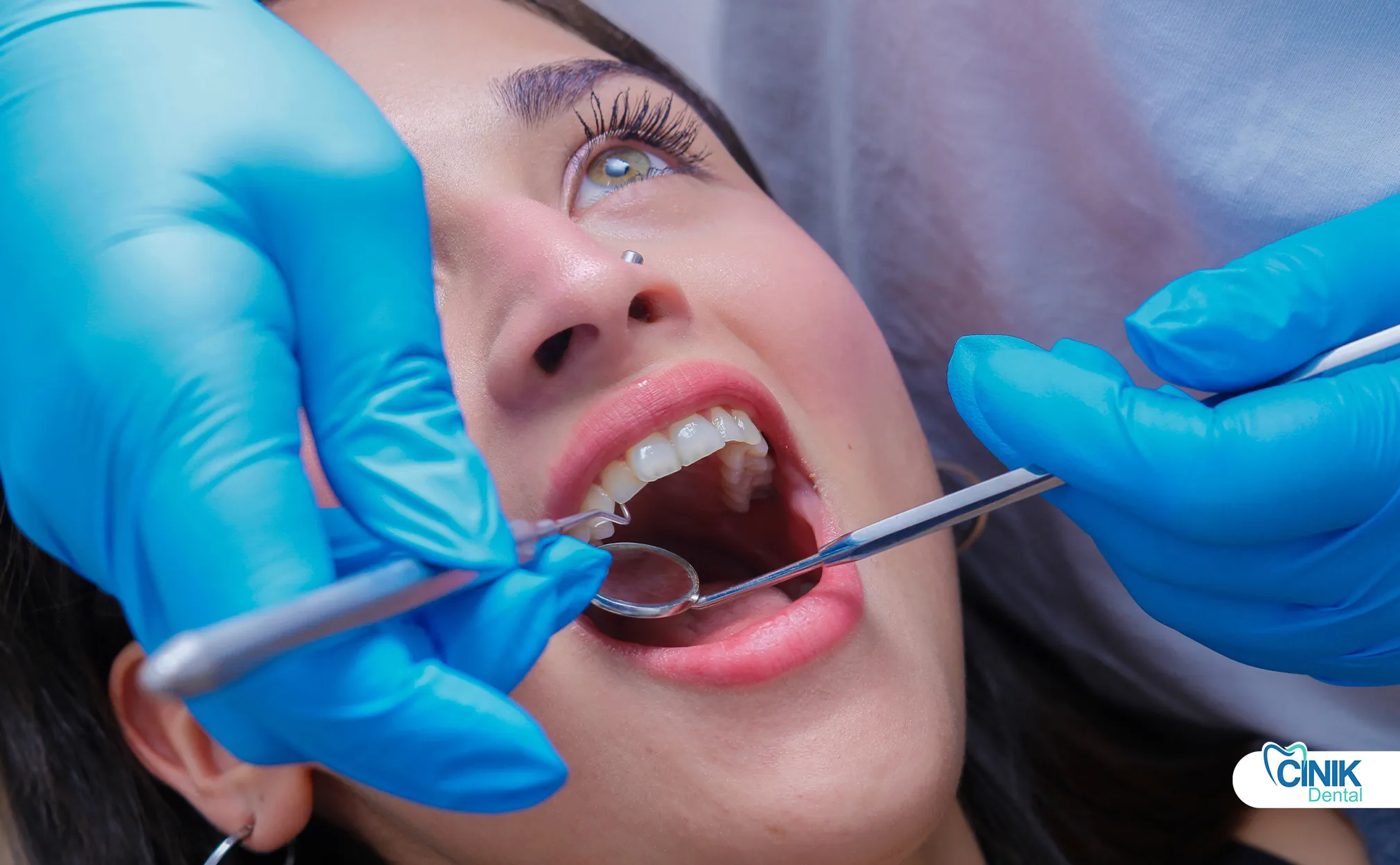
Yes. Professional dental cleaning removes plaque, calculus, and superficial stains from veneer surfaces. Dental hygienists use specialized instruments that clean without scratching the restoration. This procedure improves the overall appearance of the smile. It also prevents gum disease and decay around the veneer margins. Patients should schedule cleanings every six months.
Can Dentists Polish Veneers?
Yes. Professional polishing restores the glossy surface of veneers and removes superficial discoloration. Dentists use diamond-infused pastes, rubber polishing points, and specialized discs to smooth the surface. This process mimics the original glaze and improves light reflection.
Studies show that repolishing significantly reduces discoloration on composite resin surfaces. Fontes et al. (2009) demonstrated that removing the outer stained layer of composite improves color. For porcelain, polishing removes surface roughness and restores luster. Dentists recommend polishing every six to twelve months for optimal aesthetics.
Should You Whiten Natural Teeth Around Veneers?
Yes. Whitening the natural teeth around veneers can improve overall smile uniformity. This approach works best when the veneers still look good but the surrounding teeth have darkened. The dentist applies bleaching gel to the natural teeth only. The veneers remain unchanged. This creates a more balanced appearance without replacing the restorations.
However, this strategy has limits. If the veneers are already darker than desired, whitening the adjacent teeth will not fix the problem. In that case, replacement becomes the better option.
When Should You Replace Veneers?
Replace veneers when they show persistent discoloration, cracks, chips, or loss of polish. Replacement also makes sense when patients want a significantly lighter shade. New veneers can match updated aesthetic goals. Technicians can fabricate modern shells with improved materials and brighter shades.
Porcelain veneers last 10 to 15 years on average. Composite veneers last 5 to 7 years. Beier et al. (2012) found that porcelain laminate veneers have a survival rate of 94.4% after 5 years, 93.5% after 10 years, and 82.93% after 20 years. Layton and Walton (2012) reported even higher survival rates of 96% at 10 years and 91% at 15 years for feldspathic porcelain veneers. When veneers reach the end of their lifespan, replacement restores both function and beauty.
Can Whitening Toothpaste Whiten Veneers?
How Does Whitening Toothpaste Work?
Most whitening toothpastes do not contain bleaching agents. They use abrasives such as silica or baking soda to scrub stains from the tooth surface. These products remove external deposits from natural enamel. They can also remove superficial stains from veneers. But they cannot change the intrinsic color of either material.
What Are the Risks of Abrasive Toothpaste?
Abrasive toothpastes scratch veneer surfaces. These microscopic scratches create rough areas that trap more stains. Over time, the veneer looks darker, not brighter. Porcelain veneers can lose their protective glaze. Composite veneers suffer even more because their softer resin matrix scratches easily. Once the surface becomes rough, stain retention increases dramatically.
Which Oral Care Products Are Safe for Veneers?
Non-abrasive fluoride toothpaste protects veneer surfaces. Soft-bristled toothbrushes prevent scratching. Patients should avoid charcoal-based pastes and highly abrasive formulas. Dentist-approved oral hygiene practices include gentle brushing twice daily, flossing between veneers, and using alcohol-free mouthwash. These habits preserve the smooth surface and prevent stain buildup.
What Professional Whitening Options Exist for Veneer Patients?
Does In-Office Whitening Work?
In-office whitening lightens natural teeth but does not change veneer color. Dentists apply high-concentration hydrogen peroxide gels to the teeth. The peroxide penetrates enamel and dentin to break down pigments. Veneers block this penetration. The bleaching agent cannot reach the underlying tooth structure through the veneer, and it cannot alter the veneer material itself.
Patients with veneers can still undergo in-office whitening. The treatment improves the color of natural teeth that are not covered by restorations. This helps achieve a more uniform smile. But patients must understand that the veneers will stay the same shade.
Do Take-Home Whitening Systems Help?
Take-home whitening systems use custom trays and lower-concentration peroxide gels. These systems work the same way as in-office treatments. They lighten natural enamel but leave veneers unchanged. Patients with veneers can use take-home trays to maintain the color of their exposed natural teeth. They must manage expectations about color consistency. The trays will not whiten the veneered teeth.
Should You Whiten Before Getting Veneers?
Yes. Dentists strongly recommend whitening natural teeth before veneer placement. This protocol ensures the technician can match the veneer to the patient's brightest, desired shade. Once the dentist bonds the veneer, the color becomes permanent. Whitening after placement only affects the natural teeth, creating a mismatch.
This planning step offers long-term cosmetic advantages. Patients who whiten first enjoy a stable, uniform smile. They can perform touch-up whitening on natural teeth later without worrying about stark contrasts. This approach represents best practices in cosmetic dentistry and smile makeovers.
Do Veneers or Natural Teeth Resist Stains Better?
How Well Do Porcelain Veneers Resist Stains?
Porcelain veneers resist stains better than natural enamel. Dental porcelain has a non-porous, glass-like surface. This surface repels pigments from coffee, tea, and tobacco. The glazed finish mimics natural enamel shine while providing superior stain resistance. Clinical studies show that well-maintained porcelain veneers maintain their brightness for 10 to 15 years. Their color stability exceeds that of natural teeth.
How Easily Do Composite Veneers Stain?
Composite veneers stain more easily than porcelain. The resin matrix contains micropores that absorb pigments and oral fluids. Studies show that composite veneers show visible discoloration within 18 to 36 months when exposed to daily coffee or tea. Only about 40% of composite veneers retain acceptable color after 5 years. This makes composite a less ideal choice for patients who consume staining foods regularly.
What Factors Affect Long-Term Color Stability?
Several factors determine how long veneers stay bright. Oral hygiene habits matter most. Patients who brush and floss daily prevent plaque buildup and surface stains. Dietary choices also play a role. Limiting coffee, tea, red wine, and dark sauces preserves veneer color. Smoking introduces nicotine stains that yellow both natural teeth and composite veneers. Regular dental checkups allow early detection of surface changes. Professional maintenance every six months keeps restorations looking fresh.
How Can You Keep Veneers Bright and White?
What Daily Habits Protect Veneers?
Brush twice daily with non-abrasive fluoride toothpaste. Use a soft-bristled brush and gentle circular motions. Floss carefully between veneered teeth to remove plaque from margins. Rinse with water after consuming dark beverages or foods. These habits prevent pigment accumulation and protect the veneer surface.
Which Foods Should You Limit?
Cut back on coffee, black tea, red wine, berries, tomato sauce, and soy sauce. These foods contain intense pigments that stick to dental restorations. If you consume them, rinse your mouth with water immediately afterward. Drink staining beverages through a straw to minimize contact with front teeth. These simple changes reduce surface staining significantly.
How Often Should You Visit the Dentist?
Schedule dental checkups every six months. The dentist monitors veneer condition, checks bonding integrity, and performs professional cleaning. Early detection of margin discoloration or glaze wear allows prompt intervention. Routine maintenance appointments extend the lifespan of veneers and preserve their brightness.
Which Habits Damage Veneers?
Smoking stains veneers and harms gum health. Using teeth as tools to open packages or bite nails chips porcelain and composite. Excessive grinding and clenching wear down the veneer surface and increase fracture risk. Patients who grind their teeth should wear night guards. These protective devices prevent damage and maintain aesthetics.
When Should Veneers Be Replaced for Aesthetic Reasons?
What Are the Signs of Aging Veneers?
Chipping, cracks, and loss of polish indicate aging veneers. Persistent discoloration that does not improve with cleaning also signals the need for replacement. Marginal darkening where the veneer meets the tooth suggests bonding material degradation. Gum recession can expose the veneer margin and create an unsightly line. When these signs appear, consult a cosmetic dentist about replacement options.
How Long Do Veneers Last?
Porcelain veneers last 10 to 15 years with proper care. Some high-quality feldspathic or lithium disilicate veneers last 20 years or more. Composite veneers last 5 to 7 years before they require replacement due to wear and discoloration. Gresnigt et al. (2019) compared ceramic and indirect composite veneers over 10 years. Ceramic restorations showed significantly better color stability and fewer surface irregularities. Composite veneers displayed more staining, wear, and chipping over time.
Can Modern Materials Improve Your Smile?
Yes. Newer ceramic systems such as lithium disilicate and leucite-reinforced glass ceramics offer improved strength and aesthetics. Modern fabrication techniques like CAD/CAM technology create more precise fits and better shade matching. Patients who replace old veneers can choose lighter shades, improved translucency, and more natural contours. A cosmetic upgrade delivers a refreshed smile that meets current aesthetic standards.
Frequently Asked Questions About Whitening Veneers
Can Porcelain Veneers Change Color?
No. Porcelain veneers maintain their original shade for their entire lifespan. The ceramic material does not react to bleaching agents. Surface stains may develop if the glaze wears away, but the underlying color stays constant. Professional polishing removes these surface deposits and restores the original appearance.
Can Hydrogen Peroxide Whiten Veneers?
No. Hydrogen peroxide penetrates natural enamel to break down pigments. It cannot penetrate porcelain or alter composite resin chemistry. When applied to veneers, hydrogen peroxide simply flows over the surface without causing color change. Kwon et al. found that bleaching agents reduce microhardness in some composites but do not produce reliable whitening of the restoration itself.
Why Do Veneers Look Yellow?
Surface stains from food and tobacco create a yellow appearance. Bonding material discoloration at the margins also causes yellowing. Sometimes the underlying natural tooth darkens due to decay or root canal treatment. This darkness shows through translucent veneer edges. In composite veneers, material degradation increases yellowing over time.
Can Dentists Professionally Whiten Veneers?
No. Dentists cannot bleach veneers. They can clean, polish, and remove surface stains. They can also whiten the natural teeth around veneers. But no professional treatment changes the intrinsic color of porcelain or composite restorations. Replacement remains the only option for a major shade change.
Should You Whiten Teeth Before Getting Veneers?
Yes. Whitening natural teeth before veneer placement allows precise shade matching. The dentist achieves the desired tooth shade first. The technician then fabricates veneers to match this lighter color. This prevents future mismatches and reduces the need for replacement.
How Can You Remove Stains from Veneers?
Professional cleaning and polishing remove surface stains. Dentists use specialized instruments and polishing pastes to smooth the veneer surface. For composite veneers, repolishing removes the stained outer layer and improves brightness. Deep internal discoloration requires veneer replacement.
Do Composite Veneers Stain More Than Porcelain?
Yes. Composite veneers stain more easily due to their porous resin structure. They absorb pigments from food, beverages, and tobacco. Porcelain veneers have a non-porous glazed surface that repels stains. Studies confirm that composite restorations show more discoloration and surface roughness over time than ceramic alternatives.
How Often Should Veneers Be Polished?
Dentists recommend professional polishing every six to twelve months. This frequency prevents stain accumulation and maintains surface gloss. Patients who consume staining foods or smoke may need more frequent polishing. Regular maintenance appointments keep veneers looking their best.
Conclusion
Veneers cannot undergo whitening with conventional bleaching treatments. The materials resist hydrogen peroxide and carbamide peroxide. Porcelain veneers maintain stable color for 10 to 15 years. Composite veneers stain more easily and last 5 to 7 years. Professional cleaning and polishing improve the appearance of veneers by removing surface deposits. Whitening the natural teeth around veneers can create a more uniform smile. But replacement remains the only solution for patients who want a significantly lighter shade.
Preventive care and regular dental visits preserve long-term aesthetics. Brush with non-abrasive toothpaste, limit staining foods, and avoid smoking. Schedule checkups every six months. When veneers age or discolor beyond repair, modern replacement options offer brighter, more natural results. Work with a qualified cosmetic dentist to plan your smile makeover. Choose the right materials, whiten natural teeth first, and maintain your restorations properly. This strategy delivers a beautiful smile that lasts for years.
Comparison Table: Porcelain vs. Composite Veneers
Feature | Porcelain Veneers | Composite Veneers |
Material | Dental porcelain, ceramic crystals | Resin composite, polymer matrix |
Stain Resistance | High; non-porous glazed surface | Low; porous structure absorbs pigments |
Average Lifespan | 10–15 years | 5–7 years |
Color Stability | 85% retain original shade after 10 years | 40% retain acceptable color after 5 years |
Whitening Response | None; color is permanent | None; only surface stains removable |
Professional Polish | Restores glaze and luster | Removes stained surface layer |
Cost | Higher initial investment | Lower initial cost |
Repairability | Cannot repair; must replace | Can repair chips and stains chairside |
Maintenance Table: Keeping Veneers Bright
Task | Frequency | Benefit |
Brush with non-abrasive paste | Twice daily | Prevents scratch-related staining |
Floss between veneers | Daily | Removes plaque from margins |
Professional cleaning | Every 6 months | Eliminates calculus and surface stains |
Professional polishing | Every 6–12 months | Restores surface gloss |
Limit coffee, tea, red wine | Daily habit | Reduces pigment accumulation |
Rinse after dark foods | After each consumption | Washes away loose pigments |
Avoid smoking | Ongoing | Prevents nicotine staining |
Wear night guard if grinding | Nightly | Protects surface from wear |
References
Beier, Ulrike S., et al. "Clinical Performance of Porcelain Laminate Veneers for up to 20 Years." International Journal of Prosthodontics, vol. 25, no. 1, 2012, pp. 79–85.
Burke, F. J. Trevor. "Survival Rates for Porcelain Laminate Veneers with Special Reference to the Effect of Preparation in Dentin: A Literature Review." Journal of Esthetic and Restorative Dentistry, vol. 24, no. 4, 2012, pp. 257–265.
Fontes, S. T., et al. "Color Stability of a Nanofill Composite: Effect of Different Immersion Media." Journal of Applied Oral Science, vol. 17, no. 5, 2009, pp. 388–391.
Gresnigt, Marco M. M., et al. "Randomized Clinical Trial on Indirect Resin Composite and Ceramic Laminate Veneers: Up to 10-Year Findings." Journal of Dentistry, vol. 86, 2019, pp. 102–109.
Kreulen, C. M., et al. "Meta-Analysis of Anterior Veneer Restorations in Clinical Studies." Journal of Dentistry, vol. 26, no. 4, 1998, pp. 345–353.
Kwon, So Ran, et al. "Effect of Carbamide Peroxide Bleaching on the Surface Roughness and Microhardness of Resin Composites." Dental Materials Journal, vol. 31, no. 5, 2012, pp. 795–800.
Layton, Danielle M., and Terry R. Walton. "A Systematic Review and Meta-Analysis of the Survival of Feldspathic Porcelain Veneers over 5 and 10 Years." International Journal of Prosthodontics, vol. 25, no. 6, 2012, pp. 590–603.
Meniawi, M., et al. "Color Stability, Surface Roughness, and Surface Morphology of Universal Composites." Odontology, 2025, doi:10.1007/s10266-025-01108-2.
Villalta, P. W., et al. "Surface Discoloration of Composite Resins: Effects of Staining and Bleaching." Acta Biomaterialia Odontologica Scandinavica, vol. 2, no. 1, 2016, pp. 1–9.