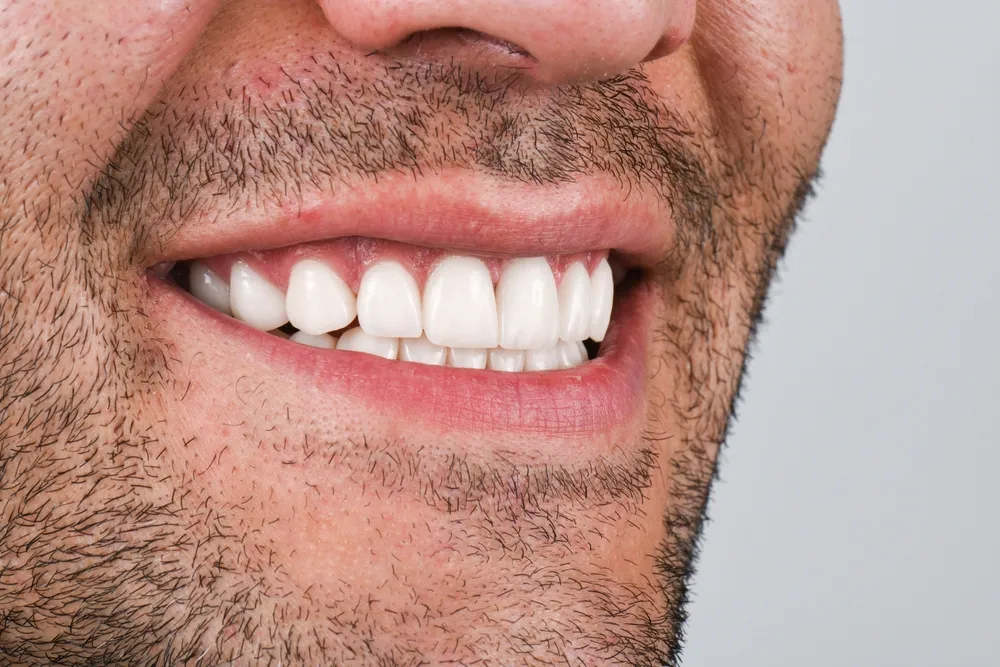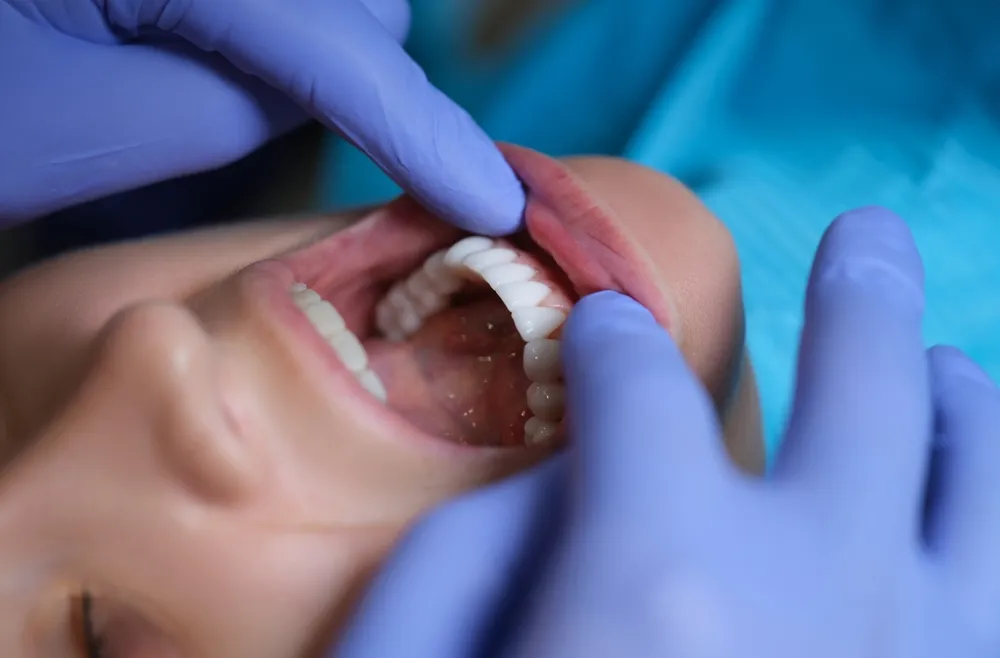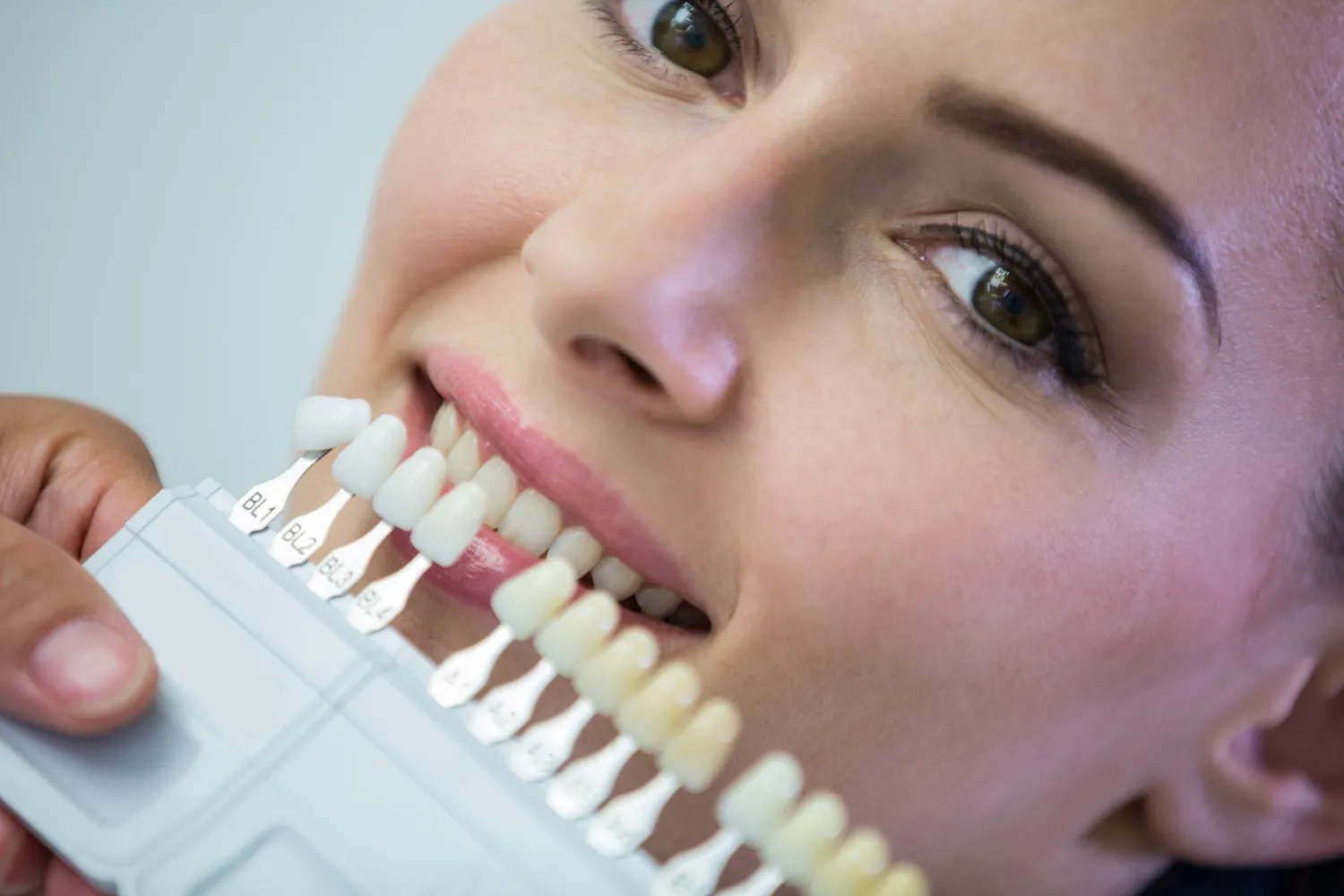
Dental veneers rank among the most popular treatments in cosmetic dentistry. Patients worldwide choose veneers to transform stained, chipped, or misaligned teeth into bright, symmetrical smiles. Two materials dominate this field: E.max veneers and traditional porcelain veneers. Many patients confuse these terms. E.max actually represents a type of porcelain veneer. Manufacturers craft E.max from lithium disilicate glass-ceramic. Traditional porcelain veneers usually refer to feldspathic porcelain veneers. Both materials create stunning results, but they differ in strength, translucency, preparation needs, and clinical indications. This article explains every difference in plain language. You will learn how each material performs, who benefits most from each option, and what factors guide the best choice for your smile makeover.
What Are Dental Veneers?
Dental veneers are thin ceramic shells. Dentists bond these shells to the front surfaces of teeth. Veneers mask imperfections and create uniform, white smiles. They belong to the family of cosmetic dental veneers. Modern veneer treatment offers a conservative alternative to full crowns.
What Purpose Do Dental Veneers Serve?
Veneers serve five main purposes. First, they enhance smile aesthetics. Second, they correct tooth color. Third, they close small gaps between teeth. Fourth, they repair chips and cracks. Fifth, they fix minor misalignment. Dentists recommend veneers when patients want dramatic cosmetic improvement without braces or extensive drilling. Veneers work best on front teeth where appearance matters most. They do not straighten severely crooked teeth or replace missing teeth. For those cases, orthodontists and implant specialists provide better solutions.
How Do Veneers Improve Smile Aesthetics?
Veneers improve smile aesthetics through conservative cosmetic treatment. A dentist removes only a thin layer of enamel. Then the lab fabricates custom shells that match the patient's desired shape and shade. The dentist bonds these shells with strong dental adhesive. This process preserves most of the natural tooth structure. Patients enjoy long-term aesthetic restoration without the invasiveness of full crowns. The result looks natural because ceramic mimics the light-reflecting properties of real enamel.
What Are E.max Veneers?
E.max veneers are lithium disilicate veneers. Ivoclar Vivadent developed IPS E.max technology. These veneers combine high strength with excellent aesthetics. Dental professionals often call them the gold standard in modern veneer materials.
What Material Makes Up E.max Veneers?
E.max veneers contain lithium disilicate glass-ceramic. This material features a crystalline structure with about 70% lithium disilicate crystals embedded in a glass matrix (Rojas-Rueda 2025). Manufacturers produce this ceramic through controlled heat treatment. The crystal structure gives E.max its remarkable strength. Unlike older ceramics, lithium disilicate resists fracture while maintaining natural translucency. This dual benefit explains why dentists trust E.max for both anterior veneers and posterior crowns.
How Do Labs Manufacture E.max Veneers?
Labs manufacture E.max veneers through two main methods. The first method uses CAD/CAM milling. A technician scans the patient's teeth digitally. Then a computer-guided mill carves the veneer from a solid lithium disilicate block. The second method uses heat pressing. The technician invests a wax pattern in refractory material. Then they press molten lithium disilicate ceramic into the mold under high temperature and pressure. Both methods yield precise, durable restorations. CAD/CAM milling allows faster turnaround. Heat pressing often produces slightly denser crystalline structures. Dentists choose the method based on lab capabilities and case complexity.
What Key Characteristics Define E.max Veneers?
E.max veneers show four key characteristics. First, they offer high strength. Second, they provide excellent translucency. Third, they require minimal tooth reduction. Fourth, they create a natural appearance. Research shows that lithium disilicate CAD/CAM veneers achieve a cumulative survival rate of 99.83% over a mean follow-up of 30.8 months (Imburgia 2021). Another study on 79 multilayered lithium disilicate anterior veneers reported a 98.7% survival rate over three years (Malchiodi 2020). These numbers confirm that E.max delivers both beauty and reliability.
What Are Traditional Porcelain Veneers?
Traditional porcelain veneers refer to feldspathic porcelain veneers. Dental technicians have used this material for decades. Feldspathic porcelain remains the most aesthetic ceramic in dentistry when handled by master ceramists.
What Is Feldspathic Porcelain?
Feldspathic porcelain is a glass-ceramic material. It contains silica, alumina, and potassium oxide. Dental technicians hand-layer this porcelain onto a refractory die. They build the veneer in thin layers, much like an artist paints a portrait. Each layer receives individual firing in a porcelain oven. This hand-crafted artistry allows unmatched color gradation and translucency. No mill or press can fully replicate the optical nuance of a master ceramist's layered feldspathic veneer.
What Material Characteristics Do Traditional Porcelain Veneers Have?
Traditional porcelain veneers show three standout characteristics. First, they offer superior translucency. Second, labs can fabricate them in ultra-thin dimensions. Third, they allow highly customizable aesthetics. Feldspathic porcelain transmits light much like natural enamel. This property creates restorations that seem to glow from within. However, feldspathic porcelain carries lower flexural strength than lithium disilicate. Studies report feldspathic porcelain flexural strength at approximately 60 to 120 MPa, while lithium disilicate reaches 360 to 400 MPa (Harada et al.). This strength gap matters in high-stress situations.
Why Have Dentists Used Feldspathic Porcelain for Decades?
Dentists have used feldspathic porcelain for decades because it delivers unmatched optical properties. Before CAD/CAM technology, technicians had no alternative for creating lifelike anterior restorations. Feldspathic porcelain allowed them to copy the subtle color shifts found in natural teeth. The material also accepts ultra-thin fabrication. Technicians can craft feldspathic veneers as thin as 0.3 mm. This thinness enables no-prep and minimal-prep techniques. For patients who want maximum aesthetics with minimal drilling, feldspathic porcelain still holds strong appeal.
E.max Veneers vs Porcelain Veneers: What Are the Key Differences?
Patients comparing E.max veneers vs porcelain veneers must understand ten key differences. These differences span material composition, manufacturing, strength, aesthetics, preparation, thickness, bonding, longevity, repairability, and cost.
How Do the Materials Differ?
E.max contains lithium disilicate glass-ceramic. Traditional porcelain veneers contain feldspathic porcelain. Lithium disilicate derives its strength from interlocking crystalline structures. Feldspathic porcelain relies on a high-glass content for its optical beauty. This fundamental difference drives every other distinction between the two materials.
How Do Manufacturing Methods Differ?
Labs manufacture E.max through CAD/CAM milling or heat pressing. Both methods use automated or semi-automated processes. Labs fabricate feldspathic porcelain through hand-layering on refractory dies. This manual process demands more time and more artistic skill. A feldspathic veneer may take a master ceramist several days to complete. An E.max veneer can emerge from a CAD/CAM mill in hours.
Which Material Offers Greater Strength and Fracture Resistance?
E.max offers greater strength and fracture resistance. Lithium disilicate shows flexural strength values between 360 and 400 MPa. Feldspathic porcelain shows flexural strength between 60 and 120 MPa. This means E.max resists chipping and cracking far better than traditional porcelain. A systematic review and meta-analysis found that lithium disilicate laminate veneers showed a 96.81% survival rate over an average of 10.4 years, with lower complication rates than feldspathic alternatives (Klein 2025). For patients who grind their teeth or bite hard foods, E.max provides a safer choice.
Which Material Delivers Better Aesthetic Performance?
Both materials deliver excellent aesthetic performance, but in different ways. Feldspathic porcelain offers superior color layering and internal optical complexity. Master ceramists can build subtle shade transitions that mimic natural dentin and enamel layers. E.max offers highly natural appearance through monolithic translucency and modern shading systems. For most patients, both materials create beautiful smiles. Only the most demanding cosmetic cases reveal the subtle edge of hand-layered feldspathic porcelain.
How Does Translucency Compare Between the Two Materials?
Feldspathic porcelain shows higher translucency than E.max. The high glass content in feldspathic porcelain allows more light to pass through. This creates a more enamel-like glow. E.max also shows good translucency, especially in its high-translucency variants. However, the crystalline structure of lithium disilicate scatters light slightly more than pure glass-ceramic. For patients with thin enamel or high aesthetic demands, feldspathic porcelain may provide a marginally more lifelike result.
Which Veneer Requires Less Tooth Preparation?
Both veneers allow conservative tooth preparation. Feldspathic porcelain can reach ultra-thin dimensions of 0.3 to 0.5 mm. This allows no-prep or minimal-prep placement in select cases. E.max typically requires 0.5 to 0.7 mm of reduction. However, E.max can also work with feather-edge margins and minimal reduction when dentists plan carefully. A study on 1075 lithium disilicate CAD/CAM veneers with feather-edge margins showed excellent outcomes with conservative preparation designs (Imburgia 2021). Neither material demands aggressive drilling when clinicians apply proper technique.
How Does Thickness Differ?
Feldspathic veneers can achieve ultra-thin profiles. Labs can craft them at 0.3 mm in some no-prep cases. E.max veneers usually measure 0.5 to 0.7 mm for adequate strength. The extra thickness in E.max compensates for its crystalline structure. However, modern high-translucency E.max blocks allow thinner designs than earlier generations.
Which Material Bonds Better to Teeth?
E.max bonds strongly to enamel through proven adhesive protocols. Dentists etch the internal surface with hydrofluoric acid. Then they apply silane coupling agent. Finally, they bond the veneer with resin cement. Feldspathic porcelain also bonds well through identical protocols. Both materials achieve reliable adhesion when dentists follow proper steps. However, E.max shows slightly better bond durability over time due to its higher crystalline content and surface stability.
Which Veneer Lasts Longer?
Both veneers last many years with proper care. A 21-year prospective study on feldspathic porcelain veneers reported a 96% cumulative survival rate at 10 years and 91% at 20 years (Layton and Walton 2012). Another 20-year retrospective study showed 94.4% survival at 5 years and 82.93% at 20 years for porcelain laminate veneers (Beier 2012). For E.max, a systematic review reported a 96.81% survival rate at 10.4 years (Klein 2025). A 10-year retrospective study on CAD/CAM lithium disilicate veneers found a 92.7% survival rate (Sen 2024, cited in Rojas-Rueda 2025). Both materials offer excellent longevity. E.max may show slightly lower complication rates over time.
How Do Costs Compare?
E.max veneers typically cost more than feldspathic porcelain veneers. The higher price reflects material costs, CAD/CAM equipment, and the brand recognition of IPS E.max. Feldspathic porcelain requires more labor from master ceramists, which can also drive up costs. Price varies by region, lab fees, and dentist expertise. Patients should discuss total treatment costs during consultation rather than choosing based on price alone.
Comparison Table: E.max Veneers vs Porcelain Veneers
Feature | E.max Veneers | Traditional Porcelain Veneers |
Material | Lithium disilicate | Feldspathic porcelain |
Flexural Strength | 360–400 MPa | 60–120 MPa |
Appearance | Highly natural | Exceptional translucency |
Typical Thickness | 0.5–0.7 mm | 0.3–0.5 mm (ultra-thin possible) |
Tooth Preparation | Minimal | Minimal to ultra-conservative |
Durability | Excellent | Excellent with proper case selection |
Stain Resistance | High | High |
Manufacturing | CAD/CAM milling or heat pressing | Hand-layered on refractory die |
Best For | Strength plus aesthetics | Maximum aesthetics |
Which Veneer Looks More Natural?
Both veneers look natural, but feldspathic porcelain holds a slight edge in maximum aesthetic cases. The difference depends on light behavior, color matching, surface texture, and technician skill.
How Does Light Transmission Differ?
Feldspathic porcelain transmits light more freely. Its glass-rich composition allows light to enter the veneer, scatter internally, and exit in a manner identical to natural enamel. This creates depth and vitality. E.max also transmits light well, but its crystalline structure produces slightly more internal reflection. For most social situations, patients cannot tell the difference. Only under direct photography or stage lighting does feldspathic porcelain reveal its optical superiority.
How Does Color Matching Work?
Color matching with feldspathic porcelain allows infinite customization. Technicians layer different shades of porcelain to build internal color gradients. They can add subtle amber, blue, or white effects that match adjacent teeth exactly. E.max uses pre-shaded blocks or staining techniques. Modern E.max shade systems offer excellent matching, but they lack the infinite variability of hand-layered feldspathic porcelain.
How Does Surface Texture Affect Appearance?
Surface texture plays a huge role in natural appearance. Natural enamel contains microscopic irregularities that scatter light. Technicians can polish E.max to a smooth, enamel-like finish. They can also add surface texture with diamond burs. Feldspathic porcelain accepts surface characterization more easily because of its glassy nature. Master ceramists can create perikymata, developmental grooves, and incisal halos that mimic real teeth.
What Role Does Individual Characterization Play?
Individual characterization means adding unique features to each veneer. Real teeth are not identical. They show color bands, crack lines, and wear facets. Feldspathic porcelain allows technicians to build these features into the ceramic layers. E.max can also receive external characterization, but internal effects are harder to achieve in monolithic restorations.
How Important Is Dental Technician Expertise?
Dental technician expertise matters enormously for both materials. A mediocre technician can make feldspathic porcelain look flat and artificial. A master technician can make E.max look indistinguishable from natural teeth. However, feldspathic porcelain demands more artistic skill because the technician builds the veneer from scratch. E.max relies more on digital design and milling precision. The best results in either material come from experienced technicians who understand optical principles.
Which Veneer Is Stronger?
E.max veneers are stronger than feldspathic porcelain veneers. This strength advantage shows in flexural tests, chip resistance, crack resistance, and bite pressure performance.
What Does Flexural Strength Comparison Show?
Flexural strength comparison shows a clear winner. Lithium disilicate registers 360 to 400 MPa. Feldspathic porcelain registers 60 to 120 MPa. This fourfold to sixfold difference means E.max can withstand much higher bending forces before fracture. In laboratory testing, E.max CAD showed the highest mean biaxial flexural strength at 312.71 MPa among tested restorative materials (ScienceDirect 2025 study). This data supports clinical observations that E.max chips less often.
Which Material Resists Chipping Better?
E.max resists chipping better than feldspathic porcelain. Chipping occurs when small pieces break off the incisal edge. This happens under biting forces or accidental trauma. The crystalline structure of lithium disilicate absorbs and distributes force more effectively. Feldspathic porcelain, with its glass-rich matrix, propagates cracks more easily. Patients with habits like nail biting or ice chewing should strongly consider E.max.
Which Material Resists Cracking Better?
E.max also resists cracking better. Cracks start at microscopic flaws in the ceramic surface. Lithium disilicate's dense crystal structure limits crack propagation. Feldspathic porcelain allows cracks to travel farther before stopping. This explains why feldspathic veneers sometimes fail through complete fracture while E.max veneers show only minor chipping if they fail at all.
How Do They Perform Under Bite Pressure?
Under bite pressure, E.max performs more reliably. The posterior teeth generate forces up to 500 Newtons during chewing. Anterior teeth experience less force but still face stress from incising food. E.max handles these forces with ease. Feldspathic porcelain works well in low-stress anterior cases but carries higher risk in patients with heavy bites or bruxism. Dentists often recommend E.max for patients who need both anterior veneers and posterior crowns in the same smile makeover.
Longevity: Which Veneer Lasts Longer?
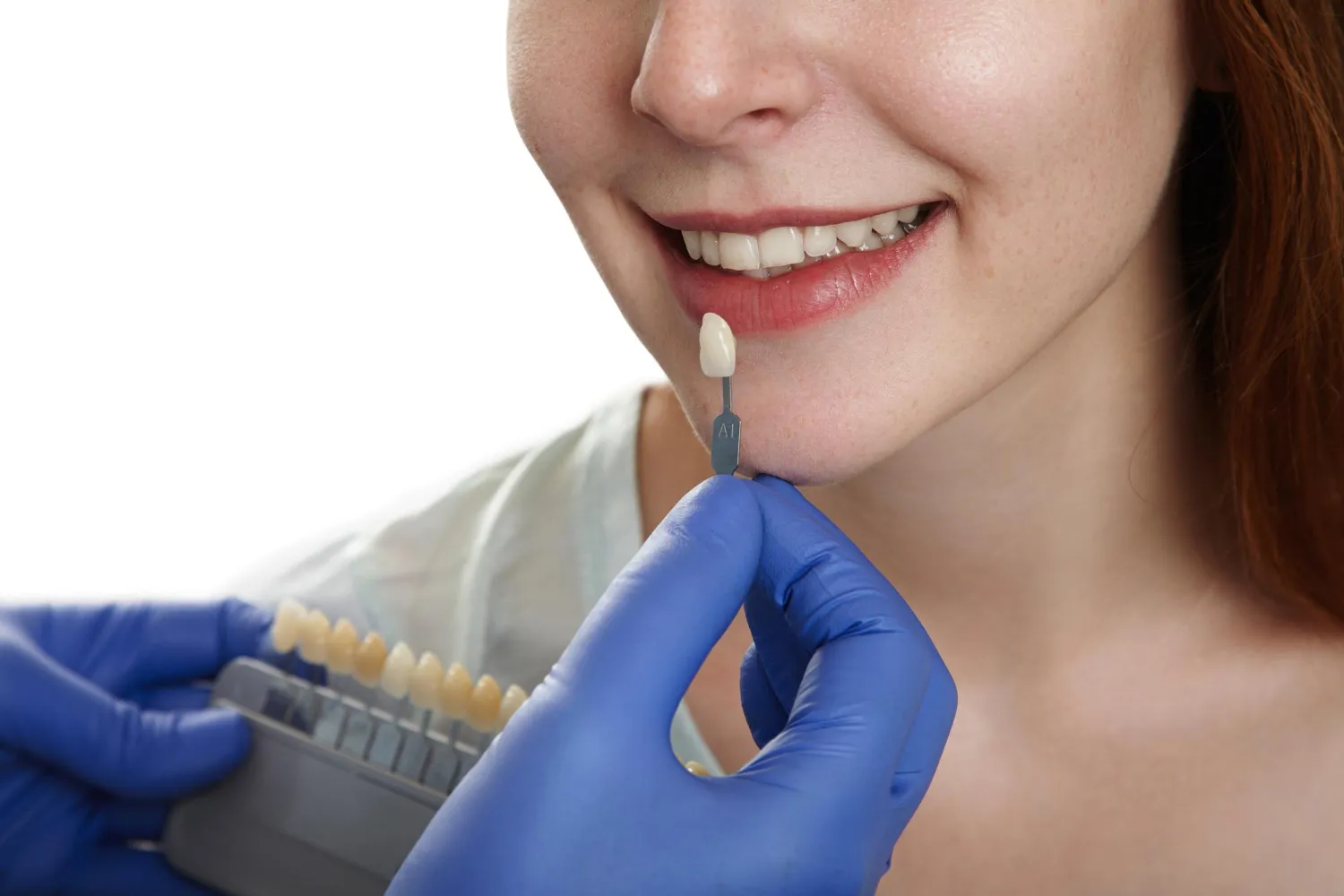
Both E.max and feldspathic porcelain veneers last many years. Proper care, bonding, and case selection determine actual lifespan more than material choice alone.
What Is the Expected Lifespan of E.max Veneers?
E.max veneers typically last 10 to 15 years. Many last longer. A retrospective study of 197 CAD/CAM lithium disilicate veneers with up to 10 years of follow-up reported a 92.7% survival rate (Sen 2024, in Rojas-Rueda 2025). Another study of 1075 CAD/CAM lithium disilicate veneers showed a 99.83% cumulative survival rate over a mean of 30.8 months (Imburgia 2021). These figures suggest that E.max provides durable, long-term service.
What Is the Expected Lifespan of Porcelain Veneers?
Porcelain veneers also last 10 to 15 years on average. A landmark 21-year study by Layton and Walton found that feldspathic porcelain veneers achieved a 96% cumulative survival rate at 10 years and 91% at 20 years when bonded to enamel (Layton and Walton 2012). Beier and colleagues reported similar findings in their 20-year retrospective study, with 94.4% survival at 5 years and 82.93% at 20 years (Beier 2012). These numbers prove that feldspathic porcelain remains a reliable long-term option.
What Factors Affect Veneer Longevity?
Five main factors affect veneer longevity. First, oral hygiene matters. Patients who brush and floss daily prevent gum recession and decay at veneer margins. Second, teeth grinding shortens lifespan. Bruxism generates excessive forces that crack ceramic. Third, bite force influences outcomes. Heavy biters need stronger materials like E.max. Fourth, regular dental visits allow early detection of problems. Fifth, bonding quality determines success. Veneers bonded entirely to enamel survive longer than those bonded to dentin. A 12-year retrospective study found a 99% survival rate for enamel-bonded veneers versus 94% for mixed-substrate veneers (Gurel 2013).
Which Veneer Requires Less Tooth Reduction?
Both veneers allow conservative preparation, but feldspathic porcelain can achieve slightly less reduction in select no-prep cases.
How Conservative Is Tooth Preparation?
Tooth preparation for both materials follows conservative principles. Dentists aim to preserve enamel because enamel provides the best bonding surface. They remove only enough structure to create space for the ceramic. Typical reduction ranges from 0.3 mm to 0.7 mm on the facial surface. Both E.max and feldspathic porcelain work within these limits.
What Are No-Prep and Minimal-Prep Possibilities?
No-prep and minimal-prep possibilities exist for both materials. Feldspathic porcelain excels here because technicians can fabricate it at 0.3 mm. This ultra-thin profile allows placement without any drilling in ideal cases. E.max also works for minimal-prep cases, especially with feather-edge margin designs. However, E.max usually needs slightly more space for optimal strength. Edelhoff and colleagues emphasize that minimally invasive treatment options in fixed prosthodontics should preserve tooth structure whenever possible (Edelhoff 2016).
Why Does Enamel Preservation Matter?
Enamel preservation matters because enamel bonding creates the strongest adhesive interface. Dentin bonding works but shows lower long-term stability. When dentists remove only enamel, they maintain the tooth's structural integrity. They also reduce post-treatment sensitivity. Conservative preparation also allows future replacement or alternative treatments if needed later.
Who Is a Good Candidate for E.max Veneers?
Four types of patients benefit most from E.max veneers.
Do Patients Seeking Strength Benefit from E.max?
Patients seeking strength benefit greatly from E.max. Those with bruxism, heavy bite forces, or active lifestyles need the fracture resistance that lithium disilicate provides. E.max withstands daily chewing stresses better than feldspathic porcelain. Athletes, professionals who speak publicly, and patients with strong jaw muscles all represent ideal candidates.
Can E.max Handle Moderate Smile Makeovers?
E.max handles moderate smile makeovers with ease. Patients who want to change tooth shape, size, and color across multiple teeth find E.max an excellent choice. The material works for four to ten veneers in a single arch. Its consistent shading and milling precision ensure uniform results across all restorations.
Does E.max Work for Mild Tooth Discoloration?
E.max works well for mild tooth discoloration. The material comes in various opacity levels. High-opacity blocks mask yellow or gray undertones. Low-translucency options block dark stains effectively. For severe discoloration, dentists may recommend crowns instead of veneers. But for mild to moderate staining, E.max provides reliable masking.
Can E.max Correct Minor Shape Issues?
E.max can correct minor shape issues. Short teeth, slightly rotated teeth, and small chips all respond well to E.max veneer treatment. The material's strength allows dentists to extend the incisal edge without fear of fracture. This makes E.max ideal for patients who want longer, more prominent front teeth.
Who Is a Better Candidate for Traditional Porcelain Veneers?
Four patient groups suit traditional feldspathic porcelain veneers best.
Do High-End Cosmetic Cases Need Feldspathic Porcelain?
High-end cosmetic cases often need feldspathic porcelain. Actors, models, and public figures demand the absolute maximum in optical realism. Hand-layered feldspathic veneers deliver subtle internal color effects that cameras capture beautifully. When every detail matters, master ceramists prefer feldspathic porcelain for its artistic potential.
Does Complex Smile Design Favor Feldspathic Porcelain?
Complex smile design favors feldspathic porcelain. Cases involving multiple shade transitions, incisal translucency, or characterization require the layering technique. Technicians can build pink effects near the gumline, amber streaks in the body, and blue translucency at the incisal edge. These effects are harder to achieve in monolithic E.max.
Do Patients Seeking Maximum Natural Translucency Prefer Feldspathic Porcelain?
Patients seeking maximum natural translucency prefer feldspathic porcelain. Young patients with thick, healthy enamel often want veneers that look exactly like natural teeth. Feldspathic porcelain's higher glass content creates this lifelike glow. The veneers seem to disappear into the smile rather than sit on top of the teeth.
Should Patients with Thin Enamel Choose Feldspathic Porcelain?
Patients with thin enamel should consider feldspathic porcelain. Because technicians can craft feldspathic veneers at ultra-thin dimensions, these patients avoid removing the little enamel they have. No-prep feldspathic veneers bond directly to the thin enamel layer without additional reduction. This preserves tooth structure and reduces sensitivity.
What Are the Advantages of E.max Veneers?
E.max veneers offer five major advantages.
How Does E.max Deliver Excellent Durability?
E.max delivers excellent durability through its lithium disilicate crystal structure. The interlocking crystals resist crack propagation. This means patients experience fewer fractures over time. The material also resists wear from opposing teeth. E.max maintains its shape and surface polish for years.
How Natural Does E.max Look?
E.max looks highly natural. Modern shading systems provide multiple translucency levels. Dentists and technicians can select blocks that match the patient's existing teeth. External staining and glazing add final characterization. While feldspathic porcelain offers slightly more optical complexity, E.max satisfies the vast majority of patients.
How Strong Is the Bonding?
The bonding for E.max is strong. Hydrofluoric acid etching creates micro-retentive surfaces. Silane coupling agent forms chemical bonds between ceramic and resin cement. Resin cement polymerizes into a rigid, durable layer. This adhesive interface strengthens the entire restoration. Properly bonded E.max veneers function as one unit with the natural tooth.
How Does E.max Resist Fracture?
E.max resists fracture through material science. The 70% crystalline content absorbs mechanical energy. The glass matrix distributes forces across the restoration. This combination prevents the catastrophic failures sometimes seen in weaker ceramics. Patients can eat, speak, and smile with confidence.
What Clinical Success Has E.max Achieved?
E.max has achieved remarkable clinical success. Thousands of published cases document its performance. A systematic review of 29 studies confirmed lithium disilicate laminate veneers as a reliable treatment option with high survival rates and low complication rates (Klein 2025). Dentists worldwide now consider E.max a first-line material for ceramic veneers.
What Are the Advantages of Traditional Porcelain Veneers?
Traditional feldspathic porcelain veneers offer four distinct advantages.
How Do They Deliver Exceptional Aesthetics?
They deliver exceptional aesthetics through optical purity. The high glass content creates depth and vitality. Light enters the veneer, bounces internally, and exits with a warm, natural glow. This mimics the behavior of young, healthy enamel. No other dental ceramic matches this effect so closely.
How Does Superior Color Layering Work?
Superior color layering works through manual artistry. Technicians apply dentin layers, enamel layers, and effect layers separately. They fire each layer individually. This builds a three-dimensional color map within the veneer. The result shows color variation from cervical to incisal, just like real teeth.
How Customizable Are These Restorations?
These restorations are highly customizable. Every feldspathic veneer is unique. Technicians adjust thickness, opacity, and surface texture for each patient. They can match adjacent teeth with photographic precision. This customization appeals to patients who demand perfection.
What Optical Properties Stand Out?
The optical properties of feldspathic porcelain stand out. The material shows high translucency, low opacity, and natural fluorescence under ultraviolet light. These properties ensure that the veneers look natural in all lighting conditions. Whether under office lights, sunlight, or camera flashes, feldspathic porcelain maintains its lifelike appearance.
What Limitations Do Both Veneer Types Share?
Both veneer types share five limitations.
Does Tooth Preparation Pose a Limitation?
Tooth preparation poses a limitation for both materials. Even minimal-prep veneers require some enamel removal. This makes the treatment irreversible. Patients must commit to maintaining veneers for life. Once a dentist removes enamel, it does not grow back.
Is This Treatment Irreversible?
Yes, this treatment is irreversible. Dentists must remove enamel to create space for the ceramic. Even no-prep cases often require minor surface roughening. Patients should understand that veneers represent a lifetime commitment. Future replacement will always be necessary.
Will Veneers Need Replacement Over Time?
Veneers will need replacement over time. No dental restoration lasts forever. Ceramic wears, margins stain, and gums recede. Most patients replace veneers after 10 to 20 years. Good oral hygiene extends this timeline. Poor habits shorten it.
Can Both Types Chip?
Yes, both types can chip. E.max resists chipping better than feldspathic porcelain, but no ceramic is indestructible. Biting on hard objects, facial trauma, or severe bruxism can damage any veneer. Patients should avoid using their teeth as tools and wear night guards if they grind.
Do Cost Considerations Affect Choice?
Cost considerations affect choice for many patients. E.max typically costs more due to brand and technology fees. Feldspathic porcelain costs vary based on ceramist skill. Insurance rarely covers cosmetic veneers. Patients should budget for initial treatment and future replacement.
What Myths Surround E.max and Porcelain Veneers?
Five common myths mislead patients. Evidence-based explanations correct these misconceptions.
Does E.max Never Chip?
No, E.max can chip. The myth that E.max never chips is false. While lithium disilicate shows high fracture resistance, extreme forces can still damage it. Patients who open bottles with their teeth or chew ice risk chipping even E.max veneers. Night guards and proper habits prevent most chip failures.
Do Porcelain Veneers Always Look Better?
No, porcelain veneers do not always look better. The myth that feldspathic porcelain always looks better is false. In the hands of an average technician, feldspathic porcelain can look flat and artificial. In the hands of a skilled CAD/CAM designer, E.max can look stunning. The operator and technician matter more than the material alone.
Do Veneers Damage Healthy Teeth?
No, veneers do not damage healthy teeth when dentists place them correctly. The myth that veneers destroy healthy teeth is false. Conservative preparation removes only a thin enamel layer. This preserves the tooth's structural integrity. Problems arise only when dentists over-prepare or place veneers on unsuitable candidates.
Are All Porcelain Veneers the Same?
No, all porcelain veneers are not the same. The myth that all porcelain veneers are identical is false. E.max is lithium disilicate. Feldspathic porcelain is a different material. Zirconia veneers are yet another option. Each material has unique properties, strengths, and indications. Patients should discuss material selection with their dentist.
Does Stronger Always Mean Better?
No, stronger does not always mean better. The myth that stronger always equals better is false. In cosmetic dentistry, aesthetic demands sometimes outweigh strength needs. A feldspathic porcelain veneer on a low-stress anterior tooth may outperform an E.max veneer if the patient values maximum translucency. Dentists must balance strength, aesthetics, and conservation for each case.
What Factors Should You Consider Before Choosing Between E.max and Porcelain Veneers?
Seven factors guide the choice between E.max and feldspathic porcelain veneers.
What Are Your Smile Goals?
Your smile goals determine material choice. If you want a dramatic Hollywood smile with bright white, uniform teeth, either material works. If you want subtle, lifelike replication of natural teeth with internal color effects, feldspathic porcelain may suit you better. Discuss your vision with your dentist and technician.
How Strong Is Your Bite Force?
Your bite force influences material selection. Dentists measure bite force during examination. Patients with high bite forces, bruxism, or heavy chewing habits need E.max. The extra strength protects against fracture. Patients with normal bite forces and no parafunctional habits can safely choose feldspathic porcelain.
Where Are the Target Teeth Positioned?
Tooth position matters. Front teeth face lower functional loads than canines or premolars. Feldspathic porcelain works well on central and lateral incisors. E.max works on any anterior tooth but especially benefits canines and premolars where forces increase. Some dentists use E.max for the entire arch to ensure consistency.
How Much Enamel Do You Have?
Existing enamel quantity affects preparation decisions. Patients with thick enamel allow more preparation flexibility. Patients with thin enamel or worn teeth need ultra-conservative approaches. Feldspathic porcelain often suits these patients because it works at thinner dimensions. E.max can also work but may require more strategic planning.
What Is Your Budget?
Budget plays a practical role. E.max typically commands higher fees. Feldspathic porcelain fees vary by lab and technician. Patients should request detailed cost estimates. They should also consider long-term value. A more expensive veneer that lasts longer may cost less per year than a cheaper option that fails sooner.
What Are Your Cosmetic Expectations?
Cosmetic expectations shape material choice. Patients who want "perfect" teeth without subtle variation may prefer E.max. Patients who want teeth that look naturally imperfect, with color shifts and translucency, may prefer feldspathic porcelain. Photographic examples help communicate these expectations.
How Experienced Are Your Dentist and Laboratory?
Dentist and laboratory experience determine success more than material choice. An experienced dentist performs better preparation, impression, and bonding. An experienced technician creates better aesthetics and fit. Ask your dentist about their case volume, continuing education, and lab partnerships before committing.
Frequently Asked Questions
Are E.max Veneers Better Than Porcelain Veneers?
E.max veneers are not universally better than porcelain veneers. They are stronger and more fracture-resistant. Feldspathic porcelain veneers offer slightly superior translucency. The better choice depends on your specific needs, bite force, and aesthetic goals.
Is E.max Stronger Than Feldspathic Porcelain?
Yes, E.max is stronger than feldspathic porcelain. Lithium disilicate shows flexural strength of 360 to 400 MPa. Feldspathic porcelain shows 60 to 120 MPa. This strength advantage makes E.max the safer choice for patients with heavy bites or bruxism.
Which Veneer Looks More Natural?
Feldspathic porcelain looks slightly more natural in high-end cosmetic cases due to superior translucency and color layering. E.max also looks highly natural and satisfies most patients. The difference is subtle and often invisible to untrained eyes.
Which Veneer Lasts Longer?
Both veneers last 10 to 15 years on average. Long-term studies show feldspathic porcelain survival rates of 91% at 20 years (Layton and Walton 2012). E.max shows 92.7% survival at 10 years (Sen 2024). With proper care, both materials provide decades of service.
Do E.max Veneers Stain?
No, E.max veneers do not stain easily. The glazed ceramic surface resists coffee, tea, wine, and tobacco. However, the resin cement margins can discolor over time. Good oral hygiene and regular cleanings prevent marginal staining.
Can Porcelain Veneers Chip?
Yes, porcelain veneers can chip. Feldspathic porcelain chips more easily than E.max due to lower strength. Patients should avoid biting hard objects and wear night guards if they grind their teeth.
Which Veneer Requires Less Tooth Preparation?
Feldspathic porcelain can require slightly less preparation in no-prep cases because technicians can fabricate it at 0.3 mm. E.max typically needs 0.5 to 0.7 mm. Both materials allow conservative, minimally invasive approaches.
Are E.max Veneers Worth the Additional Cost?
E.max veneers are worth the additional cost for patients who need extra strength. The higher price buys fracture resistance, CAD/CAM precision, and long-term durability. Patients with normal bites and high aesthetic demands may find feldspathic porcelain equally valuable.
Can Both Types Be Repaired?
Small chips in both types can sometimes be repaired with composite resin. Large fractures usually require replacement. E.max chips less often, so it needs fewer repairs. Feldspathic porcelain may need more frequent attention in high-stress situations.
Which Veneer Is Recommended for Front Teeth?
Both veneers work well for front teeth. Dentists often recommend E.max for patients who want durability plus aesthetics. They may recommend feldspathic porcelain for patients who demand maximum translucency and have low bite forces. Your dentist will assess your specific situation.
Conclusion
E.max veneers and traditional feldspathic porcelain veneers both create beautiful, lasting smiles. E.max contains lithium disilicate glass-ceramic. Manufacturers craft it through CAD/CAM milling or heat pressing. It offers higher flexural strength, better fracture resistance, and strong clinical survival rates. Feldspathic porcelain contains silica-rich glass-ceramic. Master technicians hand-layer it on refractory dies. It offers superior translucency, ultra-thin fabrication, and unmatched optical customization.
No universally superior material exists. Treatment success depends on proper case selection, conservative tooth preparation, adhesive bonding protocol, laboratory craftsmanship, and dentist experience. Patients with heavy bites or bruxism should lean toward E.max for its strength. Patients with thin enamel or maximum aesthetic demands should consider feldspathic porcelain for its translucency.
Research supports both materials. A systematic review and meta-analysis confirmed high survival rates for feldspathic, leucite-reinforced, and lithium disilicate laminate veneers at 10.4 years, with lithium disilicate showing the lowest complication rates (Klein 2025). A 21-year prospective study proved that feldspathic porcelain veneers bonded to enamel achieve 96% survival at 10 years and 91% at 20 years (Layton and Walton 2012).
The best choice comes from individualized treatment planning. Discuss your esthetic goals, functional needs, and oral health with an experienced cosmetic dentist. Together, you can select the veneer material that delivers the smile you want with the durability you need.
References
Beier, Ulrike S., et al. "Clinical performance of porcelain laminate veneers for up to 20 years." International Journal of Prosthodontics, vol. 25, no. 1, 2012, pp. 79-85.
Edelhoff, Daniel, et al. "Minimally invasive treatment options in fixed prosthodontics." Quintessence International, vol. 47, no. 3, 2016, pp. 207-216.
Harada, Kosuke, et al. "A comparative evaluation of the translucency of zirconias and lithium disilicate for monolithic restorations." Journal of Prosthetic Dentistry, vol. 116, no. 2, 2016, pp. 257-263.
Imburgia, Mario, et al. "A retrospective clinical study on 1075 lithium disilicate CAD/CAM veneers with feather-edge margins cemented on 105 patients." Journal of Prosthodontics, vol. 30, no. 5, 2021, pp. 412-420.
Klein, Patrick, et al. "Survival and complication rates of feldspathic, leucite-reinforced, lithium disilicate and zirconia ceramic laminate veneers: A systematic review and meta-analysis." Journal of Esthetic and Restorative Dentistry, vol. 37, no. 3, 2025, pp. 601-619.
Layton, Danielle M., and Timothy R. Walton. "The up to 21-year clinical outcome and survival of feldspathic porcelain veneers: accounting for clustering." International Journal of Prosthodontics, vol. 25, no. 6, 2012, pp. 604-612.
Malchiodi, Luca, et al. "Clinical and esthetical evaluation of 79 lithium disilicate multilayered anterior veneers with a medium follow-up of 3 years." Biomedicines, vol. 8, no. 1, 2020, pp. 1-12.
Morimoto, Susana, et al. "Main clinical outcomes of feldspathic porcelain and glass-ceramic laminate veneers: A systematic review and meta-analysis of survival and complication rates." International Journal of Prosthodontics, vol. 29, no. 1, 2016, pp. 38-49.