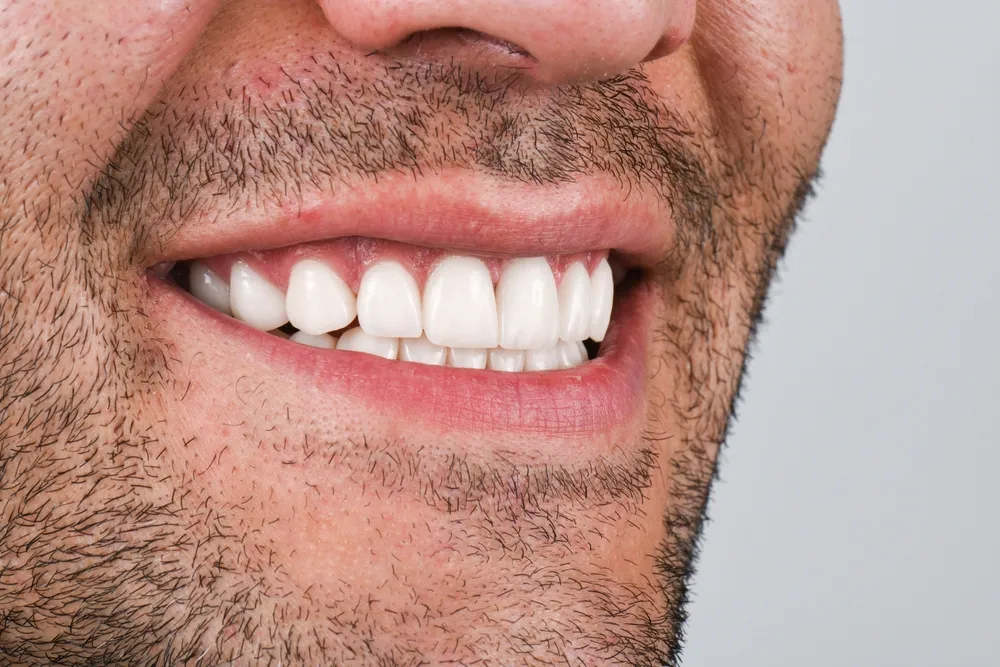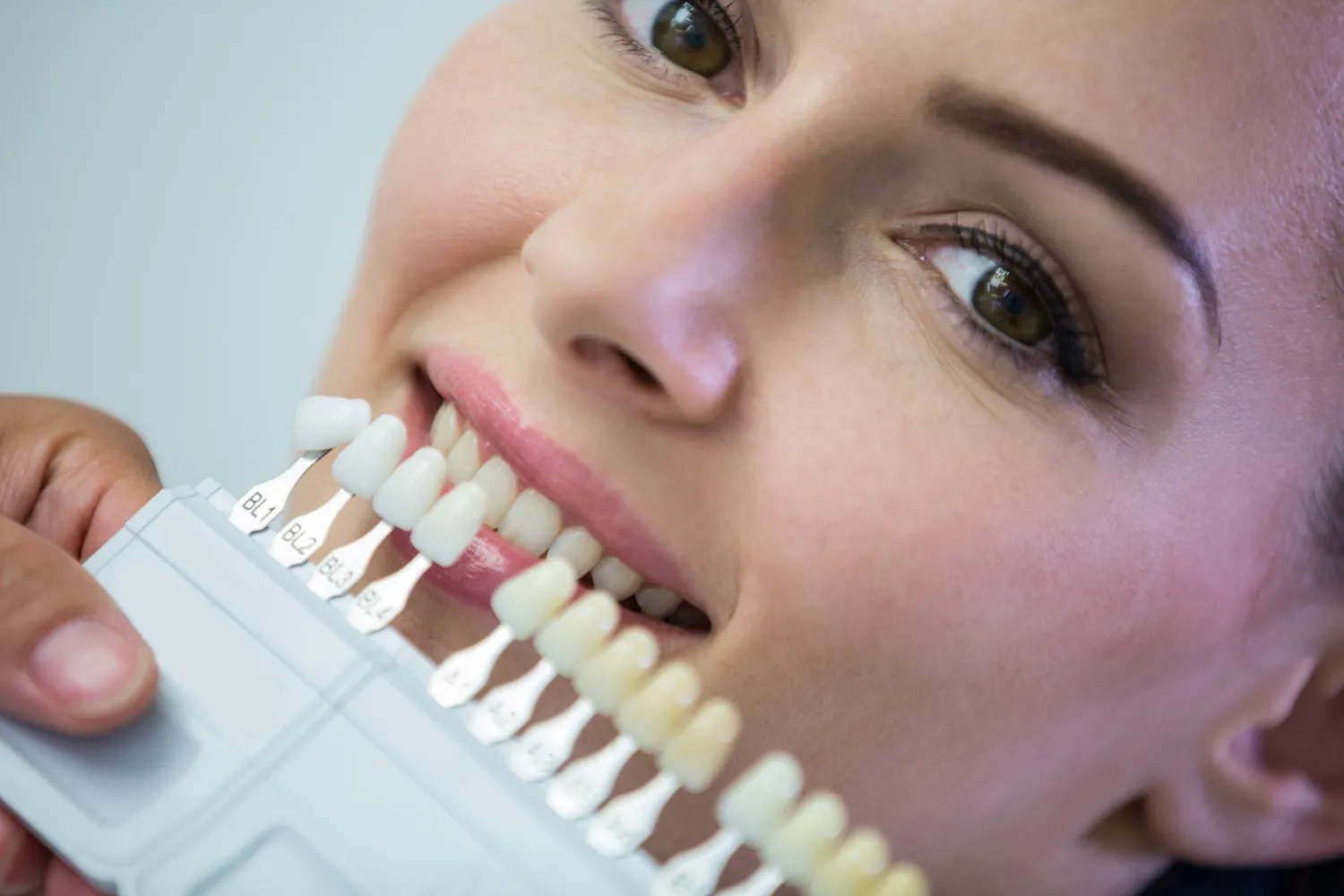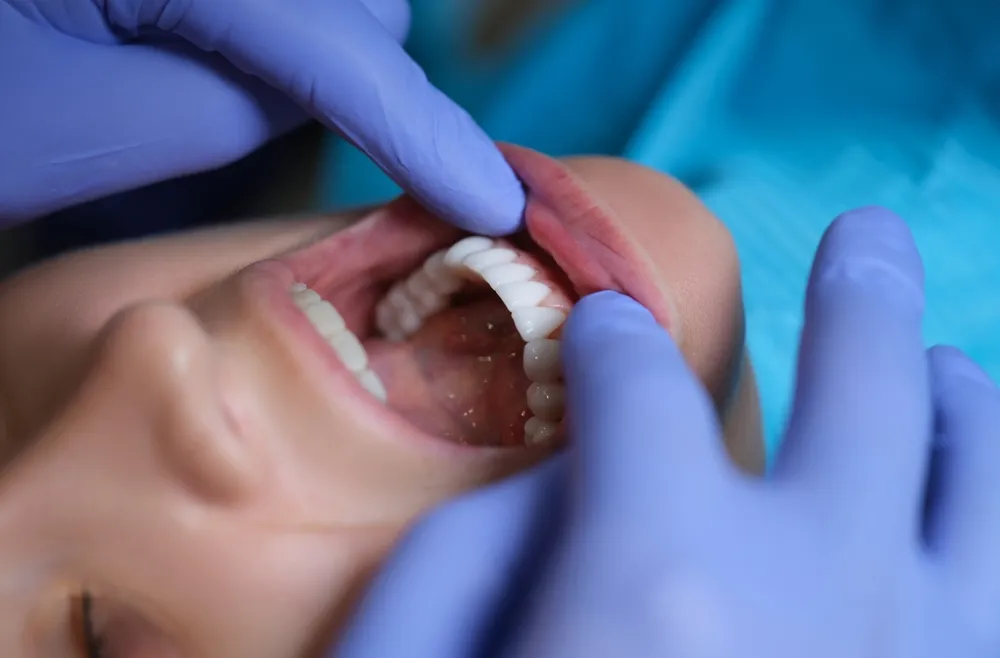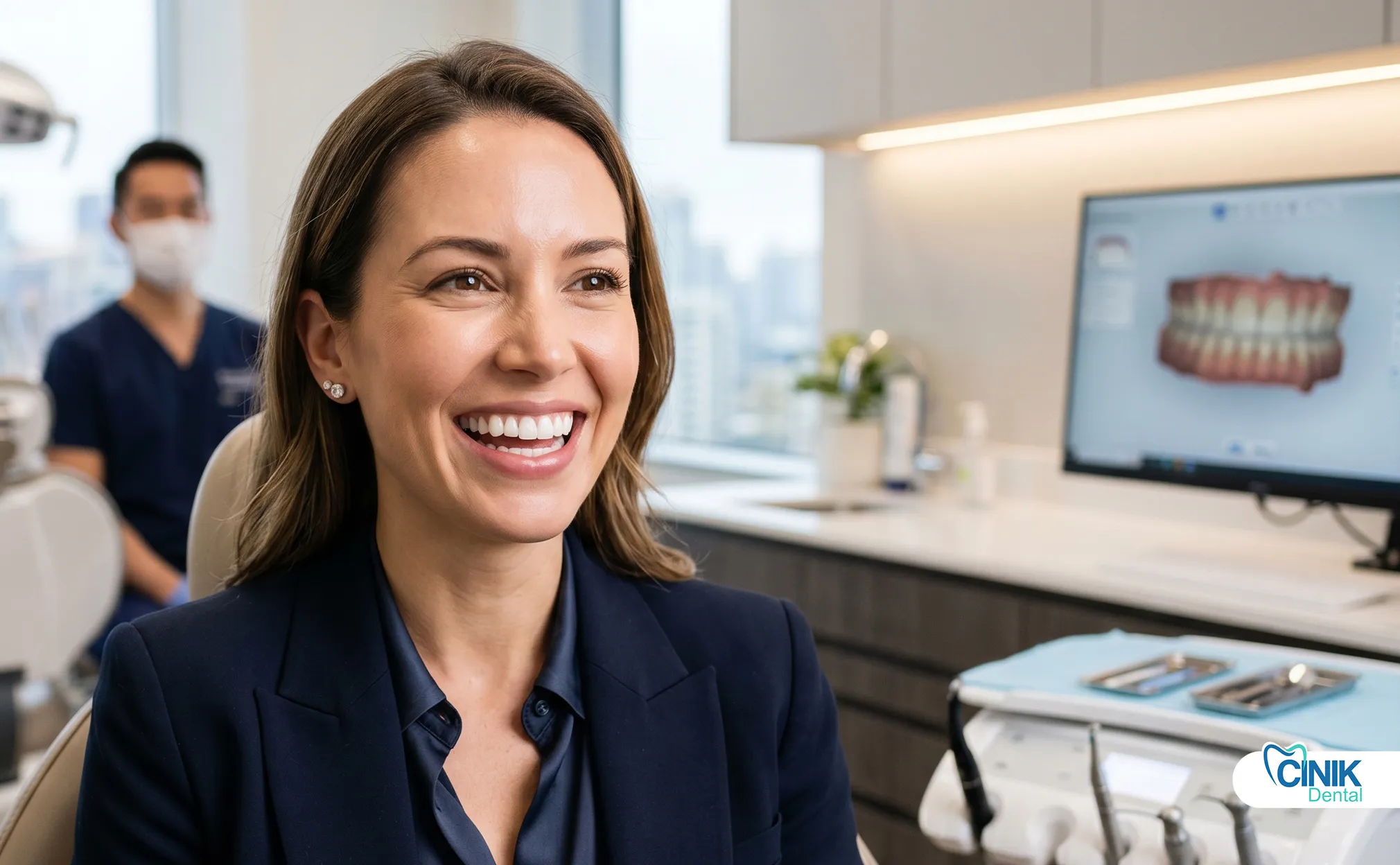
A celebrity smile blends bright tooth color, balanced gum contours, and harmonious facial proportions into one cohesive look. Modern cosmetic dentistry uses veneers, whitening, orthodontics, and digital planning to craft these smiles. Researchers now study how this aesthetic ideal affects self-esteem, social success, and mental health. This article explores the science behind the celebrity smile, the clinical steps that create it, and the psychological impact that follows.
What Is a Celebrity Smile and Why Does It Matter?
A celebrity smile is an aesthetic ideal that features bright, symmetrical, and well-proportioned teeth set in harmony with the lips and face. Media images and public figures have pushed this concept into mainstream culture. Patients now ask dentists for smile makeovers that mirror these ideals. Researchers track this demand through rising cosmetic procedure rates and shifting patient expectations.
What Cultural Forces Drive the Demand for Aesthetic Dentistry?
Social media, film, and television shape how people view dental beauty. Shaw (1981) found that cultural standards strongly influence the desire for orthodontic treatment . Today, Instagram and TikTok amplify these standards daily. Young adults compare their smiles to celebrity images more often than previous generations. This comparison drives demand for teeth whitening, veneers, and alignment correction. Dentists report that patients now arrive with specific photos of smiles they want to copy. This trend pushes the field to balance artistic goals with clinical health.
How Do Researchers Define the Celebrity Smile?
Experts define the celebrity smile through four main traits. First, the teeth show bright but natural white color. Second, the dental midline aligns with the facial midline. Third, the tooth shapes follow consistent proportions. Fourth, the gum line sits at an even height without excessive display. Anderson et al. (2005) studied tooth shape preferences and found that laypeople favor smiles with uniform tooth contours . Ker et al. (2008) confirmed that ordinary viewers notice smile symmetry before they notice minor color variations . These studies prove that the celebrity smile is not just about extreme whiteness. It is about balance and proportion.
What Research Gaps Exist in Smile Aesthetics Literature?
Scientists lack one standardized clinical definition for the celebrity smile. Different studies use different criteria. Some focus on tooth color alone. Others measure gum display or smile arc. Rodrigues et al. (2009) noted that researchers still debate which smile traits matter most to the general public . Another gap sits at the intersection of psychology and dentistry. Few longitudinal studies track how smile makeovers affect mental health over time. Most data comes from cross-sectional surveys. These limitations mean dentists must combine art, science, and patient preference without one universal blueprint.
What Are the Primary Objectives of Modern Smile Analysis?
Researchers aim to merge aesthetic science with patient expectations. They want to create evidence-based guidelines for smile design. They also want to measure how smile changes affect quality of life. Varela and Garcia-Camba (1995) showed that orthodontic treatment improves the psychological profile of adult patients . Modern objectives now include digital prediction, minimally invasive techniques, and personalized outcomes. The goal is not a one-size-fits-all Hollywood smile. The goal is a smile that fits the individual face.
What Principles Govern Smile Aesthetics in Cosmetic Dentistry?
Cosmetic dentistry follows clear visual rules. These rules guide dentists as they plan smile makeovers. The rules cover tooth color, shape, position, gum balance, and facial harmony.
What Core Principles Shape Cosmetic Dental Practice?
Dentists focus on three visual elements: color, shape, and alignment. Color must look natural rather than artificial. Shape must match the patient’s face and gender. Alignment must create a smooth arch without crowding. Lombardi (1973) established early principles of visual perception for denture aesthetics . These principles still guide modern practice. Dentists also consider how light reflects off enamel. They want smiles to look alive, not flat.
What Criteria Define an Ideal Smile Design?
An ideal smile design uses tooth proportions, smile line dynamics, and gingival display limits. Levin (1978) introduced the golden proportion as a guide for anterior tooth width. Later research questioned this rigid math. Dag et al. (2024) tested digital smile designs using golden proportion, recurring esthetic dental proportion, and Preston proportion . Laypeople and dentists scored the recurring esthetic dental proportion higher than the golden proportion. This finding suggests that flexible proportions work better than fixed formulas. Smile line dynamics refer to how the upper lip moves during speech and laughter. Gingival display limits refer to how much gum shows above the teeth. Kaya et al. (2013) found that both smile arc and gingival display significantly influence attractiveness scores .
How Does Facial Harmony Influence Smile Perception?
The teeth must fit the face. A wide smile on a narrow face looks out of place. A narrow smile on a wide face looks small. Dentists assess face shape, lip fullness, and soft tissue before they plan treatment. Ward (2001) proposed proportional smile design to correlate tooth width with facial size . This approach prevents the cookie-cutter look. Facial harmony also includes lip support. The teeth must push the upper lip forward slightly. Without this support, the face can look sunken. With too much support, the lips look forced.
What Are the Defining Characteristics of a Celebrity Smile?
A celebrity smile contains specific dental, gingival, and functional traits. These traits work together to create an attractive and healthy appearance.
What Dental Features Create an Ideal Smile?
The teeth must show consistent color, shape, and size. Bright white teeth attract attention, but the shade must match the patient’s skin tone. Tooth size must follow the golden percentage or recurring esthetic dental proportion. Midline alignment must center perfectly under the nose. Anderson et al. (2005) found that laypeople prefer teeth with tapered or oval shapes over flat or square shapes in certain facial contexts . Dentists also check incisal edge position. The edges of the upper front teeth must touch the lower lip when the patient smiles.
How Do Gingival and Periodontal Factors Affect Smile Beauty?
Gums frame the teeth. Even gum lines create symmetry. Uneven gum lines distract the viewer. Excessive gum display, known as a gummy smile, reduces attractiveness. Kaya et al. (2013) proved that higher gingival display lowers smile attractiveness scores across all rater groups . Geron and Atalia (2005) showed that gender changes how people perceive gingival display . Women show more gum during smiling than men. Dentists correct uneven gums through periodontal plastic surgery. Cairo et al. (2012) demonstrated that osseous resective surgery predictably treats altered passive eruption and gummy smile .
What Role Does Functional Balance Play in Smile Aesthetics?
A beautiful smile must also work well. The bite must align so that forces spread evenly. The smile arc must parallel the lower lip curvature. Parekh et al. (as cited in Ohio State research) found that flat smile arcs overwhelm attractiveness ratings and drop scores into the lower forty percent . The buccal corridors, or the dark spaces at the corners of the mouth, must be minimal but present. Too much darkness looks like missing teeth. Too little looks artificial. Functional balance ensures that the smile looks good at rest, during speech, and in full laughter.
Do Gender and Culture Alter Smile Preferences?
Yes. Gender and culture change what people view as attractive. Women display more gingiva when they smile. Men possess wider and longer central incisors. Geron and Atalia (2005) confirmed these biological differences . Culture also shapes preferences. Some societies favor extremely white teeth. Others prefer a more natural ivory tone. Age matters too. Older participants in aesthetic studies often score smiles differently than younger participants. Dag et al. (2024) noted that participants over thirty gave higher attractiveness scores than younger viewers . Dentists must account for these variables during treatment planning.
What Clinical Procedures Can Create a Celebrity Smile?
Dentists use several tools to build a celebrity smile. Each tool addresses a specific flaw. The most common tools include porcelain veneers, teeth whitening, orthodontics, gum contouring, and composite bonding.
How Do Porcelain Veneers Transform Smile Appearance?
Porcelain veneers are thin ceramic shells that cover the front surface of teeth. Dentists bond these shells to enamel after minimal preparation. Veneers correct discoloration, spacing, chips, and shape flaws. Beier et al. (2012) evaluated 318 porcelain veneers and found that ninety-five percent survived five years, ninety-four percent survived ten years, and eighty-three percent survived twenty years . Porcelain resists stains and mimics natural enamel translucency. However, dentists must remove a small layer of enamel to place veneers. This step is irreversible. Patients with bruxism need night guards to protect veneers from fracture.
What Whitening Options Exist for Brighter Smiles?
Patients choose between in-office bleaching and at-home trays. In-office systems use higher concentrations of hydrogen peroxide. They deliver faster results. At-home trays use lower concentrations over two to four weeks. A study in Head & Face Medicine (2025) tracked whitening outcomes over one year and found that personality traits influence satisfaction more than shade change . Patients with lower neuroticism and higher perfectionism report better short-term happiness. Whitening does not change the shape or position of teeth. It only lifts color. For a full celebrity smile, dentists often combine whitening with veneers or bonding.
How Does Orthodontic Treatment Improve Smile Attractiveness?
Braces and clear aligners straighten teeth and correct bite issues. Coppola et al. (2023) conducted a systematic review and found that orthodontic treatment moderately improves smile attractiveness . Extraction cases improved by twenty-two percent. Surgical Class III correction improved by seven and a half percent over camouflage treatment. Alignment creates space for veneers. It also improves long-term periodontal health. Straight teeth are easier to clean. This reduces gum disease risk. Orthodontic treatment takes longer than veneers or bonding, but it preserves natural tooth structure.
Can Gum Contouring Correct a Gummy Smile?
Yes. Dentists use gingivectomy and crown lengthening to reduce gum display. Gingivectomy removes excess gum tissue. Crown lengthening reshapes both gum and bone to expose more tooth structure. Cairo et al. (2012) treated eleven patients with periodontal plastic surgery and achieved stable crown length increases after six months. All patients rated the outcomes as satisfactory. These procedures require careful planning. Dentists must respect biological width, the natural space between gum and bone. Violating this space causes gum recession or inflammation.
What Benefits Does Composite Bonding Offer?
Composite bonding uses tooth-colored resin to fix chips, gaps, and minor shape flaws. Dentists apply the material directly to the tooth and sculpt it in one visit. Bonding costs less than porcelain veneers. It also requires no enamel removal in many cases. However, composite stains more easily than porcelain. It lasts five to seven years on average, while porcelain lasts ten to fifteen years. Bonding works best for small repairs. It serves as an excellent minimally invasive entry point into cosmetic dentistry.
Table 1: Comparison of Veneer Materials
Feature | Porcelain Veneers | Composite Veneers |
Average lifespan | 10–15 years | 5–7 years |
Stain resistance | High | Moderate |
Enamel removal | 0.4–0.7 mm | Minimal or none |
Repairability | Requires replacement | Easy chairside repair |
Cost | Higher | Lower |
Aesthetic quality | Natural translucency | Good but less lifelike |
How Does the Smile Design Process Work in Clinical Practice?
Creating a celebrity smile requires a structured workflow. Dentists follow assessment, digital design, planning, and execution phases.
What Happens During Initial Patient Assessment?
The dentist examines facial structure, dental records, and patient goals. They take photographs from multiple angles. They record video of the patient speaking and smiling. This dynamic documentation captures natural lip movement. Coachman and Calamita (2012) emphasized that digital smile design starts with thorough photographic and video analysis . Dentists also check for cavities, gum disease, and bite problems. They must treat these issues before starting cosmetic work.
How Does Digital Smile Design Predict Outcomes?
Digital Smile Design (DSD) uses software to simulate the final result. Dentists overlay ideal tooth shapes onto patient photos. Patients see the preview before treatment starts. This tool improves communication and sets realistic expectations. Jain et al. (2024) reviewed patient satisfaction with digital smile design and found high approval rates when patients viewed simulations beforehand . DSD also guides lab technicians. They use the digital blueprint to craft veneers or crowns with precision.
What Factors Shape Personalized Treatment Planning?
Dentists consider anatomy, age, gender, and patient expectations. They choose materials based on tooth position and functional load. They decide whether to use veneers, crowns, or bonding. Alharkan (2024) reviewed digital smile design integration and stressed that personalized planning yields better functional and aesthetic results than template-based approaches . The plan must also respect the patient’s budget and time frame. Some patients need six months of orthodontics before veneers. Others need only one bonding session.
How Do Execution and Follow-Up Ensure Lasting Results?
Execution happens in stages. Dentists prepare the teeth, take impressions or digital scans, and place temporary restorations. The lab fabricates final veneers or crowns. Dentists bond these restorations with specialized cements. They check bite and polish edges. Follow-up includes regular cleanings, night guard use for bruxism patients, and dietary advice. Patients must avoid biting ice or hard candy. With proper care, porcelain restorations maintain their beauty for over a decade.
How Does a Celebrity Smile Affect Psychology and Social Life?
Smile aesthetics influence how people see themselves and how others treat them. Research in psychology and dentistry confirms these effects.
How Does Smile Aesthetics Link to Self-Esteem?
People with attractive smiles report higher self-confidence. Klages et al. (2004) studied young adults and found that dental aesthetics directly connect to self-awareness and oral health quality of life . Bernabe et al. (2006) compared adults with and without prior orthodontic treatment. The group with past treatment showed better dental esthetic self-perception . Patients who hide their teeth in photos or cover their mouths when laughing often suffer from social anxiety. Correcting smile flaws removes this barrier.
What Social Perceptions Attach to an Attractive Smile?
Society links bright, straight smiles to success, trustworthiness, and intelligence. Ker et al. (2008) proved that laypeople judge smile characteristics within seconds of viewing a face . Job candidates with attractive smiles receive more favorable interview ratings. Sales professionals with confident smiles close more deals. These biases are not fair, but they are real. A celebrity smile can open social and professional doors.
How Do Media and Celebrities Shape Dental Trends?
Film stars, musicians, and influencers drive cosmetic dentistry demand. When a famous actor reveals a new smile, dental offices see a spike in consultation requests. This phenomenon is called the Hollywood smile effect. However, media images are often edited. They show impossible perfection. Dentists must educate patients about realistic outcomes. Natural variation in tooth shape and color is normal. The goal is enhancement, not imitation.
What Risks and Ethical Issues Surround Smile Makeovers?
Cosmetic dentistry carries risks. Over-treatment, biological damage, and ethical conflicts can harm patients.
What Dangers Does Over-Treatment Pose?
Some patients receive veneers they do not need. Others whiten teeth beyond natural limits. This creates an artificial, chalky appearance. Over-treatment can also lead to sensitivity. Aggressive enamel removal weakens teeth. Dentists must refuse requests that violate biological principles. The best cosmetic work looks natural, not obvious.
What Biological Risks Come With Veneers?
Veneer preparation removes enamel. Once gone, enamel never returns. This increases the risk of decay at the margin. It also raises the chance of pulp damage in young patients. Beier et al. (2012) noted that veneer failure often stems from fracture, debonding, or color mismatch over time . Patients must understand that veneers are not permanent. They require replacement eventually. Dentists should discuss these risks during informed consent.
What Ethical Concerns Affect Cosmetic Dentistry?
Cosmetic dentistry is not a recognized dental specialty. Any licensed dentist can advertise smile makeovers. This creates wide variation in skill levels. Marketing materials often promise life-changing results. They blur the line between medical necessity and elective beauty. Ethical dentists provide honest assessments. They refer complex cases to prosthodontists or orthodontists. They prioritize health over profit.
What Trends and Innovations Are Reshaping Smile Design?
The field moves toward natural aesthetics, minimally invasive techniques, and artificial intelligence.
Why Is the Natural Smile Trend Replacing Perfection?
Patients now want smiles that look like their own teeth, only better. They reject overly white, perfectly uniform teeth. This trend values individuality. Dentists use layered ceramics to mimic natural enamel translucency. They preserve tooth surface texture. They match restorations to the patient’s age and character. A fifty-year-old should not have the same smile as a twenty-year-old.
How Do Minimally Invasive Techniques Preserve Tooth Structure?
Dentists now favor no-prep or minimal-prep veneers. They use composite bonding for minor flaws. They perform enamel microabrasion for superficial stains. These techniques keep natural tooth structure intact. Studies show that restorations bonded to enamel last longer than those bonded to dentin. Preserving enamel also maintains tooth strength and vitality.
How Is AI Changing Digital Smile Design?
Artificial intelligence now generates smile simulations automatically. Software analyzes facial photos and suggests ideal tooth positions. Baaj et al. (2025) reviewed AI applications in smile design and found that AI-generated designs match manual designs in aesthetic perception . However, Kaushik et al. (2025) showed that prosthodontist-crafted designs still outperform AI designs in overall harmony . Ceylan et al. (2023) compared AI and dentist-generated designs and found no significant difference in facial esthetic outcomes . These tools speed up planning. They do not replace clinical judgment. The future likely holds a hybrid model where AI handles drafting and dentists handle refinement.
What Does Current Research Reveal About Smile Aesthetics?
Current research proves that smile beauty is both objective and subjective. Scientists can measure tooth proportions, smile arcs, and gingival display. However, cultural background, gender, and personality alter individual preference. Digital tools now let dentists preview results with accuracy. Long-term data supports the durability of porcelain veneers and the psychological benefits of orthodontic correction. The field still needs more longitudinal studies. Researchers must track patients for years after treatment to measure true quality of life changes.
What Conclusions Can We Draw About the Future of Celebrity Smiles?
The celebrity smile is not a single template. It is a dynamic concept that blends art, science, and psychology. Modern cosmetic dentistry offers powerful tools. Porcelain veneers, whitening, orthodontics, and gum contouring can transform smiles. Digital smile design and AI improve prediction and planning. However, the best results come from individualized care. Dentists must balance patient desires with biological limits. They must prioritize function alongside beauty. Future trends point toward natural, patient-specific aesthetics. The goal is not to copy a movie star. The goal is to help every patient smile with confidence and health.
Frequently Asked Questions
What exactly is a celebrity smile?
A celebrity smile is an aesthetic ideal that features bright, symmetrical, well-proportioned teeth with minimal gum display and harmonious facial balance.
How can someone achieve a celebrity smile?
Patients achieve celebrity smiles through combinations of teeth whitening, porcelain veneers, orthodontic alignment, gum contouring, and composite bonding. A dentist creates a personalized plan after facial analysis and digital simulation.
Are veneers always necessary?
No. Some patients need only whitening and minor bonding. Others need orthodontics alone. Veneers help when color, shape, or spacing flaws are severe.
How long does a smile makeover last?
Whitening lasts one to three years before touch-ups. Porcelain veneers last ten to fifteen years. Composite bonding lasts five to seven years. Orthodontic results last indefinitely with retainer use.
Is pursuing a celebrity smile safe?
Yes, when a qualified dentist performs the work. Risks include enamel loss, sensitivity, and unrealistic expectations. Proper assessment and informed consent keep patients safe.
References
Anderson, K.M., et al. "Tooth shape preferences in an esthetic smile." American Journal of Orthodontics and Dentofacial Orthopedics, vol. 128, no. 4, 2005, pp. 458-465.
Baaj, Rakan E., et al. "Artificial intelligence applications in smile design dentistry: A scoping review." Journal of Prosthodontics, vol. 34, no. 4, 2025, pp. 341-349.
Beier, U. Sonja, et al. "Clinical performance of porcelain laminate veneers for up to 20 years." International Journal of Prosthodontics, vol. 25, no. 2, 2012, pp. 143-150.
Bernabe, E., et al. "Dental esthetic self-perception in young adults with and without previous orthodontic treatment." The Angle Orthodontist, vol. 76, 2006, pp. 412-416.
Cairo, Francesco, et al. "Periodontal plastic surgery to improve aesthetics in patients with altered passive eruption/gummy smile: a case series study." International Journal of Dentistry, vol. 2012, 2012, Article ID 837658.
Ceylan, G., et al. "Evaluating the facial esthetic outcomes of digital smile designs generated by artificial intelligence and dental professionals." Applied Sciences, vol. 13, no. 15, 2023, p. 9001.
Coachman, Christian, and M. Calamita. "Digital smile design: a tool for treatment planning and communication in aesthetic dentistry." Quintessence Dental Technology, vol. 35, 2012, pp. 103-111.
Coppola, G., et al. "The effect of orthodontic treatment on smile attractiveness: a systematic review." Progress in Orthodontics, 2023.
Dag, Onur Dogan, et al. "The influence of different tooth proportions obtained using digital smile design on the perception of smile esthetics." Journal of Esthetic and Restorative Dentistry, vol. 36, no. 3, 2024, pp. 494-502.
Geron, S., and W. Atalia. "Influence of sex on the perception of oral and smile esthetics with different gingival display and incisal plane inclination." The Angle Orthodontist, vol. 75, 2005, pp. 778-784.
Jain, A., et al. "The recent use, patient satisfaction, and advancement in digital smile designing: a systematic review." Cureus, vol. 16, no. 6, 2024, e62459.
Kaushik, K., et al. "Comparative analysis of facial aesthetics in AI generated versus conventionally crafted digital smile designs - a cross-sectional study." BDJ Open, vol. 11, no. 1, 2025, pp. 79.
Kaya, Burçak, et al. "Influence on smile attractiveness of the smile arc in conjunction with gingival display." American Journal of Orthodontics and Dentofacial Orthopedics, vol. 144, no. 4, 2013, pp. 574-582.
Ker, A.J., et al. "Esthetics and smile characteristics from the laypersons' perspective: A computer-based survey study." Journal of the American Dental Association, vol. 139, no. 10, 2008, pp. 1318-1327.
Klages, U., et al. "Dental aesthetics, self-awareness, and oral health related quality of life in young adults." European Journal of Orthodontics, vol. 26, 2004, pp. 507-514.
Levin, E.I. "Dental esthetics and the golden proportion." Journal of Prosthetic Dentistry, vol. 40, 1978, pp. 244-252.
Lombardi, R.E. "The principles of visual perception and their clinical application to denture esthetics." Journal of Prosthetic Dentistry, vol. 29, no. 4, 1973, pp. 358-382.
Rodrigues, C., et al. "The perception of smile attractiveness." The Angle Orthodontist, vol. 79, 2009, pp. 634-639.
Shaw, W.C. "Factors influencing the desire for orthodontic treatment." European Journal of Orthodontics, vol. 3, no. 3, 1981, pp. 151-162.
Varela, M., and J.E. Garcia-Camba. "Impact of orthodontics on the psychological profile of adult patients: A prospective study." American Journal of Orthodontics and Dentofacial Orthopedics, vol. 108, 1995, pp. 142-148.
Ward, D.H. "Proportional smile design using the recurring esthetic dental (RED) proportion." Dental Clinics of North America, vol. 45, 2001, pp. 143-154.