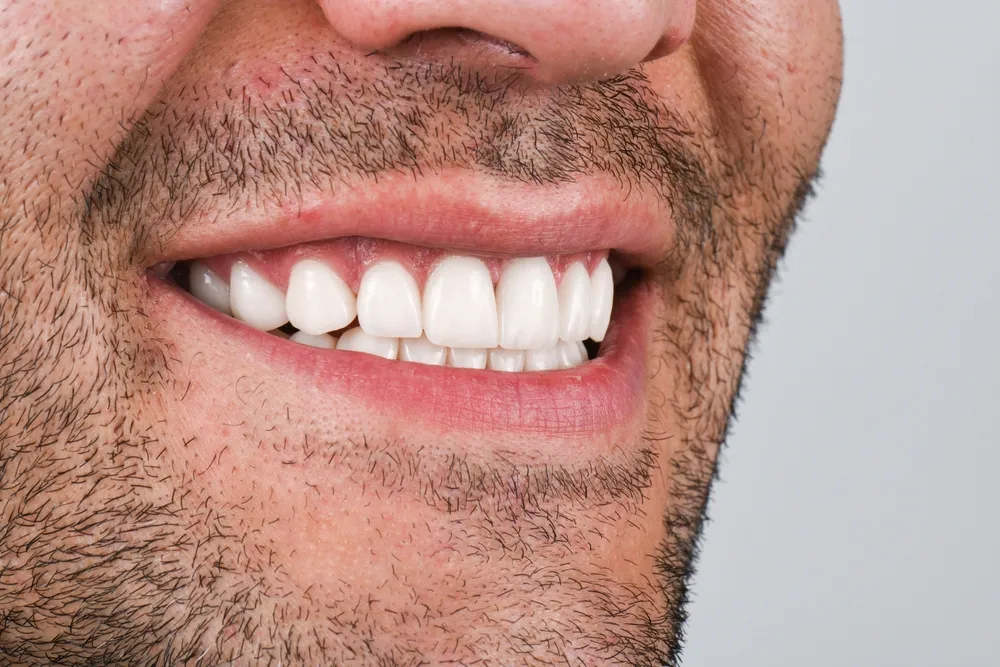
Yes, E.max veneers can look highly natural. The material, shade, translucency, thickness, preparation, and fabrication must all work together. Natural appearance depends on more than color alone. Several optical characteristics determine how real these veneers look. These include translucency, opalescence, light transmission, color, surface texture, and tooth morphology. Scientific studies demonstrate meaningful differences in the optical properties of lithium disilicate ceramics. These differences depend on material composition and surface treatment (Shirani 2021; Dal Piva 2024).
E.max veneers belong to the lithium disilicate family. This glass-ceramic material has revolutionized aesthetic dentistry. Patients want smiles that look real, not plastic. E.max veneers can deliver that result when clinicians plan properly. The following sections explain the science behind this natural appearance.
What Are E.max Veneers?
E.max veneers are thin ceramic shells that dentists place on anterior teeth to improve aesthetics and function. These restorations correct discoloration, chips, gaps, and minor misalignments. The term "E.max" refers to a specific brand of lithium disilicate glass-ceramic. Ivoclar Vivadent developed this material. Dental professionals worldwide now use it for crowns, veneers, and other aesthetic restorations.
What Material Forms E.max Veneers?
E.max veneers come from lithium disilicate glass-ceramic. This material contains lithium dioxide and silicon dioxide. Manufacturers crystallize these components into a glass-ceramic matrix. The resulting material offers both strength and beauty. Dentists recognize lithium disilicate as one of the most reliable materials for anterior restorations. Vásquez-Torres et al. (2024) confirm that lithium disilicate provides superior mechanical strength and optical properties for aesthetic rehabilitation.
The crystalline structure of lithium disilicate sets it apart from older ceramics. Needle-shaped lithium disilicate crystals sit inside a glassy matrix. This arrangement gives the material its unique combination of durability and light transmission. The flexural strength of lithium disilicate reaches 350 to 400 megapascals. This strength allows dentists to fabricate very thin restorations. These thin veneers still resist fracture during normal function.
How Does E.max Differ From Traditional Porcelain Veneers?
E.max veneers differ from traditional feldspathic porcelain veneers in several key ways. Feldspathic porcelain contains feldspar, quartz, and kaolin. This material offers excellent aesthetics but lacks the strength of lithium disilicate. Feldspathic veneers typically require more bulk to resist fracture. E.max veneers can achieve similar or better aesthetics with less material.
Lithium disilicate also offers more predictable shade customization than traditional porcelain. Dentists can select from high-translucency, medium-translucency, and low-translucency formulations. This variety allows better matching to individual patient needs. Traditional porcelain provides fewer options for controlling light transmission. E.max veneers also bond more reliably to enamel. This stronger bond improves long-term clinical success. Vásquez-Torres et al. (2024) note that lithium disilicate demonstrates exceptional adhesion when bonded to enamel, reinforcing the importance of conservative tooth preparation.
Why Do E.max Veneers Look Natural?
E.max veneers look natural because they replicate the way light interacts with real teeth. Natural enamel transmits, scatters, and reflects light in complex ways. E.max ceramics can mimic these optical behaviors. The result is a restoration that blends seamlessly with surrounding dentition.
How Does Translucency Mimic Natural Enamel?
Translucency allows light to pass through a material rather than bouncing off the surface. Natural enamel exhibits high translucency. Light enters the enamel, scatters through the underlying dentin, and exits with a warm, vital appearance. E.max veneers can replicate this effect. Manufacturers offer high-translucency E.max blocks that permit significant light transmission.
Shirani et al. (2021) compared the translucency of lithium disilicate with other monolithic ceramics. Their study found that lithium disilicate demonstrates substantially higher translucency than zirconia-based materials. The researchers measured translucency parameters using spectrophotometry. They confirmed that lithium disilicate allows more light transmission than conventional zirconia. This high translucency proves particularly important for anterior teeth. Anterior teeth receive the most light exposure. Patients and observers notice opaque restorations immediately in this region. High-translucency E.max avoids this artificial, chalky appearance.
How Does Opalescence Create a Lifelike Appearance?
Opalescence refers to the way a material scatters different wavelengths of light. Natural enamel displays opalescence because of its microstructure. Shorter wavelengths (blues) scatter more than longer wavelengths (reds and oranges). This scattering creates the bluish-white appearance at the incisal edges of young teeth. E.max materials can demonstrate both translucency and opalescent optical behavior.
Shirani et al. (2021) also measured opalescence parameters across different ceramic systems. Their research showed that lithium disilicate exhibits meaningful opalescence. This property contributes to visual depth and vitality. Without opalescence, a veneer looks flat and monochromatic. With opalescence, the restoration catches light like natural enamel. Dental technicians can enhance this effect through ceramic characterization. They apply subtle tints and internal effects during fabrication. These techniques reproduce the natural variations found in real teeth.
How Does Light Diffusion Help E.max Blend With Natural Teeth?
Light diffusion describes how light scatters within a material rather than passing straight through. Natural enamel diffuses light beautifully. This diffusion creates the "chameleon" effect where a tooth seems to glow from within. E.max ceramics can achieve similar light diffusion. The glass-ceramic matrix contains crystals of varying sizes. These crystals scatter light in multiple directions.
Alghazzawi et al. (2020) evaluated the optical properties of laminate veneers made from different materials. Their study compared lithium disilicate with zirconia laminates. The researchers found that lithium disilicate veneers experience greater color change than zirconia veneers due to the presence of a glassy phase in their structure. This glassy phase promotes light diffusion and optical blending. A veneer should not simply look white. It should interact with light similarly to the surrounding dentition. E.max achieves this interaction through controlled light scattering.
What Makes E.max Veneers Look Artificial?
Several factors can make E.max veneers look artificial. Understanding these pitfalls helps patients and clinicians avoid disappointing results. Even the best material fails when clinicians select wrong shades, apply incorrect thicknesses, or neglect surface finishing.
How Does Incorrect Shade Selection Affect Veneer Appearance?
Incorrect shade selection represents one of the most common causes of artificial-looking veneers. Dental shade involves four components: hue, value, chroma, and translucency. Hue refers to the basic color family (red, yellow, blue). Value describes lightness or darkness. Chroma indicates color intensity. Translucency determines how much light passes through.
When clinicians select an excessively bright or opaque shade, veneers look fake. A shade that is too white creates a "toilet bowl" effect. The restoration stands out rather than blending in. Clinicians must evaluate shade under appropriate lighting conditions. Natural daylight provides the most accurate assessment. Some dental offices use color-corrected lights. These lights help clinicians match value and chroma precisely. Paravina et al. (2015) established color difference thresholds in dentistry. Their research confirms that human eyes detect even small color mismatches. Clinicians must respect these thresholds during shade selection.
How Does Incorrect Veneer Thickness Alter Optical Behavior?
Thickness directly influences how a veneer interacts with light. Thin restorations allow more influence from the underlying tooth. Thick restorations alter color, translucency, and masking ability. Savaş (2022) evaluated how thickness and translucency affect the final color of lithium disilicate veneers. The researcher prepared specimens in 0.5 mm, 0.7 mm, and 1.0 mm thicknesses. The study found that optical properties changed significantly with thickness. Thinner veneers transmitted more substrate color. Thicker veneers blocked more light but looked less natural.
Clinicians must balance thickness with aesthetic goals. A 0.3 mm veneer might look translucent and vital on a light tooth. That same veneer might look gray or discolored on a dark tooth. Savaş (2022) concluded that clinicians must account for both thickness and translucency to achieve desired shade and appearance.
How Does Poor Surface Texture or Finishing Reduce Naturalness?
Surface texture affects how light reflects off a veneer. Natural enamel has microscopic irregularities. These irregularities create subtle reflections that the human eye reads as "real." A perfectly smooth, glazed veneer can look artificial. Conversely, a rough, poorly polished veneer looks dull and lifeless.
Dal Piva et al. (2024) studied how glazing protocols affect the surface roughness and optical properties of lithium disilicate. Their research found that different firing protocols significantly influenced surface roughness. Additional firing cycles increased roughness values. However, color and translucency changes remained within clinically acceptable thresholds. The study reinforces that technicians must control surface finishing carefully. Polishing and glazing alter translucency, gloss, and opalescence. The wrong protocol can compromise the natural appearance.
How Does Poorly Designed Tooth Shape Create an Artificial Look?
Material alone cannot guarantee a natural smile. Tooth shape matters enormously. Natural-looking veneers require correct anatomical morphology. This includes proper incisal edges, line angles, facial contours, surface texture, and tooth proportions. Overly square, perfectly symmetrical veneers look fake. Natural teeth have subtle asymmetries, developmental grooves, and incisal translucency.
Technicians must design each veneer to match the patient's facial features, gender, and age. Younger patients typically show more incisal translucency and shorter contact points. Older patients often display more wear and flatter incisal edges. Ignoring these biological realities produces "Hollywood" veneers that scream artificiality.
How Does Tooth Preparation Affect the Natural Appearance of E.max Veneers?
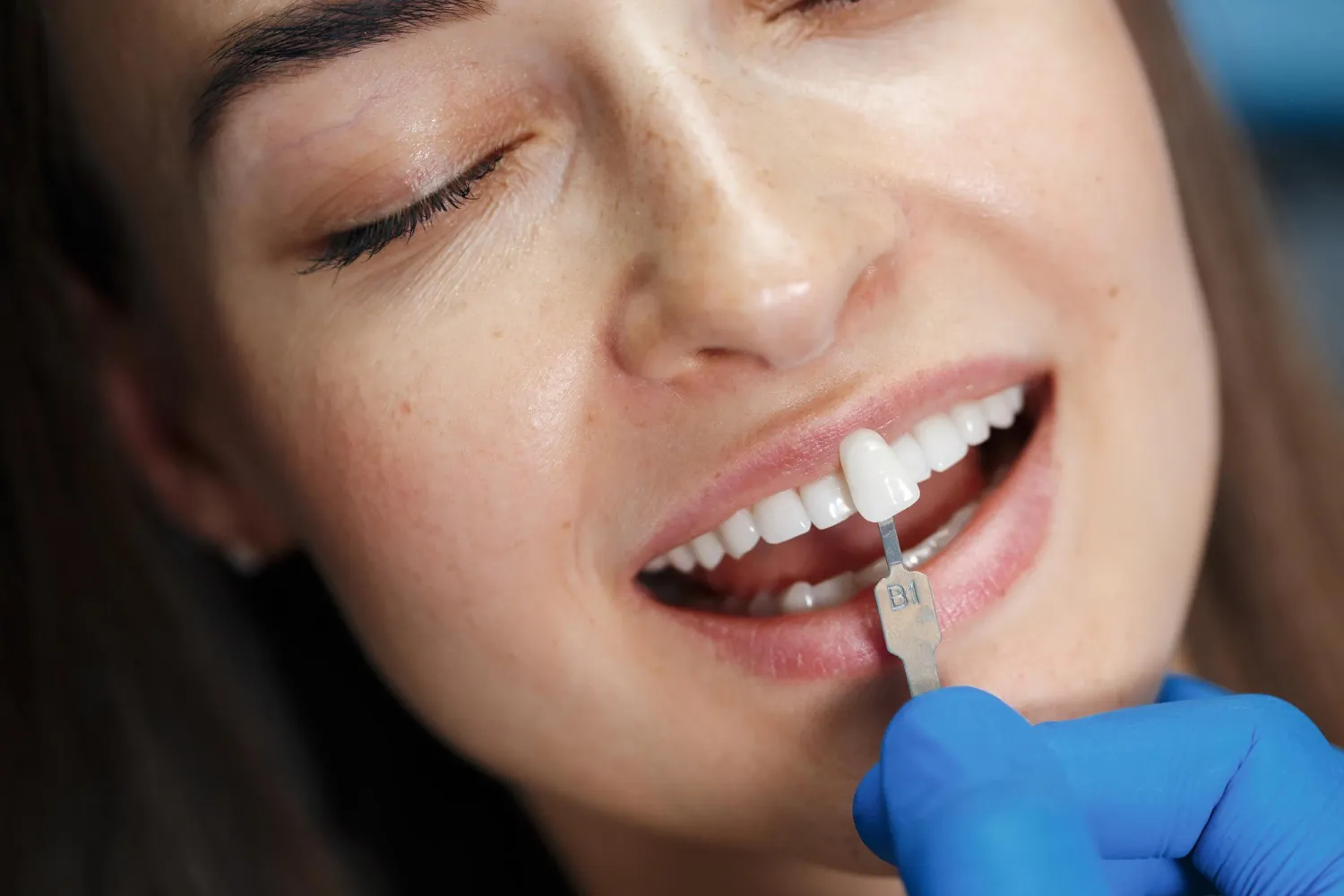
Tooth preparation directly impacts the final optical result. Conservative preparation preserves enamel. This preservation improves bonding and maintains natural light transmission.
Why Does Minimal Tooth Preparation Matter?
Minimal tooth preparation removes only a thin layer of enamel. This approach preserves the natural tooth structure. E.max veneers can be fabricated in very thin dimensions. Some no-prep or minimal-prep designs require only 0.3 to 0.5 mm of reduction. These ultra-thin veneers allow maximum light transmission from the underlying tooth.
Vásquez-Torres et al. (2024) emphasize that conservative tooth preparation maximizes bonding effectiveness. When dentists bond lithium disilicate to enamel, the restoration achieves exceptional adhesion and superior longevity. Enamel provides a better bonding surface than dentin. Enamel also transmits light more naturally than dentin. Preserving enamel therefore serves both mechanical and optical goals.
Why Does the Underlying Tooth Color Matter?
The underlying tooth color significantly influences the final veneer appearance. Natural enamel varies in color. Dentin lies beneath the enamel and contributes yellow, orange, or brown tones. Discolored teeth or dark substrates change how light reflects through a veneer.
Alghazzawi et al. (2020) found that composite abutment shade significantly affected the optical properties of laminate veneers. Their study tested different substrate shades with lithium disilicate laminates. The researchers concluded that clinicians must carefully select ceramic thickness and cement shade to mask dark substrates. Highly translucent veneers may not adequately mask severe discoloration. In these cases, clinicians might choose low-translucency E.max or apply an opaque cement layer.
Does E.max Veneer Translucency Make It Look More Natural?
Translucency plays a central role in natural appearance. However, more translucency does not always mean better aesthetics. The right translucency depends on the clinical situation.
When Should Dentists Choose High-Translucency E.max?
High-translucency E.max works best on naturally colored teeth. These teeth have light, uniform dentin. The high-translucency veneer allows maximum light transmission. This creates depth and vitality. The restoration appears to glow from within. However, high-translucency E.max performs poorly on heavily discolored teeth. The dark substrate shows through. The veneer looks gray or muddy.
When Should Dentists Choose Medium-Translucency E.max?
Medium-translucency E.max offers a balance between natural light transmission and shade control. This option suits most anterior cases. It provides enough translucency to look vital. It also offers enough opacity to mask minor discoloration. Many clinicians choose medium-translucency as their default for anterior veneers.
When Should Dentists Choose Low-Translucency E.max?
Low-translucency E.max provides greater masking power. Dentists should select this option for severely discolored substrates. Tetracycline staining, fluorosis, or endodontically darkened teeth require more opacity. The trade-off involves reduced optical depth. The veneer may look slightly less vital than a high-translucency restoration. However, masking a dark tooth with a low-translucency veneer looks far more natural than allowing the darkness to show through.
Can E.max Veneers Match the Color of Natural Teeth?
Yes, E.max veneers can match natural teeth. However, achieving this match requires careful shade analysis, proper cement selection, and skilled laboratory characterization.
How Do Digital and Conventional Shade Matching Work?
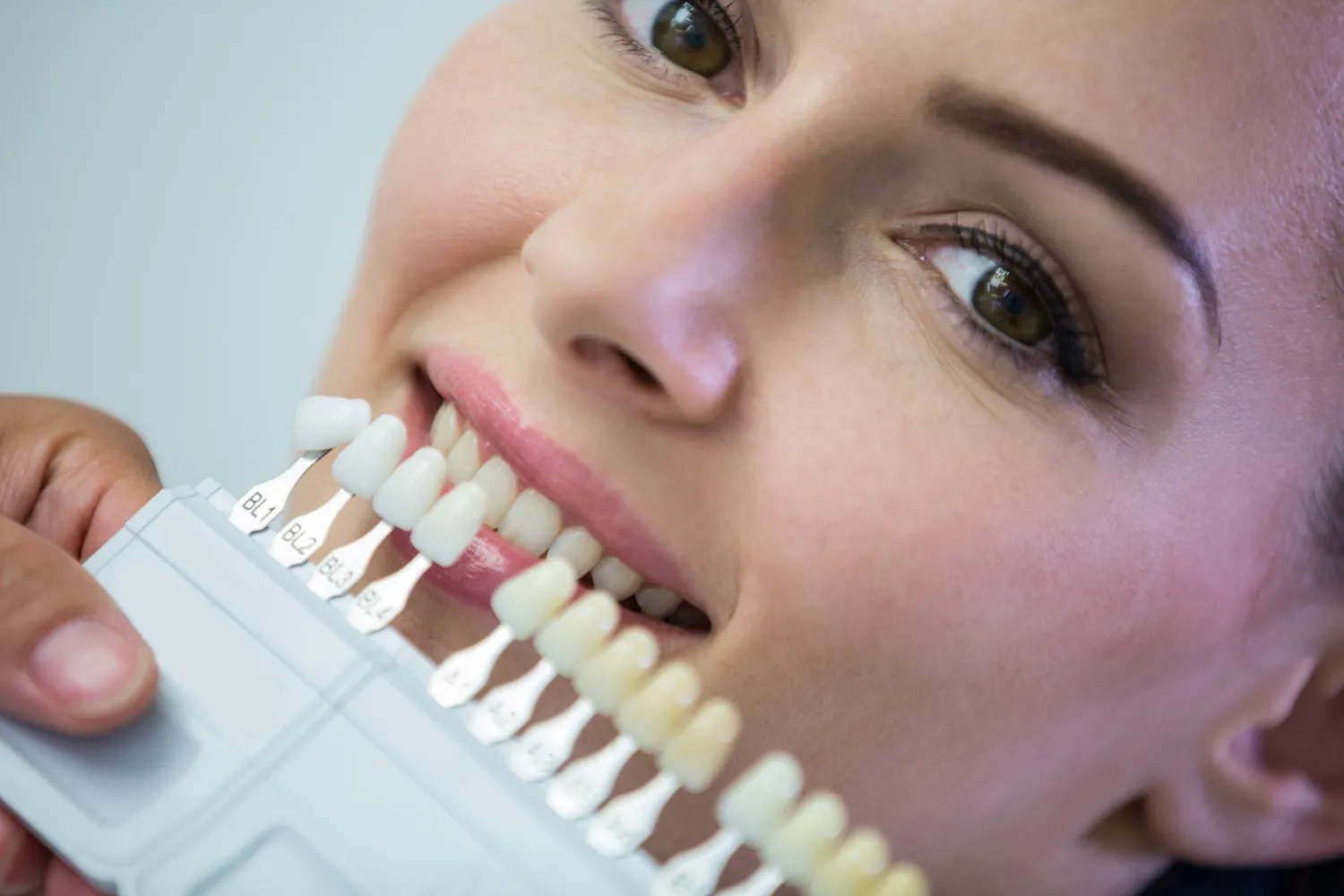
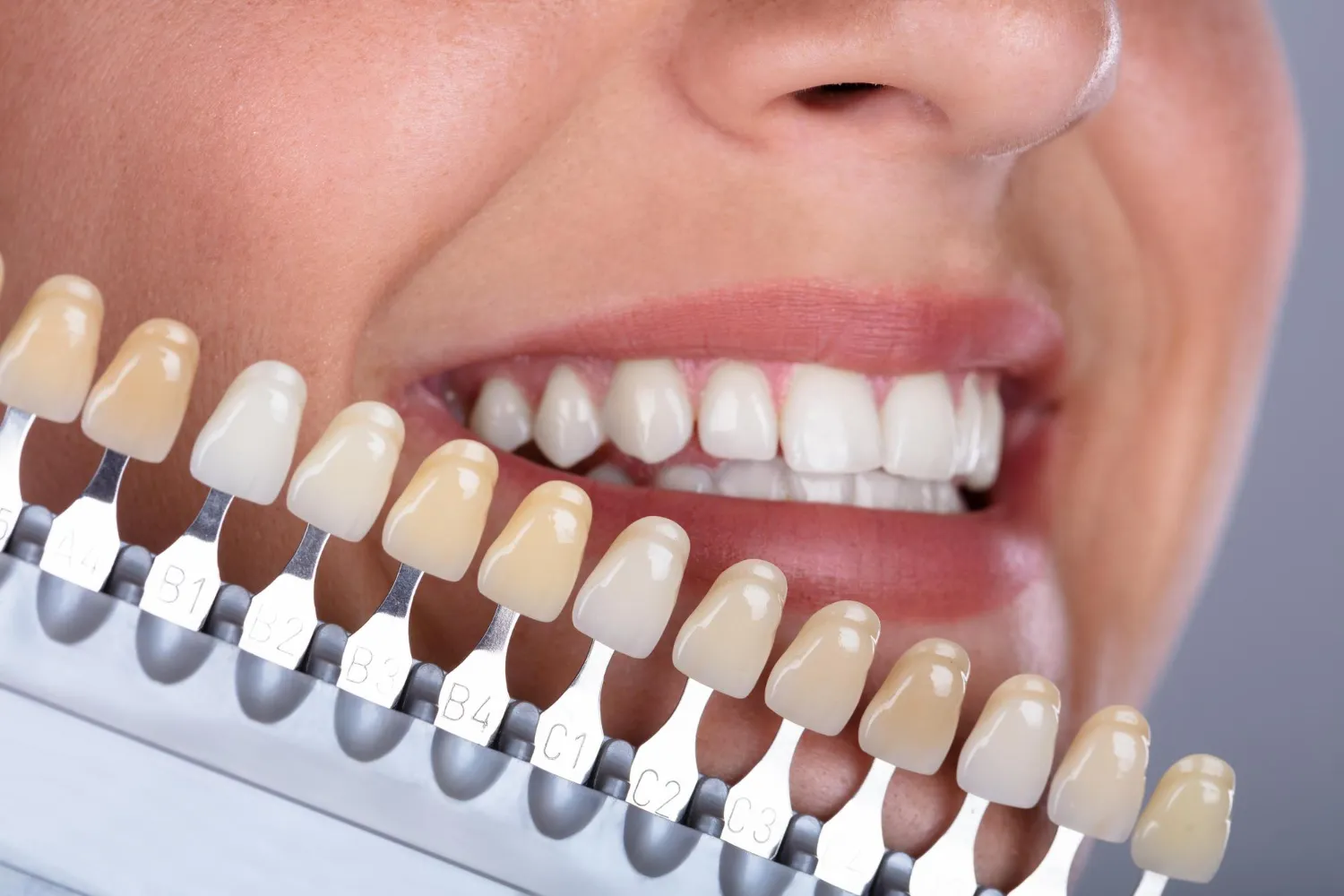
Professional shade assessment involves more than holding a shade tab next to a tooth. Clinicians must evaluate hue, value, and chroma under standardized lighting. Conventional shade guides like Vita Classical or Vita 3D-Master provide reference frameworks. However, human eyes tire quickly. Color perception shifts after just a few seconds of looking.
Digital shade measurement devices reduce this subjectivity. Spectrophotometers and colorimeters measure CIELAB color coordinates objectively. These devices record L*, a*, and b* values precisely. They eliminate guesswork and improve communication with the dental laboratory. Clinicians should always consider adjacent teeth rather than an isolated shade tab. The final restoration must harmonize with the entire smile, not just one tooth.
How Does Resin Cement Influence the Final Color?
Resin cement acts as an active optical component, not just a glue. The cement shade and translucency significantly affect the final color of thin ceramic restorations. Tabatabaei et al. (2019) evaluated how different self-adhesive resin cements affect the final color of ceramic veneers. Their study found that cement influences the color of ceramic laminates. Delta E values exceeded the critical perceptibility threshold after cementation.
Alghazzawi et al. (2020) confirmed that trial insertion paste color significantly affected the b* parameter in lithium disilicate veneers. White opaque cements increased lightness. Translucent cements allowed more substrate influence. Clinicians should use try-in pastes before final cementation. These pastes simulate the final optical result. However, clinicians must remember that cured cement may differ slightly from try-in paste. Polymerization changes the refractive index.
How Do Technicians Apply Custom Characterization and Layering?
Dental technicians reproduce subtle natural variations through several techniques. Staining involves applying colored pigments to the ceramic surface. Cut-back techniques remove a thin layer of monolithic ceramic. Technicians then replace this layer with hand-layered porcelain. This approach creates internal effects and incisal characterization.
Layered ceramic builds different optical zones within the veneer. The cervical area might contain more opaque, yellowish porcelain. The incisal area might contain more translucent, bluish porcelain. Internal effects mimic developmental defects, crack lines, or color gradations. These details separate average veneers from truly natural restorations.
Do E.max Veneers Look More Natural Than Zirconia Veneers?
Generally, yes. Lithium disilicate demonstrates higher translucency than conventional zirconia materials. Harada et al. (2017) compared the translucency of five zirconia products with lithium disilicate. Their study measured total light transmittance at 555 nanometers. At 0.5 mm thickness, e.max CAD LT showed 40.32% transmittance. The most translucent zirconia (Katana UT) showed only 33.73% transmittance. At 1.0 mm thickness, e.max CAD LT showed 27.05% transmittance. The best zirconia reached only 23.73%.
Shirani et al. (2021) also found that zirconia specimens showed significantly lower translucency than lithium disilicate. The researchers noted that zirconia's higher crystalline content creates more light scattering. This scattering reduces depth and vitality. However, modern zirconia formulations vary considerably. Some high-translucency zirconias now approach lithium disilicate values. Clinicians should evaluate each material individually. The optimal choice depends on the specific clinical situation.
Do E.max Veneers Stay Natural-Looking Over Time?
Yes, E.max veneers generally maintain their natural appearance over time. However, environmental factors and maintenance habits influence long-term aesthetics.
How Does Color Stability Affect Long-Term Appearance?
Lithium disilicate resists staining better than natural enamel. However, exposure to pigmented beverages can cause subtle color changes. Dal Piva et al. (2024) immersed lithium disilicate specimens in coffee and red wine for seven days. The researchers found visible color changes within clinically acceptable thresholds. Red wine caused more severe staining than coffee. Brushing after staining did not produce clinically visible color changes in most cases.
Patients who drink coffee, tea, or wine daily should rinse with water after consumption. They should also maintain regular professional cleanings. These habits preserve the original shade.
How Does Surface Gloss and Roughness Change Over Time?
Surface roughness increases bacterial retention and reduces gloss. A rough surface scatters light diffusely rather than reflecting it smoothly. This scattering makes veneers look dull. Dal Piva et al. (2024) found that different firing protocols significantly influenced surface roughness in lithium disilicate. Glazed and polished surfaces maintained better gloss over time.
Patients should avoid abrasive toothpastes. They should also attend regular dental visits for professional polishing. These measures maintain the smooth surface that natural enamel displays.
How Do Oral Hygiene and Dental Follow-Up Preserve Aesthetics?
Daily brushing and flossing remove plaque and stains. Regular dental examinations catch problems early. Professional maintenance includes polishing and occlusal evaluation. Clinicians should also assess bruxism. Patients who grind their teeth may need night guards. These guards protect veneers from excessive mechanical stress. Avoiding hard objects like ice or pens also prevents chipping.
What Factors Determine Whether E.max Veneers Look Natural?
Multiple factors work together to create a natural result. The following checklist summarizes the key determinants.
How Does Material Selection Influence Naturalness?
Clinicians must select the right E.max formulation. They must choose appropriate translucency levels. They must also specify correct ceramic thickness. These decisions depend on the substrate color and the patient's aesthetic goals.
How Does Shade Selection Influence Naturalness?
Hue, value, chroma, and adjacent tooth color all matter. Clinicians should evaluate shade under standardized lighting. They should communicate shade information clearly to the laboratory.
How Does Tooth Preparation Influence Naturalness?
Enamel preservation improves bonding and optics. Preparation depth affects veneer thickness. Margin position influences the final emergence profile. Conservative approaches generally produce better aesthetic outcomes.
How Does Laboratory Fabrication Influence Naturalness?
CAD/CAM milling and pressed techniques both work well. Layering and characterization add natural variation. Surface finishing determines final gloss and texture. Technicians must execute each step precisely.
How Does Dentist and Technician Expertise Influence Naturalness?
Smile design requires artistic vision. Tooth morphology must match facial features. Occlusion must function properly. Shade communication must flow clearly between clinic and lab. Cementation technique must follow strict protocols.
How Do Patient-Specific Factors Influence Naturalness?
Existing tooth discoloration limits options. Tooth position affects light exposure. Gum appearance frames the restoration. Bite forces determine material thickness needs. Oral habits like nail-biting or bruxism affect longevity.
Who Is a Good Candidate for Natural-Looking E.max Veneers?
Good candidates seek subtle cosmetic enhancement. They have minor tooth discoloration, small chips, slight gaps, or uneven proportions. They possess adequate enamel and healthy gums. Patients with active decay, uncontrolled gum disease, or severe bruxism need treatment first. These conditions compromise veneer success.
Clinicians must assess each patient individually. No universal indication exists. A thorough examination of teeth, bite, enamel, and aesthetic objectives guides the decision.
How Are Natural-Looking E.max Veneers Made?
The fabrication process involves multiple stages. Each stage influences the final natural appearance.
What Happens During Initial Smile and Dental Assessment?
The dentist examines the patient's teeth, gums, and bite. The dentist discusses aesthetic goals. Photographs and radiographs document the starting condition. This assessment identifies any contraindications.
How Do Clinicians Perform Shade and Tooth-Color Analysis?
The clinician selects the base shade using conventional tabs or digital devices. The clinician records stump shade if the tooth is dark. The clinician communicates incisal translucency preferences. This information guides the laboratory.
How Does Digital Scan or Impression Capture Tooth Structure?
The clinician takes a digital scan or conventional impression of the prepared teeth. Digital scans offer higher precision. They also allow immediate visualization of preparation quality. The laboratory uses this data to fabricate the veneer.
How Does Smile and Tooth-Shape Design Work?
The technician designs the veneer shape using CAD software or wax models. The design must match the patient's facial features. It must also follow proper dental proportions. The dentist approves the design before fabrication.
How Does E.max Veneer Fabrication Occur?
Technicians mill the veneer from a CAD/CAM block or press it from an ingot. Milling offers speed and precision. Pressing offers excellent marginal adaptation. After milling or pressing, the technician crystallizes the ceramic. The technician then characterizes and glazes the surface.
How Does Try-In and Optical Evaluation Work?
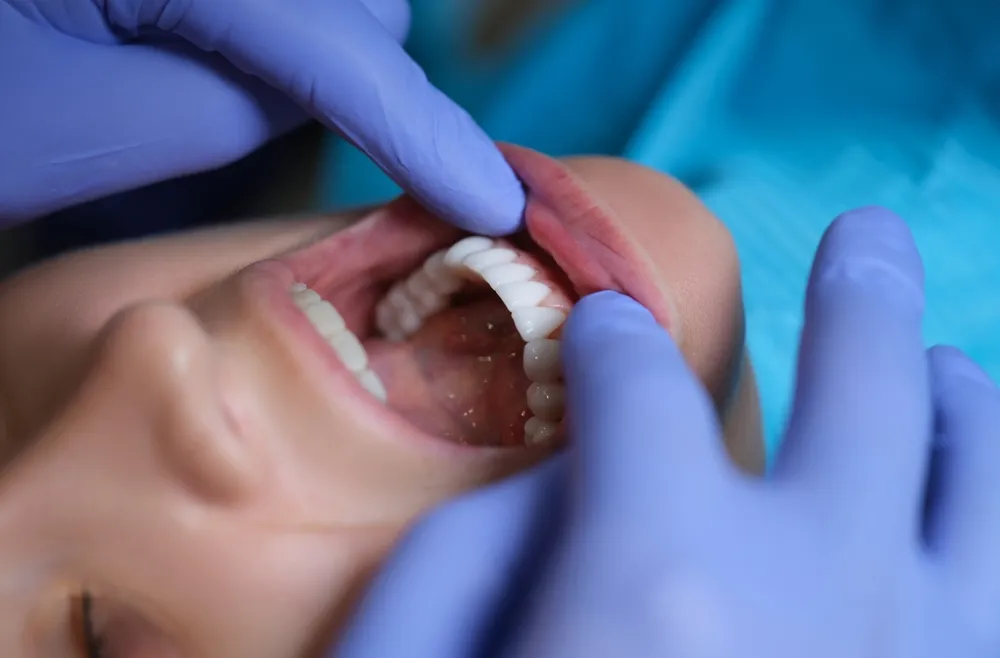
The dentist places the veneer on the tooth without cement. The dentist evaluates fit, margins, and shade. The dentist checks the optical integration with adjacent teeth. Try-in pastes simulate the final cement color. The dentist makes any necessary adjustments.
How Does Final Bonding Work?
The dentist etches the ceramic with hydrofluoric acid. The dentist applies silane coupling agent. The dentist etches the tooth with phosphoric acid. The dentist applies adhesive and resin cement. The dentist light-cures each surface. The dentist removes excess cement.
How Do Clinicians Perform Occlusal and Aesthetic Check?
The dentist verifies that the veneer does not interfere with the bite. The dentist checks contacts with adjacent teeth. The dentist polishes any rough edges. The dentist takes final photographs. The dentist schedules follow-up appointments.
E.max Veneers vs Natural Teeth: How Close Is the Appearance?
The following table compares key optical and physical features:
Feature | Natural Teeth | E.max Veneers |
Translucency | Naturally variable | Can be customized |
Opalescence | Naturally present | Can be reproduced |
Color | Individualized | Professionally matched |
Surface texture | Naturally irregular | Can be anatomically recreated |
Light reflection | Dynamic | Can be designed to mimic enamel |
Stain resistance | Can stain | Generally highly stain resistant |
Shape | Natural anatomy | Digitally or laboratory designed |
E.max can reproduce many optical characteristics of enamel. However, no artificial restoration perfectly duplicates every biological feature of a natural tooth. Natural enamel contains living tissue with moisture exchange. It repairs itself through remineralization. E.max cannot replicate these biological processes. Despite these limitations, E.max comes remarkably close to natural enamel in appearance.
Frequently Asked Questions About Natural-Looking E.max Veneers
Do E.max veneers look like real teeth?
Yes, E.max veneers can look like real teeth when clinicians plan and execute treatment properly. The material mimics natural enamel optics.
Are E.max veneers too white to look natural?
No, E.max veneers come in many shades. Clinicians can select subtle, natural shades rather than bright white.
Are E.max veneers translucent?
Yes, E.max veneers offer high, medium, and low translucency options. High-translucency options closely match natural enamel.
Can E.max veneers look natural on dark teeth?
Yes, but clinicians must select low-translucency formulations or use opaque cement. These choices mask the darkness.
Can E.max veneers match existing teeth?
Yes, digital shade matching and custom characterization allow precise color matching.
Do E.max veneers stain?
E.max veneers resist staining well. However, prolonged exposure to coffee, tea, or wine may cause subtle changes over time.
Are E.max veneers more natural-looking than zirconia?
Generally, yes. Lithium disilicate offers higher translucency and better light diffusion than most zirconia materials.
How thin can E.max veneers be?
E.max veneers can be as thin as 0.3 to 0.5 mm in some no-prep or minimal-prep cases.
Does veneer thickness affect natural appearance?
Yes, thickness influences translucency, color, and masking ability. Thinner veneers look more translucent. Thicker veneers look more opaque.
Does the cement color affect E.max veneers?
Yes, cement shade significantly influences the final color, especially with thin or highly translucent veneers.
How long do natural-looking E.max veneers last?
Studies show survival rates exceeding 96% over 10 years with proper care and maintenance.
Conclusion: Do E.max Veneers Look Natural?
Yes, E.max veneers can look highly natural. Lithium disilicate offers excellent optical properties. Its translucency, opalescence, and light diffusion closely mimic natural enamel. Custom shade selection, appropriate thickness, and proper surface finishing further enhance the result.
However, the material alone does not guarantee success. The final appearance depends on clinical planning, tooth preparation, material selection, laboratory characterization, cementation, and the patient's existing tooth color. Clinicians must assess the teeth, bite, enamel, substrate color, and aesthetic objectives before selecting the veneer material. Patients must maintain excellent oral hygiene and attend regular follow-ups. When all these factors align, E.max veneers deliver beautiful, natural-looking smiles that stand the test of time.
References
Alghazzawi, Tariq M., et al. "Comparison of Optical Properties of Laminate Veneers Made of Zolid FX and Katana UTML Zirconia and Lithium Disilicate Ceramics." Journal of Dentistry (Tehran, Iran), vol. 17, no. 2, 2020, pp. 128-135.
Dal Piva, Amanda Maria de Oliveira, et al. "Effect of Glazing Protocol on the Surface Roughness and Optical Properties of Lithia-Based Glass-Ceramics." Coatings, vol. 14, no. 6, 2024, p. 668.
Harada, Kosuke, et al. "A Comparative Evaluation of the Translucency of Zirconias and Lithium Disilicate for Monolithic Restorations." The Journal of Prosthetic Dentistry, vol. 117, no. 6, 2017, pp. 814-822.
Paravina, Rade D., et al. "Color Difference Thresholds in Dentistry." Journal of Esthetic and Restorative Dentistry, vol. 27, 2015, pp. S1-S9.
Savaş, T. Y. "Effect of the Thickness and Translucency of the Lithium Disilicate Veneer Ceramics on the Color Difference, Translucency Parameters, and Opalescence Parameter." International Dental Research, vol. 12, no. 2, 2022, pp. 78-85.
Shirani, Mohammadjavad, et al. "Comparison of Translucency and Opalescence Among Different Dental Monolithic Ceramics." The Journal of Prosthetic Dentistry, vol. 126, no. 4, 2021, pp. 553-559.
Tabatabaei, M. H., et al. "Evaluation of the Final Color of Ceramic Veneers with Different Self-Adhesive Resin Cements." The Open Dentistry Journal, vol. 13, 2019, pp. 203-210.
Vásquez-Torres, J., et al. "Enhancing Smile Aesthetics and Function with Lithium Disilicate Veneers: A Brief Review and Case Study." Prosthesis, vol. 6, no. 1, 2024, pp. 123-135.