E.max veneers are popular in Turkey because the country combines certified lithium disilicate ceramics, digital dentistry workflows, experienced cosmetic dentists and competitive prices in one destination. International patients can complete a full smile makeover in about one week while paying significantly less than private treatment costs in the UK or the USA. The material itself delivers the aesthetic results, and Turkey's dental tourism infrastructure delivers the access.
This article explains the science behind lithium disilicate, the reasons patients travel to Turkey for this treatment, and the clinical factors that determine a safe and lasting outcome.
What Makes E.max Veneers Different from Other Dental Veneers?
E.max veneers are thin restorations manufactured from lithium disilicate glass-ceramic, a material that contains about 70 percent needle-shaped lithium disilicate crystals embedded in a glassy matrix. This microstructure gives the ceramic a flexural strength of roughly 360 to 400 MPa while preserving high translucency (Guess et al. 2011). Few dental ceramics combine these two properties at this level.
Conventional feldspathic porcelain veneers offer excellent aesthetics but lower fracture resistance. Composite veneers cost less and allow same-day placement, yet the resin material stains and wears faster than any ceramic. Lithium disilicate sits between these options and solves their main weaknesses: it approaches the optical quality of feldspathic porcelain while offering strength closer to zirconia-based ceramics.
Dentists frequently select lithium disilicate for anterior teeth because the front teeth carry lower biting forces than molars, and appearance matters most in this zone. The material also bonds chemically to enamel through hydrofluoric acid etching and silane application, which creates a durable adhesive interface (Peumans et al. 2000).
Property | E.max (lithium disilicate) | Feldspathic porcelain | Composite resin |
Flexural strength | 360-400 MPa | 90-120 MPa | 80-120 MPa |
Translucency | High | Very high | Moderate |
Stain resistance | Excellent | Excellent | Limited |
Typical lifespan | 10-15+ years | 8-12 years | 4-8 years |
Repairability | Requires replacement | Requires replacement | Chairside repair possible |
Why E.max stands out among veneer materials
Strength and lifespan side by side, using the figures in this article.
Flexural strength MPa, higher is stronger
Typical lifespan years
Lighter segments show the spread of each reported range. Lifespan also depends on case selection, bonding and care.
One clarification matters before going further. An E.max veneer covers only the front surface of a tooth, while an E.max crown encircles the entire tooth. Veneers preserve more natural tissue, so dentists reserve crowns for teeth with extensive damage or large existing fillings.
Why Do E.max Veneers Create Such Natural-Looking Smiles?
E.max veneers look natural because lithium disilicate transmits and scatters light in a pattern similar to human enamel. Natural enamel is a semi-translucent, hydroxyapatite-based tissue, and restorations that block light completely appear flat and artificial. Comparative measurements show that glass-ceramics transmit significantly more light than zirconia core materials (Heffernan et al. 2002).
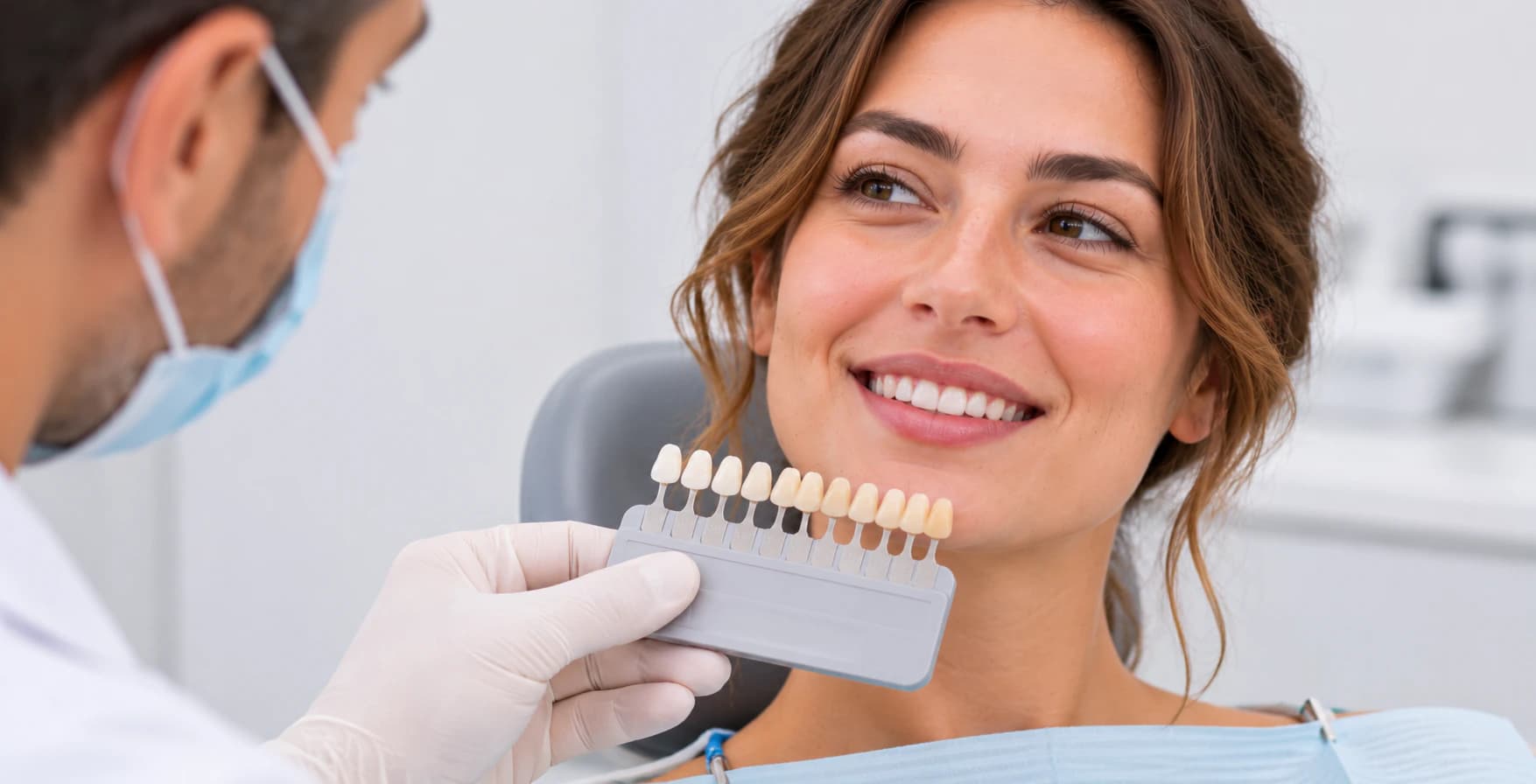
Colour matching forms the second pillar of a natural result. The dentist records the shade of adjacent teeth under controlled lighting and selects a ceramic ingot with matching value, chroma and hue. Technicians can layer surface stains to copy the subtle colour gradients of neighbouring teeth.
Shape design completes the illusion. The dental team adjusts tooth length, width ratios and surface texture to match the patient's face. Central incisors that follow the golden proportion of approximately 1.6 to 1 relative to lateral incisors tend to read as harmonious to the human eye. Surface micro-texture breaks up light reflection and prevents the uniform gloss that reveals artificial teeth.
A final advantage appears over time. Glazed lithium disilicate resists extrinsic staining from coffee, tea and tobacco far better than composite resin, so the initial shade remains stable for years.
How Do E.max Veneers Preserve Natural Tooth Structure?
E.max veneers preserve tooth structure because their strength allows fabrication at thicknesses of 0.3 to 0.5 mm, which means the dentist removes only a thin layer of enamel in suitable cases. Conservative preparation keeps the restoration within the enamel layer, and enamel provides the most reliable substrate for adhesive bonding (Van Meerbeek et al. 2003).
Traditional veneer preparation reduces the front surface by 0.5 to 0.7 mm and often wraps around the incisal edge. Minimal-preparation techniques reduce less tissue and keep margins within enamel. No-prep veneers require no reduction at all, but they suit only patients with small or slightly set-back teeth, because adding ceramic without space creates bulky, over-contoured results.
Preserving enamel matters for one mechanical reason. Bond strength to enamel exceeds bond strength to dentine, and veneers bonded mostly to dentine show higher failure rates over time (Burke 2012). Conservative preparation therefore protects both the tooth and the restoration.
Why Is E.max Ceramic Considered a Durable Material?
Lithium disilicate qualifies as durable because its interlocking crystal structure deflects cracks and resists fracture under normal chewing forces. Clinical evidence supports this laboratory performance. A systematic review reported a 96.4 percent five-year survival rate for lithium disilicate restorations, and long-term veneer studies report survival rates above 90 percent at ten years (Pieger et al. 2014; Morimoto et al. 2016).
Durability still depends on design. A veneer with adequate thickness, correct preparation geometry and full enamel bonding withstands daily function far better than a thin, poorly supported restoration. Bite alignment also plays a decisive role. Patients with bruxism load their veneers with repeated parafunctional forces, and uncontrolled grinding ranks among the main risk factors for ceramic fracture (Manfredini et al. 2013).
The correct conclusion is therefore precise: E.max is a strong material, but patient selection and clinical execution determine whether that strength translates into longevity.
Why Has Turkey Become a Popular Destination for E.max Veneers?
Turkey became a leading destination for E.max veneers because it combines lower operating costs, high treatment volumes and a mature medical tourism sector. Lower laboratory fees, staff salaries and facility costs allow Turkish clinics to offer the same certified materials at a fraction of Western European prices, without any change in the ceramic itself. E.max is a manufactured material, so its quality depends on the laboratory and the dentist, not on the country where treatment takes place.
Istanbul hosts the highest concentration of cosmetic dentistry clinics and benefits from direct flights from most European cities. Antalya attracts patients who prefer to recover in a coastal resort setting. Both cities offer English-speaking coordinators, hotel partnerships and transfer services designed for international dental patients.
Academic research on medical tourism confirms that cost savings motivate most cross-border patients, but it also stresses that provider quality varies widely within every destination country (Hanefeld et al. 2013). The sensible approach evaluates each clinic on its own evidence rather than assuming a national standard.
How Much Do E.max Veneers Cost in Turkey Compared with Other Countries?
As of 2025, a single E.max veneer in Turkey typically costs between 200 and 400 euros, compared with roughly 600 to 1,000 pounds in the UK and 900 to 2,500 US dollars per tooth in private American practices. A full smile makeover of 16 to 20 veneers therefore costs about 4,000 to 7,000 euros in Turkey versus 12,000 to 20,000 pounds in the UK.
Cost factor | Turkey | UK | USA |
Price per E.max veneer | 200-400 EUR | 600-1,000 GBP | 900-2,500 USD |
16-veneer smile makeover | 4,000-7,000 EUR | 10,000-16,000 GBP | 15,000-40,000 USD |
Consultation and X-rays | Often included | Usually billed separately | Usually billed separately |
Accommodation and transfers | Often packaged | Not applicable | Not applicable |
What E.max veneers cost in Turkey, the UK and the USA
Typical 2025 price ranges, shown in each country's own currency.
- ✓Consultation and X-rays often included
- ✓Hotel and transfers often packaged
- ✕Consultation and X-rays usually extra
- –No travel package needed
- ✕Consultation and X-rays usually extra
- –No travel package needed
Approximate ranges for general guidance. Your final price depends on the number of veneers and any preparatory treatment. Always ask for an itemised written quote, and be cautious of prices that look unusually low.
The number of veneers drives the total budget more than any other factor. Patients should also account for consultations, panoramic X-rays, temporary veneers and follow-up visits. An advertised price per veneer rarely equals the complete treatment cost, so a written, itemised quotation protects against surprises. Unusually low quotations deserve extra scrutiny, because they may indicate non-genuine ceramic, shortcuts in laboratory work or inexperienced operators.
What Role Does Digital Smile Design Play in E.max Veneer Treatment?
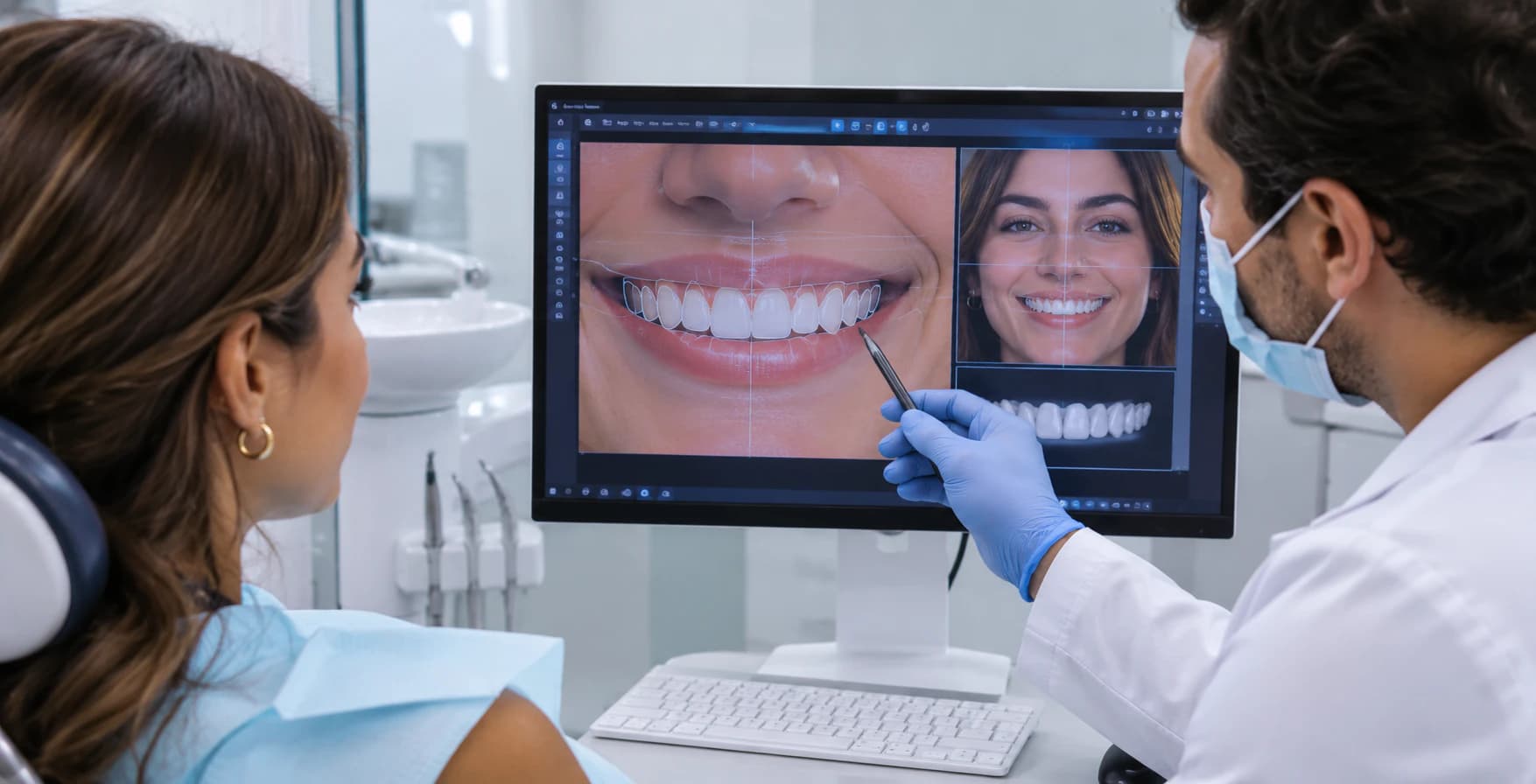
Digital smile design turns veneer treatment from guesswork into a planned procedure. The dentist captures high-resolution photographs, intraoral scans and facial measurements, then analyses tooth proportions, gum contours and smile symmetry on screen (Coachman and Calamita 2012).
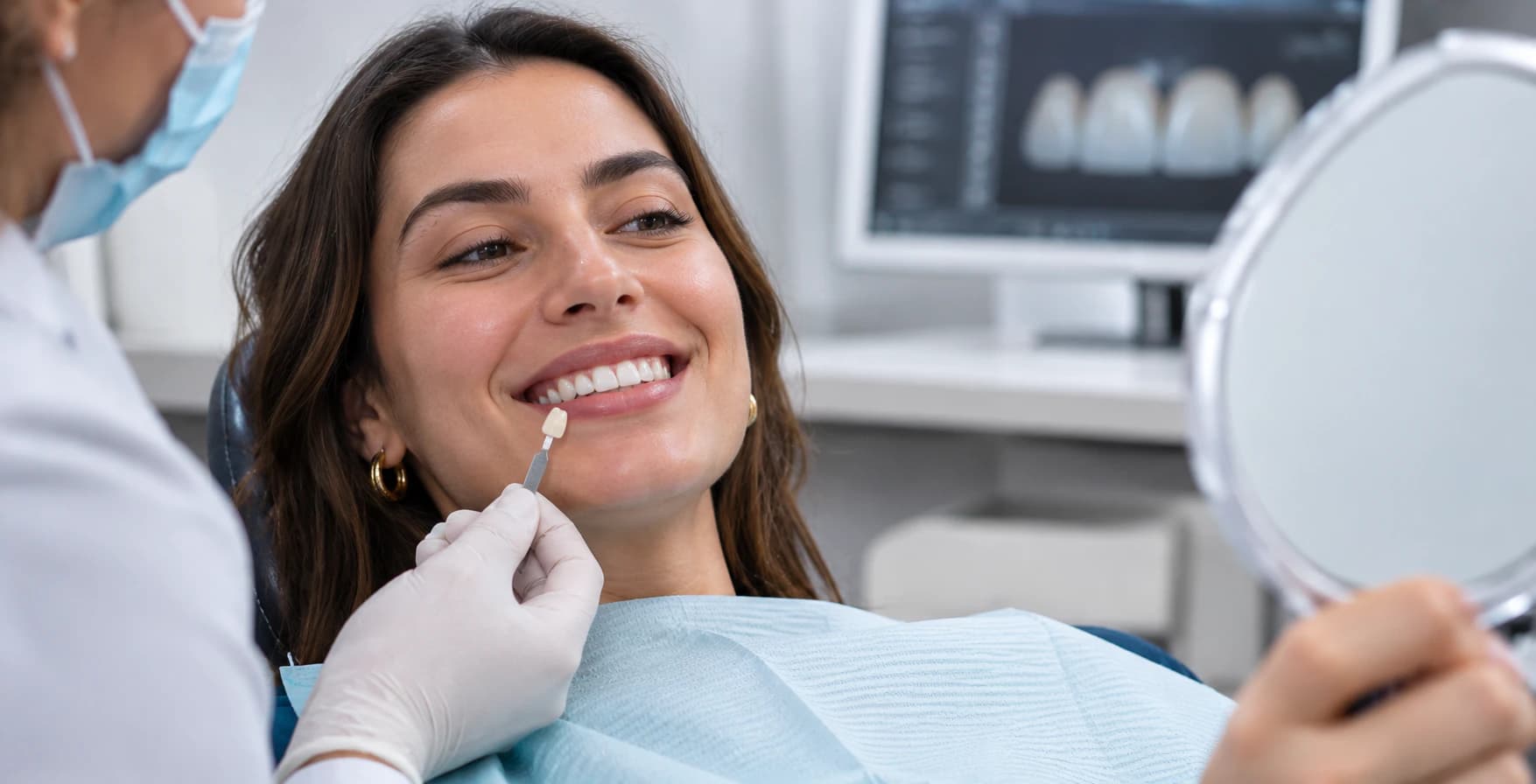
This planning stage produces a digital mock-up that shows the proposed result before any enamel is removed. Many clinics transfer the design into the patient's mouth with a temporary trial smile, so the patient can approve the shape and length in real conditions. Patient approval at this stage prevents most aesthetic disappointments.
The approved design then guides CAD/CAM fabrication. Milling machines carve the veneers from lithium disilicate blocks with micrometre-level precision, and digital workflows reduce the margin errors that cause poor fit and gum irritation.
From photo to finished veneer: the digital workflow
Your new smile is designed and approved on screen before any tooth is touched.
Photos & video
Face, lips and smile recorded
Intraoral scan
Exact 3D model of your teeth
Digital design
Shape and proportions planned on screen
Trial smile
You see it in your mouth and approve
CAD/CAM
Veneers made with micron-level precision
How Are E.max Veneers Made and Fitted in Turkey?
The treatment follows a structured clinical sequence that reputable clinics in Turkey perform over several appointments.
Examination and planning. The dentist assesses oral health, takes X-rays and photographs, and confirms that gums and enamel can support veneers.
Tooth preparation. The dentist removes a conservative layer of enamel where the plan requires it, usually 0.3 to 0.5 mm.
Impressions. An intraoral scanner or conventional impression records the prepared teeth for the laboratory.
Laboratory fabrication. Technicians press or mill the lithium disilicate restorations and finish them with layering, staining and glazing.
Temporary veneers. The patient wears provisional restorations while the laboratory works, protecting the prepared teeth and previewing the new smile.
Final fitting. The dentist tries in each veneer, checks shade and bite, makes adjustments and bonds the restorations with resin cement.
A final clinical examination before departure confirms bite stability and gum response. Patients should treat this last appointment as essential, not optional.
How Long Does It Take to Get E.max Veneers in Turkey?
Most international patients complete E.max veneer treatment in Turkey within five to seven days. Day one covers consultation, diagnostics and preparation. The laboratory fabricates the veneers over the next three to four days. The final days cover trial, bonding and the closing check-up.
Several factors can extend this schedule. Root canal treatment, gum therapy or replacement of old fillings add appointments before veneer work begins. Laboratory adjustments or a requested shade change add one or two days. Patients who book a tight return flight before the final fitting risk travelling home with unverified restorations, so a buffer day at the end of the trip is a practical safeguard.
A typical 5–7 day veneer trip
Most international patients finish everything within one stay.
Arrive & plan
Consultation, X-rays, scans and tooth preparation
Lab at work
Temporaries on, free time to explore
Lab at work
Veneers pressed or milled, layered and glazed
Lab at work
Free day
Final fitting
Shade and bite check, then bonding
Buffer day
Time for any adjustment or shade change
Fly home
With your new smile and care instructions
The lab usually needs three to four days. Root canal, gum treatment or replacing old fillings can add appointments, so plan a buffer day before your flight.
Who Is a Suitable Candidate for E.max Veneers?
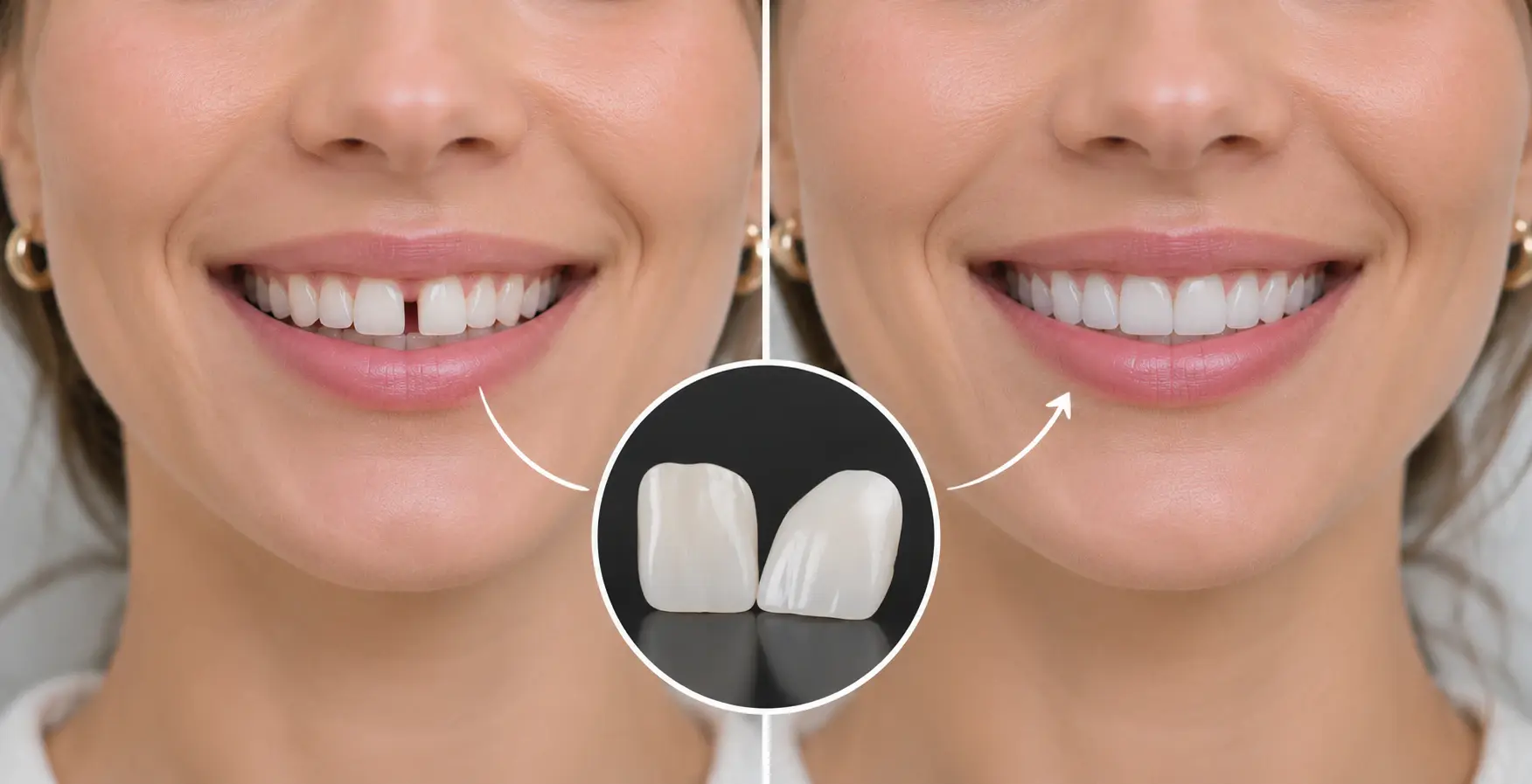
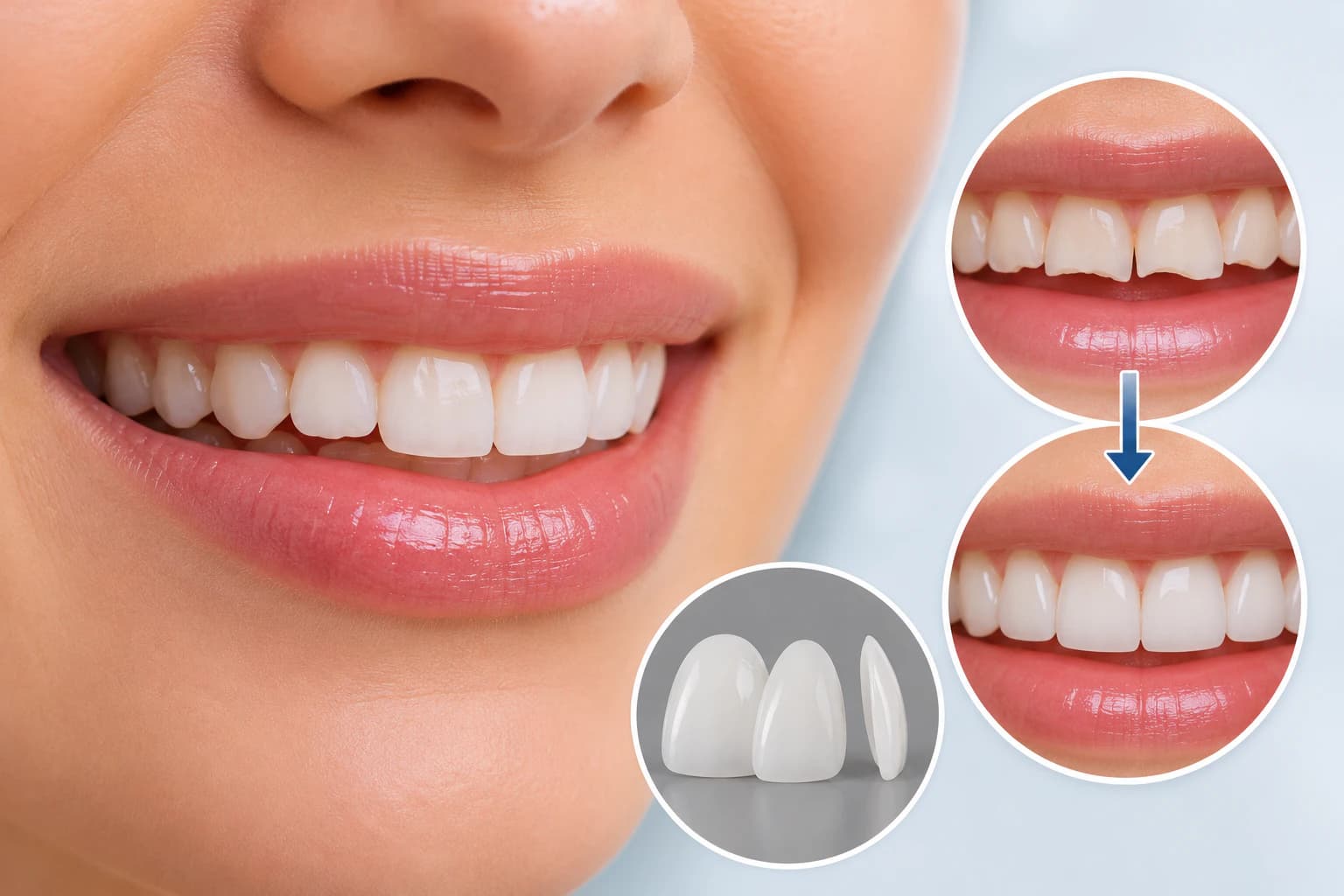
Good candidates for E.max veneers share one profile: healthy mouths with specific aesthetic concerns that conservative treatment cannot solve. Veneers address persistent discolouration that does not respond to whitening, minor chips, uneven edges, irregular tooth shapes and small gaps between front teeth.
Healthy gums and sufficient enamel are non-negotiable requirements. Active tooth decay and periodontal disease require treatment first, because bonding ceramic to diseased tissue guarantees failure. Patients considering veneers for mildly crooked teeth should also weigh alternatives. Orthodontics, professional whitening and composite bonding sometimes achieve the same goal with less or no enamel removal, and a conscientious dentist presents these options honestly.
How Should You Compare Dental Clinics Offering E.max Veneers in Turkey?
Clinic comparison works best as a checklist of verifiable evidence rather than an impression from marketing photos.
Comparing clinics? Tick off what each one confirms
A clinic worth choosing answers every one of these clearly and in writing.
Tick each item once a clinic has confirmed it.
Clinics that answer these questions clearly demonstrate the transparency that international patients need.
What Are the Potential Risks and Limitations of E.max Veneers?
E.max veneers carry real risks, and honest information requires stating them plainly. Temporary tooth sensitivity to hot and cold commonly follows preparation and usually resolves within weeks. Veneers can chip, crack or debond, especially under biting habits like opening packaging with the teeth. Gum irritation signals poorly fitted margins and requires clinical correction.
Excessive tooth reduction causes the most serious harm, because aggressive preparation can expose dentine, trigger pulp inflammation and commit the tooth to a lifetime of restorations. Untreated bruxism multiplies fracture risk, and patients who grind their teeth need a night guard and careful occlusal adjustment (Manfredini et al. 2013). Veneer placement is not a reversible cosmetic procedure in most cases, so the decision deserves the same seriousness as any surgical choice.
How Can You Maintain E.max Veneers After Returning Home?
Maintenance after returning home follows the same rules as caring for natural teeth, with a few additions. Brush twice daily with a non-abrasive fluoride toothpaste and clean between teeth every day. Schedule professional examinations and hygiene appointments at least twice a year, and inform your local dentist about the veneers so they monitor the margins.
Avoid biting hard objects such as ice, nutshells and pens with veneered teeth. Patients with bruxism should wear their prescribed night guard every night. If a veneer loosens, chips or breaks, keep the fragment, avoid gluing it yourself, and contact both the treating clinic and a local dentist promptly. Most clinics that treat international patients coordinate remote follow-up and share treatment records with local dentists on request.
Is Getting E.max Veneers in Turkey Worth It?
For a well-informed patient, E.max veneers in Turkey can offer genuine value: a proven ceramic material, digital planning and significant cost savings in a single trip. Long-term clinical data confirm that lithium disilicate veneers survive at high rates when dentists place them correctly (Morimoto et al. 2016; Alenezi et al. 2021).
The decision should never rest on price alone. Clinical standards vary between providers in every country, so compare evidence, credentials and transparency rather than headline figures. Personalised planning determines whether the final result suits your face, and realistic expectations plus consistent maintenance determine whether the result lasts. Patients who approach the treatment with this discipline report the outcomes that make Turkey's reputation understandable.
Frequently Asked Questions About E.max Veneers in Turkey
Are E.max veneers in Turkey made from genuine lithium disilicate?
Reputable clinics use certified lithium disilicate ingots from the original manufacturer, but patients should verify this in writing. Ask the clinic to confirm the material brand and batch before treatment begins.
Do E.max veneers look more natural than zirconia veneers?
Yes, in most anterior cases. Lithium disilicate transmits light more like natural enamel, while zirconia appears more opaque, so dentists prefer E.max for front teeth and zirconia for high-load posterior restorations.
Can E.max veneers be placed without shaving natural teeth?
No-prep placement is possible only when the existing teeth are small or slightly recessed. Most patients need 0.3 to 0.5 mm of enamel removal to avoid bulky results.
How many E.max veneers are usually needed for a smile makeover?
Most smile makeovers involve 8 to 10 veneers per arch, because the design should cover every tooth visible in a full smile. Some patients need 16 to 20 veneers for both arches.
Can E.max veneers correct severely discoloured teeth?
Yes, but severe discolouration requires a more opaque ceramic layering technique to mask the dark substrate. The dentist may recommend additional masking steps for teeth darkened by root canal treatment.
Do E.max veneers change colour over time?
The glazed ceramic itself resists staining and holds its shade for many years. Marginal discolouration can appear at the bonding line over a decade, which regular polishing appointments help control.
Can you eat normally after getting E.max veneers?
Yes, after the bonding cement fully sets. Patients can eat a normal diet but should avoid biting very hard objects directly with the veneered teeth.
What happens if an E.max veneer breaks while you are abroad?
Keep the fragment and contact the treating clinic immediately. Most clinics coordinate repair with a local dentist and supply the original treatment records and shade information.
Are E.max veneers suitable for people who grind their teeth?
They can be, with precautions. Bruxism raises fracture risk, so grinders need a hard night guard and precise bite adjustment, and some severe cases suit stronger materials better (Manfredini et al. 2013).
Can E.max veneers be replaced after several years?
Yes. A dentist can remove and replace veneers when they wear, chip or lose marginal integrity. Replacement follows the same clinical sequence as the original treatment.
References
Alenezi, A., et al. "Long-Term Survival and Complication Rates of Porcelain Laminate Veneers in Clinical Studies: A Systematic Review." Journal of Clinical Medicine, vol. 10, no. 5, 2021, p. 1074.
Burke, F. J. T. "Survival Rates for Porcelain Laminate Veneers with Special Reference to the Effect of Preparation in Dentin: A Literature Review." Journal of Esthetic and Restorative Dentistry, vol. 24, no. 4, 2012, pp. 257-265.
Coachman, C., and M. Calamita. "Digital Smile Design: A Tool for Treatment Planning and Communication in Esthetic Dentistry." Quintessence of Dental Technology, vol. 35, 2012, pp. 101-109.
Guess, P. C., et al. "All-Ceramic Systems: Laboratory and Clinical Performance." Dental Clinics of North America, vol. 55, no. 2, 2011, pp. 333-352.
Hanefeld, J., et al. "Medical Tourism: A Cost or Benefit to the NHS?" PLoS ONE, vol. 8, no. 10, 2013, e70406.
Heffernan, M. J., et al. "Relative Translucency of Six All-Ceramic Systems. Part II: Core and Veneer Materials." Journal of Prosthetic Dentistry, vol. 88, no. 1, 2002, pp. 10-15.
Manfredini, D., et al. "Epidemiology of Bruxism in Adults: A Systematic Review of the Literature." Journal of Orofacial Pain, vol. 27, no. 2, 2013, pp. 99-110.
Morimoto, S., et al. "Main Clinical Outcomes of Feldspathic Porcelain and Glass-Ceramic Laminate Veneers: A Systematic Review and Meta-Analysis of Survival and Complication Rates." International Journal of Prosthodontics, vol. 29, no. 1, 2016, pp. 38-49.
Peumans, M., et al. "Porcelain Veneers: A Review of the Literature." Journal of Dentistry, vol. 28, no. 3, 2000, pp. 163-177.
Pieger, S., A. Salman, and A. S. Bidra. "Clinical Outcomes of Lithium Disilicate Single Crowns and Partial Fixed Dental Prostheses: A Systematic Review." Journal of Prosthetic Dentistry, vol. 112, no. 1, 2014, pp. 22-30.
Van Meerbeek, B., et al. "Buonocore Memorial Lecture. Adhesion to Enamel and Dentin: Current Status and Future Challenges." Operative Dentistry, vol. 28, no. 3, 2003, pp. 215-235.