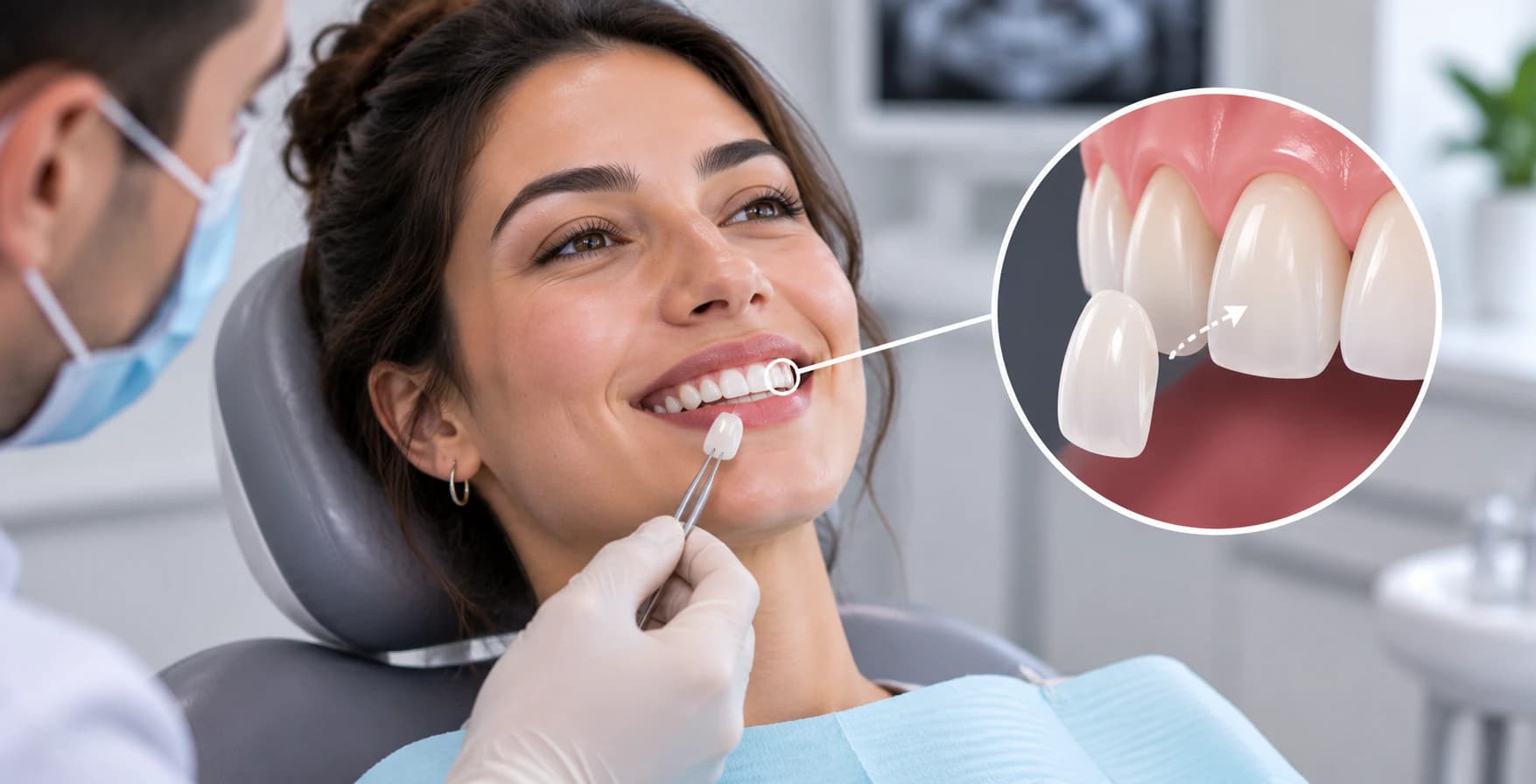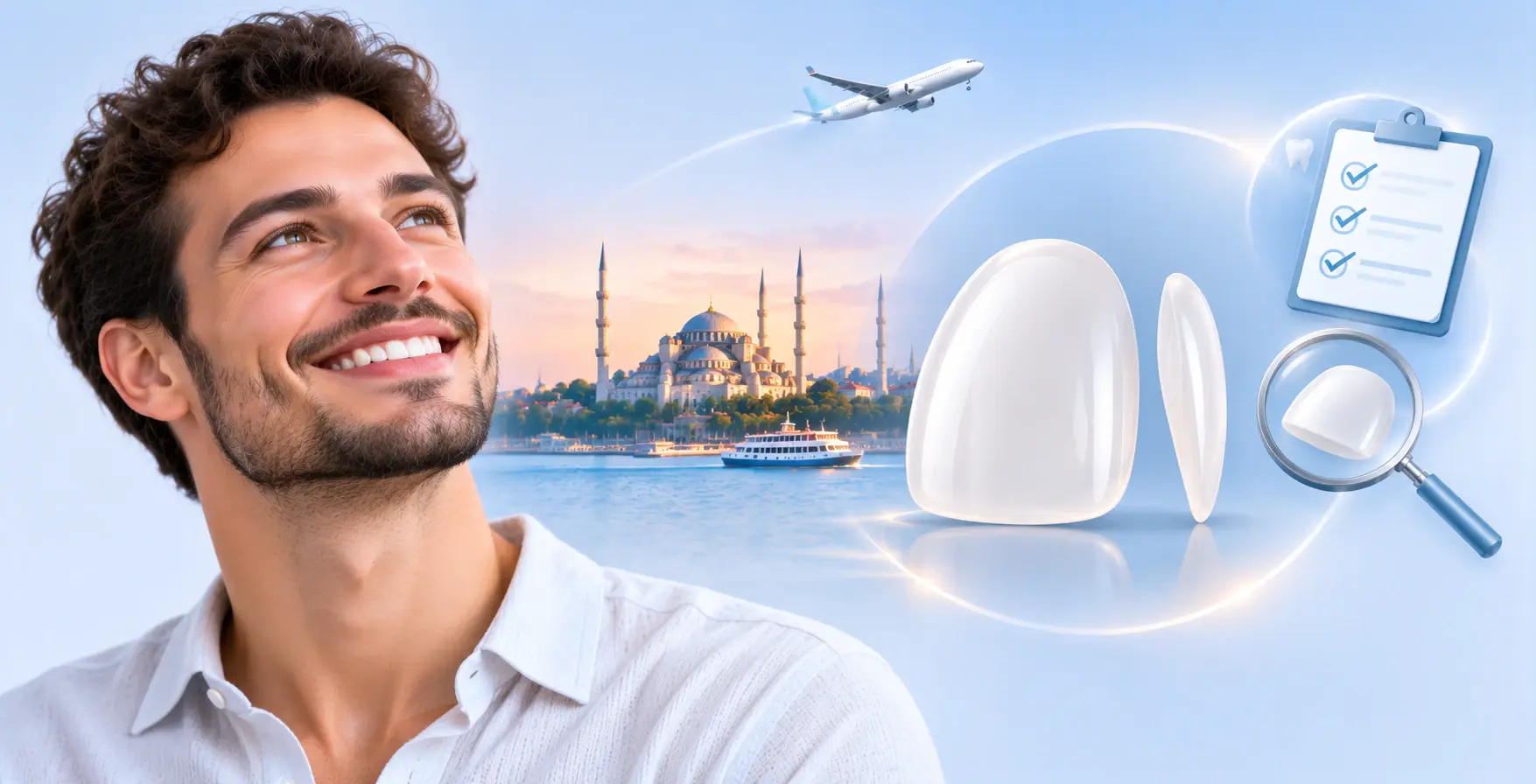
Turkey has become one of the busiest destinations for dental tourism in Europe and the Middle East. Thousands of patients travel to Istanbul, Antalya, and Izmir each year for ceramic veneer treatment. E.max veneers sit at the centre of this demand. These restorations use lithium disilicate glass ceramic, a material that dentists value for its natural translucency and strong bond to enamel (Guess et al. 2011). Yet the material itself guarantees nothing. The clinical skill of the dentist, the honesty of the diagnosis, and the quality of the dental laboratory decide the final result. This guide gives you a practical framework for evaluating Turkish clinics before you book a flight. Each section covers one selection criterion, so you can compare providers on evidence rather than marketing.
Why Does Choosing the Right E.max Veneer Clinic Matter?
Clinic selection matters because E.max veneer treatment is irreversible, technique sensitive, and dependent on at least three different professionals. The dentist plans and prepares the teeth. A ceramist fabricates the restorations. The treating team bonds them under strict isolation. A weakness in any one of these steps compromises the whole case.
Price comparison alone cannot capture this complexity. Two clinics may quote the same fee per tooth and deliver entirely different outcomes. Clinical research confirms that veneer survival depends on bonding quality, enamel preservation, and occlusal management rather than the ceramic brand alone (Peumans et al. 2004). Patients who choose a clinic on price frequently discover hidden trade offs in preparation depth, laboratory quality, or aftercare. The sections below show you how to detect those trade offs before treatment begins.
What Qualifications Should an E.max Veneer Dentist Have?
A qualified E.max veneer dentist holds a valid dental licence, documented postgraduate training in aesthetic or restorative dentistry, and a verifiable case history with lithium disilicate restorations. These three elements form the minimum standard.
General dental experience does not equal veneer expertise. Veneer treatment belongs to the intersection of prosthodontics and cosmetic dentistry. It requires knowledge of ceramic bonding protocols, shade science, and minimally invasive preparation design. A dentist who places crowns daily may still lack specific training in thin laminate restorations, because crowns and veneers follow different mechanical principles.
Ask direct questions. Request the dentist's full name before you commit. Check registration with the Turkish Dental Association or the relevant provincial chamber. Look for postgraduate certificates in prosthodontics, aesthetic dentistry, or adhesive dentistry. Ask how many E.max cases the dentist completes each month, and ask who performs each clinical step. A trustworthy clinic lets the same dentist evaluate you, prepare your teeth, and supervise the final bonding.
How Can You Evaluate a Dentist's E.max Veneer Portfolio?
A credible portfolio shows unedited before and after photographs of real patients, consistent quality across different facial types, and results that respect natural anatomy. Stock images, heavy filters, and identical Hollywood smiles are warning signs.
Examine the details inside each case. Look at natural translucency near the incisal edge and gradual colour transitions from the gum line outward. Check whether tooth proportions fit the patient's face rather than a template. Study the gum line for harmony and health. Assess the incisal edge position, because it controls both phonetics and bite function. Finally, judge whether the smile integrates with the patient's lips and facial features.
Clinical studies link long term veneer success to precise fit and conservative aesthetics rather than maximal whiteness or uniformity (Fradeani, Redemagni and Corrado 2005). Ask the clinic to show you cases that resemble your own starting situation. If the team cannot document comparable cases, treat that silence as meaningful data.
Why Is the Dental Laboratory Important for E.max Veneer Results?
The dental laboratory shapes, layers, and characterises your veneers, so its craftsmanship determines how natural the final restorations look. Two dentists can prepare identical teeth and receive completely different ceramics from different laboratories.
Ask whether the clinic works with an in house laboratory or an external partner. Both models can succeed, but you should know which one applies to your case. Ask about the technicians' specific experience with IPS e.max ceramics. Lithium disilicate demands controlled crystallisation, careful layering of translucent porcelain, and accurate surface characterisation. These skills take years to develop.
Communication between dentist and technician matters as much as individual skill. Digital photography, shade mapping, and detailed prescriptions allow the ceramist to reproduce natural colour gradients (Guess et al. 2011). Before final bonding, the clinical team must verify marginal adaptation, contact points, and occlusion. A clinic that skips a proper try in appointment transfers laboratory errors directly onto your teeth.
How Can You Verify the Authenticity and Quality of E.max Materials?
You verify material authenticity by asking for the manufacturer's name, the exact ceramic system, and traceable product documentation. Genuine IPS e.max comes from a single manufacturer, and a legitimate clinic can prove what it uses.
The market contains many generic glass ceramics that imitate the E.max name. These alternatives differ in crystalline structure, flexural strength, and optical behaviour. Research on all ceramic systems shows that material composition directly affects fracture resistance and bonding performance (Guess et al. 2011). A quotation that lists only "porcelain veneer" or "ceramic veneer" hides the most important variable in your treatment.
Request the brand name in writing inside your treatment plan. Ask whether the clinic can show original packaging, batch information, or the ceramic ingots used in the press furnace. Remember one distinction. Material quality is necessary but not sufficient. Even a genuine IPS e.max block fails in unskilled hands, so material transparency must accompany clinical and laboratory competence.
Does the Clinic Follow a Conservative Tooth Preparation Philosophy?
A conservative clinic removes the minimum enamel required for aesthetics and function, and it considers minimal preparation or no preparation designs whenever the case allows. Enamel preservation is the single strongest predictor of veneer longevity.
Bonding to enamel produces a far more durable adhesive interface than bonding to dentine. Clinical studies show that veneers bonded primarily to enamel achieve higher survival rates than those extended into dentine (Peumans et al. 2004). A classic study of preparation designs measured how much tooth structure each approach removes, and aggressive designs sacrifice substantially more healthy tissue (Edelhoff and Sorensen 2002).
Ask the dentist how much enamel your plan will remove, tooth by tooth. Accept that some cases need conventional preparation. Crowded teeth, deep discolouration, or existing fillings may require more reduction. The problem arises when a clinic proposes heavy preparation for healthy, well aligned teeth simply to speed up the workflow. Unnecessary reduction causes sensitivity, weakens the bond, and permanently removes tissue you cannot recover. Question any proposal that treats every visible tooth identically.
Which Diagnostic Technologies Should a Reliable E.max Clinic Use?
A reliable clinic uses digital intraoral scanning, digital photography, and structured smile analysis to plan treatment. Technology earns its place when it improves accuracy, not when it decorates a website.
Digital intraoral scanners capture precise three dimensional impressions without distortion from traditional materials. Digital Smile Design software lets the dentist visualise proposed changes and discuss proportions with you before any tooth is touched. Clinical photography and shade matching systems support accurate colour communication with the laboratory. Digital bite analysis reveals occlusal contacts that threaten ceramic edges.
Ask how the clinic uses CAD/CAM technology. Some clinics mill restorations in house, while others send digital files to specialised laboratories. Both approaches can deliver excellent results. What matters is the workflow behind the machine. A scanner without a diagnostic protocol is marketing equipment. Judge technology by the questions it answers: the quality of the fit, the accuracy of the shade, and the stability of the bite.
How Does a Good Clinic Determine Whether You Are Suitable for E.max Veneers?
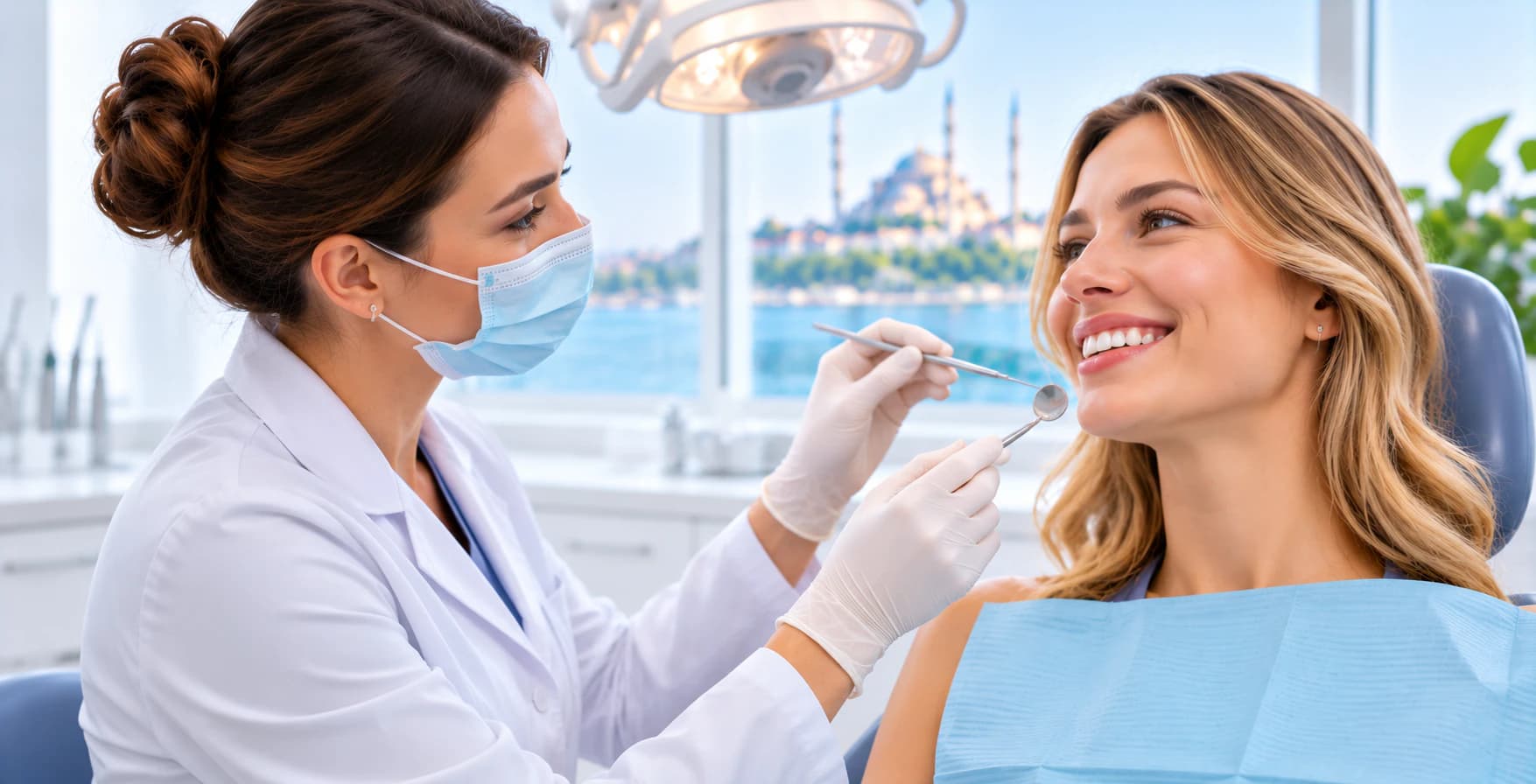
A good clinic confirms your suitability through a structured examination before it accepts you as a veneer patient. E.max veneers do not fit every mouth, and honest clinics say so.
The assessment covers several factors. The dentist evaluates your existing enamel, because bonding depends on it. Tooth position and alignment determine how much preparation the case needs. Previous restorations change the bonding substrate. Gum health must be stable, since inflamed tissue bleeds during bonding and ruins adhesive isolation. Bite alignment and occlusal forces decide whether the ceramic edges will survive function. Severe discolouration or structural damage may push the plan toward crowns instead.
Untreated gum disease, active decay, or heavy bite problems require attention before any cosmetic step. Patients who grind their teeth need a protective night guard and a frank discussion about fracture risk. A reputable dentist recommends orthodontics, whitening, or periodontal treatment when those options serve you better than veneers. Refusal to offer alternatives is a commercial behaviour, not a clinical one.
What Should an Individualised E.max Veneer Treatment Plan Include?
An individualised plan names each treated tooth, states the restoration type for every unit, describes the preparation depth, and defines the planned shade, shape, and smile design. You should receive it in writing before you travel.
Check the details. The plan should distinguish veneers from partial coverage restorations and full crowns, because these options differ in tooth cost and tissue sacrifice. It should list any preliminary treatment such as fillings, gum therapy, or replacement of failing restorations. It should state the expected outcome, the known limitations, and the possible complications.
Adhesive dentistry research shows that case planning and substrate evaluation shape clinical outcomes as strongly as the restoration itself (Peumans et al. 2000). If two clinics propose very different treatments for the same mouth, request a third opinion. Divergent plans reveal how each clinic weighs conservation against commercial volume.
How Can Patient Reviews Reveal the Quality of an E.max Veneer Clinic?
Patient reviews reveal quality when you read them on independent platforms, filter for veneer specific experiences, and look for patterns rather than isolated praise or complaint.
Prioritise reviews that mention E.max or ceramic veneers by name. Study what patients say about treatment accuracy, aesthetic results, and communication with the dentist. Note comments on appointment organisation and comfort during preparation and bonding. Pay special attention to how the clinic responded when something went wrong, because complication handling shows character.
Distinguish hospitality reviews from clinical reviews. Airport pickups and hotel quality say nothing about ceramic margins. Give more weight to reviewers who returned months later to report durability, because long term satisfaction reflects bonding quality and occlusal design. A single negative review means little, but recurring complaints about the same issue describe a system, not an accident.
What Hygiene and Sterilisation Standards Should You Expect?
You should expect documented sterilisation protocols, autoclave validation, single use materials where appropriate, and visibly clean treatment rooms. Infection control is a clinical discipline, not an aesthetic one.
Ask the clinic how it sterilises instruments. Autoclaves require routine testing and cycle documentation. Ask which items are disposable and how the team stores sterile packages. Observe the treatment room when you arrive. Clean surfaces, sealed instruments, and gloved handling of materials signal functioning protocols.
A luxurious lobby proves nothing about hygiene. Marble floors and clinical cleanliness follow different budgets and different priorities. Judge the treatment room, not the reception area. A clinic that answers sterilisation questions confidently and specifically usually runs a documented system. Vague or irritated answers tell you the opposite.
How Should You Compare E.max Veneer Prices Between Turkish Clinics?
You compare prices correctly by matching the full treatment scope, not the advertised per tooth figure. Material authenticity, dentist experience, laboratory quality, diagnostics, and included services all move the real cost.
Advertised prices often describe one veneer under ideal conditions. Complete treatment includes the examination, imaging, preparation, temporary restorations, laboratory work, bonding, and follow up. An unusually low quotation usually reflects a difference somewhere in this chain: a generic ceramic, an outsourced laboratory of unknown quality, or a reduced appointment count.
Request an itemised written quotation from every clinic on your shortlist. The sample comparison below shows why itemisation matters.
Cost component | Clinic A quotation | Clinic B quotation |
Ceramic material | IPS e.max, documented | "Premium ceramic", unspecified |
Units included | 10 veneers | 10 veneers |
Diagnostics and scans | Included | Charged separately |
Temporary restorations | Included | Not mentioned |
Laboratory | Named partner lab | Not disclosed |
Aftercare policy | Written, 2 years | Verbal only |
Total transparency | Itemised | Single figure |
Clinic A may cost more per tooth and still deliver more value, because every component is defined and verifiable.
Which Services Should Be Included in an International Patient's Dental Package?
A complete package covers the clinical pathway first and the travel logistics second. Both matter, but they do not carry equal weight.
On the clinical side, expect an initial online consultation, a full examination with diagnostic imaging, temporary veneers when indicated, the final E.max restorations, bonding, and written post treatment instructions. On the travel side, many clinics include airport transfers, hotel accommodation, and translation assistance.
Clarify in writing which services the quoted price includes and which cost extra. Then keep your priorities straight. Travel convenience never compensates for weak diagnostics or rushed bonding. Choose the clinic for its clinical answers, and treat the hotel and transfers as secondary benefits.
How Should a Turkish Dental Clinic Manage Communication With International Patients?
A professional clinic gives you direct access to the treating dentist, provides documents in a language you understand, and answers technical questions in writing before you travel.
English speaking dentists and dedicated patient coordinators prevent the most common source of dental tourism disputes: misunderstanding. Ask whether you can speak with the dentist personally, not only with a sales agent. Request treatment recommendations, consent forms, and aftercare instructions in your language.
Study the tone of the answers you receive. Transparent clinics explain risks, limitations, and alternatives without pressure. They never promise identical results for every patient, because biology does not work that way. If a representative pushes you to pay a deposit before any clinical evaluation, you are reading a sales script, not a treatment plan.
What Should You Know About Treatment Timelines and Appointments in Turkey?
E.max veneer treatment typically requires a remote assessment, an in person examination, tooth preparation, laboratory fabrication, and a fitting and bonding phase spread over several days. The exact number of appointments depends on case complexity and laboratory arrangements.
The process usually begins with photographs and dental records reviewed online. A responsible clinic then repeats the diagnosis in person before finalising the plan, because photographs cannot reveal bite dynamics or gum condition. Preparation and digital impressions come next, followed by temporary restorations when indicated. The laboratory then fabricates the ceramics, and the team completes try in, adjustments, and final bonding.
Allow enough days for clinical adjustments. A clinic that promises an exceptionally fast transformation compresses the try in and refinement stages, which are exactly the stages that protect your result. Confirm the full schedule before you book flights, and build in a buffer day.
What Happens If Your E.max Veneers Need Adjustments After Returning Home?
A dependable clinic offers a written aftercare policy, remote consultations, and clear rules about repairs before you leave Turkey. Post treatment support is part of the treatment, not a favour.
Ask how the clinic handles sensitivity, bite irregularities, or ceramic fractures once you are home. Ask whether follow up requires another trip or whether the team cooperates with dentists in your country. Request written information about maintenance, repair conditions, and possible costs.
Long term clinical data show that veneers perform well for many years, but they also show that complications concentrate in the early functional period and around unaddressed bite issues (Beier et al. 2012). Ongoing access to professional support protects both your comfort and your investment, so treat aftercare terms as seriously as the quotation.
Which Warning Signs Should Make You Avoid an E.max Veneer Clinic?
Several concrete behaviours reliably identify clinics you should avoid. Each one signals a system built around volume rather than clinical judgement.
Watch for these red flags: extensive tooth preparation proposed without justification; guaranteed identical results for every patient; quotations that do not name the ceramic material; refusal to identify the treating dentist; before and after photographs that you cannot verify as genuine cases; pressure to pay a deposit before a real consultation; unrealistically short schedules with no time for adjustments; recommendations to veneer every visible tooth without individual assessment; and unclear warranty terms or no written aftercare policy.
Any single item deserves a question. A combination of two or three deserves a rejection.
How Can You Make the Final Decision Between Shortlisted E.max Veneer Clinics?
You make the final decision by scoring two or three clinics against the same criteria and giving clinical reasoning more weight than promotional claims.
Build a simple comparison framework. Judge each provider on dentist qualifications, portfolio authenticity, material transparency, laboratory standards, conservative preparation philosophy, and aftercare. Compare the complete written proposals rather than the headline prices. Favour the clinic that explains why your case needs a specific approach, because individualised reasoning predicts individualised execution.
Evaluation criterion | What to verify | Positive sign |
Dentist expertise | Licence, training, E.max case volume | Named dentist, documented cases |
Material authenticity | Brand and product documentation | IPS e.max named in writing |
Laboratory quality | Technician experience, communication | Named lab, try in protocol |
Preparation philosophy | Enamel removal per tooth | Minimal prep where possible |
Treatment plan | Written, itemised, individual | Tooth by tooth detail |
Aftercare | Written warranty and remote support | Clear repair conditions |
Prioritise clinical suitability, natural looking outcomes, and long term oral health. The cheapest option and the most advertised option are rarely the same as the best option.
What Are the Most Common Questions About Choosing an E.max Veneer Clinic in Turkey?
How Do I Verify Whether a Turkish Clinic Uses Genuine IPS E.max Materials?
Ask for the manufacturer, the exact product line, and material documentation in writing. A legitimate clinic names IPS e.max openly and can show packaging or batch information. Generic phrases such as "German ceramic" or "premium porcelain" without a product name do not count as verification.
Should I Choose a Prosthodontist or a Cosmetic Dentist for E.max Veneers?
Choose the clinician with documented veneer experience, regardless of the title. Prosthodontics training covers ceramic restorations and occlusion in depth, while cosmetic dentistry training focuses on aesthetics. The decisive factor is supervised, repeated experience with lithium disilicate veneers, supported by a portfolio you can inspect.
How Many E.max Veneer Cases Should a Dentist Have Completed?
No fixed number defines competence. Case quality, complexity, and documented outcomes matter more than volume alone. A dentist who has completed hundreds of conservative, well photographed cases and can discuss failures honestly offers more assurance than one who claims thousands of cases without evidence.
Are E.max Veneers Better Than Zirconia Veneers?
Neither material is universally better. E.max lithium disilicate offers superior translucency and bonds strongly to enamel, which suits anterior aesthetics. Zirconia offers higher fracture strength and masks dark substrates better, which suits heavy bite forces or discoloured teeth.
Property | E.max lithium disilicate | Zirconia |
Translucency | High | Moderate to low |
Flexural strength | Moderate, about 400 MPa | High, above 900 MPa |
Enamel bonding | Excellent | More technique sensitive |
Best indication | Front teeth, enamel preserved | Dark teeth, heavy load |
The right choice depends on your enamel, bite, and discolouration, not on a brand preference.
Can I Get E.max Veneers Without Shaving My Natural Teeth?
Sometimes, yes. No preparation and minimal preparation veneers exist, but they suit only selected cases with favourable tooth position, colour, and shape. Adding ceramic without removing tissue increases tooth volume, so the dentist must confirm that the extra thickness will not distort your smile or your bite. A trustworthy clinic offers this option when it fits and explains why when it does not.
How Long Should I Stay in Turkey for E.max Veneer Treatment?
Most cases need roughly one working week, but the honest answer depends on diagnostics, laboratory production, and adjustment time. Simple cases move faster; complex cases with preliminary gum or bite treatment take longer. Confirm the schedule after the in person examination, and avoid clinics that commit to a fixed duration before they examine you.
Do Turkish Dental Clinics Provide Warranties for E.max Veneers?
Many clinics offer warranties, but the terms vary widely. Ask for the warranty in writing and read the exclusions. A material warranty covers the ceramic itself, while clinical aftercare covers the treatment. Conditions usually include regular check ups and night guard use for grinders. A warranty that exists only in conversation does not exist.
How Long Can E.max Veneers Last After Treatment?
Long term studies report high survival rates beyond ten years when veneers bond to enamel and the bite is managed well (Layton and Walton 2007; Beier et al. 2012). A systematic review of glass ceramic veneers confirms strong survival with low complication rates across thousands of restorations (Morimoto et al. 2016). Your individual outcome depends on bonding quality, oral hygiene, bite forces, and regular examinations, so no clinic can promise you a fixed number of years.
What Defines the Best E.max Veneer Clinic in Turkey?
The best clinic is the one that proves its competence, not the one that advertises it loudest. Throughout this guide, one pattern repeats: verifiable evidence beats attractive promises at every stage of the decision.
Focus on what you can check. Confirm the dentist's qualifications and case portfolio. Demand the ceramic brand in writing. Ask who makes the restorations and how the laboratory works. Expect a conservative preparation philosophy and a written, tooth by tooth treatment plan. Read independent reviews for clinical patterns, and insist on clear aftercare terms before you pay anything.
Cosmetic dentistry serves you best when it preserves what nature gave you. A clinic that protects your enamel, plans conservatively, and stays reachable after you fly home treats you as a patient rather than a transaction. That standard, applied consistently, will lead you to the right clinic.
References
Beier, Ulrike S., et al. "Clinical Performance of Porcelain Laminate Veneers for up to 20 Years." International Journal of Prosthodontics, vol. 25, no. 1, 2012, pp. 79-85.
Edelhoff, Daniel, and John A. Sorensen. "Tooth Structure Removal Associated with Various Preparation Designs for Anterior Teeth." Journal of Prosthetic Dentistry, vol. 87, no. 5, 2002, pp. 503-509.
Fradeani, Mauro, Mauro Redemagni, and Massimo Corrado. "Porcelain Laminate Veneers: 6- to 12-Year Clinical Evaluation: A Retrospective Study." International Journal of Periodontics and Restorative Dentistry, vol. 25, no. 1, 2005, pp. 9-17.
Guess, Petra C., et al. "All-Ceramic Systems: Laboratory and Clinical Performance." Dental Clinics of North America, vol. 55, no. 2, 2011, pp. 333-352.
Layton, Danielle M., and Terry R. Walton. "An up to 16-Year Prospective Study of 304 Porcelain Veneers." International Journal of Prosthodontics, vol. 20, no. 4, 2007, pp. 389-396.
Morimoto, Susana, et al. "Main Clinical Outcomes of Feldspathic Porcelain and Glass-Ceramic Laminate Veneers: A Systematic Review and Meta-Analysis of Survival and Complication Rates." International Journal of Prosthodontics, vol. 29, no. 1, 2016, pp. 38-49.
Peumans, Michel, et al. "A Prospective Ten-Year Clinical Trial of Porcelain Veneers." Journal of Dental Research, vol. 83, no. 1, 2004, pp. 61-65.
Peumans, Michel, et al. "Porcelain Veneers: A Review of the Literature." Journal of Dentistry, vol. 28, no. 3, 2000, pp. 163-177.