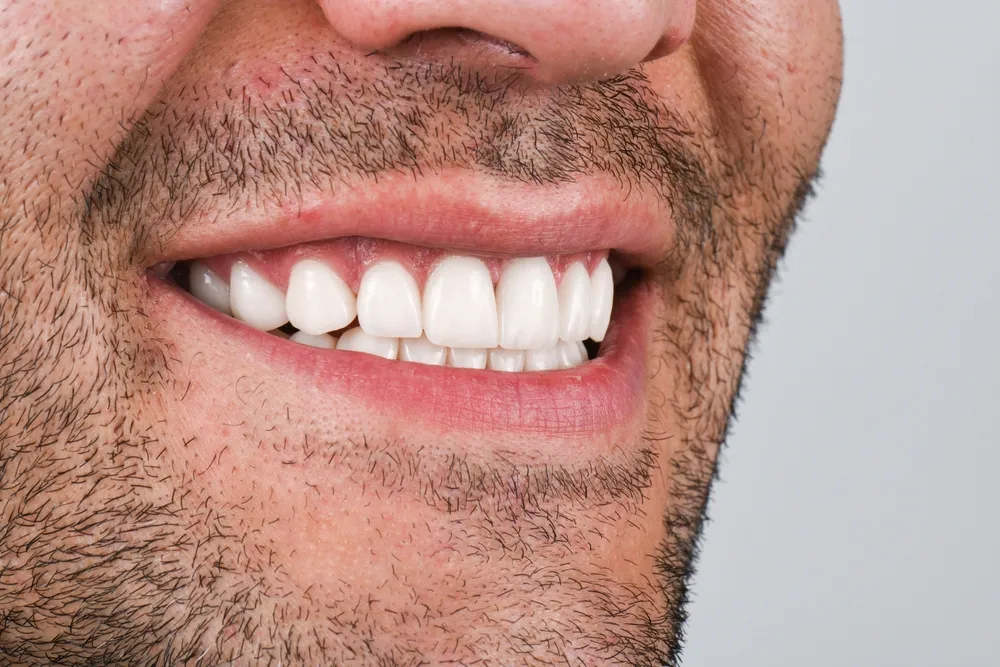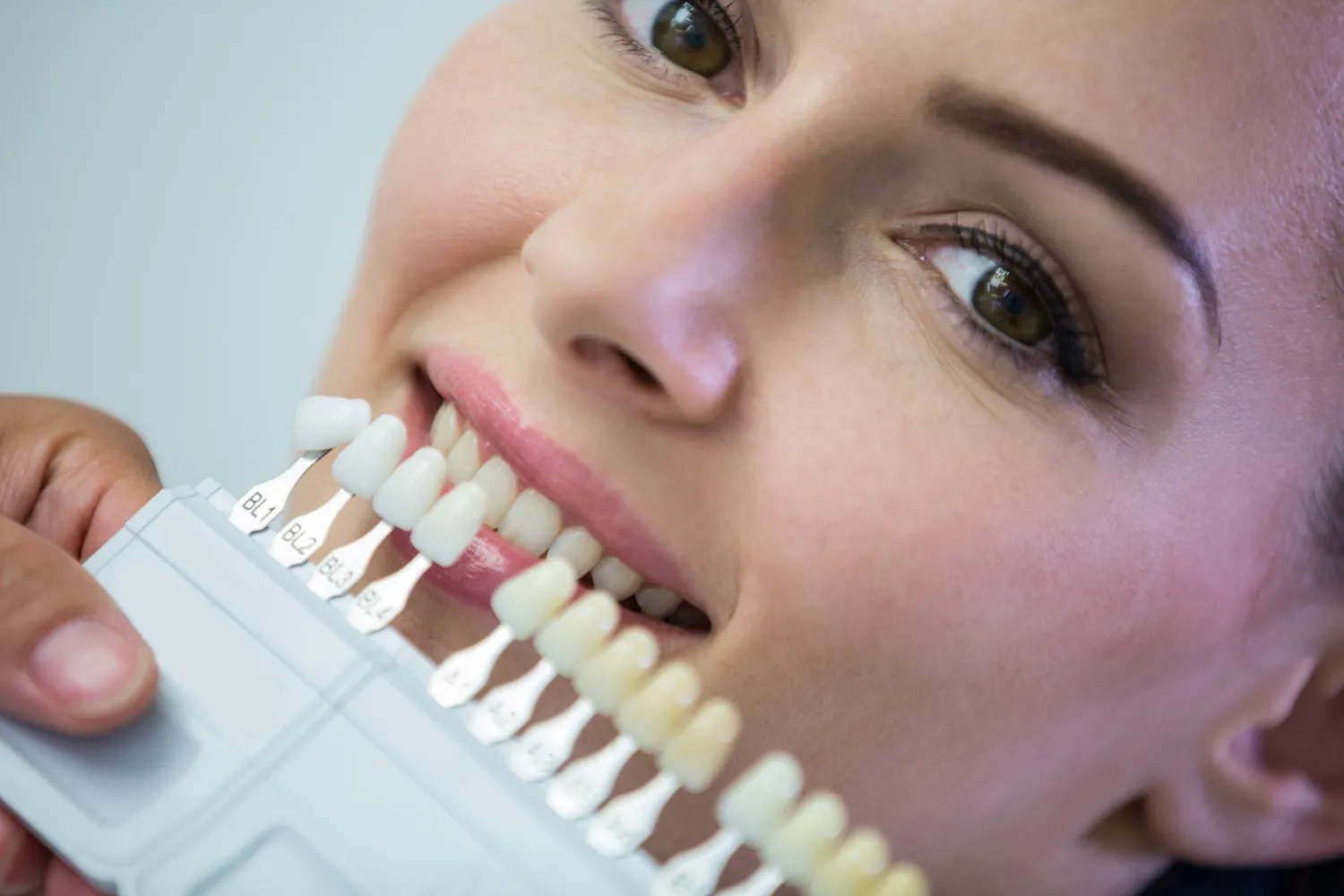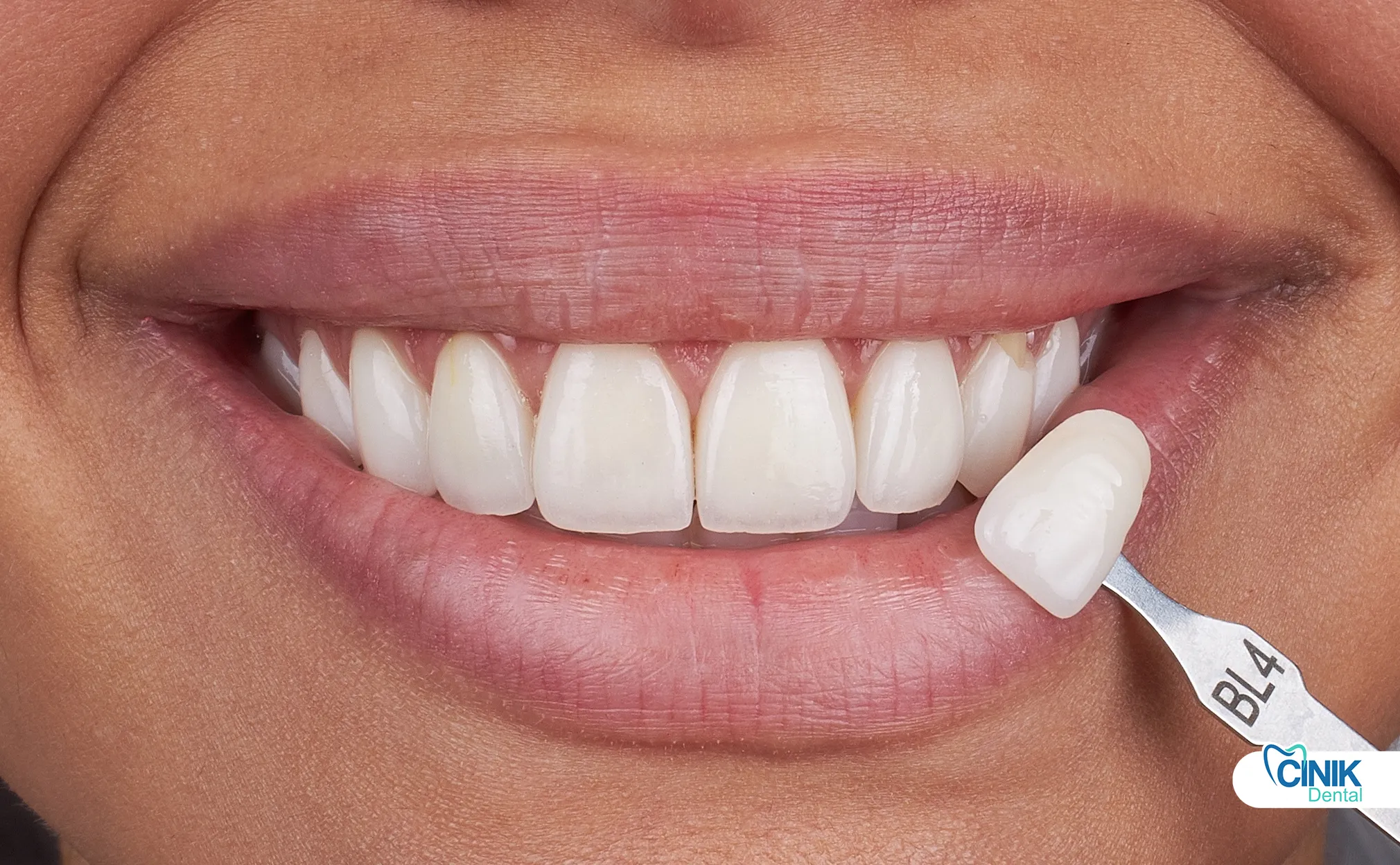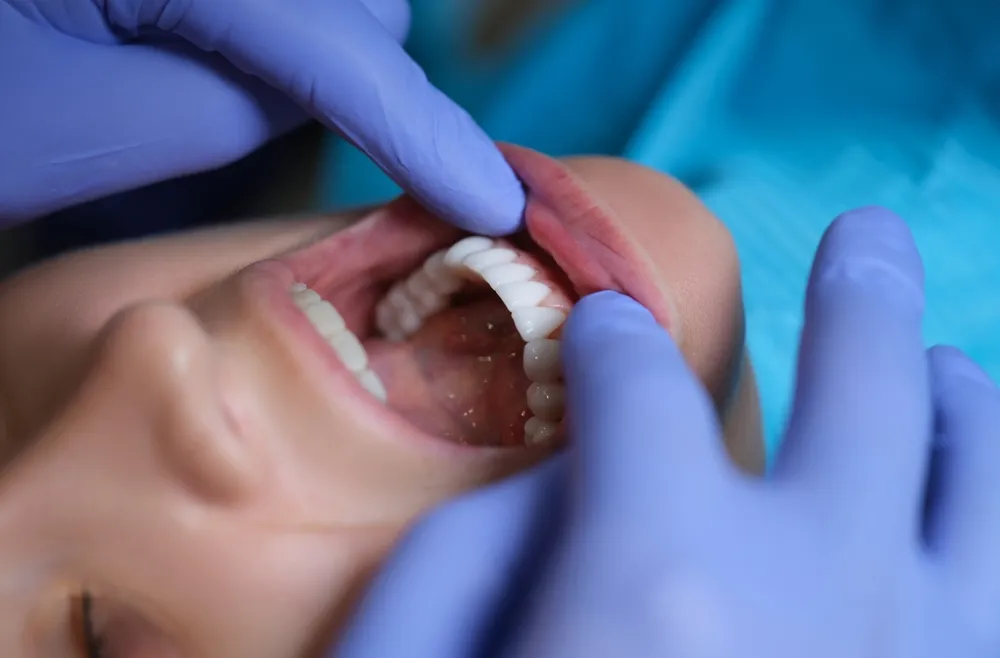
E.max veneers transform smiles. These thin lithium-disilicate glass-ceramic shells bond to the front surfaces of teeth. They correct discoloration, chips, gaps, and minor misalignments. Dentists love them for their strength and lifelike appearance. Patients love them for the confidence boost. But placement day marks the start of a critical adaptation period. What you eat matters just as much as how you brush. This guide explains exactly which foods threaten your new restorations and why smart food choices protect your investment.
E.max veneers contain lithium disilicate. This glass-ceramic material offers excellent flexural strength and fracture resistance. Studies show that lithium-disilicate restorations withstand considerable occlusal forces under normal conditions (Holand et al. 2006). However, the ceramic itself represents only one part of the system. The adhesive cementation, the underlying tooth structure, the gum tissue, and the opposing teeth all play roles in long-term success. When you bite into the wrong food, you risk mechanical stress, veneer fracture, chipping, debonding, surface staining, and sensitivity. You also raise the risk of plaque accumulation and secondary caries around restoration margins.
E.max veneers resist stains better than many other restorative materials. The dense glass-ceramic surface does not absorb pigments easily. But the cement layer at the margin, the natural tooth structure next to the veneer, and the adhesive interface remain vulnerable. Color mismatch develops when natural teeth darken while the veneer stays bright. This article focuses on evidence-based dietary guidance. You do not need a highly restrictive diet forever. You do need to modify how you consume certain hard, sticky, acidic, or highly pigmented foods. Smart habits today prevent costly repairs tomorrow.
Why Should You Avoid Certain Foods After Getting E.max Veneers?
Certain foods generate excessive force, pull at the adhesive bond, or stain the surrounding tooth structure. Avoiding them protects the ceramic, the cement layer, and the natural enamel underneath.
How Can Mechanical Forces Damage E.max Veneers?
Concentrated biting forces exceed the fracture threshold of even strong ceramics. Biting directly into hard objects creates shear stress that chips or cracks the veneer.
Your jaw generates impressive power. Normal chewing distributes this force across multiple teeth and food surfaces. But when you bite directly into a hard object, you concentrate that force onto a tiny point. This creates shear stress. Lithium disilicate resists flexural stress well, but no ceramic tolerates unlimited point loading. Research demonstrates that ceramic restorations fail when occlusal forces exceed their fracture resistance (Edelhoff and Sorensen 2002). The thickness of the veneer matters. The design of the tooth preparation matters. The quality of the adhesive bond matters. Your bite alignment matters. Even the strongest IPS e.max veneer fractures when you subject it to inappropriate loading.
Biting into ice, hard candy, or popcorn kernels directs force straight through the veneer. The ceramic flexes slightly. Microcracks form. Over time, these cracks propagate. One day, a piece chips off. The fracture might stay small and cosmetic. Or it might expose the underlying tooth. Either way, you face replacement or repair. Normal chewing with your back teeth rarely causes this damage. Direct anterior biting into hard objects does.
Can Food Affect the Bond Between an E.max Veneer and the Tooth?
Yes. Excessive pulling or twisting forces weaken the resin cement layer. Debonding occurs when the adhesive fails before the ceramic does.
Dentists bond E.max veneers with resin cement. This adhesive cementation creates a micromechanical and chemical union between the ceramic and the enamel. The bond strength often exceeds the cohesive strength of the ceramic itself (Blatz, Sadan, and Kern 2003). But sticky foods apply tensile and shear forces directly to this interface. When you chew taffy or caramel, the food grips the veneer surface. As you open your jaw, the sticky mass pulls outward. This repeated tugging stresses the cement layer.
Debonding differs from fracture. In debonding, the veneer pops off intact. The ceramic remains whole, but the adhesive fails. You might save the veneer, but you still need dental intervention. Hard foods can also contribute to debonding. A sharp impact creates micro-movement at the margin. Over hundreds of cycles, this loosens the bond. Protecting the adhesive interface matters as much as protecting the ceramic itself.
Can Foods Cause E.max Veneers to Stain?
The veneer itself resists staining well, but the cement margins, adjacent natural teeth, and accumulated plaque discolor. This creates visible color mismatch.
Lithium-disilicate glass-ceramic features a dense, non-porous surface. It does not stain easily. But the story does not end there. The resin cement at the margin can yellow over time. Plaque accumulates at the gumline. Natural teeth next to the veneer absorb pigments from coffee, tea, and wine. Your veneer stays bright white while your natural teeth darken. The result looks like a color line at the margin.
Pigmented foods and drinks cause this problem. Coffee, black tea, green tea, red wine, cola, curry, tomato-based sauces, and dark berries all contain chromogens. These pigment molecules cling to enamel and cement. Frequent exposure matters more than occasional indulgence. A single cup of coffee rarely causes trouble. Five cups daily, without rinsing, accelerates discoloration of the surrounding structures (Peumans et al. 2000).
Which Foods Should You Avoid After Getting E.max Veneers?
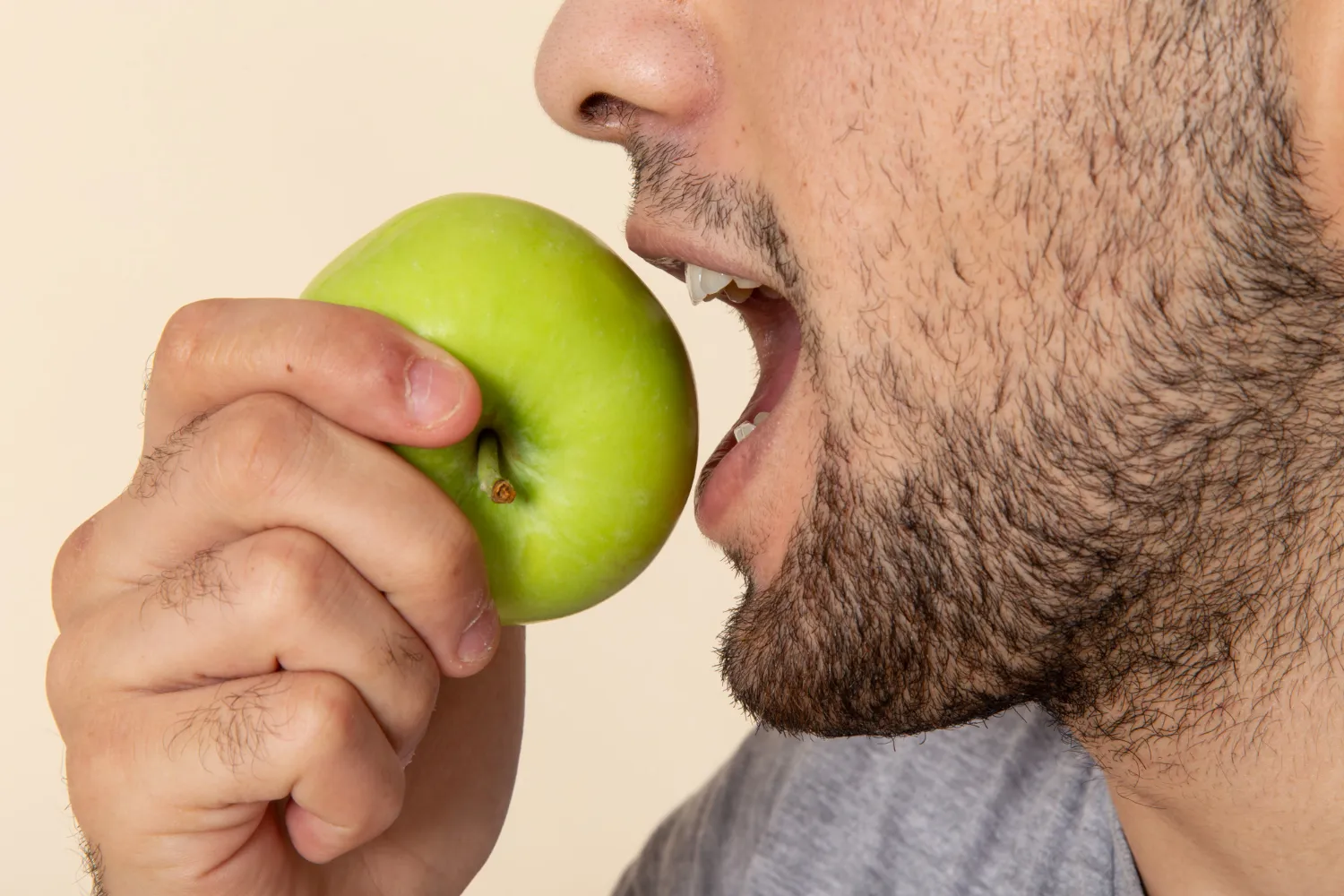
Hard foods, sticky candies, dark beverages, acidic drinks, and bone-in meats pose the greatest risks. Cut or avoid them when possible.
Should You Avoid Hard Foods With E.max Veneers?
Yes. Ice, hard candy, nuts, popcorn kernels, hard chips, seeds, hard crusts, and raw hard vegetables concentrate force and threaten fracture.
Hard foods demand high biting force. When you chomp down on an unpopped popcorn kernel, your incisor focuses hundreds of newtons onto a tiny contact point. The flexural strength of lithium disilicate has limits. Studies on ceramic fracture show that impact loading causes catastrophic failure more readily than distributed chewing forces (Guess et al. 2011).
Consider these specific threats:
Food | Risk Mechanism | Safer Alternative |
Ice cubes | Direct impact; thermal shock | Skip chewing ice entirely |
Hard candies | Concentrated point load; prolonged acid exposure | Soft chocolate (in moderation) |
Popcorn kernels | Unexpected hard object | Hulled popcorn or softer snacks |
Hard chips | Sharp edges; brittle fracture risk | Soft pita or bread |
Raw carrots | Dense fiber; high bite force | Cooked or steamed carrots |
Hard crusty bread | Rigid surface; anterior loading | Soft bread or cut into small pieces |
Seeds | Small hard particles | Ground seeds or seedless options |
The way you eat matters as much as what you eat. Cut hard foods into smaller pieces. Chew them with your molars instead of biting with your front teeth. This simple habit distributes force and protects your veneers.
Are Sticky Foods Bad for E.max Veneers?
Yes. Sticky foods pull at the restoration, trap plaque at margins, and prolong acid exposure.
Caramel, toffee, taffy, chewy candy, sticky chocolate, gummy sweets, and very adhesive dried fruits create unique problems. They do not melt E.max ceramic. Nothing in your diet dissolves lithium disilicate. But sticky foods adhere to the veneer surface. When you pull your teeth apart, the food tugs on the restoration. This generates tensile stress at the adhesive interface.
Sticky foods also linger. They wedge into the microscopic space between the veneer margin and the gum tissue. Bacteria feed on the sugars. Acid production increases. Plaque thickens. Over time, this raises the risk of marginal discoloration and secondary caries. The ceramic itself remains untouched, but the natural tooth at the margin suffers.
You do not need to eliminate every gummy vitamin or piece of dried apricot. But you should limit chewy candies and brush soon after eating sticky foods. Water rinsing helps, but it does not replace thorough cleaning.
Should You Avoid Coffee and Tea After E.max Veneers?
You do not need to eliminate them, but you should limit frequency and rinse afterward. These drinks stain natural teeth and cement margins more than the ceramic itself.
Coffee and black tea contain tannins. These polyphenols bind to enamel and dental pellicle. Green tea and iced tea carry similar risks. The lithium-disilicate veneer resists this absorption. Your natural teeth do not. Over months, the contrast grows. The veneer stays bright. The neighboring teeth yellow.
Frequent sipping matters more than total volume. A person who drinks one large coffee in ten minutes exposes their teeth to less cumulative staining than someone who nurses a small cup over three hours. The prolonged contact time allows pigments to settle. Practical measures work well. Drink your coffee in one sitting. Rinse with water afterward. Use a straw for iced coffee to bypass the front teeth. Maintain excellent oral hygiene. These steps let you enjoy your morning ritual without sacrificing your smile.
Can Red Wine and Dark-Colored Drinks Affect E.max Veneers?
Yes. Red wine, cola, dark fruit beverages, colored energy drinks, and other pigmented drinks stain natural enamel and cement margins. They also introduce acid.
Red wine combines two problems: chromogens and acidity. The deep pigments cling to tooth surfaces. The alcohol and acids soften enamel slightly, making it more receptive to staining. Cola adds phosphoric acid and caramel coloring. Dark fruit juices contain natural pigments and sugars. Energy drinks often feature intense artificial dyes and low pH.
These drinks do not etch or dissolve the E.max ceramic. But they stain the natural tooth structure around the veneer. They also acidify the oral environment. This softens enamel and raises caries risk at the margin. Limit these beverages. When you indulge, drink water alongside them. Wait thirty minutes before brushing after acidic drinks. Brushing immediately scrubs softened enamel and worsens wear.
Should You Avoid Acidic Foods After Getting E.max Veneers?
You should limit them. Citrus fruits, lemon juice, grapefruit, vinegar-based foods, carbonated soft drinks, sports drinks, and acidic sauces threaten natural enamel and oral pH more than the ceramic itself.
E.max lithium disilicate resists acid erosion. Laboratory tests show minimal surface change after acid exposure (Holand et al. 2006). But your natural enamel does not share this resistance. Citric acid from lemons, phosphoric acid from soda, and acetic acid from vinegar dissolve enamel crystals. This process, dental erosion, thins the enamel. It exposes dentin. It changes the appearance of the natural teeth next to your veneers.
Acid also affects the adhesive interface over long periods. Constant low pH weakens the bond between resin cement and enamel. It promotes plaque accumulation. It raises caries risk at the veneer margin. You do not need to ban oranges or salad dressing. But you should consume acidic foods as part of a meal rather than alone. Rinse with water afterward. Avoid swishing soda between your teeth. These habits protect the natural tooth structure that supports your veneer.
Are Very Hot or Very Cold Foods Safe With New E.max Veneers?
Yes, after the initial sensitivity period. Normal temperature variation does not crack E.max veneers. But extreme temperatures may cause temporary discomfort in recently treated teeth.
Some articles exaggerate thermal risks. They suggest that hot soup or ice cream cracks ceramic. This misleads patients. Lithium-disilicate glass-ceramic undergoes thermal cycling in the mouth daily. Hot coffee and cold water alternate without causing fracture in well-bonded restorations. Research on thermal cycling shows that properly cemented lithium-disilicate crowns survive extreme temperature changes in laboratory testing (Sailer et al. 2007).
However, new veneers often accompany dentinal sensitivity. The dentist removes a thin layer of enamel during preparation. This brings the restoration closer to the dentin. Dentin contains microscopic tubules. These tubules transmit temperature changes to the nerve. Very hot soup or ice-cold drinks may trigger a brief zing of sensitivity. This sensation fades as the tooth adapts. It does not mean your veneer cracked. If sensitivity persists beyond a few weeks, contact your dentist. Otherwise, choose moderate temperatures during the first week for comfort, not because heat threatens the ceramic.
Should You Avoid Foods That Require Biting Close to Bones?
Yes. Chicken wings, ribs, bone-in meat, and corn on the cob create risk of accidental impact against hard bone.
Bone exceeds the hardness of any food you normally chew. When you tear meat from a chicken wing with your front teeth, you sometimes misjudge. Your incisor slams into bone. This generates a sharp, concentrated impact force. Such trauma chips even strong ceramics. Corn on the cob requires anterior biting and twisting. A hard kernel or the cob itself can strike the veneer edge.
The solution is simple. Remove meat from the bone with a knife and fork. Cut corn off the cob. These preparation steps eliminate the risk while preserving the eating experience.
Which Foods Can You Eat Safely With E.max Veneers?
Most normal foods fit safely into an E.max veneer diet. Soft foods, cooked vegetables, tender meats, dairy, and grains all work well when eaten properly.
What Soft Foods Are Suitable Immediately After Veneer Placement?
Yogurt, soft eggs, oatmeal, mashed vegetables, soft pasta, rice, tender fish, and smooth soups at comfortable temperatures make ideal choices for the first days.
Your mouth needs time to adjust after veneer placement. The gums may feel tender. The bite feels slightly different. Sensitivity lingers. Soft foods minimize mechanical stress and temperature extremes. They also reduce the chance of accidentally biting down hard while your proprioception adapts.
Good immediate options include:
Greek yogurt with soft fruit
Scrambled or poached eggs
Oatmeal or cream of wheat
Mashed potatoes or sweet potatoes
Well-cooked pasta with soft sauce
White rice or quinoa
Baked or steamed flaky fish
Pureed vegetable soups at lukewarm temperatures
Cottage cheese
Ripe bananas
These foods provide nutrition without demanding heavy chewing. They pose minimal staining risk. They allow you to eat comfortably while the adhesive cement fully sets and the tissues heal.
Which Everyday Foods Are Generally Compatible With Permanent E.max Veneers?
Cooked vegetables, soft fruits, lean meats, whole grains, dairy products, and most ordinary meals work fine with permanent E.max veneers.
Once your permanent veneers settle in, you can return to a normal, balanced diet. The key lies in preparation and technique. Cook vegetables until tender. Slice fruits into wedges rather than biting whole apples. Cut steak across the grain into bite-sized pieces. Eat sandwiches with manageable bites. Drink water with meals.
E.max veneers aim to restore normal function. They do not sentence you to a lifetime of baby food. Dentists place these restorations so patients can smile, speak, and eat with confidence. Reasonable care preserves that function for years.
Can You Eat Apples, Carrots, and Other Crunchy Foods With E.max Veneers?
Yes, if you cut them into pieces and chew with your back teeth. Avoid biting directly into whole hard fruits and vegetables with your veneered anterior teeth.
Apples and carrots provide fiber, vitamins, and satisfying crunch. You do not need to ban them. But modify your approach. Slice apples into wedges. Chew them with your molars. Grate carrots into salads. Steam or roast them for softer texture. Cut crunchy foods down to size, and they pose little threat to well-made lithium-disilicate veneers.
What Should You Eat During the First Few Days After Getting E.max Veneers?
Stick to soft, lukewarm, low-staining foods for the initial adaptation period. Follow your dentist's specific timeline.
What Is the Best Diet Immediately After Veneer Placement?
Choose soft-textured foods at moderate temperatures with low staining potential. Minimize biting force.
The first 24 to 72 hours matter most. The resin cement continues to mature. The tooth adjusts to the new restoration. The gum tissue settles around the margin. During this window, prioritize:
Soft textures that require minimal chewing
Lukewarm temperatures that avoid triggering sensitivity
Light-colored foods that reduce staining risk while you establish cleaning routines
Small bites that let you control force
Avoid extremely hot coffee, hard crackers, sticky candy, and tough meats during this brief phase. Think of it as a short recovery diet, not a permanent restriction.
How Long Should You Follow a Soft-Food Diet?
It varies. Some patients need only 24 hours. Others need several days. Your dentist's instructions override any general guideline.
Cementation protocols differ. Some dentists use dual-cure resin cement that reaches functional strength within hours. Others prefer protocols that mature over 24 hours. Temporary veneers demand more caution than permanent ones. Individual sensitivity varies widely. One patient feels fine the next morning. Another experiences tenderness for a week.
Do not fixate on a universal number of days. Follow your treating dentist's specific postoperative instructions. They understand your preparation design, cement choice, occlusion, and tissue condition. Their guidance tailors the timeline to your situation.
Are Temporary Veneers Different From Permanent E.max Veneers?
Yes. Temporary veneers use acrylic or composite resin. They bond more weakly and fracture more easily. Dietary restrictions stay stricter during the temporary phase.
Temporary veneers protect prepared teeth while the dental laboratory crafts your permanent E.max restorations. These temporaries usually consist of acrylic or bis-acryl composite. They lack the flexural strength of lithium disilicate. They attach with temporary cement designed for easy removal. This weaker bond makes them more prone to popping off. Their softer surface scratches and stains more readily.
During the temporary phase, avoid all hard, sticky, and heavily pigmented foods. Do not chew gum. Do not bite into apples. Cut everything into small pieces. Chew carefully. Once your dentist bonds the permanent IPS e.max veneers with resin cement, the rules relax. Permanent E.max veneers offer substantially different mechanical properties and a far stronger adhesive connection.
Which Foods Can Cause Problems for E.max Veneers Over the Long Term?
Frequent sugar, chronic acid exposure, and habitual staining foods threaten the natural tooth around the veneer more than the ceramic itself.
How Can Frequent Sugar Consumption Affect Teeth With Veneers?
Sugar feeds bacteria that cause caries at veneer margins and on exposed tooth surfaces. Veneers do not protect the entire tooth from decay.
A veneer covers only the facial surface. The back of the tooth remains natural enamel. The margin where veneer meets tooth creates a microscopic seam. Bacteria colonize this seam. They metabolize sugars and produce acid. This acid dissolves enamel and causes dental caries. If decay reaches under the veneer, the restoration fails.
Plaque accumulation compounds the problem. Sticky sugary foods cling to margins. They resist saliva's natural cleansing action. They feed bacterial colonies for hours. Even if the veneer itself remains pristine, the supporting tooth decays. Daily interdental cleaning, fluoride toothpaste, and limiting frequent sugar exposure protect the tooth structure that holds your veneer in place.
Can Acidic Foods Contribute to Problems Around Veneers?
Yes. Dietary acid erodes natural enamel and exposes dentin. It acidifies the oral environment and raises caries risk at the margin.
Chronic acid exposure thins enamel around the veneer margin. This erosion creates a ledge where plaque accumulates. It increases sensitivity. It changes the optical properties of the natural tooth, making color mismatch more obvious. Sports drinks, sodas, citrus juices, and vinegar-heavy diets accelerate this process.
The E.max ceramic does not erode. Your enamel does. Protect it by limiting acidic beverages, drinking them quickly rather than sipping, and rinsing with water afterward. Wait at least 30 minutes before brushing after acid exposure. Brushing too soon abrades the softened enamel surface.
Can Staining Foods Cause a Color Difference Between Veneers and Natural Teeth?
Yes. Natural teeth stain faster than lithium-disilicate ceramic. Over time, the veneer looks brighter than the surrounding tooth.
Differential staining presents a common long-term cosmetic concern. The IPS e.max veneer maintains its shade. The natural teeth darken. The cement margin yellows. Smoking accelerates this effect dramatically. Coffee, tea, red wine, curry, and dark berries contribute gradually.
Professional cleanings help. Your dental hygienist can polish natural enamel and remove surface stains. But internal tooth discoloration progresses regardless of veneers. Some patients eventually whiten their natural teeth to match the veneer again. Others replace older veneers to match newly darkened teeth. Minimizing pigmented foods and quitting smoking slows this process considerably.
Which Eating Habits Should You Avoid With E.max Veneers?
Nail biting, package opening, ice chewing, pen chewing, and unaddressed bruxism all raise fracture and debonding risk.
Should You Bite Your Nails With E.max Veneers?
No. Nail biting applies repetitive lateral forces that chip veneer edges and stress the adhesive bond.
Nail biting counts as a parafunctional habit. You generate precise, repetitive loading on the incisal edges. This habit produces shear forces in directions that normal chewing rarely creates. Over months, microcracks develop at the veneer margin. Pieces chip away. The bond weakens. Beyond veneer damage, nail biting introduces bacteria and risks infection. Break this habit to protect both your restorations and your health.
Is It Safe to Open Packages With Your Teeth?
No. Opening packages, bottles, or tags with your teeth concentrates force on one or two incisors. This often exceeds fracture thresholds.
Your teeth serve as food-processing tools. They do not serve as scissors, bottle openers, or pliers. When you tear plastic packaging with your incisors, you apply torque and tension in unnatural vectors. The veneer experiences point loading far beyond normal occlusal forces. One wrong pull fractures the edge or debonds the restoration. Use proper tools. Your veneers cost far more than a pair of scissors.
Can Chewing Ice Damage E.max Veneers?
Yes. Ice chewing combines high impact force, repetitive loading, and thermal variation. This habit ranks among the worst for ceramic restorations.
Ice is harder than you think. It also melts slowly, prolonging cold exposure. When you crunch ice, you slam your teeth together with no food cushion. The hard ice crystal impacts the ceramic directly. Repeated cycles of thermal shock and mechanical impact cause cumulative damage. Studies identify ice chewing as a significant risk factor for ceramic fracture (Dumfahrt and Schäffer 2000). Skip the ice habit entirely.
Should You Avoid Chewing Pens or Other Hard Objects?
Yes. Chewing pens, pencils, eyeglass temples, or jewelry creates abnormal point loading and scratches ceramic surfaces.
Parafunctional chewing habits stress restorations unnecessarily. Hard plastic or metal objects concentrate force on small contact areas. They also abrade the polished ceramic surface. Over time, this dulls the luster and creates microscopic defects that act as fracture initiation points. Find alternatives for stress relief. Chew sugar-free gum if you need oral stimulation.
Does Bruxism Increase the Risk of Veneer Damage?
Yes. Nocturnal grinding and clenching generate massive repetitive forces that fatigue ceramic and cement. A professionally fitted night guard reduces this risk significantly.
Bruxism subjects veneers to cyclic loading night after night. The forces often exceed normal chewing pressures. This fatigue loading weakens the adhesive bond. It creates micro-movement. It stresses the ceramic. Research links bruxism to higher rates of veneer fracture and debonding (Peumans et al. 2000).
If your dentist diagnoses bruxism, invest in a custom night guard. Over-the-counter guards offer minimal protection and may alter your bite. A professionally fitted guard distributes forces and separates the teeth during sleep. This simple device extends veneer lifespan by years.
How Should You Eat to Protect E.max Veneers?
Cut hard foods small, chew with back teeth, rinse after meals, and delay brushing after acid exposure.
Should You Cut Hard Foods Into Smaller Pieces?
Yes. Smaller pieces reduce the anterior biting force needed and shift chewing to posterior teeth.
Large apples, thick sandwiches, and whole raw vegetables demand significant incisor penetration. When you cut these foods into bite-sized portions, you bypass the need for aggressive anterior biting. Your molars handle the grinding. Your incisors guide the food. This distribution of function protects the veneered teeth from concentrated loads.
Should You Chew With Your Back Teeth?
Yes, when eating hard or crunchy items. Your posterior teeth handle grinding forces better than your anterior veneers.
Anterior veneers beautify your smile. Posterior molars process tough foods. Use this natural division of labor. When you eat nuts, chips, or crunchy vegetables, place them on your molars. Let your back teeth do the heavy crushing. Your veneered incisors still participate in eating, but they avoid the peak forces.
Should You Rinse Your Mouth After Eating?
Yes. Water rinsing removes food debris, dilutes acids, and washes away pigments before they settle.
A 30-second water rinse after meals provides simple, effective protection. It clears loose particles from veneer margins. It neutralizes acid pH. It reduces pigment contact time. This habit takes seconds and costs nothing. Carry a water bottle if you snack away from home. Swish and swallow after consuming staining or acidic items.
How Soon Should You Brush After Acidic Foods?
Wait 30 to 60 minutes. Brushing immediately after acid exposure abrades softened enamel.
Acid softens enamel temporarily. The calcium and phosphate crystals dissolve slightly. They reharden as saliva neutralizes the acid. If you brush during this soft phase, you scrub away enamel layer by layer. This erosion thins the tooth and increases sensitivity. It also raises caries risk.
After drinking soda, citrus juice, or wine, rinse with water. Wait at least 30 minutes. Then brush gently with a soft-bristled brush and fluoride toothpaste. This timing protects your enamel while maintaining cleanliness.
How Can You Maintain E.max Veneers After Eating?
Brush twice daily with a soft brush and fluoride toothpaste. Floss daily. Clean carefully around margins. Visit your dentist regularly.
What Oral Hygiene Routine Helps Protect E.max Veneers?
Twice-daily brushing, daily flossing, and professional cleanings every six months maintain both the veneer and the supporting tooth.
Plaque threatens natural enamel and gum tissue around veneers. A consistent routine prevents this:
Brush twice daily for two minutes with a soft-bristled toothbrush. Hard bristles scratch ceramic polish and abrade gum tissue.
Use fluoride toothpaste. Fluoride strengthens the natural enamel at the veneer margin. It reduces caries risk.
Floss daily. Slide the floss gently below the gumline. Do not snap it down hard against the margin.
Consider interdental brushes for wider spaces.
Schedule professional examinations and hygiene visits every six months. Your hygienist removes calculus that home care misses. Your dentist checks the integrity of the bond and the condition of the margin.
Can Whitening Toothpaste Damage or Affect Veneers?
Whitening toothpaste does not change the intrinsic shade of E.max ceramic. But abrasive formulations may scratch the polished surface over time.
Ceramic restorations do not respond to bleaching agents. Hydrogen peroxide and carbamide peroxide penetrate natural enamel to break down stains. They cannot alter the fired color of lithium disilicate. If your natural teeth darken, whitening toothpaste helps them but leaves the veneer unchanged. This worsens color mismatch.
Additionally, many whitening toothpastes contain abrasive silica particles. These particles polish stains from natural teeth. They also micro-scratch ceramic glaze. Over years, this dulls the veneer's luster. Use a non-abrasive fluoride toothpaste instead. If you want whiter natural teeth, consult your dentist about professional whitening protocols that account for your veneers.
Does Flossing Damage E.max Veneers?
No. Proper flossing does not damage correctly bonded veneers. It protects the margin from plaque and decay.
Some patients fear that flossing will catch the veneer edge and pop it off. A well-bonded IPS e.max veneer resists this. The cement layer creates a seal stronger than the pull of dental floss. Flossing removes plaque from the critical margin area. This prevents gingivitis, periodontal disease, and interproximal caries.
Use proper technique. Slide the floss gently between teeth. Curve it around the tooth in a C-shape. Move it up and down along the surface. Avoid sawing motions that traumatize gums. If your veneer has a rough edge or feels loose, see your dentist. Do not avoid flossing because of unfounded fears.
What Should You Do If an E.max Veneer Chips or Comes Loose?
Stop eating hard foods on that side, save the piece if possible, and contact your dentist promptly. Do not attempt home repair.
What Are the Warning Signs of Veneer Damage?
Roughness, visible chips, sharp edges, new sensitivity, movement, bite changes, margin discoloration, chewing pain, or visible cracks all signal problems.
Inspect your veneers regularly. Run your tongue along the edges. Feel for changes. Look for cracks or chips in the mirror. Note any new sensitivity to temperature or pressure. These signs indicate that the ceramic, the bond, or the underlying tooth needs attention. Early detection allows simpler repairs. Ignored damage often progresses to complete failure.
Should You Continue Eating Normally After Veneer Damage?
No. Avoid hard and sticky foods on the affected side until your dentist evaluates the damage.
A chipped or loose veneer has compromised structural integrity. Additional loading can worsen the fracture or complete the debonding. Sharp edges may cut your tongue or soft tissues. If the veneer has partially detached, food and bacteria can seep underneath. This risks caries and infection. Switch to soft foods. Chew on the opposite side. Protect the area until you receive professional care.
When Should You Contact Your Dentist?
Contact your dentist immediately for significant fractures, displacement, persistent pain, or trauma. Schedule prompt evaluation for minor chips or roughness.
Significant fractures expose underlying tooth structure. Displacement allows bacterial ingress. Persistent pain suggests nerve involvement or bond failure. Trauma requires assessment of the root and surrounding bone. These situations demand same-day or next-day attention.
Minor chips or slight roughness still need evaluation, though they may not constitute emergencies. Your dentist determines whether polishing, repair, or replacement serves as the best solution. They assess whether the problem involves the ceramic, the adhesive, the tooth, or the surrounding tissue.
Are E.max Veneers Durable Enough for a Normal Diet?
Yes. Lithium-disilicate veneers withstand normal eating well. But they are not indestructible. Appropriate loading and good habits ensure long-term success.
How Strong Are Lithium-Disilicate Veneers?
Very strong. Lithium disilicate offers flexural strength around 360 to 400 MPa. This exceeds many other glass-ceramics used in dentistry.
Lithium disilicate (Li2Si2O5) belongs to the glass-ceramic family. Heat treatment converts the glass into a crystalline structure interspersed with a glassy matrix. This dual-phase microstructure provides both strength and translucency. Laboratory measurements place the flexural strength of IPS e.max CAD at approximately 360 MPa in the crystallized state (Holand et al. 2006). This strength supports thin veneer designs that preserve tooth structure.
But laboratory strength does not equal clinical invincibility. Strength tests apply controlled, distributed forces. Real mouths generate unpredictable, concentrated, repetitive forces. A veneer that survives 400 MPa in a testing machine may still chip when you bite a fork or crack an ice cube. Strength provides a safety margin. It does not replace smart behavior.
What Factors Affect the Longevity of E.max Veneers?
Veneer thickness, preparation design, adhesive bonding quality, occlusion, bruxism, restoration quality, oral hygiene, dietary habits, and professional maintenance all influence lifespan.
Multiple variables interact to determine how long your veneers last:
Factor | Impact on Longevity |
Veneer thickness | Thicker veneers resist fracture better but require more tooth reduction |
Preparation design | Conservative preparation preserves enamel for better bonding |
Adhesive bonding | Strong resin cement and proper technique prevent debonding |
Occlusion | Balanced bite distributes forces evenly |
Bruxism | Uncontrolled grinding dramatically increases failure risk |
Restoration quality | Precision fit and finish reduce margin problems |
Oral hygiene | Clean margins prevent caries and periodontal disease |
Dietary habits | Hard, sticky, and acidic foods raise mechanical and biological risks |
Professional maintenance | Regular checkups catch problems early |
No single factor guarantees success or failure. They work together. A perfectly bonded veneer still fails if you chew ice nightly. A careful eater still faces margin decay if they never floss. Address every factor for optimal results.
What Does Research Say About the Long-Term Survival of Lithium-Disilicate Veneers?
Clinical studies report high survival rates. Fracture, debonding, and marginal discoloration remain the most common complications over time.
Long-term clinical data supports the use of lithium-disilicate veneers. Fradeani, Redemagni, and Corrado (2005) reported a 94.4% survival rate for porcelain laminate veneers over 6 to 12 years. Layton and Walton (2012) documented up to 21-year clinical outcomes, noting that proper case selection and bonding technique strongly influenced success. Dumfahrt and Schäffer (2000) found similar positive results in their 1-to-10-year retrospective evaluation.
Complications do occur. Studies identify ceramic fracture, chipping, debonding, marginal discoloration, and marginal gap formation among the most frequent technical problems (Peumans et al. 2000). These complications rarely appear suddenly. They develop from accumulated stress, poor hygiene, or parafunctional habits. The research consistently shows that patient behavior matters as much as material properties.
Foods to Avoid After Getting E.max Veneers: Quick Reference
Use this table as a daily guide for protecting your E.max veneers.
Food or Drink | Main Concern | Recommended Approach |
Ice | High impact force; thermal shock | Avoid chewing completely |
Hard candy | Concentrated biting force | Avoid |
Nuts | Hard mechanical load | Chop finely or choose softer alternatives |
Popcorn kernels | Unexpected hard object | Avoid unpopped kernels |
Sticky candy | Pulling forces; plaque retention | Limit or avoid |
Coffee | Pigmentation of natural teeth | Limit frequency; rinse after drinking |
Black tea | Pigmentation; tannins | Limit frequency; maintain hygiene |
Red wine | Pigmentation and acidity | Limit exposure; rinse after |
Cola | Acid plus pigmentation | Limit; use straw; rinse |
Citrus drinks | Dietary acid erosion | Limit frequency; drink with meals |
Hard crusty bread | High biting force | Cut into small pieces |
Bone-in meat | Accidental bone impact | Remove meat from bone before eating |
Corn on the cob | Twisting and bone contact | Cut kernels off the cob |
Raw hard vegetables | Dense fiber; anterior load | Cook, grate, or cut small |
Soft foods | Lower mechanical load | Generally suitable and recommended |
Frequently Asked Questions About Foods to Avoid After Getting E.max Veneers
Most common concerns about daily eating with E.max veneers have simple, practical answers.
Can I Eat Normally After Getting E.max Veneers?
Yes, after the brief initial adaptation period. Normal eating resumes with minor modifications to technique.
Can I Eat Pizza With E.max Veneers?
Yes. Cut slices into manageable pieces. Avoid biting directly into thick, hard crusts with your front teeth.
Can I Eat Apples With E.max Veneers?
Yes, if you slice them. Avoid biting into whole apples with your veneered incisors.
Can I Eat Nuts With E.max Veneers?
Yes, if you choose softer varieties or chop them finely. Avoid biting whole hard nuts with anterior teeth.
Can I Drink Coffee With E.max Veneers?
Yes. Limit frequency, avoid prolonged sipping, and rinse with water afterward.
Can I Drink Tea With E.max Veneers?
Yes. The same guidelines apply as for coffee. Green and herbal teas stain less than black tea but still contain tannins.
Can I Drink Red Wine With E.max Veneers?
Occasionally, yes. Limit exposure, drink water alongside, and maintain excellent hygiene.
Can I Eat Chocolate With E.max Veneers?
Yes. Soft chocolate poses little risk. Avoid hard chocolate bars and sticky caramel-filled varieties.
Can I Eat Steak With E.max Veneers?
Yes. Cut steak into small, bite-sized pieces. Chew with your back teeth.
Can I Eat Crunchy Foods With E.max Veneers?
Yes, with caution. Cut them small and chew with molars rather than biting with incisors.
Can E.max Veneers Stain?
The ceramic itself stains minimally, but surrounding teeth and cement margins discolor. Overall smile aesthetics can change.
Can Hard Foods Break E.max Veneers?
Yes. Direct biting into very hard objects can chip or fracture even strong lithium-disilicate veneers.
How Long Should I Avoid Hard Foods After Getting E.max Veneers?
Follow your dentist's timeline. Temporary veneers require more caution for weeks. Permanent veneers need only a few days of soft foods.
What Should I Do If My E.max Veneer Feels Loose?
Avoid chewing on that side, stick to soft foods, and contact your dentist immediately. Do not wiggle or pull at it.
Key Takeaways for Protecting E.max Veneers
E.max veneers give patients beautiful, durable smiles. These lithium-disilicate glass-ceramic restorations offer excellent flexural strength and natural aesthetics. But they are not indestructible. Hard, sticky, and very tough foods generate forces that fracture, chip, or debond veneers. Highly pigmented foods and drinks stain the natural teeth and cement margins around the veneer, creating color mismatch. Acidic foods primarily threaten the natural enamel and oral environment rather than dissolving the ceramic itself.
Patients must distinguish between temporary veneer precautions and permanent E.max veneer care. Temporary acrylic restorations demand stricter limitations. Permanent lithium-disilicate veneers return patients to near-normal function. Food preparation and eating technique matter more than food elimination. Cut hard foods small. Chew with posterior teeth. Rinse after meals. Wait before brushing after acid exposure.
Long-term veneer longevity depends on more than diet. Adhesive bonding quality, occlusion, oral hygiene, parafunctional habits, and professional maintenance all contribute. Clinical literature identifies fracture, debonding, marginal discoloration, and marginal gap formation as possible long-term outcomes (Layton and Walton 2012; Peumans et al. 2000). You control many of these risk factors through daily habits.
Work closely with your dentist. Follow their specific postoperative instructions. Wear a night guard if you grind your teeth. Maintain excellent oral hygiene. Schedule regular checkups. With proper care, your E.max veneers serve you well for many years, letting you eat confidently and smile brightly.
References
Blatz, Markus B., Avishai Sadan, and Matthias Kern. "Resin-Ceramic Bonding: A Review of the Literature." The Journal of Prosthetic Dentistry, vol. 89, no. 3, 2003, pp. 268-74.
Dumfahrt, Herbert, and Helmut Schäffer. "Porcelain Laminate Veneers: A Retrospective Evaluation After 1 to 10 Years of Service." The International Journal of Prosthodontics, vol. 13, no. 1, 2000, pp. 9-18.
Edelhoff, Daniel, and John A. Sorensen. "Tooth Structure Removal Associated with Various Preparation Designs for Anterior Teeth." The Journal of Prosthetic Dentistry, vol. 87, no. 5, 2002, pp. 503-09.
Fradeani, Mauro, Marco Redemagni, and Monica Corrado. "Porcelain Laminate Veneers: 6- to 12-Year Clinical Evaluation." The International Journal of Periodontics and Restorative Dentistry, vol. 25, no. 1, 2005, pp. 9-17.
Guess, Paul C., et al. "All-Ceramic Systems: Laboratory and Clinical Performance." Dental Clinics of North America, vol. 55, no. 2, 2011, pp. 251-65.
Holand, Wolfram, et al. "Clinical Results of Lithium Disilicate Glass-Ceramic Crowns and Fixed Partial Dentures." The Journal of Prosthetic Dentistry, vol. 95, no. 4, 2006, pp. 312-18.
Layton, Danielle M., and Terry R. Walton. "The Up to 21-Year Clinical Outcome and Survival of Porcelain Laminate Veneers." The International Journal of Prosthodontics, vol. 25, no. 4, 2012, pp. 389-98.
Peumans, Marleen, et al. "Porcelain Veneers: A Review of the Literature." Journal of Dentistry, vol. 28, no. 3, 2000, pp. 163-77.
Sailer, Irena, et al. "A Systematic Review of the Survival and Complication Rates of All-Ceramic and Metal-Ceramic Reconstructions After an Observation Period of at Least 3 Years." Clinical Oral Implants Research, vol. 18, no. 3, 2007, pp. 298-310.