Turkey has emerged as one of the most popular destinations for dental tourism. Thousands of international patients travel to Turkish cities every year. They seek high-quality dental care at competitive prices. However, not every clinic delivers the same standard of care. Choosing the right dental clinic requires careful research. Patients must verify credentials, assess technology, and evaluate aftercare support. This guide provides a comprehensive framework. It helps you make an informed, safe decision about your dental treatment in Turkey.
Why Has Turkey Become a Leading Global Destination for Dental Treatment?
Turkey attracts dental tourists from the UK, Europe, North America, and beyond. The country offers significant cost advantages. Patients often save 50 to 70 percent compared to domestic prices. Turkey also invests heavily in modern healthcare infrastructure. Many clinics feature state-of-the-art technology. Turkish dentists frequently train internationally. They attend conferences in Europe and the United States. This combination of affordability and quality drives the growth of dental tourism.
The Turkish government supports health tourism actively. The Ministry of Health regulates clinics strictly. International patients receive legal protections through health tourism authorization certificates. Major cities like Istanbul, Antalya, and Izmir host hundreds of accredited dental facilities. These cities combine world-class dental care with rich cultural experiences. Patients recover while exploring historic landmarks and scenic coastlines.
However, the popularity of dental tourism also attracts unqualified providers. Some operators prioritize profit over patient safety. This reality makes research essential. You must distinguish reputable clinics from risky alternatives. The following sections explain exactly how to do this.
Why Does Choosing a Reliable Dental Clinic Matter for Your Health?
Your choice of clinic directly affects your treatment outcome. A reliable clinic protects your oral health for decades. A poor choice can cause permanent damage. Dental procedures involve irreversible changes to your teeth and gums. You cannot undo an implant placement or a crown preparation. Therefore, your first decision shapes every future decision about your mouth.
Quality dental work lasts ten to twenty years. Substandard work fails within months. Failed restorations require costly repairs. They also damage underlying bone and tissue. Infections from poorly sterilized equipment threaten your overall health. Some patients develop serious complications. These complications require emergency treatment back home. Emergency dental repairs often cost more than the original treatment.
What Risks Do Poorly Planned Dental Procedures Create?
Poorly planned procedures create multiple risks. Infected implants can destroy jawbone. Over-prepared teeth become sensitive and weak. Ill-fitting crowns trap bacteria and cause decay. Nerve damage from sloppy surgery creates chronic pain. These problems demand corrective surgery. Corrective surgery costs significantly more than original treatment. It also extends your recovery timeline dramatically.
Some patients receive unnecessary treatments. Aggressive clinics recommend full veneers when simple whitening suffices. They place implants when root canal therapy could save natural teeth. These approaches prioritize profit over preservation. Natural teeth always outperform artificial replacements. Once you remove a tooth, you lose it forever. Reliable clinics preserve natural tissue whenever possible.
Informed decision-making prevents these disasters. You must research before you travel. You must verify every claim a clinic makes. You must demand documentation, not promises. This article shows you exactly how to conduct that research.
What Official Licensing Requirements Should a Dental Clinic Meet in Turkey?
Turkish law requires every dental clinic to hold specific licenses. The Turkish Ministry of Health issues these licenses. A clinic cannot operate legally without them. International patients should only consider legally registered clinics. Registration ensures the facility meets minimum safety standards. It also provides a legal path for complaints if problems arise.
The Ministry of Health conducts regular inspections. Inspectors check sterilization protocols, equipment maintenance, and staff qualifications. Clinics must display their licenses prominently. Patients have the right to request license numbers. You can verify these numbers through official government channels.
How Can Patients Verify a Clinic's Legal Registration?
You can verify a clinic's credentials through several steps. First, ask the clinic directly for its health tourism authorization certificate. Every clinic serving international patients must hold this document. The certificate includes a unique registration number. You can cross-check this number on the Ministry of Health website.
Second, confirm the clinic holds a valid business license. The license should match the clinic's exact name and address. Some operators use fake documents. They display licenses from unrelated facilities. Always verify that the name and address align perfectly.
Third, check whether the clinic belongs to the Turkish Dental Association. Membership indicates professional accountability. The association enforces ethical standards. It also provides dispute resolution services. Reputable clinics maintain active membership without hesitation.
What Warning Signs Indicate an Unlicensed Provider?
Unlicensed providers display clear warning signs. They refuse to share license numbers. They claim licenses are "unnecessary for international patients." They operate from apartments, hotels, or unmarked offices. They lack proper sterilization rooms. They use portable equipment instead of fixed dental chairs.
Some unlicensed providers advertise exclusively through social media. They offer extreme discounts through direct messages. They pressure patients to pay deposits immediately. They avoid written contracts. They provide no physical address for their clinic. These red flags indicate serious risk. Avoid such providers completely. Your health deserves proper legal protection.
Which Quality Certifications Prove Clinical Excellence?
Beyond basic licensing, top clinics pursue voluntary certifications. These certifications demonstrate commitment to excellence. They require external audits. They verify that clinics exceed minimum standards. International patients should prioritize clinics with recognized accreditations.
Why Do ISO Certifications Matter?
ISO certifications address specific management systems. ISO 9001 certifies quality management processes. It ensures consistent service delivery. ISO 13485 certifies medical device management. It guarantees proper handling of implants and instruments. ISO 14001 addresses environmental responsibility. It indicates professional operational standards.
These certifications require documented procedures. Clinics must maintain records of every sterilization cycle. They must track equipment calibration. They must monitor supplier quality. This documentation creates accountability. Patients benefit from predictable, reliable care.
How Do JCI Standards Protect International Patients?
Joint Commission International (JCI) represents the gold standard in healthcare accreditation. JCI accreditation requires compliance with over 1,000 measurable standards. These standards cover patient rights, medication safety, and infection prevention. They also address leadership governance and performance improvement.
Few dental clinics worldwide achieve JCI accreditation. Those that do operate within hospital systems. They maintain emergency response capabilities. They employ anesthesia specialists. They manage complex medical histories safely. For patients with diabetes, heart conditions, or immune disorders, JCI affiliation provides essential medical backup.
Certification | Focus Area | Audit Frequency | Patient Benefit |
Ministry of Health License | Legal compliance and basic safety | Annual inspections | Legal protection and minimum standards |
ISO 9001 | Quality management systems | Annual surveillance | Consistent service and documented processes |
ISO 13485 | Medical device handling | Annual surveillance | Safe implant and instrument management |
JCI | Comprehensive healthcare excellence | Every 3 years | Emergency capabilities and complex care management |
How Should Patients Evaluate Dental Professional Qualifications?
The dentist's skill determines your outcome more than any technology or material. You must verify who will actually perform your procedure. Some clinics employ marketing dentists for consultations. Junior staff perform the actual work. You must confirm the treating dentist's credentials directly.
What Questions Reveal a Dentist's True Experience?
Ask specific questions about clinical experience. How many years has the dentist practiced? Where did they complete their dental degree? Do they hold specialist certifications? How many similar procedures have they completed? Do they teach or lecture at professional conferences?
Request the dentist's curriculum vitae. Reputable professionals share this information proudly. Look for university education at recognized institutions. Check for membership in the Turkish Dental Association. Verify participation in international continuing education. The best dentists complete courses in Germany, Switzerland, or the United States annually.
Examine before-and-after cases from the specific dentist. Not from the clinic generally. From the individual who will treat you. Ask about complication rates. Honest dentists discuss challenges openly. They explain how they handle difficult cases. They do not claim perfection. They demonstrate competence through transparency.
Why Does Specialization Outperform General Practice?
Dental specialties require additional years of training. An implantologist completes three to five extra years after dental school. A prosthodontist trains extensively in crown and veneer design. An orthodontist specializes in bite correction. Oral surgeons manage complex extractions and bone grafting.
General dentists perform routine cleanings and simple fillings competently. However, complex procedures demand specialized expertise. A general dentist placing implants risks nerve damage and implant failure. A general dentist designing full-mouth veneers may ignore functional bite principles. This oversight creates jaw pain and broken restorations.
Procedure Type | Required Specialist | Training Duration | Why Specialization Matters |
Implantologist or oral surgeon | 3-5 additional years | Prevents nerve damage and ensures bone integration | |
Crowns and veneers | Prosthodontist | 3 additional years | Balances aesthetics with functional bite |
Braces and aligners | Orthodontist | 3 additional years | Corrects bite without damaging roots |
Complex extractions | Oral surgeon | 4-6 additional years | Manages bleeding and nerve proximity safely |
Gum disease treatment | Periodontist | 3 additional years | Preserves bone and tissue health |
Why Do Reliable Clinics Prioritize Comprehensive Diagnostics?
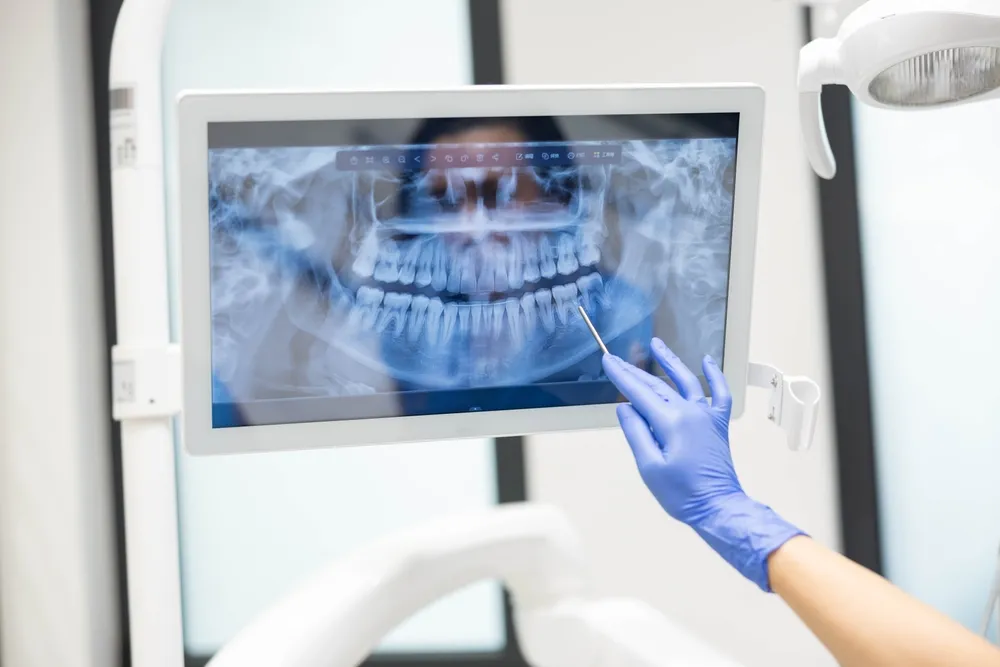
Reliable clinics never begin treatment without thorough diagnostics. They examine your entire oral system. They assess bone density, gum health, and bite alignment. They identify hidden problems before they become emergencies. This approach prevents surprises during treatment. It also ensures long-term success.
What Pre-Treatment Evaluations Are Non-Negotiable?
Every patient deserves a complete diagnostic workup. This workup includes a clinical dental examination. The dentist inspects each tooth visually. They check for decay, cracks, and wear patterns. They measure gum pockets. They assess bleeding and inflammation. They evaluate oral cancer risk.
Panoramic X-rays reveal the full jaw structure. They show impacted teeth, bone levels, and cysts. They display the relationship between teeth and sinuses. They identify pathology invisible to the naked eye. Every implant patient needs this imaging. Every full-mouth reconstruction patient needs this imaging.
3D CBCT scans provide three-dimensional views. CBCT stands for Cone Beam Computed Tomography. This technology measures bone width and height precisely. It locates nerves and blood vessels. It guides implant placement with sub-millimeter accuracy. CBCT scans also reveal sinus conditions. They detect bone defects that panoramic X-rays miss.
Bite analysis examines how teeth meet during chewing. Poor alignment creates excessive force. This force cracks crowns and loosens implants. A proper bite analysis prevents these failures. It ensures restorations function comfortably for decades.
Gum and periodontal assessment checks tissue health. Active gum disease destroys bone. It dooms implants to failure. It contaminates preparation margins for crowns. Reliable clinics treat gum disease before cosmetic work. They do not hide disease beneath beautiful veneers.
Diagnostic Tool | What It Reveals | Why It Matters |
Clinical examination | Decay, cracks, wear, gum health | Direct visual assessment of immediate problems |
Panoramic X-ray | Full jaw structure, bone levels, cysts | Identifies hidden pathology and bone conditions |
3D CBCT scan | Bone width, nerve location, sinus status | Enables precise implant planning and risk avoidance |
Bite analysis | Force distribution and alignment | Prevents restoration failure from excessive load |
Periodontal assessment | Gum disease activity and bone loss | Ensures foundation health before cosmetic treatment |
Which Red Flags Signal Inadequate Clinical Evaluation?
Beware clinics that recommend treatment immediately. They see you today. They schedule surgery tomorrow. They skip diagnostics entirely. They claim experience replaces imaging. This approach invites disaster. No competent dentist operates without seeing the full picture.
One-size-fits-all treatment plans indicate laziness. Every mouth differs. Every patient has unique bone structure, bite patterns, and aesthetic goals. A clinic offering identical packages to everyone ignores individual needs. They treat patients like assembly lines. They maximize profit through volume. They minimize care through standardization.
Unrealistic timelines also signal danger. Quality bone grafting requires four to six months of healing. Implant integration demands three to six months. Veneer fabrication needs one to two weeks for laboratory work. Clinics promising full-mouth reconstruction in three days cut corners. They use inferior materials. They skip healing phases. They create temporary solutions that fail permanently.
Pressure tactics reveal profit motives. Clinics should welcome your questions. They should encourage second opinions. They should never demand immediate deposits. They should never claim discounts expire today. Professional dentistry values patient comfort over sales velocity.
How Does Modern Technology Improve Dental Treatment Outcomes?
Digital technology has transformed modern dentistry. It improves accuracy. It reduces treatment time. It enhances patient comfort. Reliable clinics invest in advanced equipment. They update technology regularly. They train staff continuously. This investment directly benefits patient outcomes.
What Digital Tools Transform Modern Dentistry?
Intraoral scanners replace traditional dental impressions. They capture digital models of your teeth. These models are more accurate than mold materials. They eliminate gagging and discomfort. They transmit instantly to dental laboratories. They enable same-day design modifications.
CAD/CAM systems design restorations digitally. CAD stands for Computer-Aided Design. CAM stands for Computer-Aided Manufacturing. These systems create crowns, veneers, and bridges with microscopic precision. They reduce human error in fabrication. They ensure consistent quality across hundreds of cases.
Digital Smile Design software plans aesthetic treatments. It analyzes facial proportions. It considers lip dynamics. It simulates final results before any drilling begins. You see your new smile digitally. You approve the design before treatment starts. This collaboration prevents disappointment.
3D imaging technologies guide implant placement. Surgeons plan every drill angle digitally. They create surgical guides. These guides direct instruments through pre-programmed paths. They avoid nerves and sinuses. They achieve optimal positioning for long-term stability.
Computer-guided implant placement combines CBCT data with surgical planning. The surgeon practices the procedure virtually. They anticipate challenges. They prepare solutions. They execute the actual surgery with confidence and precision. This technology reduces surgery time. It minimizes tissue trauma. It accelerates healing.
How Does Digital Dentistry Enhance Patient Comfort?
Digital workflows reduce chair time significantly. Traditional impressions require multiple appointments. Digital scans complete in minutes. Temporary restorations fit better. Permanent restorations arrive faster. Patients spend fewer hours in the dental chair.
Precision digital fabrication creates better-fitting crowns. Tight margins prevent bacterial leakage. Proper contacts prevent food impaction. Accurate occlusion prevents bite discomfort. These details determine whether your crown feels natural or annoying.
Digital communication improves understanding. You see your X-rays on large screens. The dentist explains problems visually. You understand why treatment matters. You participate actively in decisions. This transparency builds trust. It reduces anxiety about unfamiliar procedures.
Technology | Function | Patient Benefit |
Intraoral scanner | Digital impression capture | No gagging, instant transmission, superior accuracy |
CAD/CAM system | Digital design and manufacturing | Precise fit, consistent quality, faster delivery |
Digital Smile Design | Aesthetic simulation | Preview results, collaborative planning |
3D CBCT imaging | Three-dimensional jaw visualization | Safe implant placement, hidden pathology detection |
Surgical guide | Computer-directed drilling | Nerve avoidance, optimal positioning, faster surgery |
Why Does Material Quality Directly Affect Treatment Longevity?
Dental materials determine how long your treatment lasts. They affect appearance, comfort, and biocompatibility. Premium materials resist staining. They withstand chewing forces. They bond reliably to tooth structure. Inferior materials degrade quickly. They discolor within months. They crack under normal pressure. They trigger allergic reactions.
Which Restorative Materials Deliver the Best Results?
E-max veneers and crowns use lithium disilicate ceramic. This material mimics natural tooth translucency. It reflects light like enamel. It provides exceptional aesthetics for front teeth. It also offers adequate strength for posterior teeth. E-max requires minimal tooth preparation. It preserves healthy tissue.
Zirconia restorations provide maximum strength. Zirconia withstands extreme chewing forces. It works well for molars and bruxism patients. Modern zirconia also achieves natural aesthetics. High-translucency zirconia blends beautifully with adjacent teeth. It resists chipping better than traditional porcelain.
Implant systems vary significantly in quality. Premium manufacturers like Straumann, Nobel Biocare, and Dentsply invest decades in research. They publish long-term clinical studies. They offer extensive warranty programs. Their implants demonstrate 95 to 98 percent success rates over ten years. Budget implant systems lack this research base. They may use lower-grade titanium. They may have incompatible connection designs. They may fail to integrate with bone properly.
Laboratory standards matter as much as material brands. Even premium zirconia fails if technicians underdesign the restoration. Even premium implants fail if laboratories create poor abutments. Ask which laboratory fabricates the clinic's restorations. Verify the laboratory's certifications. Confirm they use CAD/CAM technology. Confirm they employ certified dental technicians.
What Questions Ensure Material Transparency?
Demand specific brand names. Do not accept vague descriptions like "ceramic crown" or "titanium implant." Ask for manufacturer names. Ask for material certificates. Ask for warranty documentation. Reputable clinics provide this information freely.
Inquire about country of manufacture. European and American laboratories maintain strict quality controls. Some clinics send work to uncertified overseas laboratories. These laboratories use cheaper materials. They cut fabrication steps. They deliver inferior restorations. You deserve to know where your crown was made.
Discuss warranty coverage explicitly. What does the warranty include? How long does it last? What voids the warranty? Does the warranty cover both materials and labor? Does it apply internationally? Get these answers in writing. Verbal promises disappear when problems arise.
Material Type | Best Application | Expected Longevity | Key Advantage |
E-max lithium disilicate | Front veneers and crowns | 10-15 years | Natural translucency and minimal preparation |
High-translucency zirconia | Posterior crowns and bridges | 15-20 years | Maximum strength with aesthetic improvement |
Premium titanium implants | All implant placements | 20+ years | Proven bone integration and research support |
Zirconia abutments | Implant-supported crowns | 10-15 years | Biocompatibility and aesthetic emergence profile |
How Can Patients Find Authentic Reviews and Testimonials?
Patient reviews provide valuable insights. They reveal real experiences. They expose hidden problems. They confirm claimed expertise. However, reviews also contain misinformation. Some clinics manipulate feedback. You must evaluate reviews critically. You must seek multiple sources.
Where Should Patients Look Beyond Clinic Websites?
Clinic websites display selected testimonials. They highlight positive cases. They omit negative experiences. Independent platforms provide broader perspectives. Google Reviews aggregates feedback from verified patients. Trustpilot specializes in service evaluation. Independent healthcare platforms like WhatClinic and Dental Departures focus specifically on medical tourism.
Social media channels reveal unfiltered opinions. Facebook groups dedicated to dental tourism contain honest discussions. Patients share photos, timelines, and complications. They name specific dentists. They describe coordinator behavior. They discuss aftercare responsiveness. These communities provide raw, unedited perspectives.
Video testimonials offer additional authenticity. Written reviews are easy to fake. Video reviews require real people. Look for patients showing their actual faces. Listen for specific details about their journey. Generic praise suggests scripting. Detailed narratives suggest genuine experience.
How Can Patients Spot Fake Reviews?
Fake reviews display common patterns. They use generic language. They praise everything without specifics. They mention "amazing experience" and "best clinic ever" repeatedly. They lack detail about the actual procedure. They never mention challenges or waiting times. Real patients describe mixed experiences. They mention travel logistics. They discuss recovery discomfort. They note both positives and negatives.
Large volumes of unverified reviews within short periods indicate manipulation. Authentic reviews accumulate gradually. They span months or years. They come from diverse locations. Sudden floods of five-star reviews suggest purchased feedback. Check the dates carefully.
Lack of independent online presence also signals caution. Reputable clinics maintain active social media. They engage with patient questions. They share educational content. They feature real staff members. Clinics with only a website and no social footprint may hide behind anonymity. They may disappear after collecting deposits.
Review Source | Verification Level | What to Look For | Red Flags |
Google Reviews | Moderate | Detailed procedure descriptions, photo evidence | Generic praise, sudden volume spikes |
Trustpilot | High | Service-specific feedback, response from clinic | Unverified accounts, template language |
Dental tourism forums | Low | Unfiltered discussions, complication reports | Anonymous posts, competitor sabotage |
Social media groups | Low | Real-time updates, photo documentation | Sponsored posts, undisclosed affiliations |
Video testimonials | High | Facial visibility, specific timeline details | Professional production, scripted delivery |
Why Do Treatment Plans Vary Between Clinics?
Different clinics recommend different treatments for the same patient. This variation confuses dental tourists. Some clinics suggest aggressive approaches. Others recommend conservative solutions. Understanding why plans differ helps you evaluate recommendations wisely.
What Factors Create Clinical Differences?
Professional philosophy drives treatment variation. Some dentists prioritize tooth preservation. They recommend root canals over extractions. They suggest bonding over veneers. They favor minimal intervention. Other dentists prioritize final aesthetics. They recommend extraction and implant placement. They suggest full veneers for uniform color. Neither philosophy is automatically wrong. However, you must understand which philosophy your clinic follows.
Conservative approaches preserve natural tissue. They require less invasive procedures. They maintain nerve vitality. They allow future options if problems arise. Aggressive approaches deliver dramatic transformations. They achieve perfect symmetry quickly. They may sacrifice healthy teeth unnecessarily.
Functional priorities also differ. Some clinics focus on chewing efficiency. They adjust bites meticulously. They ensure proper jaw alignment. Other clinics focus on visual appearance. They may ignore functional consequences. Beautiful veneers that prevent comfortable chewing create long-term problems.
Long-term oral health considerations separate excellent clinics from mediocre ones. Excellent clinics plan for decades. They consider how your gums will recede. They anticipate future bone loss. They design restorations that accommodate aging. Mediocre clinics solve today's problem. They ignore tomorrow's complications.
How Should Patients Compare Beyond Price?
Price comparison requires evaluating the complete package. What does the quoted price include? Does it cover all diagnostic imaging? Does it include temporary restorations? Does it cover laboratory fees? Does it include medications and follow-up visits? Some clinics advertise low base prices. They add hidden charges later. They charge separately for anesthesia. They bill extra for bite adjustments. They demand payment for emergency repairs.
Compare treatment objectives directly. One clinic plans ten veneers. Another plans twelve. One clinic uses standard implants. Another uses premium bone-level implants. One clinic includes gum contouring. Another ignores tissue aesthetics. These differences explain price variations. They also explain outcome differences.
Timeline and number of visits affect total cost. A clinic requiring two visits may seem cheaper. However, you pay for flights and hotels twice. A clinic completing work in one extended visit may offer better total value. Consider travel expenses in your calculation.
Long-term value always outweighs short-term savings. A 2,000-pound treatment lasting five years costs 400 pounds annually. A 3,500-pound treatment lasting fifteen years costs 233 pounds annually. The "expensive" option actually saves money. It also saves you from repeated dental appointments and repeated discomfort.
Comparison Factor | Why It Matters | Questions to Ask |
Included services | Prevents hidden costs | What does the price cover completely? |
Material brands | Determines longevity | Which implant and crown brands will you use? |
Number of visits | Affects travel expenses | How many trips does this plan require? |
Treatment philosophy | Shapes outcome style | Do you prioritize preservation or replacement? |
Aftercare coverage | Protects future investment | What support do you provide after I return home? |
What Communication Standards Should International Patients Expect?
Communication quality predicts treatment quality. Clinics that communicate clearly before treatment usually perform well. Clinics that respond slowly or vaguely before treatment often disappoint. You must evaluate communication standards during your research phase.
Why Does Clear Communication Prevent Misunderstandings?
Language barriers create serious medical risks. You must understand your diagnosis. You must understand your treatment options. You must understand potential complications. You must provide accurate medical history. Miscommunication leads to inappropriate treatment. It leads to unexpected outcomes. It leads to legal disputes.
English-speaking dentists and coordinators should handle your case. They should speak fluent English. They should understand dental terminology precisely. They should explain complex concepts simply. They should confirm your understanding. They should not rely on translation apps for medical discussions.
Transparent consultations reveal clinic integrity. The dentist should explain what they see. They should show you X-rays and scans. They should discuss multiple treatment options. They should explain why they recommend one option. They should discuss risks honestly. They should not pressure you toward the most expensive choice.
Written treatment plans and consent documentation protect both parties. You should receive a detailed treatment plan. It should list every procedure. It should specify materials and brands. It should state prices clearly. It should outline the timeline. You should sign informed consent forms. These forms document that you understand risks. They prevent misunderstandings about expectations.
How Do Patient Coordinators Improve the Experience?
Patient coordinators serve as your primary contact. They handle logistics. They schedule appointments. They arrange airport transfers. They book hotel accommodations. They answer questions between visits. Excellent coordinators anticipate your needs. They provide local recommendations. They assist with pharmacy visits. They coordinate with the dental team.
Translation support extends beyond dental discussions. You may need pharmacy instructions translated. You may need medical reports translated for your home dentist. You may need restaurant menus translated. Comprehensive clinics provide multilingual support throughout your stay.
Ongoing communication before and after treatment indicates professional commitment. The coordinator should respond to emails within hours. They should answer WhatsApp messages promptly. They should provide pre-treatment instructions. They should send post-treatment care guides. They should check on you after you return home. This continuity builds lasting relationships.
Why Is Aftercare Essential for Dental Tourism Success?
Aftercare determines your long-term satisfaction. Dental procedures require healing. They require monitoring. They require maintenance. You cannot simply fly home and forget your treatment. You need a support system. You need a plan for follow-up care.
What Follow-Up Support Should Patients Demand?
Follow-up consultations should occur before you leave Turkey. The dentist should examine healing. They should adjust bite pressure. They should polish restorations. They should verify implant stability. They should provide written aftercare instructions. They should schedule your next check-up.
Remote monitoring maintains connection after departure. Clinics should offer video consultations. They should review photos you send. They should advise on concerns. They should coordinate with your local dentist. They should not abandon you after receiving payment.
Emergency support must be available. Complications sometimes arise. Crowns may loosen. Implants may ache. Gums may swell. You need a direct contact for emergencies. You need a protocol for urgent situations. You need assurance that the clinic will respond immediately.
Maintenance recommendations preserve your investment. The dentist should explain oral hygiene specific to your restorations. They should recommend cleaning tools. They should suggest professional cleaning frequency. They should warn against habits that damage restorations. They should provide a maintenance schedule.
How Do Clinic Guarantees Protect Patients?
Warranty terms should be explicit. What duration does the warranty cover? What conditions apply? Does it cover material failure? Does it cover workmanship errors? Does it cover accidents? Does it require you to return to Turkey? Does it include travel costs for warranty work?
Conditions and exclusions require careful reading. Some warranties void if you see another dentist. Some warranties require annual check-ups at their clinic. Some warranties exclude damage from grinding or trauma. Understand these limitations before treatment.
Repair and revision policies should be reasonable. If a veneer fractures, will they replace it free? If an implant fails, will they remove it without charge? If a crown does not fit, will they remake it promptly? These policies reveal the clinic's confidence in their work.
International support options matter for distant patients. Some clinics partner with dentists in your home country. They authorize local repairs under warranty. This arrangement saves you travel expenses. Other clinics require you to return to Turkey. This requirement adds significant cost to warranty claims. Clarify this arrangement before booking.
Aftercare Element | What to Expect | Why It Matters |
Pre-departure check | Final examination and adjustment | Confirms immediate treatment success |
Written instructions | Specific care protocols | Guides proper healing and maintenance |
Remote monitoring | Video consultations and photo review | Catches problems early without travel |
Emergency contact | Direct 24/7 communication line | Provides urgent guidance when needed |
Warranty documentation | Written terms and conditions | Protects your financial investment |
Local dentist coordination | Reports and communication transfer | Enables home-based maintenance |
Which Red Flags Should Patients Avoid?
Certain warning signs indicate unacceptable risk. You should eliminate clinics displaying these signs immediately. No amount of savings justifies compromising your health. Your teeth and gums deserve proper care.
What Common Mistakes Do Dental Tourists Make?
Choosing based solely on price ranks as the most dangerous mistake. Extremely low prices indicate corner-cutting. They suggest inferior materials. They suggest inexperienced dentists. They suggest inadequate sterilization. They suggest no aftercare support. Quality dental care requires fair investment. Bargain dentistry often becomes the most expensive dentistry when repairs become necessary.
Ignoring diagnostic requirements leads to inappropriate treatment. Some patients request specific procedures without examination. They want implants without bone assessment. They want veneers without gum evaluation. They want immediate loading without healing time. Responsible clinics refuse these requests. They insist on proper evaluation. Impatient patients then seek clinics that accommodate their demands. These accommodating clinics endanger their patients.
Failing to verify credentials exposes you to fraud. Some patients trust slick websites. They believe impressive photos. They do not verify licenses. They do not check dentist qualifications. They do not confirm accreditation claims. Scammers exploit this trust. They create professional facades. They deliver dangerous care.
Not researching patient experiences limits your perspective. Every clinic claims excellence. Independent reviews reveal truth. Patients share real complications. They share real disappointments. They share real successes. You need this balanced view. You need to know what happens when things go wrong.
Overlooking aftercare arrangements creates vulnerability. Some patients assume treatment ends when they board the plane. They ignore follow-up needs. They skip maintenance. They miss early warning signs. They develop serious problems that require extensive intervention. Proper aftercare planning prevents this progression.
Red Flag | What It Indicates | Your Response |
Prices 70% below market average | Inferior materials or unlicensed operation | Eliminate immediately |
No license verification | Illegal operation | Request documentation or leave |
Aggressive sales tactics | Profit-driven rather than patient-centered | Seek second opinion |
Unrealistic promises | Dishonesty or incompetence | Verify claims independently |
No written treatment plan | Lack of accountability | Demand documentation |
No post-treatment support | Abandonment after payment | Choose clinic with aftercare |
Immediate treatment without diagnostics | Dangerous corner-cutting | Insist on proper evaluation |
Frequently Asked Questions About Choosing a Dental Clinic in Turkey
How Can I Verify a Dental Clinic's License?
You verify a license by requesting the health tourism authorization certificate. You cross-check the certificate number on the Turkish Ministry of Health website. You confirm the clinic's business registration matches its operating name and address. You also verify membership in the Turkish Dental Association. These steps confirm legal operation and professional accountability (Yildirim 2018).
What Certifications Should a Reputable Clinic Have?
A reputable clinic should hold a Ministry of Health license. It should pursue TEMOS accreditation for international patient services. It should maintain ISO 9001 for quality management. It should consider ISO 13485 for medical device handling. Hospital-affiliated clinics may hold JCI accreditation. These certifications demonstrate external validation of standards (Smith and Turner 2019).
How Many Treatment Plans Should I Compare?
You should compare at least three treatment plans from different clinics. This comparison reveals professional philosophy differences. It exposes price manipulation. It clarifies what each plan includes. Multiple perspectives help you identify the most appropriate approach for your specific needs. Never accept the first plan you receive without alternatives (Lunt et al. 2020).
Are Online Reviews Reliable?
Online reviews are partially reliable. They provide real patient perspectives. However, clinics manipulate reviews. You should examine reviews across multiple platforms. You should look for detailed, specific experiences. You should verify reviewer identities when possible. You should balance positive and negative feedback. You should trust video testimonials more than written ones. Critical evaluation produces reliable conclusions (Hanefeld et al. 2019).
What Questions Should I Ask Before Booking?
You should ask about the treating dentist's qualifications and experience. You should ask about diagnostic protocols. You should ask about material brands and warranties. You should ask about aftercare and emergency support. You should ask about total costs including hidden fees. You should ask about the clinic's complication history. You should request written answers to these questions. Documentation protects your interests (Ormond and Sothern 2019).
What Happens If Complications Occur After I Return Home?
You should clarify emergency protocols before treatment. Reliable clinics provide 24/7 emergency contact. They offer remote consultations. They coordinate with local dentists. They explain warranty coverage for complications. They may authorize local repairs under warranty. They should not abandon you after payment. Aftercare planning prevents panic during emergencies (Connell 2016).
Is the Cheapest Dental Clinic Always the Best Option?
The cheapest clinic is rarely the best option. Low prices indicate compromised quality. They suggest inferior materials. They suggest inexperienced staff. They suggest inadequate technology. They suggest no aftercare. Quality dental care requires fair investment. Long-term value matters more than initial price. A moderately priced excellent clinic outperforms a cheap mediocre clinic over time (Crozier and Baylis 2021).
What Key Steps Ensure a Safe Dental Tourism Decision?
Choosing a reliable dental clinic in Turkey requires systematic research. You must verify licensing and accreditation. You must assess dentist qualifications and specialization. You must ensure comprehensive diagnostics. You must evaluate technology and materials. You must review authentic patient experiences. You must compare treatment plans carefully. You must confirm aftercare and support policies.
Quality, transparency, and long-term oral health deserve priority over price alone. Your teeth serve you every day. They affect your eating, speaking, and smiling. They deserve the best care you can arrange. Research builds confidence. Professional consultation confirms your choice. Proper preparation transforms dental tourism from a gamble into a reliable healthcare solution.
Turkey offers exceptional dental care. World-class clinics like Cinik Dental demonstrate what Turkish dentistry can achieve. They combine advanced technology with experienced specialists. They maintain rigorous quality standards. They support international patients comprehensively. They prove that dental tourism succeeds when patients choose wisely.
Your research starts now. Your healthy smile awaits. Make your decision with confidence. Make it with knowledge. Make it with the understanding that your oral health deserves nothing less than excellence.
References
Connell, John. "Reversing the Medical Tourism Brain Drain." Globalization and Health, vol. 12, no. 1, 2016, pp. 1-12.
Crozier, G. K. D., and Françoise Baylis. "Medical Tourism, Bioethics, and Global Justice." The Cambridge Quarterly of Healthcare Ethics, vol. 30, no. 2, 2021, pp. 209-219.
Hanefeld, Johanna, et al. "A Scoping Review of Medical Tourism Research." Journal of Health Services Research & Policy, vol. 24, no. 2, 2019, pp. 115-124.
Lunt, Neil, et al. "International Patient Movement: A Qualitative Analysis of the Experiences of Medical Tourists." Sociology of Health & Illness, vol. 42, no. 4, 2020, pp. 789-804.
Ormond, Meghann, and Matthew Sothern. "Cosmetic Surgery Tourism." Annals of Tourism Research, vol. 76, 2019, pp. 64-75.
Smith, Richard, and Leigh Turner. "The Rise and Fall of Medical Tourism." The Lancet, vol. 393, no. 10180, 2019, pp. 1353-1354.
Yildirim, Yavuz. "Health Tourism in Turkey: Current Status and Future Perspectives." Tourism Management Perspectives, vol. 28, 2018, pp. 178-184.