Endosteal implants work better for patients with healthy jawbone volume. Subperiosteal implants serve patients with severe bone loss who cannot undergo bone grafting. Your bone density, general health, and surgical goals determine the ideal choice.
Modern dental implantology offers powerful solutions for missing teeth. Scientists developed dental implants to replace tooth roots and restore chewing function. Today, dentists classify implants into two main systems. Endosteal implants sit inside the jawbone. Subperiosteal implants rest on top of the jawbone beneath the gum tissue. Both systems support crowns, bridges, and dentures. However, each system suits different jaw conditions. Bone density and jaw anatomy matter greatly when choosing between these options. This article provides a scientific comparison of subperiosteal and endosteal implant systems. You will learn how each system works, who qualifies for each option, and what risks each procedure carries.
What Are Dental Implants?
Dental implants are artificial tooth roots made of titanium or zirconia. Surgeons place them in or on the jawbone. Implants fuse with bone and hold replacement teeth firmly.
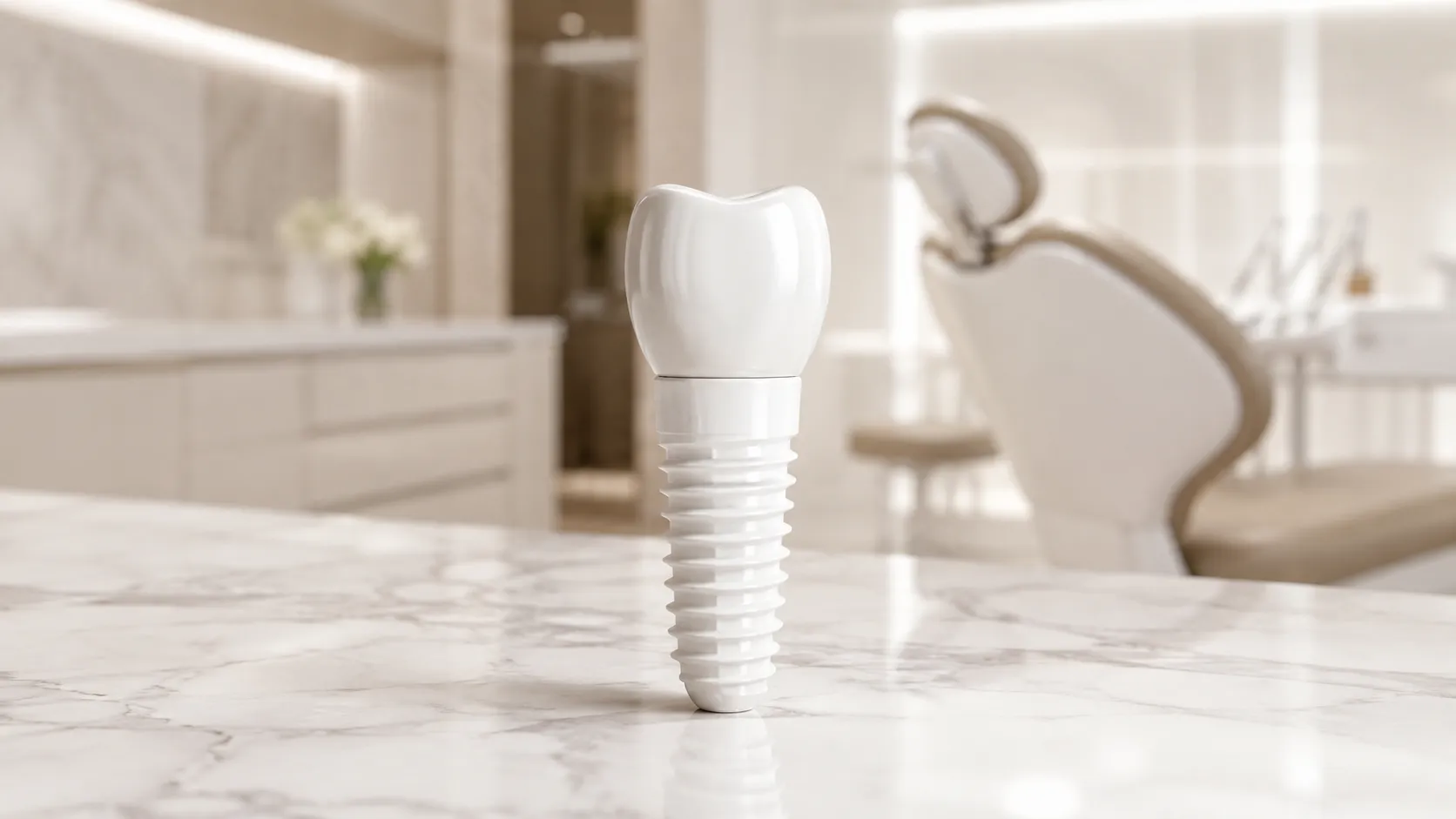
Dental implants revolutionized restorative dentistry. They replace single teeth, multiple teeth, or full arches. Implant dentistry relies on three core components. The implant fixture acts as the artificial root. The abutment connects the fixture to the prosthetic crown. The prosthetic crown mimics the visible tooth. Together, these parts rebuild smiles and preserve oral health.
What Is the Basic Structure of a Dental Implant?
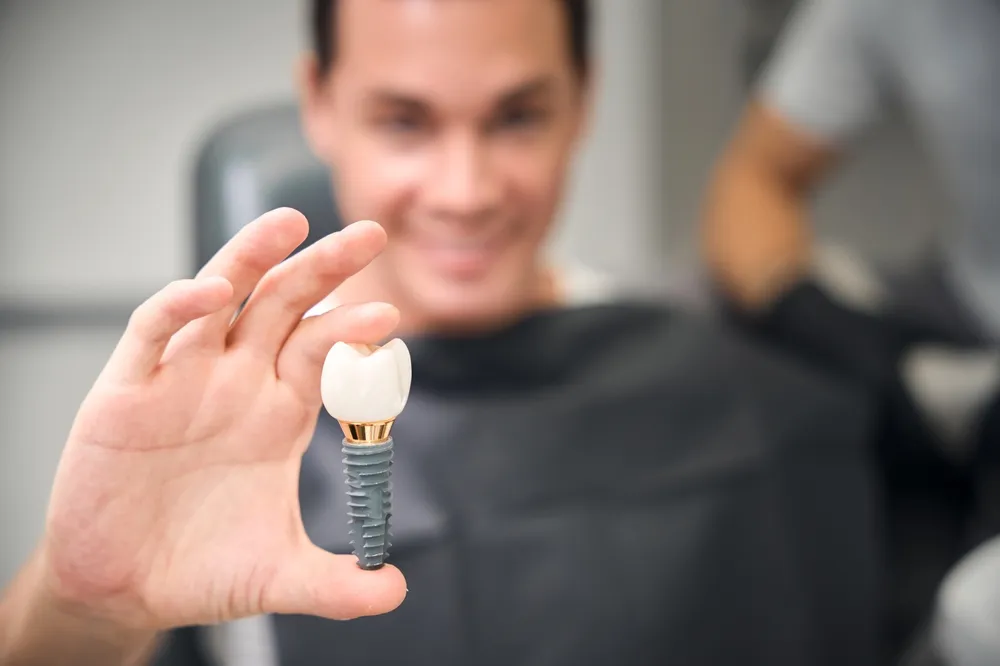
Every dental implant contains three parts: a fixture that anchors to bone, an abutment that links the fixture to the crown, and a crown that looks like a natural tooth.
The implant fixture resembles a small screw or cylinder. Manufacturers typically use titanium or zirconia for this part. Titanium dental implants dominate the market because titanium bonds with bone through osseointegration. Zirconia offers a metal-free alternative for patients with sensitivities. The abutment protrudes above the gum line. It serves as the attachment point for the final restoration. The prosthetic crown covers the abutment. Labs craft crowns from porcelain or ceramic composites. These materials match natural tooth color and reflect light like enamel.
How Do Dental Implants Restore Missing Teeth?
Implants restore teeth through osseointegration. Bone cells attach to the implant surface. This fusion creates a stable base for chewing.
Osseointegration defines modern implant success. Per-Ingvar Brånemark discovered this process in the 1960s. Bone tissue grows directly against the implant surface. No soft tissue intervenes between bone and implant. This direct bond creates exceptional stability. Functional benefits include restored bite force and clear speech. Aesthetic benefits include natural gum contour and lifelike tooth appearance. Long-term oral health preservation matters too. Implants stimulate the jawbone and prevent bone resorption. They also stop neighboring teeth from shifting into empty spaces.
What Are the Main Categories of Dental Implants?
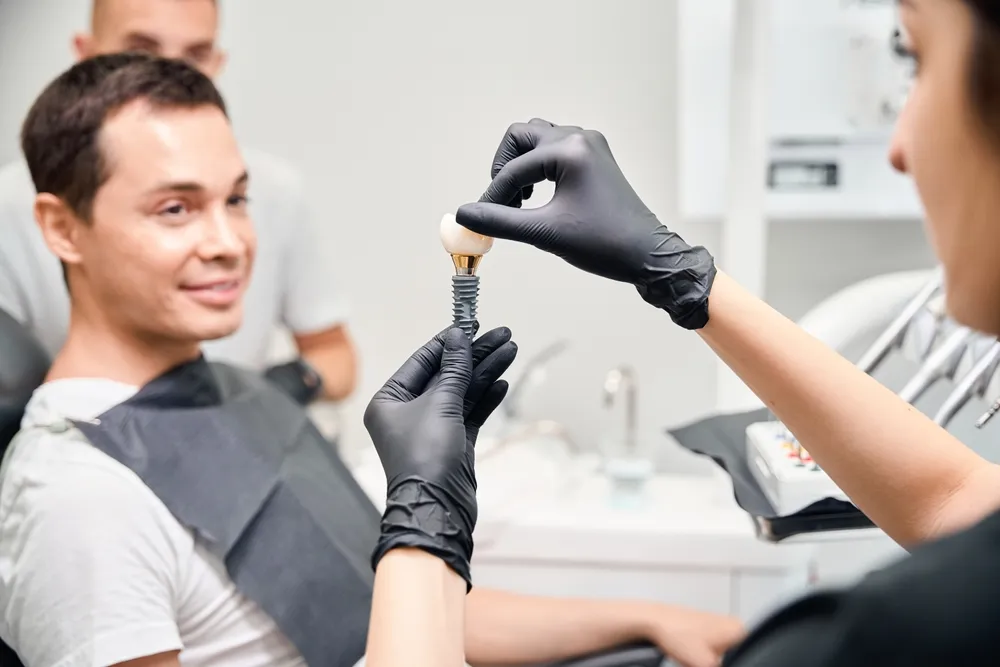
Dentists recognize four main categories: endosteal implants, subperiosteal implants, zygomatic implants, and mini dental implants.
Endosteal implants constitute the most common dental implant types. Surgeons place these root-form fixtures directly into the jawbone. Subperiosteal implants offer an alternative for severe bone loss. These custom frameworks sit atop the bone under the gums. Zygomatic implants anchor into the cheekbone when the upper jaw lacks sufficient bone. Mini dental implants use narrow-diameter fixtures for limited spaces or temporary restorations. Each category addresses specific anatomical and clinical needs.
What Are Endosteal Implants?
Endosteal implants are screw-shaped or cylinder-shaped fixtures. Surgeons insert them directly into the alveolar bone. They represent the most widely used implant system globally.
Endosteal implants transformed modern dentistry. They mimic natural tooth roots more closely than any other system. Patients with adequate bone volume prefer this option for its predictability.
How Do Endosteal Implants Look and Function?
Endosteal implants look like screws, cylinders, or blades. Titanium varieties dominate the field. They function as artificial roots that integrate with living bone.
Titanium screw-shaped implants make up the majority of endosteal placements. Some designs use cylinders or blades for specific bone conditions. The screw design maximizes surface contact with bone. Threads on the fixture distribute chewing forces evenly. This design reduces stress on surrounding bone and promotes long-term stability.
How Do Endosteal Implants Integrate With Bone?
Surgeons drill a precise osteotomy into the jawbone. They insert the implant. Bone cells then grow onto the implant surface and lock it in place.
The surgical placement follows strict protocols. First, the surgeon exposes the alveolar bone. Next, the surgeon drills a channel matching the implant dimensions. The surgeon inserts the implant flush with or slightly below the bone crest. Over three to six months, bone fusion occurs through osseointegration. The bone remodels around the implant and forms a biological seal. This seal prevents bacterial invasion and secures the foundation for the final crown.
What Types of Endosteal Implants Exist?
Three main types exist: screw implants, cylinder implants, and blade implants. Screw implants remain the most popular choice.
Screw implants feature threaded surfaces. These threads increase bone contact and primary stability. Cylinder implants rely on a press-fit design. Surgeons tap them into place without threading. Blade implants serve narrow ridge situations. These flat implants anchor into thin bone where screw fixtures cannot fit. Most implant dentists prefer screw-type fixtures because they offer excellent initial stability and versatile loading protocols.
What Materials Make Up Endosteal Implants?
Manufacturers use titanium, zirconia, and surface-treated alloys. Titanium leads the market. Zirconia grows in popularity among patients seeking metal-free restorations.
Titanium endosteal implants boast decades of clinical success. Commercially pure titanium and titanium-aluminum-vanadium alloys provide strength and biocompatibility. Surface treatments enhance osseointegration further. Sandblasting and acid etching create micro-roughness. This texture increases bone-to-implant contact. Plasma-sprayed hydroxyapatite coatings also accelerate bone bonding. Zirconia implants appeal to patients with metal allergies or aesthetic concerns. Zirconia resists plaque accumulation and offers a tooth-colored alternative. However, titanium still dominates long-term data and clinical flexibility (Cionca and Mombelli 2017).
Why Do Endosteal Implants Offer Strong Advantages?
Endosteal implants deliver high success rates, long-term durability, excellent chewing stability, and natural appearance.
Clinical studies confirm the reliability of endosteal systems. Research shows 10-year survival rates between 90% and 95% for titanium screw implants (Moraschini et al. 2015). Endosteal fixtures withstand normal chewing forces after osseointegration completes. They preserve facial structure by maintaining jawbone volume. Patients report high satisfaction with the aesthetic outcomes. The predictable clinical outcomes allow dentists to plan complex restorations with confidence.
What Challenges Do Endosteal Implants Present?
Endosteal implants require sufficient jawbone. Some patients need bone grafting. Healing takes longer than with some alternatives.
Patients with severe jawbone resorption may not qualify for standard endosteal implants. Bone grafting adds cost, time, and surgical complexity. Sinus lifts and ridge augmentation require additional recovery periods. The surgical invasiveness intimidates some patients. However, these challenges rarely outweigh the long-term benefits for suitable candidates.
What Are Subperiosteal Implants?
Subperiosteal implants use a custom metal framework. This framework sits on the bone surface beneath the gum tissue. They help patients with severe bone atrophy who cannot receive bone grafts.
Subperiosteal implants date back to the 1940s. Early designs used cast metal frameworks. Modern technology revived this option through digital precision.
How Do Subperiosteal Implants Differ in Structure?
A subperiosteal implant uses a patient-specific metal frame. The frame follows the exact contour of the jawbone. Posts protrude through the gums to hold the prosthesis.
Unlike endosteal fixtures, subperiosteal implants do not penetrate deep into bone. The framework distributes chewing forces across the bone surface. Mini-screws or the framework shape itself provide stability. The design eliminates the need for extensive bone volume. This makes subperiosteal implants a viable bone graft alternative.
How Do Subperiosteal Implants Work?
The custom framework rests directly on the bone surface. The gum tissue heals over the frame. Prosthetic teeth attach to the posts that extend through the gums.
Surgeons place the framework under a reflected gum flap. The periosteum covers the bone beneath the flap. The framework sits between the bone and the periosteum. After closure, the gum tissue adapts around the posts. The prosthetic team then attaches crowns or dentures to these posts. The entire system bypasses the need for deep bone insertion.
How Did Subperiosteal Implants Develop Over Time?
Dahl created the first subperiosteal implant in 1943. Goldberg and Gerskoff refined the design in the late 1940s. The designs gained popularity in the 1950s and 1960s.
Early subperiosteal implants used Vitallium alloy. This cobalt-chromium-molybdenum mix provided rigidity but limited biocompatibility. Dentists manufactured these implants through casting based on direct bone impressions. The two-stage surgery required extensive flap reflection. By the 1970s and 1980s, endosteal osseointegrated implants emerged. These root-form fixtures showed superior long-term outcomes. Subperiosteal use declined sharply. However, patients with severe bone loss still needed solutions. This demand preserved subperiosteal implants as a niche alternative.
What Does Modern Subperiosteal Implant Technology Involve?
Modern subperiosteal implants use CBCT imaging, CAD/CAM design, and direct metal laser sintering. These tools create precise patient-specific frameworks.
Cone-beam computed tomography captures detailed jaw anatomy. CAD/CAM software designs a framework that matches every ridge contour. Direct metal laser sintering prints titanium frameworks with exceptional accuracy. Digital surgical planning guides placement. This workflow minimizes surgical morbidity. It also eliminates the need for bone grafting in many cases. Modern CAD/CAM dental implants represent a major leap from the cast-metal era.
Why Do Subperiosteal Implants Offer Unique Advantages?
Subperiosteal implants suit severe bone loss. They reduce bone grafting needs. They offer faster treatment in selected cases. They help medically compromised patients.
Patients with Cawood and Howell Class IV to VI atrophy often lack bone for endosteal fixtures. Subperiosteal implants bypass this limitation. Elderly patients or those with uncontrolled medical conditions may not tolerate extensive bone grafting. The reduced surgical invasiveness benefits these groups. In select cases, the digital workflow shortens treatment time. The implant-supported restorations provide immediate functional improvement.
What Risks Do Subperiosteal Implants Carry?
Historical designs showed lower long-term success rates. Modern designs still risk gum irritation, infection, and framework exposure.
Early subperiosteal implants suffered from recurrent inflammation and fistula formation. Studies reported 10-year survival rates between 67% and 86% for traditional designs. Modern additively manufactured subperiosteal implants show better short-term results. One systematic review found 97.8% survival after a weighted mean follow-up of 21.4 months. However, 25.6% of implants showed partial framework exposure. Soft tissue infections occurred in 5.3% of patients. These complications require careful management ("Clinical performance of additively manufactured subperiosteal implants" 2023).
How Do Subperiosteal and Endosteal Implants Differ?
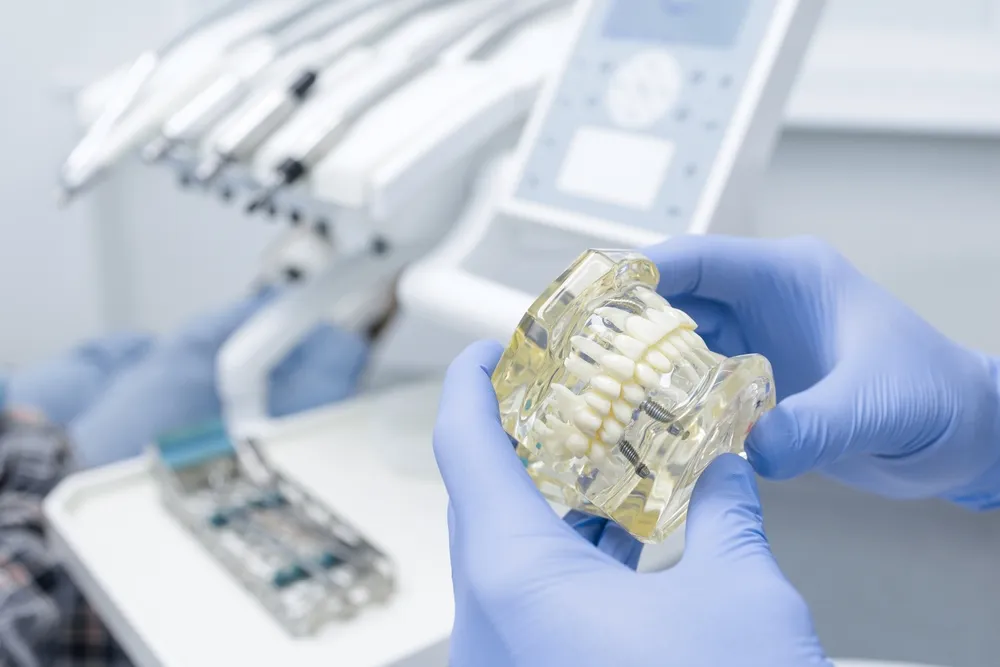
Endosteal implants sit inside bone. Subperiosteal implants rest on bone. They differ in placement, bone needs, healing time, durability, cost, and surgical complexity.
How Does Placement Technique Differ Between Implant Types?
Surgeons insert endosteal implants into the bone. They place subperiosteal frameworks on top of the bone.
Feature | Endosteal Implants | Subperiosteal Implants |
Placement Location | Inside the jawbone | On top of the jawbone |
Stability Mechanism | Osseointegration bonds implant to bone | Framework support distributes force across bone surface |
Surgical Complexity | Moderate | Advanced and highly customized |
Bone Requirement | Needs adequate bone volume | Needs minimal bone height for screw fixation |
Healing Focus | Bone fusion | Soft tissue adaptation |
Endosteal placement requires osteotomy preparation. The surgeon drills into dense bone. Subperiosteal placement requires digital scanning and custom fabrication. The surgeon adapts the pre-made framework to the bone surface.
What Bone Requirements Does Each Implant Type Demand?
Endosteal implants need sufficient bone width and height. Subperiosteal implants need only enough bone to support a surface framework.
Endosteal fixtures typically require 6 to 8 millimeters of bone height and 5 to 6 millimeters of width. Subperiosteal implants accommodate severe resorption. They need only a bony foundation wide enough to seat the framework. This difference makes subperiosteal implants ideal for jawbone resorption treatment.
How Do Healing and Recovery Times Compare?
Endosteal implants need 3 to 6 months for osseointegration. Subperiosteal implants need 2 to 4 weeks for soft tissue healing but may require 3 to 5 months before final loading.
Bone fusion takes time. Endosteal implants in the lower jaw heal in about 3 months. Upper jaw implants need 4 to 6 months due to softer bone. Subperiosteal implants do not rely on bone fusion. The gum tissue heals within weeks. However, dentists often delay prosthetic loading to ensure framework stability.
Which Implant Type Offers Greater Durability?
Endosteal implants show higher long-term durability. Subperiosteal implants demonstrate good short-term survival but lack extensive long-term data.
Endosteal screw implants achieve 10-year survival rates near 92% (Albrektsson et al. 1986). Some meta-analyses report 20-year survival near 78% to 88%. Modern subperiosteal implants show 80% survival at 10 years in limited studies. More research must confirm these outcomes across larger populations ("Long-term clinical results of additively manufactured subperiosteal implants" 2025).
Which Implant Type Delivers Better Aesthetics?
Both systems deliver excellent aesthetics when planned well. Endosteal implants offer more predictable gum contour. Subperiosteal implants require careful post design to avoid soft tissue show-through.
Endosteal implants emerge through the gum like natural teeth. This supports natural gum architecture. Subperiosteal posts must exit the gum at correct angles. Poorly angled posts create aesthetic challenges. Skilled prosthodontists overcome these issues with digital smile design.
How Do Costs Compare Between Implant Types?
Subperiosteal implants often cost more initially due to digital design and custom fabrication. Endosteal implants may cost less per unit but bone grafting adds expense.
Digital customization requires CBCT scans, CAD/CAM design, and 3D printing. These technologies increase the initial price. Endosteal implants use mass-produced fixtures. However, patients needing sinus lifts or ridge augmentation face additional surgical costs. The total cost for endosteal treatment with grafting sometimes exceeds subperiosteal costs.
Which Procedure Is Less Invasive?
Standard endosteal surgery is less invasive when bone is adequate. Subperiosteal surgery avoids bone drilling but requires wider flap reflection.
Endosteal surgery uses minimal flap elevation in simple cases. Flapless surgery is even possible with guided systems. Subperiosteal surgery must expose the full bone surface for framework seating. This creates a larger surgical field. However, subperiosteal surgery avoids bone removal and grafting. For patients with severe atrophy, this trade-off reduces overall surgical burden.
Who Qualifies for Endosteal Implants?
Patients with adequate bone density, good general health, and healthy gums qualify for endosteal implants. Younger adults and middle-aged patients often meet these criteria.
Which Patients Have Adequate Bone Density?
Patients with a healthy alveolar ridge and sufficient jawbone volume qualify. CBCT imaging confirms bone dimensions.
Dentists measure bone height, width, and density before planning. A dense cortical bone shell surrounds the implant and ensures primary stability. Patients who lost teeth recently usually retain enough bone. Long-term denture wearers may suffer resorption and need evaluation.
Who Seeks Long-Term Stability?
Younger adults and active patients prefer endosteal implants. These patients want full chewing functionality for decades.
Endosteal implants withstand higher bite forces than removable dentures. Athletes and professionals who eat diverse diets benefit most. The long-term durability justifies the initial surgical investment. Patients seeking permanent solutions rather than temporary fixes choose endosteal systems.
Who Can Undergo Bone Grafting?
Healthy non-smokers with controlled medical conditions tolerate bone grafting well. Patients needing sinus lifts or ridge augmentation qualify.
Guided bone regeneration rebuilds lost alveolar ridges. Sinus augmentation adds bone beneath the maxillary sinus. Ridge preservation maintains bone after extractions. Patients must commit to longer treatment timelines. They must also maintain excellent oral hygiene during healing.
Who Qualifies for Subperiosteal Implants?
Patients with severe bone loss, grafting contraindications, or complex anatomy qualify for subperiosteal implants.
Which Patients Suffer Severe Jawbone Resorption?
Long-term denture wearers, elderly patients, and those with advanced periodontal disease often experience severe atrophy.
Bone disappears after tooth loss. The alveolar ridge shrinks in both height and width. After many years, only a narrow ridge remains. Some patients lose bone from trauma or cysts. These patients cannot support endosteal fixtures without major reconstruction.
Who Cannot Tolerate Bone Grafting?
Medically compromised patients and some elderly patients face higher risks with grafting. Uncontrolled diabetes, osteoporosis, or blood disorders complicate healing.
Bone grafting requires additional surgery and longer recovery. Patients on anticoagulants or immunosuppressants face bleeding and infection risks. Subperiosteal implants reduce these risks by avoiding graft harvest sites and extensive bone manipulation.
Who Needs Alternative Implant Solutions?
Patients with complex anatomical limitations choose subperiosteal implants. These limitations include severe maxillary atrophy or mandibular canal proximity.
Some patients reject bone grafting for personal or financial reasons. Others failed previous grafting attempts. Subperiosteal implants provide an alternative path to fixed restorations. They also help patients who want dental implants without bone grafting.
How Does Bone Loss Affect Implant Selection?
Bone loss limits endosteal options. It pushes patients toward subperiosteal implants, zygomatic fixtures, or grafting procedures.
What Causes Jawbone Deterioration?
Periodontal disease, tooth loss, trauma, and long-term denture use destroy jawbone.
Bacteria from periodontal disease eat away at alveolar bone. Missing teeth stop the mechanical stimulation that maintains bone density. The body resorbs unused bone. Trauma fractures or crushes bone segments. Ill-fitting dentures accelerate resorption by pressing on the ridge.
How Does Bone Density Influence Implant Choice?
CBCT imaging reveals bone quality. Dentists classify bone into types D1 to D4. D1 bone suits any implant. D4 bone often requires special strategies.
D1 bone consists of dense cortical bone. It offers excellent stability for endosteal screws. D4 bone is soft and spongy. It struggles to hold standard implants. CBCT imaging analysis guides the choice. Bone quality classifications help dentists predict osseointegration success.
When Do Doctors Recommend Bone Grafting?
Doctors recommend grafting when bone volume falls below implant requirements. Guided bone regeneration, sinus augmentation, and ridge preservation rebuild lost tissue.
Guided bone regeneration uses membranes and bone particles. These materials block soft tissue invasion and encourage bone growth. Sinus augmentation elevates the sinus membrane and adds bone beneath it. Ridge preservation packs graft material into extraction sockets. These procedures restore eligibility for endosteal implants.
How Do Surgical Procedures Compare?
Endosteal surgery focuses on bone channel preparation. Subperiosteal surgery focuses on custom framework seating.
What Happens During Endosteal Implant Surgery?
The surgeon consults with the patient, places the implant, waits for healing, adds the abutment, and delivers the crown.
The consultation includes medical history review and CBCT scanning. The surgeon places the implant under local anesthesia. The gum closes over the implant. Three to six months later, the surgeon exposes the implant and attaches the abutment. The dental lab fabricates the crown. The dentist cements or screws the crown into place.
What Happens During Subperiosteal Implant Surgery?
The team scans the jaw, fabricates a custom framework, inserts the framework under the gums, allows soft tissue healing, and attaches the prosthesis.
Digital scanning captures the bone anatomy. Technicians design the framework using CAD/CAM software. The surgeon reflects a gum flap to expose the bone. The surgeon inserts the framework and secures it with mini-screws if needed. The surgeon closes the gum tissue around the posts. After healing, the prosthetic team attaches the definitive restoration.
What Anesthesia Options Exist?
Dentists use local anesthesia, IV sedation, or general anesthesia depending on case complexity.
Simple endosteal cases need only local anesthetic injections. IV sedation helps anxious patients stay calm. General anesthesia supports complex subperiosteal cases or multi-implant surgeries. The implantologist selects the safest option based on health status and procedure length.
What Risks and Complications Affect Both Implant Types?
Both implant types risk infection, bleeding, swelling, and implant failure. Proper planning and hygiene reduce these risks.
What Are Common Implant Risks?
Infection, bleeding, swelling, and nerve irritation affect all implant surgeries.
Bacteria can invade surgical sites. Patients see swelling and feel discomfort for several days. Bleeding usually stops within hours. Implant failure occurs when the implant does not stabilize. These risks remain rare in healthy patients.
What Complications Threaten Endosteal Implants?
Failed osseointegration, nerve injury, and bone loss around the implant threaten endosteal fixtures.
Failed osseointegration happens when bone never bonds to the implant. Smoking, diabetes, and poor hygiene increase this risk. Nerve injury causes numbness in the lip or chin. It occurs when lower jaw implants sit too close to the inferior alveolar nerve. Peri-implantitis causes progressive bone loss around integrated implants. It behaves like periodontal disease and demands prompt treatment ("Peri-implantitis: Etiology, prevention and management strategies" 2022).
What Complications Threaten Subperiosteal Implants?
Framework exposure, gum irritation, and peri-implant inflammation threaten subperiosteal systems.
The metal framework can erode through the gum tissue. This exposure creates a portal for bacteria. Chronic inflammation leads to pain and infection. Some patients develop recurrent abscesses around the posts. Modern designs allow surgeons to remove exposed struts without removing the entire framework. This feature improves management but does not eliminate risk.
How Can Patients Prevent Complications?
Patients must brush carefully, floss daily, attend regular check-ups, and follow digital treatment plans.
Proper oral hygiene removes plaque from implant surfaces. Regular follow-ups let dentists detect early signs of peri-implantitis. Digital treatment planning minimizes surgical errors. Patients must also control systemic factors. They should stop smoking and manage blood sugar levels.
What Do Success Rates and Clinical Outcomes Reveal?
Endosteal implants show excellent long-term success. Modern subperiosteal implants show promising short-term results.
What Do Studies Show About Endosteal Success?
Systematic reviews report 10-year survival rates between 90% and 95%. Some studies track success beyond 20 years.
Long-term survival rates for screw-shaped titanium implants remain remarkably high. Moraschini et al. (2015) evaluated studies with at least 10 years of follow-up. They confirmed durable outcomes across diverse patient populations. Surface modifications improved early stability and shortened healing. Titanium surface treatments enhance osseointegration and reduce failure risk (Wennerberg and Albrektsson 2009).
What Does Modern Research Say About Subperiosteal Outcomes?
CAD/CAM technology improved subperiosteal survival. Short-term studies show 97.8% survival. Long-term data remains limited.
A 2025 study tracked custom DMLS maxillary subperiosteal implants for up to 10 years. The Kaplan-Meier analysis demonstrated an 80% survival probability. Two implants failed due to poor fit and recurrent infection. Eight remained functional and stable. These results suggest that modern subperiosteal implants serve as a reliable alternative when endosteal placement is impossible ("Long-term clinical results of additively manufactured subperiosteal implants" 2025).
What Factors Affect Implant Longevity?
Smoking, diabetes, poor oral hygiene, and bruxism reduce implant longevity.
Smoking restricts blood flow to bone and gums. It delays healing and increases infection risk. Diabetes impairs immune response when poorly controlled. Bruxism generates excessive forces. These forces overload implants and crack restorations. Good oral hygiene and regular maintenance protect against these threats.
What Does Recovery and Aftercare Involve?
Endosteal recovery spans 3 to 6 months for bone fusion. Subperiosteal recovery spans weeks for gum healing. Both require careful home care.
What Is the Healing Timeline for Endosteal Implants?
Patients manage swelling for one week. Osseointegration takes 3 to 6 months. Final restoration follows.
The immediate postoperative phase lasts 7 to 10 days. Patients eat soft foods and avoid strenuous activity. The osseointegration period dominates the timeline. Lower jaw implants heal faster than upper jaw implants. The dentist verifies integration with X-rays or stability tests. Final restoration occurs after successful fusion.
What Is the Healing Timeline for Subperiosteal Implants?
Soft tissue adaptation takes 2 to 4 weeks. Prosthetic stabilization may take 3 to 5 months.
Gum tissue heals quickly around the posts. However, dentists often wait before loading the framework fully. This delay ensures soft tissue maturity and patient comfort. Provisional restorations may attach earlier. Definitive prostheses follow after complete adaptation.
What Postoperative Care Do Patients Need?
Patients must eat soft foods, maintain gentle hygiene, take prescribed medications, and avoid smoking.
Diet recommendations include soups, yogurt, and mashed vegetables. Patients avoid hard, crunchy, or sticky foods. Oral hygiene protocol includes saltwater rinses and soft brushing around the surgical site. Medication guidance covers antibiotics and pain relievers. Patients must complete the full antibiotic course. They should also avoid alcohol and tobacco during healing.
What Alternatives Exist Beyond Subperiosteal and Endosteal Implants?
Zygomatic implants, mini dental implants, All-on-4 systems, and implant-supported dentures offer additional solutions.
How Do Zygomatic Implants Help?
Zygomatic implants anchor into the cheekbone. They bypass severe maxillary bone loss entirely.
Oral surgeons insert long implants through the upper jaw and into the zygomatic bone. This approach avoids sinus grafting. It supports immediate fixed restorations in select cases.
What Are Mini Dental Implants?
Mini dental implants use narrow-diameter fixtures. They stabilize lower dentures and support single crowns in tight spaces.
These implants measure less than 3 millimeters in diameter. They require minimal bone and allow flapless placement. Dentists often use them for temporary restorations or for elderly patients seeking denture stability.
How Do All-on-4 Solutions Work?
All-on-4 uses four endosteal implants to support a full arch. Surgeons place two implants straight and two at angles.
The angled placement maximizes contact with available bone. This technique often avoids bone grafting. It supports immediate loading with a provisional bridge. Full-mouth rehabilitation completes in one or two days.
How Do Implant-Supported Dentures Improve Stability?
Implant-supported dentures snap onto abutments. They eliminate slipping and improve chewing power.
Traditional dentures rest on the gum ridge. They shift during eating and speaking. Implants provide anchors that lock the denture in place. Patients enjoy greater confidence and better nutrition.
What Technological Advances Shape Modern Implantology?
Digital imaging, CAD/CAM manufacturing, and 3D printing improve precision and outcomes.
How Do Digital Smile Design and CBCT Imaging Help?
CBCT scans show bone in three dimensions. Digital smile design plans the final aesthetic result before surgery begins.
Precision diagnostics prevent surgical surprises. Dentists measure nerve locations, sinus boundaries, and bone density accurately. Treatment planning software simulates implant placement. This technology reduces complications and improves patient communication.
What Benefits Do CAD/CAM Frameworks Offer?
CAD/CAM frameworks fit precisely. They reduce surgery time and improve patient comfort.
Customization benefits include passive fit and optimal load distribution. Accuracy improvements come from digital scanning and computer-guided milling. These frameworks integrate seamlessly with patient anatomy.
How Does 3D Printing Transform Implant Dentistry?
3D printing creates personalized implant frameworks and surgical guides. It shortens production time and lowers costs for custom work.
Direct metal laser sintering builds titanium frameworks layer by layer. Surgical guides direct drills to exact positions. This personalization improves safety and predictability.
How Can Patients Choose Between Subperiosteal and Endosteal Implants?
Patients must evaluate bone volume, general health, age, and personal expectations. They must consult specialists.
What Clinical Factors Matter Most?
Bone volume matters most. General health, age, and lifestyle expectations follow.
Patients with ample bone usually choose endosteal implants. Patients with severe atrophy explore subperiosteal or grafting options. Age influences recovery speed but does not disqualify anyone. Expectations about treatment time and cost also guide decisions.
What Questions Should Patients Ask Their Implantologist?
Patients should ask about experience with complex cases, implant material options, and expected outcomes.
Experience with complex cases indicates surgical skill. Material options include titanium versus zirconia. Expected outcomes cover survival rates, aesthetic results, and maintenance needs. Patients should also ask about warranty and follow-up protocols.
Why Does Specialist Consultation Matter?
Prosthodontists plan the final teeth. Oral surgeons place the implants. Periodontists manage gum health.
Each specialist brings unique expertise. Team collaboration ensures comprehensive care. Patients benefit from combined knowledge in surgery, restoration, and maintenance.
Frequently Asked Questions About Subperiosteal vs Endosteal Implants
Patients ask about longevity, safety, pain, cost, and suitability for elderly patients or smokers.
Which Implant Type Lasts Longer?
Endosteal implants last longer based on current evidence. They show 20-year survival data. Subperiosteal implants need more long-term studies.
Are Subperiosteal Implants Safe?
Modern subperiosteal implants are safe when placed by experienced surgeons. Short-term survival reaches 97.8%. Patients must accept risks of framework exposure.
Do Endosteal Implants Always Require Bone Grafting?
No. Patients with adequate bone do not need grafting. Only patients with insufficient bone require augmentation.
Which Implant Is Less Painful?
Both procedures use anesthesia. Postoperative discomfort is similar. Subperiosteal surgery avoids bone drilling but requires larger flap reflection.
Are Subperiosteal Implants Still Used Today?
Yes. Modern digital technology revived their use. They serve patients with severe atrophy who cannot receive grafting.
What Is the Recovery Time for Each Implant Type?
Endosteal implants need 3 to 6 months for bone fusion. Subperiosteal implants need 2 to 4 weeks for gum healing. Final prosthetic loading may take 3 to 5 months for both.
Which Implant Option Is More Affordable?
Simple endosteal cases often cost less. Complex endosteal cases with grafting may exceed subperiosteal costs. Pricing varies by region and case complexity.
Can Smokers Receive Dental Implants?
Smokers can receive implants, but they face higher failure rates. Dentists strongly recommend smoking cessation before surgery.
Smoking impairs blood flow and bone healing. Studies confirm that smoking increases implant failure risk significantly (Hwang et al. 2013). Patients who quit smoking improve their odds dramatically.
Which Implant Is Better for Elderly Patients?
Healthy elderly patients tolerate endosteal implants well. Frail elderly patients with severe bone loss may benefit more from subperiosteal implants or mini implants.
Which Dental Implant System Should You Choose?
Choose endosteal implants if you have adequate bone and want maximum longevity. Choose subperiosteal implants if you have severe bone loss and want to avoid grafting.
This article compared subperiosteal and endosteal implants using scientific evidence. Endosteal implants remain the gold standard for most patients. They offer predictable osseointegration, high survival rates, and natural function. Subperiosteal implants fill a critical gap. They help patients with severe atrophy who lack other options. Modern CAD/CAM technology improved subperiosteal precision and short-term success. Individualized treatment planning matters most. Digital dentistry now guides every step from scan to restoration. Work with a qualified implant team. Let them assess your bone, health, and goals. Then select the ideal implant solution for your smile.
References
Albrektsson, Tomas, et al. "The long-term efficacy of currently used dental implants: a review and proposed criteria of success." International Journal of Oral and Maxillofacial Implants, vol. 1, no. 1, 1986, pp. 11-25.
"Clinical performance of additively manufactured subperiosteal implants: a systematic review." Journal of Oral Implantology, 2023.
Cionca, Norbert, and Andrea Mombelli. "Zirconia dental implants: where are we now, and where are we heading?" Periodontology 2000, vol. 73, 2017, pp. 241-258.
Hwang, Daehyun, et al. "Smoking, radiotherapy, diabetes and osteoporosis as risk factors for dental implant failure: a meta-analysis." PLoS ONE, vol. 8, no. 9, 2013, e71955.
Jung, Ronald E., et al. "Group 1 ITI Consensus Report: The influence of implant length and design and medications on clinical and patient-reported outcomes." Clinical Oral Implants Research, vol. 29, 2018, pp. 69-77.
"Long-term clinical results of additively manufactured subperiosteal implants for the treatment of the severely atrophic maxilla." Journal of Cranio-Maxillofacial Surgery, 2025.
Moraschini, Victor, et al. "Evaluation of survival and success rates of dental implants reported in longitudinal studies with a follow-up period of at least 10 years: a systematic review." International Journal of Oral and Maxillofacial Surgery, vol. 44, 2015, pp. 377-388.
Papaspyridakos, Panos, et al. "Success criteria in implant dentistry: a systematic review." Journal of Dental Research, vol. 91, 2012, pp. 242-248.
"Peri-implantitis: Etiology, prevention and management strategies." BMC Oral Health, 2022.
Wennerberg, Ann, and Tomas Albrektsson. "Effects of titanium surface topography on bone integration: a systematic review." Clinical Oral Implants Research, vol. 20, 2009, pp. 172-184.