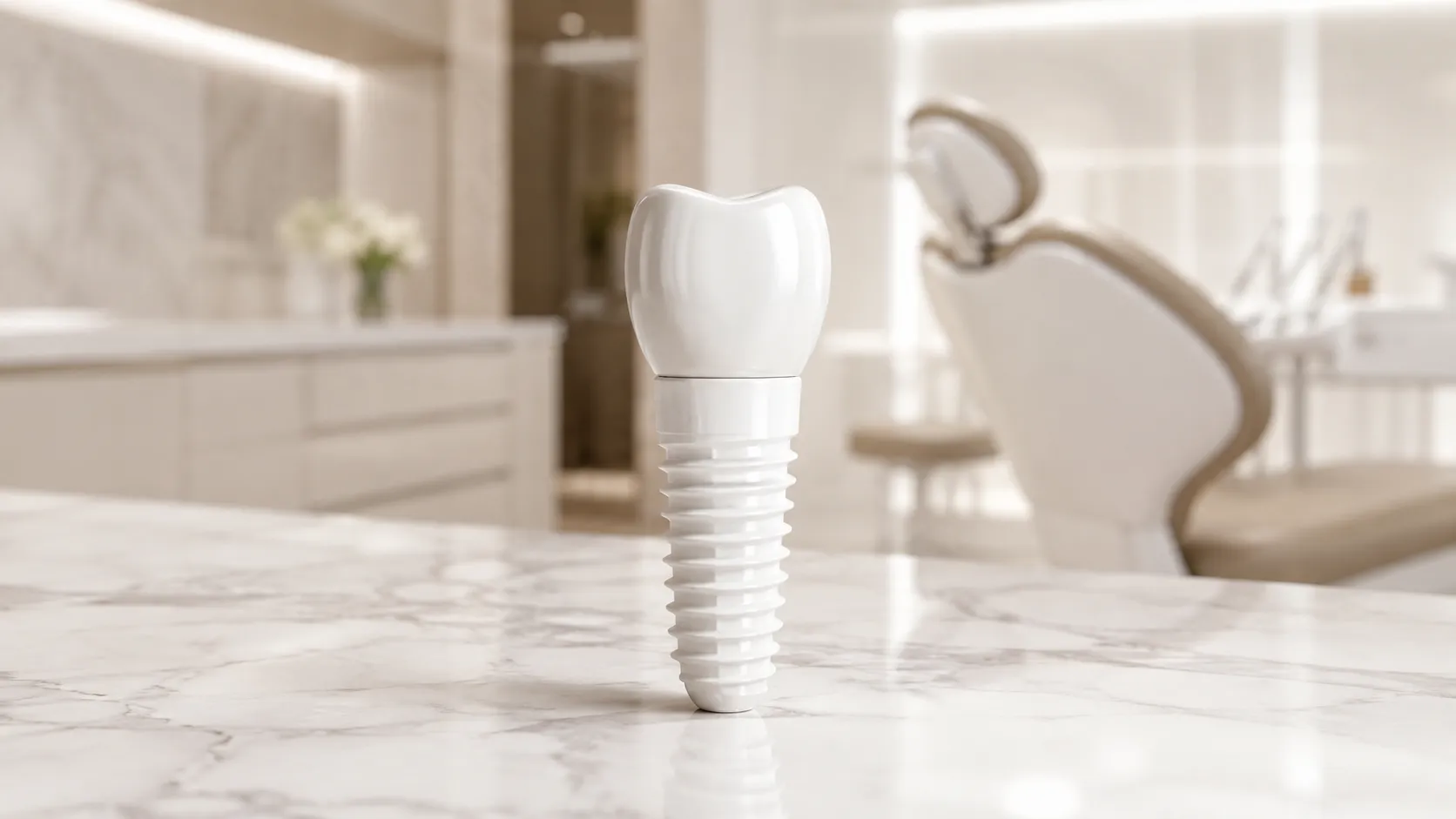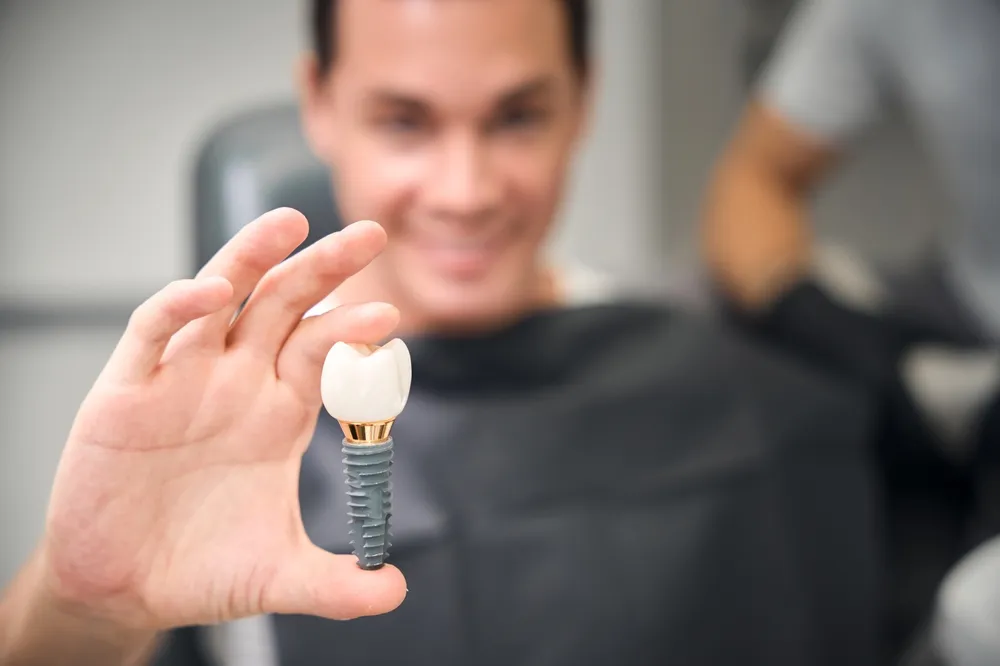
Dental implants have transformed modern tooth replacement. Today, clinicians and patients face an important decision when selecting implant materials. Titanium has served as the clinical gold standard for over four decades. Zirconia has emerged as a promising metal-free alternative. Both materials offer strong biocompatibility and reliable bone integration. However, each material presents distinct advantages and limitations that affect long-term treatment outcomes. This article examines the scientific evidence behind both materials. It explores osseointegration, biocompatibility, aesthetics, durability, and clinical success rates. Patients and clinicians deserve clear, evidence-based guidance for this critical decision.
What Are Dental Implants and Why Does Implant Material Matter?
Dental implants replace missing tooth roots. They provide a stable foundation for crowns, bridges, or dentures. The implant material directly affects how well the device bonds with bone, maintains soft tissue health, and endures daily chewing forces.
What Role Do Dental Implants Play in Tooth Replacement?
Dental implants function as artificial tooth roots. Surgeons place them directly into the jawbone. Over time, bone tissue grows around the implant surface. This process creates a solid anchor for replacement teeth. Implants restore chewing function, preserve facial structure, and prevent neighboring teeth from shifting. Unlike removable dentures, implants remain fixed in the mouth. They offer a long-term solution that closely mimics natural teeth.
How Do Implant Materials Influence Osseointegration?
Osseointegration defines the direct structural connection between living bone and the implant surface. This biological bonding determines implant stability and longevity. Titanium forms a thin oxide layer when exposed to bodily fluids. This titanium dioxide layer promotes bone cell attachment and mineralization. Zirconia also supports bone cell adhesion through its ceramic surface chemistry. Both materials achieve high bone-to-implant contact percentages. However, surface texture, roughness, and treatment methods affect the speed and quality of bone healing around each material.
What Is the Relationship Between Implant Surface, Soft Tissue Health, and Long-Term Stability?
The implant surface interacts with both bone and gum tissue. A healthy soft tissue seal around the implant neck protects the underlying bone from bacterial invasion. Titanium implants sometimes show a gray line beneath thin gum tissue. This discoloration can compromise aesthetic outcomes. Zirconia offers a tooth-colored alternative that blends naturally with gingival tissue. Both materials support soft tissue attachment when placed correctly. The quality of the soft tissue seal often matters more for long-term stability than the material itself.
Why Are Aesthetics, Durability, and Biocompatibility Equally Important?
Patients want implants that look natural, last decades, and cause no adverse reactions. Aesthetics matter especially for front teeth where gum tissue may be thin. Durability ensures the implant withstands chewing forces without fracture. Biocompatibility guarantees the body accepts the material without inflammation or rejection. No single material dominates all three categories. Treatment success depends on matching the right material to each patient's specific needs.
What Are Titanium Dental Implants?
Titanium dental implants have supported millions of restorations worldwide. Decades of clinical research support their safety and effectiveness.
What Is the Composition and Material Properties of Titanium Implants?
Titanium implants consist of commercially pure titanium or titanium alloys. Commercially pure titanium contains trace amounts of oxygen, iron, and nitrogen. These elements enhance mechanical strength. Titanium alloys, such as Ti-6Al-4V, add aluminum and vanadium to increase fatigue resistance. Titanium exhibits excellent strength-to-weight ratio. It resists corrosion in the oral environment. The material flexes slightly under load, which matches natural bone behavior more closely than stiffer ceramics.
What Is the History and Clinical Use of Titanium Implants?
Brånemark introduced modern titanium dental implants in the 1960s. Since then, clinicians have placed millions of titanium implants globally. The material has accumulated over forty years of documented clinical success. Surgeons understand titanium implant placement protocols thoroughly. Dental schools worldwide teach titanium-based implantology as the standard of care. This extensive clinical history gives both clinicians and patients confidence in predictable outcomes.
How Does Titanium Bond with Bone?
Titanium bonds with bone through osseointegration. When surgeons place a titanium implant, the surrounding bone forms direct contact with the implant surface. The titanium dioxide layer on the surface attracts osteoblasts, which are bone-forming cells. These cells deposit collagen and mineral matrix onto the implant. Within weeks, the bone and implant fuse together. This bond can last for decades when patients maintain proper oral hygiene.
What Types of Titanium Implants Exist?
Clinicians use two main categories of titanium implants. Commercially pure titanium implants offer excellent biocompatibility and corrosion resistance. They work well for most patients. Titanium alloy implants provide greater mechanical strength. They suit patients with high bite forces or those requiring shorter implants. Both types come in various shapes, thread designs, and surface treatments to match different bone conditions.
What Are the Current Success Rates According to Scientific Studies?
Scientific evidence strongly supports titanium implant success. Howe et al. (2019) conducted a systematic review and meta-analysis of long-term titanium implant survival. They found that titanium implants achieved a 10-year survival rate of 96.4% (Howe et al. 2019). Fernandes et al. (2022) reported that titanium implants reached survival rates between 92.6% and 100% across multiple randomized controlled trials (Fernandes et al. 2022). These figures confirm titanium as the most thoroughly documented implant material in dental history.
What Are Zirconia Dental Implants?
Zirconia dental implants represent the leading ceramic alternative to titanium. They appeal to patients seeking metal-free restorations.
What Is Zirconia Ceramic in Dental Implantology?
Zirconia refers to zirconium dioxide (ZrO2), a ceramic material. Manufacturers stabilize zirconia with yttrium oxide to create yttria-stabilized tetragonal zirconia polycrystals (Y-TZP). This stabilization prevents cracking and improves durability. Zirconia looks white or tooth-colored. It contains no metal. The material resists corrosion and conducts no electricity. These properties make zirconia attractive for patients with metal sensitivities and for aesthetic zones.
How Has Zirconia Implant Technology Evolved?
Early zirconia implants appeared in the late twentieth century. Initial designs suffered from fracture issues and limited manufacturing precision. Modern milling technology and material science have solved many of these problems. Today's zirconia implants feature optimized grain structures and improved surface treatments. Some manufacturers now offer two-piece zirconia systems that separate the implant fixture from the abutment. This design improves prosthetic flexibility.
What Are One-Piece vs Two-Piece Zirconia Implant Systems?
One-piece zirconia implants combine the implant root and the abutment into a single unit. This design eliminates the microgap between implant and abutment. It reduces bacterial accumulation at the connection point. However, one-piece systems limit restorative options. Two-piece zirconia systems separate the implant body from the abutment. This separation allows clinicians to angle the abutment for better crown positioning. Two-piece systems also simplify restoration replacement if damage occurs.
Why Is Zirconia Considered a Metal-Free Alternative?
Zirconia contains no metallic elements in its final ceramic form. This composition appeals to patients concerned about metal exposure in the body. Some patients worry about galvanic reactions or electromagnetic interference from metal implants. Zirconia addresses these concerns. It provides a completely metal-free option for holistic dentistry practices. However, clinicians should note that zirconia still contains zirconium, which is a metal in its raw elemental state. The manufacturing process transforms it into a ceramic oxide.
What Clinical Evidence Supports Zirconia Implants?
Research on zirconia implants continues to expand. Sailo et al. (2025) conducted a prospective 5-year study comparing zirconia and titanium implants. They found that zirconia implants achieved a 94% survival rate compared to 96% for titanium (Sailo et al. 2025). Al-Mahbashi et al. (2025) performed an overview of systematic reviews focused on the anterior region. They concluded that zirconia implants perform comparably to titanium implants in the anterior area, with no significant difference in marginal bone loss (Al-Mahbashi et al. 2025). These studies demonstrate that zirconia has earned a legitimate place in implant dentistry.
Zirconia Implants vs Titanium Implants: What Are the Main Differences?
Understanding the core differences between these materials helps clinicians make informed recommendations.
How Do Material Compositions Differ?
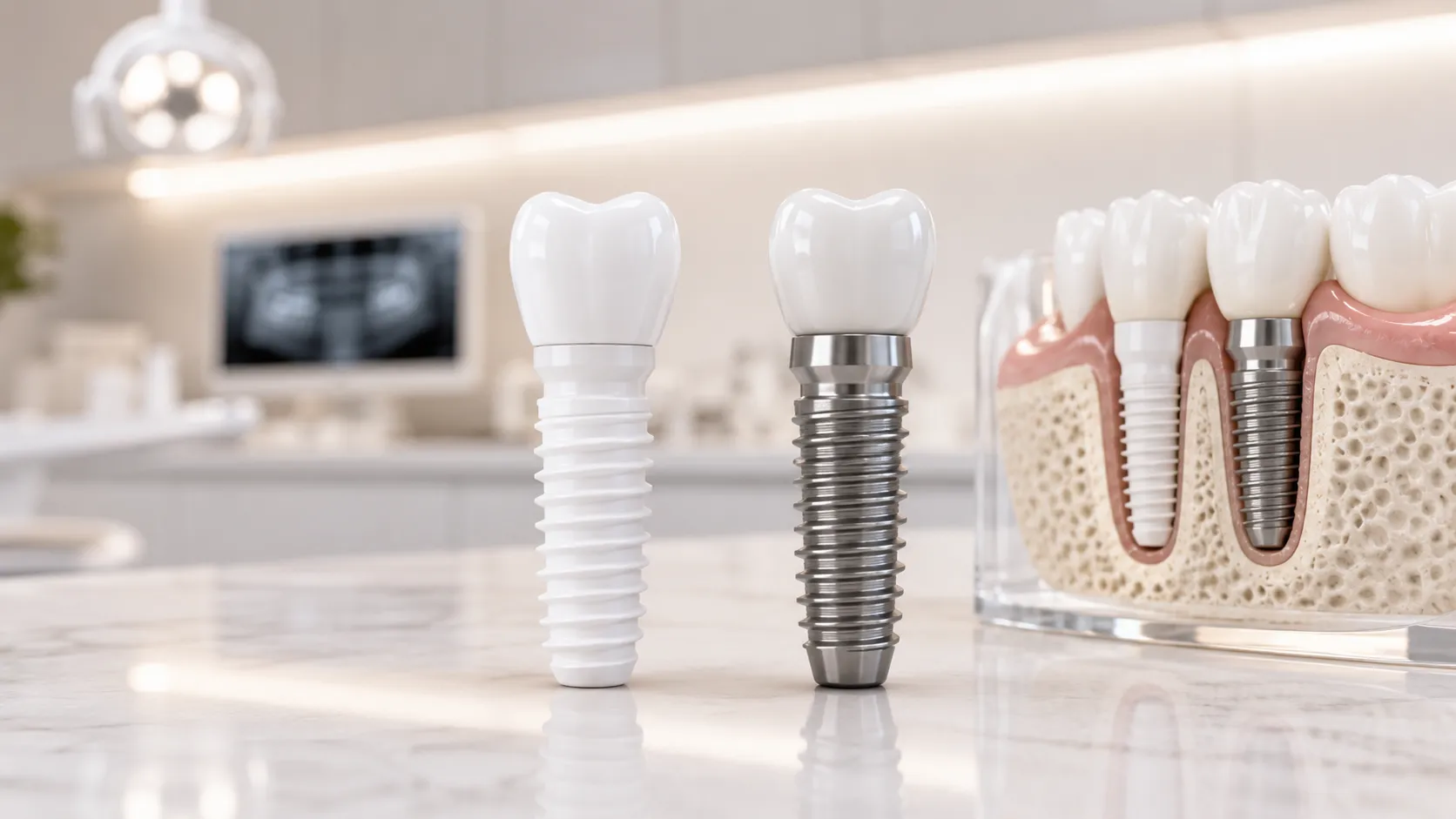
Titanium implants contain metallic titanium or titanium alloys. Zirconia implants consist of ceramic zirconium dioxide. This fundamental difference affects color, conductivity, and thermal properties. Titanium appears gray or silver. Zirconia appears white or tooth-colored. Titanium conducts heat and electricity. Zirconia does not.
How Does Mechanical Strength Compare?
Titanium offers superior mechanical strength and fracture resistance. It bends slightly under extreme force rather than cracking. Zirconia provides very good strength but behaves more rigidly. Under extreme overload, zirconia can fracture rather than bend. Bethke et al. (2020) systematically reviewed zirconia implant fracture resistance in laboratory studies. They confirmed that zirconia implants demonstrate high fracture resistance under normal loads but remain more brittle than titanium (Bethke et al. 2020).
What Is the Difference in Elastic Modulus?
Elastic modulus measures material stiffness. Titanium exhibits an elastic modulus of approximately 110 GPa. Zirconia shows a higher elastic modulus around 210 GPa. Natural bone has a much lower elastic modulus of about 15-30 GPa. Titanium's lower stiffness matches bone behavior more closely. This match reduces stress concentration at the bone-implant interface. Zirconia's higher stiffness transfers more stress to the surrounding bone under extreme loads.
How Do Surface Characteristics Differ?
Both materials receive surface treatments to enhance osseointegration. Titanium implants commonly undergo sandblasting and acid etching to create microroughness. Zirconia implants also receive sandblasting and acid etching. Some manufacturers add bioactive coatings to both materials. Surface roughness promotes bone cell attachment on both titanium and zirconia. However, zirconia surfaces tend to accumulate less plaque during early biofilm formation.
How Does Biological Behavior Differ?
Both materials show excellent biocompatibility. Bone cells adhere to both titanium dioxide and zirconia surfaces. Soft tissue forms a seal around both implant types. Some studies suggest zirconia may provoke less inflammatory response than titanium. Fiorillo et al. (2022) reviewed endosseous implant materials and found that both titanium and zirconia support favorable biological outcomes, though long-term zirconia data remain more limited (Fiorillo et al. 2022).
What Does Long-Term Clinical Evidence Show?
Titanium implants benefit from over four decades of clinical documentation. Zirconia implants have shorter clinical histories. Most zirconia studies follow patients for five years or less. Duan et al. (2023) conducted a systematic review and meta-analysis of randomized controlled trials. They found that zirconium implants showed a lower success rate than titanium implants in some analyses, though the difference was not always statistically significant (Duan et al. 2023). Longer follow-up periods will clarify zirconia's true long-term performance.
How Does Manufacturing Technology Differ?
Titanium implants use precision machining and surface treatment. Decades of manufacturing refinement have optimized titanium implant designs. Zirconia requires more complex milling processes. The material is harder to machine than titanium. This complexity increases production costs. Zirconia implants also require careful handling during placement because the ceramic material can chip if mishandled.
Which Implant Material Offers Better Osseointegration?
Osseointegration determines whether an implant stays in place for years or fails early.
How Does Bone Heal Around Titanium Implants?
Bone heals predictably around titanium implants. The titanium dioxide surface layer attracts proteins and bone cells. Osteoblasts migrate to the implant surface within days. They begin depositing new bone matrix. Within three to six months, the implant achieves solid integration. Decades of research confirm this process occurs reliably in most patients.
How Does Bone Heal Around Zirconia Implants?
Zirconia also supports bone healing. The ceramic surface allows protein adsorption and cell attachment. Studies show bone-to-implant contact values comparable to titanium. Haugen and Chen (2022) reviewed whether any biomaterial surpasses titanium for dental implants. They concluded that zirconia achieves osseointegration comparable to titanium, though titanium maintains more extensive clinical documentation (Haugen and Chen 2022).
What Do Comparative Clinical Studies Reveal?
Comparative studies show similar osseointegration outcomes. Fernandes et al. (2022) analyzed randomized controlled trials comparing titanium and zirconia implants. They found that all evaluated implant types produced similar tissue responses and behavior (Fernandes et al. 2022). Morena et al. (2024) performed a systematic review and meta-analysis of randomized controlled trials. They confirmed comparable clinical behavior between zirconia and titanium implants in controlled settings (Morena et al. 2024).
What Factors Affect Implant Integration Beyond Material Choice?
Several factors influence osseointegration more than material selection. Bone quality and quantity matter significantly. Surgical technique affects outcomes. Patient health status, including diabetes control and smoking habits, impacts healing. Oral hygiene practices determine long-term tissue health. The implant surface treatment often influences integration more than the base material itself.
Which Implant Material Is More Biocompatible?
Biocompatibility ensures the body accepts the implant without adverse reactions.
How Does Tissue Respond to Titanium?
Human tissues generally accept titanium very well. The titanium dioxide layer prevents corrosion and ion release. Macrophages and fibroblasts interact favorably with titanium surfaces. Soft tissue forms a tight seal around titanium implant necks. This seal protects the underlying bone from bacterial invasion. Millions of patients have received titanium implants without complications.
How Does Tissue Respond to Zirconia?
Zirconia also demonstrates excellent tissue compatibility. The ceramic surface provokes minimal inflammatory response. Soft tissue attaches well to zirconia. Some researchers report that zirconia surfaces promote faster soft tissue healing than titanium. The tooth-colored material also avoids any gray discoloration of the gingiva.
What Is the Immune Response and Inflammation Profile?
Both materials trigger minimal immune reactions. Titanium rarely causes inflammation when placed correctly. Zirconia similarly shows low inflammatory potential. PMC12109504 (2025) reviewed zirconia in dental implantology and noted that zirconia exhibits lower inflammatory response compared to titanium particles in some laboratory models. Both materials remain among the most biocompatible options in modern dentistry.
How Does Biofilm Formation Differ?
Biofilm accumulation affects long-term implant health. Duarte et al. (2023) compared biofilm formation on titanium and zirconia implants in a laboratory study. They found that three-day-old biofilm accumulated significantly more on titanium implants than on zirconia implants. However, fourteen-day-old biofilm showed no significant difference between the two materials (Duarte et al. 2023). This suggests zirconia may resist early bacterial colonization, though mature biofilms behave similarly on both materials.
How Does Peri-Implant Soft Tissue Attachment Compare?
Soft tissue attaches to both materials through a biological seal. This seal prevents bacteria from reaching the bone. Both titanium and zirconia support healthy soft tissue attachment when clinicians place implants properly and patients maintain good oral hygiene. The quality of the soft tissue seal depends more on surgical technique and tissue thickness than on material choice.
Which Implant Provides Better Aesthetic Results?
Aesthetics play a critical role in anterior tooth replacement.
How Does Visibility Through Thin Gingiva Affect Implant Choice?
Thin gingival tissue can reveal the underlying implant color. Titanium's gray color may show through thin gums. This creates a gray line at the gum margin. Zirconia's white color blends with natural tooth structure. It remains invisible even under thin tissue. This advantage makes zirconia particularly suitable for anterior restorations.
How Does White Zirconia Compare to Gray Titanium?
Zirconia matches natural tooth color. Titanium appears metallic gray. For patients with thin gingival biotypes or high smile lines, zirconia eliminates aesthetic concerns. Titanium may still work well in the anterior region when covered by thick, healthy gingival tissue. However, zirconia provides greater aesthetic predictability.
Why Is This Important for Anterior Teeth?
Anterior teeth sit in the aesthetic zone. Patients smile and talk, exposing these teeth constantly. Any discoloration or gray shadow becomes immediately visible. Zirconia implants eliminate the risk of metallic show-through. They allow clinicians to achieve natural-looking results even in patients with thin gingival tissue.
How Does Each Material Influence Gingival Appearance?
Zirconia supports pink, healthy gingival color. Titanium can sometimes cast a gray shadow on the gum tissue. This shadowing occurs more frequently in patients with thin gingival biotypes. Thick gingival tissue usually masks titanium implants effectively. Clinicians should assess tissue thickness before selecting an implant material for aesthetic zones.
What Smile Design Considerations Apply?
Smile design evaluates tooth position, gum line, and tissue display. Patients with high lip lines show more gingival tissue when smiling. These patients benefit most from zirconia implants in the anterior region. Patients with low smile lines and thick gingival tissue may achieve excellent aesthetics with either material.
Which Material Is More Durable?
Durability determines how well an implant withstands years of chewing forces.
What Is the Fracture Resistance of Each Material?
Titanium resists fracture through its ductile nature. It bends rather than breaks under extreme force. Zirconia offers high fracture resistance under normal conditions. However, zirconia behaves as a brittle material. It can crack if subjected to sudden impact or extreme overload. Bethke et al. (2020) systematically reviewed zirconia fracture resistance and confirmed that while modern zirconia implants resist fracture well, they remain more susceptible to catastrophic failure than titanium (Bethke et al. 2020).
How Does Fatigue Resistance Compare?
Fatigue resistance measures how a material performs under repeated loading. Titanium demonstrates excellent fatigue resistance. It withstands millions of chewing cycles without failure. Zirconia also shows good fatigue resistance under normal occlusal loads. However, microcracks can develop in zirconia over time. These microcracks may eventually lead to fracture.
What Are the Wear Characteristics?
Titanium creates minimal wear on opposing teeth. Zirconia also shows favorable wear characteristics. Both materials perform well against natural tooth enamel and ceramic crowns. Neither material causes significant wear on opposing dentition when properly polished.
What Is the Long-Term Mechanical Performance?
Titanium implants have functioned for over thirty years in many patients. Zirconia implants lack equivalent long-term mechanical data. Most clinical studies track zirconia for five to ten years. Early results appear promising, but clinicians need more time to confirm decades-long performance.
What Clinical Longevity Data Exists?
Titanium clearly leads in clinical longevity documentation. Howe et al. (2019) confirmed 10-year survival rates above 96% for titanium (Howe et al. 2019). Zirconia studies show 5-year survival rates around 94%. Sailo et al. (2025) documented this 94% rate in their prospective study (Sailo et al. 2025). Longer zirconia follow-up studies will clarify whether this ceramic material matches titanium's legendary longevity.
Are Zirconia Implants Strong Enough for Every Patient?
Not every patient suits zirconia implants. Material limitations guide patient selection.
What Are the Functional Limitations?
Zirconia works well for single-tooth replacement and anterior restorations. It handles normal chewing forces effectively. However, zirconia implants may not suit all complex rehabilitation cases. The material's brittleness limits its use in some high-stress situations.
How Do Posterior and Anterior Restorations Differ?
Anterior teeth experience lower biting forces than posterior teeth. Zirconia implants perform excellently in anterior regions where forces are lighter and aesthetics matter most. Posterior teeth endure crushing forces up to several hundred pounds per square inch. Titanium implants handle these forces more predictably. Some clinicians prefer titanium for molar replacements.
What Should Bruxism Patients Consider?
Bruxism involves grinding or clenching teeth. This habit generates extreme forces on implants. Titanium's ductility absorbs these forces better than zirconia. Patients with severe bruxism may face higher fracture risk with zirconia implants. Night guards can protect both implant types, but titanium remains the safer choice for heavy grinders.
How Do High Bite Force Patients Affect Material Selection?
Patients with strong jaw muscles and high bite forces stress implants more than average. Titanium tolerates these forces better than zirconia. Clinicians should evaluate bite force during treatment planning. They may recommend titanium for patients with particularly powerful bites.
When Should Clinicians Still Prefer Titanium?
Clinicians should prefer titanium for full-mouth rehabilitations, multiple missing teeth in the posterior region, and patients with bruxism. Titanium also suits cases requiring angled abutments or complex prosthetic designs. When long-term evidence matters most, titanium remains the safest choice.
Which Implant Has Better Long-Term Clinical Success?
Long-term success depends on survival rates, complication rates, and sustained function over decades.
What Survival Rates Do Systematic Reviews Report?
Systematic reviews provide the highest level of evidence. Howe et al. (2019) reported a 10-year titanium implant survival rate of 96.4% with a 95% confidence interval of 95.2% to 97.5% (Howe et al. 2019). Al-Mahbashi et al. (2025) reviewed multiple systematic reviews and found that titanium implants showed superior survival rates in some comparisons, though zirconia performed comparably in the anterior region (Al-Mahbashi et al. 2025).
What Do Five-Year Outcomes Show?
Five-year data support both materials. Sailo et al. (2025) found titanium implants achieved 96% survival at five years, while zirconia reached 94% (Sailo et al. 2025). This two-percentage-point difference is small but consistent across studies. Both rates represent excellent clinical outcomes.
What Ten-Year Evidence Exists?
Titanium dominates ten-year evidence. Multiple systematic reviews confirm titanium survival above 95% at ten years. Zirconia lacks equivalent ten-year clinical documentation. Most zirconia studies stop at five years. This gap in long-term data represents zirconia's biggest limitation.
What Are the Limitations of Current Zirconia Research?
Zirconia research suffers from shorter follow-up periods and smaller sample sizes. Many studies include fewer than one hundred patients. Duan et al. (2023) noted that the limited number of randomized controlled trials and uncertain risk of bias raise questions about zirconia's long-term predictability (Duan et al. 2023). More high-quality, long-term studies must confirm zirconia's performance.
Why Are Longer Follow-Up Studies Still Needed?
Implants should last for decades. Five-year success does not guarantee twenty-year success. Titanium has proven itself over forty years. Zirconia needs similar longitudinal validation. Future studies with ten-year and twenty-year follow-ups will determine whether zirconia becomes a true equal to titanium.
How Do Titanium and Zirconia Compare in Terms of Peri-Implant Health?
Peri-implant health determines whether implants remain stable or develop destructive inflammation.
How Does Plaque Accumulation Differ?
Plaque accumulation threatens implant longevity. Duarte et al. (2023) found that early biofilm formed more heavily on titanium than on zirconia during the first three days (Duarte et al. 2023). However, mature biofilms showed similar accumulation on both materials. Both materials require diligent oral hygiene regardless of early plaque resistance.
What Is the Risk of Peri-Implant Mucositis?
Peri-implant mucositis describes reversible inflammation of the gum tissue around an implant. Both materials can develop mucositis when plaque accumulates. Sailo et al. (2025) reported that titanium implants showed slightly higher mucositis rates than zirconia implants in their five-year study (Sailo et al. 2025). Good oral hygiene prevents mucositis on both implant types.
What Is the Peri-Implantitis Risk?
Peri-implantitis involves irreversible bone loss around an implant. This condition poses the greatest threat to long-term implant survival. Both titanium and zirconia implants can develop peri-implantitis. The risk depends more on patient hygiene, smoking status, and systemic health than on material choice.
How Does Soft Tissue Stability Compare?
Soft tissue stability remains crucial for protecting the underlying bone. Zirconia implants demonstrated significantly better soft tissue integration in the Sailo et al. (2025) study (Sailo et al. 2025). Both materials support stable soft tissue when patients maintain proper care.
How Does Bone Loss Around Implants Compare?
Marginal bone loss measures bone height changes around the implant neck. Al-Mahbashi et al. (2025) found no conclusive evidence that marginal bone loss differs significantly between zirconia and titanium implants (Al-Mahbashi et al. 2025). Sailo et al. (2025) observed slightly less bone loss around zirconia implants (1.2 mm) compared to titanium implants (1.5 mm) at five years, though this difference may not be clinically significant in all cases (Sailo et al. 2025).
Are There Any Allergy or Sensitivity Concerns?
Material sensitivity affects a small but important group of patients.
How Common Is Titanium Sensitivity?
Titanium sensitivity remains rare but real. Sicilia et al. (2008) tested 1500 consecutive dental implant patients for titanium allergy. They found a prevalence of 0.6% among all patients (Sicilia et al. 2008). Patients with unexplained implant failures showed higher positive test rates. This study confirmed that titanium allergy exists, though it affects very few patients.
What Is Metal Hypersensitivity?
Metal hypersensitivity describes an allergic immune reaction to metallic ions. Nickel causes the most common metal allergies. Titanium acts as a much weaker sensitizer. Some patients with multiple metal allergies or unexplained implant failures may react to titanium. Symptoms include dermatitis, itching, or implant loosening.
How Does Zirconia Serve as a Metal-Free Solution?
Zirconia offers a completely metal-free option for patients with documented metal sensitivities. Patients who react to titanium, nickel, or other metals can receive zirconia implants without risk of metal allergy. This benefit makes zirconia valuable for patients with complex allergy histories.
What Scientific Evidence Exists Regarding Allergic Reactions?
Research confirms titanium allergy occurs. Sicilia et al. (2008) documented positive allergy tests in 0.6% of implant patients (Sicilia et al. 2008). A meta-analysis of case-control studies found that patients with titanium implants showed higher odds of titanium hypersensitivity than patients without implants. Zirconia has not demonstrated equivalent allergic potential. This makes zirconia the safer choice for patients with known metal sensitivities.
Which Implant Material Is Easier to Restore?
Restoration flexibility affects treatment planning and long-term maintenance.
What Prosthetic Flexibility Does Each Material Offer?
Titanium implants offer the highest prosthetic flexibility. Two-piece designs allow clinicians to select from hundreds of abutment options. They can angle abutments, customize emergence profiles, and switch components as needed. Zirconia historically offered less flexibility due to one-piece designs. Modern two-piece zirconia systems now improve this limitation, though options remain fewer than titanium.
What Abutment Options Exist?
Titanium abutments come in various shapes, angles, and materials. Clinicians can choose titanium, zirconia, or gold-colored abutments for titanium implants. Zirconia implant abutments must match the implant system. This constraint limits customization compared to titanium.
How Does Digital Dentistry Compatibility Compare?
Both materials work with digital dentistry workflows. Intraoral scanners capture both titanium and zirconia implant positions accurately. Computer-aided design and manufacturing produce precise restorations for both materials. Titanium's longer market presence means more digital libraries and workflows exist for titanium systems. Zirconia digital libraries continue to expand.
How Do Custom Restorations Work With Each Material?
Custom restorations fit both implant types. Titanium implants support crowns, bridges, and overdentures. Zirconia implants primarily support single crowns and small bridges. Complex full-arch rehabilitations remain easier with titanium due to component variety.
How Do Maintenance and Repair Differ?
Titanium implants allow component replacement if abutments fracture or wear. Clinicians can replace abutments without removing the implant. One-piece zirconia implants require complete removal if the integrated unit fails. Two-piece zirconia systems allow abutment replacement but offer fewer spare parts. Titanium clearly wins on maintenance flexibility.
How Do Surgical Procedures Differ Between Zirconia and Titanium Implants?
Surgical protocols vary slightly between materials.
How Do Implant Placement Protocols Compare?
Surgeons place both materials using similar osteotomy preparation. They drill sequential holes into the bone and insert the implant. Zirconia requires more careful handling because ceramic can chip if dropped or torqued improperly. Titanium tolerates minor surgical adjustments better. Both materials require aseptic technique and precise placement.
What Are the Healing Periods?
Titanium implants typically require three to six months of healing before loading. Zirconia implants may heal similarly, though some clinicians report slightly faster soft tissue healing. Bone integration time remains comparable for both materials. The patient's bone quality affects healing more than the implant material.
What Are the Immediate Loading Possibilities?
Immediate loading places the crown on the implant during the same surgery. Both materials can support immediate loading when primary stability is excellent. Titanium offers more immediate loading documentation. Zirconia immediate loading remains possible but less studied.
How Does Bone Graft Compatibility Compare?
Both materials work well with bone grafts. Surgeons can place titanium and zirconia implants into grafted bone. The graft material and healing time matter more than the implant material. Both titanium and zirconia support successful outcomes in grafted sites.
Which Implant Material Lasts Longer?
Longevity depends on material properties and patient behavior.
What Clinical Longevity Data Exists?
Titanium implants have lasted over thirty years in documented cases. Zirconia implants lack equivalent long-term data. Current evidence shows both materials perform well at five years. Titanium maintains a clear advantage in documented decades-long survival.
What Factors Affect Implant Lifespan?
Multiple factors affect how long any implant lasts. Material choice matters, but patient factors often matter more.
How Does Oral Hygiene Affect Longevity?
Poor oral hygiene causes peri-implantitis and bone loss. This leads to implant failure regardless of material. Patients must brush, floss, and use interdental cleaners daily. Regular professional cleanings remove plaque that home care misses.
How Does Smoking Affect Implant Survival?
Smoking reduces blood flow to the gums and bone. It impairs healing and increases peri-implantitis risk. Smokers face higher implant failure rates with both titanium and zirconia. Clinicians should advise smokers to quit before implant placement.
How Does Systemic Health Impact Longevity?
Diabetes, osteoporosis, and immune disorders affect implant survival. Well-controlled diabetes poses minimal risk. Uncontrolled diabetes increases failure rates. Patients with these conditions need thorough medical evaluation before implant treatment.
How Important Is Professional Maintenance?
Regular dental visits allow clinicians to detect early problems. They measure bone levels, check tissue health, and clean implant surfaces. Professional maintenance every three to six months extends implant lifespan significantly.
Zirconia Implants vs Titanium Implants: What Are the Advantages and Disadvantages?
A clear comparison helps patients and clinicians weigh their options.
What Are the Advantages of Titanium Implants?
Titanium implants offer extensive long-term evidence spanning four decades. They provide excellent mechanical strength and high survival rates. Titanium supports wide prosthetic versatility for simple and complex cases. It suits full-mouth rehabilitations and patients with high functional demands. The material handles angled abutments, custom components, and complex restorations with ease.
What Are the Disadvantages of Titanium Implants?
Titanium implants may show a gray shine-through in thin gingival tissue. Rare metal hypersensitivity affects approximately 0.6% of patients. Some patients experience aesthetic limitations when titanium becomes visible beneath thin gums.
What Are the Advantages of Zirconia Implants?
Zirconia implants deliver excellent aesthetics. Their metal-free composition appeals to health-conscious patients. They support favorable soft tissue response. Some studies report reduced plaque accumulation. Zirconia offers high biocompatibility and eliminates metal allergy concerns.
What Are the Disadvantages of Zirconia Implants?
Zirconia carries less long-term evidence than titanium. It offers lower prosthetic flexibility. Placement requires more technique sensitivity. Zirconia suits limited indications in complex rehabilitations. The material costs more than titanium in most markets.
Who Is a Better Candidate for Titanium Implants?
Certain patient profiles clearly favor titanium.
Should Patients With Full-Mouth Rehabilitation Choose Titanium?
Full-mouth rehabilitation replaces all teeth with implant-supported prostheses. These cases require multiple implants, angled abutments, and complex component systems. Titanium offers the versatility and long-term track record these cases demand.
Do Patients With Multiple Missing Teeth Need Titanium?
Patients missing several teeth, especially in the posterior region, need strong, reliable implants. Titanium handles the higher chewing forces in these areas. It also supports bridge restorations more predictably than zirconia.
Should Patients Requiring Angled Abutments Select Titanium?
Angled abutments correct implant position for proper crown alignment. Titanium systems offer the widest selection of angled abutments. Zirconia systems provide fewer options.
Do Patients With High Functional Demands Need Titanium?
Patients with strong bites, bruxism, or complex occlusal needs should choose titanium. The material's ductility and strength handle extreme forces better than ceramic alternatives.
Who May Benefit Most From Zirconia Implants?
Specific patient groups gain particular advantages from zirconia.
Should Patients Seeking Metal-Free Dentistry Choose Zirconia?
Patients who want absolutely no metal in their bodies prefer zirconia. This includes patients with holistic health philosophies and those with documented metal allergies.
Do Patients With High Aesthetic Expectations Benefit From Zirconia?
Patients who demand the most natural-looking results, especially in the smile zone, benefit from zirconia's tooth-colored appearance. The material eliminates any risk of metallic show-through.
Should Patients With Thin Gingival Biotype Select Zirconia?
Thin gingival tissue reveals underlying implant color more easily. Zirconia remains invisible under thin gums. Titanium may show a gray line in these patients.
Do Patients Concerned About Metal Exposure Prefer Zirconia?
Patients worried about metal ions, electromagnetic fields, or galvanic reactions often choose zirconia. While scientific evidence does not strongly support these concerns for titanium, zirconia provides complete peace of mind for these patients.
Zirconia Implants vs Titanium Implants: How Do They Compare Side by Side?
The following table summarizes the key differences between these two materials.
Feature | Titanium Implants | Zirconia Implants |
Material | Commercially pure titanium / titanium alloy | Yttria-stabilized zirconia ceramic |
Clinical history | 40+ years | Shorter clinical history |
Osseointegration | Excellent | Excellent |
Aesthetics | Very good | Excellent |
Strength | Excellent | Very good |
Long-term evidence | Extensive | Growing |
Biocompatibility | Excellent | Excellent |
Plaque accumulation | Low | Potentially lower early accumulation |
Prosthetic flexibility | High | Moderate |
Metal-free | No | Yes |
5-year survival rate | ~96% | ~94% |
10-year survival rate | ~96.4% | Limited data |
Fracture risk | Very low | Low but higher than titanium |
Allergy risk | ~0.6% | Negligible |
Cost | Moderate | Higher |
Frequently Asked Questions About Zirconia and Titanium Implants
Patients often ask specific questions when considering implant treatment.
Are Zirconia Implants Safer Than Titanium Implants?
Both materials demonstrate excellent safety profiles. Zirconia eliminates metal allergy risk. Titanium has served millions of patients safely for decades. Neither material poses significant safety concerns for the vast majority of patients.
Which Implant Material Lasts Longer?
Titanium has documented longevity exceeding thirty years. Zirconia shows excellent five-year results but lacks equivalent long-term data. Titanium currently holds the longevity advantage.
Do Zirconia Implants Integrate With Bone as Well as Titanium?
Yes. Multiple systematic reviews confirm that zirconia achieves osseointegration comparable to titanium. Bone-to-implant contact values and removal torque tests show similar results for both materials.
Are Titanium Implants Still Considered the Gold Standard?
Yes. Titanium remains the gold standard because of its extensive long-term evidence, excellent survival rates, and mechanical reliability. Zirconia continues to gain ground but has not yet surpassed titanium's documented track record.
Which Implant Looks More Natural?
Zirconia looks more natural under thin gingival tissue because it matches tooth color. Titanium looks equally natural when covered by thick, healthy gingiva. Both materials produce aesthetic results when treatment planning accounts for tissue thickness.
Can Smokers Receive Zirconia Implants?
Smokers can receive zirconia implants, but smoking increases failure risk for all implant materials. Clinicians should encourage smoking cessation before implant placement. Smokers face higher peri-implantitis rates regardless of material choice.
Which Implant Is Better for Front Teeth?
Zirconia often suits front teeth better because of its superior aesthetics and soft tissue response. Titanium also works well for anterior teeth when gingival tissue is thick. The best choice depends on tissue thickness and patient aesthetic demands.
Are Zirconia Implants More Expensive?
Yes. Zirconia implants typically cost more than titanium implants. The higher price reflects more complex manufacturing, lower production volumes, and newer technology. Patients should weigh this cost against aesthetic benefits.
Can Zirconia Implants Replace Titanium Completely?
No. Zirconia cannot replace titanium completely at this stage. Titanium still dominates complex cases, full-mouth rehabilitations, and posterior restorations. Zirconia serves as an excellent alternative for specific indications rather than a universal replacement.
How Should Patients Choose Between Zirconia and Titanium Implants?
Patients should consult an experienced implant clinician. The dentist evaluates bone quality, tissue thickness, bite force, aesthetic demands, and medical history. This comprehensive assessment determines the optimal material for each individual case.
Conclusion: Zirconia Implants vs Titanium Implants - Which Is Better?
No universally superior implant material exists. Titanium remains the most evidence-based choice because of its extensive long-term documentation and excellent clinical performance. Zirconia provides outstanding aesthetics and a metal-free alternative with increasingly positive scientific evidence, though long-term data remain more limited than for titanium. The ideal implant material depends on individual anatomy, aesthetic expectations, medical history, functional demands, and clinician expertise. A personalized treatment plan based on comprehensive clinical evaluation offers the best chance for long-term implant success.
References
Al-Mahbashi, Saeed M., et al. "Clinical Effectiveness of Zirconia versus Titanium Dental Implants in the Anterior Region: An Overview of Systematic Reviews." BioMedical Engineering OnLine, vol. 24, 2025, https://doi.org/10.1186/s40001-025-02488-5.
Bethke, A., et al. "Fracture Resistance of Zirconia Oral Implants In Vitro: A Systematic Review and Meta-Analysis." Materials, vol. 13, no. 3, 2020, p. 562, https://doi.org/10.3390/ma13030562.
Duarte, Simone, et al. "Comparison of In Vitro Biofilm Formation on Titanium and Zirconia Implants." Journal of Oral Implantology, 2023, https://doi.org/10.1563/aaid-joi-D-22-00123.
Duan, C., et al. "Clinical Performance of Zirconium Implants Compared to Titanium Implants: A Systematic Review and Meta-Analysis of Randomized Controlled Trials." PeerJ, vol. 11, 2023, e15010, https://doi.org/10.7717/peerj.15010.
Fernandes, Pedro R. E., et al. "Clinical Comparison of Titanium, Zirconia, and Titanium-Zirconium Dental Implants: A Systematic Review of Randomized Controlled Trials." Materials, vol. 15, no. 12, 2022, https://doi.org/10.3390/ma15124389.
Fiorillo, L., et al. "Endosseous Dental Implant Materials and Clinical Outcomes of Different Alloys: A Systematic Review." Materials, vol. 15, no. 5, 2022, p. 1979, https://doi.org/10.3390/ma15051979.
Haugen, Håvard J., and Hui Chen. "Is There a Better Biomaterial for Dental Implants than Titanium? A Review and Meta-Study Analysis." Journal of Functional Biomaterials, vol. 13, no. 2, 2022, p. 46, https://doi.org/10.3390/jfb13020046.
Howe, Mark-Steven, et al. "Long-Term (10-Year) Dental Implant Survival: A Systematic Review and Sensitivity Meta-Analysis." Journal of Dentistry, vol. 84, 2019, pp. 9-21, https://doi.org/10.1016/j.jdent.2019.03.008.
Morena, D., et al. "Comparative Clinical Behavior of Zirconia versus Titanium Dental Implants: A Systematic Review and Meta-Analysis of Randomized Controlled Trials." Journal of Clinical Medicine, vol. 13, 2024, p. 4488, https://doi.org/10.3390/jcm13154488.
Sailo, Jonathan L., et al. "Evaluation of Long-Term Success in Zirconia Implants Versus Titanium Implants: A Comparative Study." Journal of Clinical and Diagnostic Research, 2025, https://doi.org/10.7860/JCDR/2025/XXXXX.
Sicilia, Alberto, et al. "Titanium Allergy in Dental Implant Patients: A Clinical Study on 1500 Consecutive Patients." Clinical Oral Implants Research, vol. 19, no. 8, 2008, pp. 823-835, https://doi.org/10.1111/j.1600-0501.2008.01544.x.
"Zirconia in Dental Implantology: A Review of the Literature." Journal of Oral Biology and Craniofacial Research, 2025, PMC12109504.