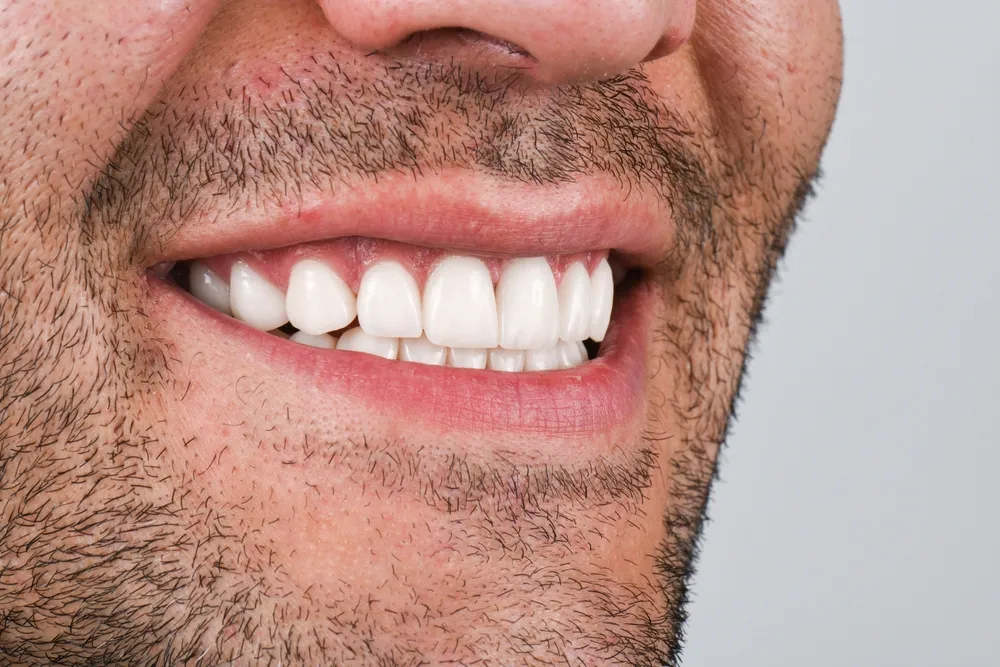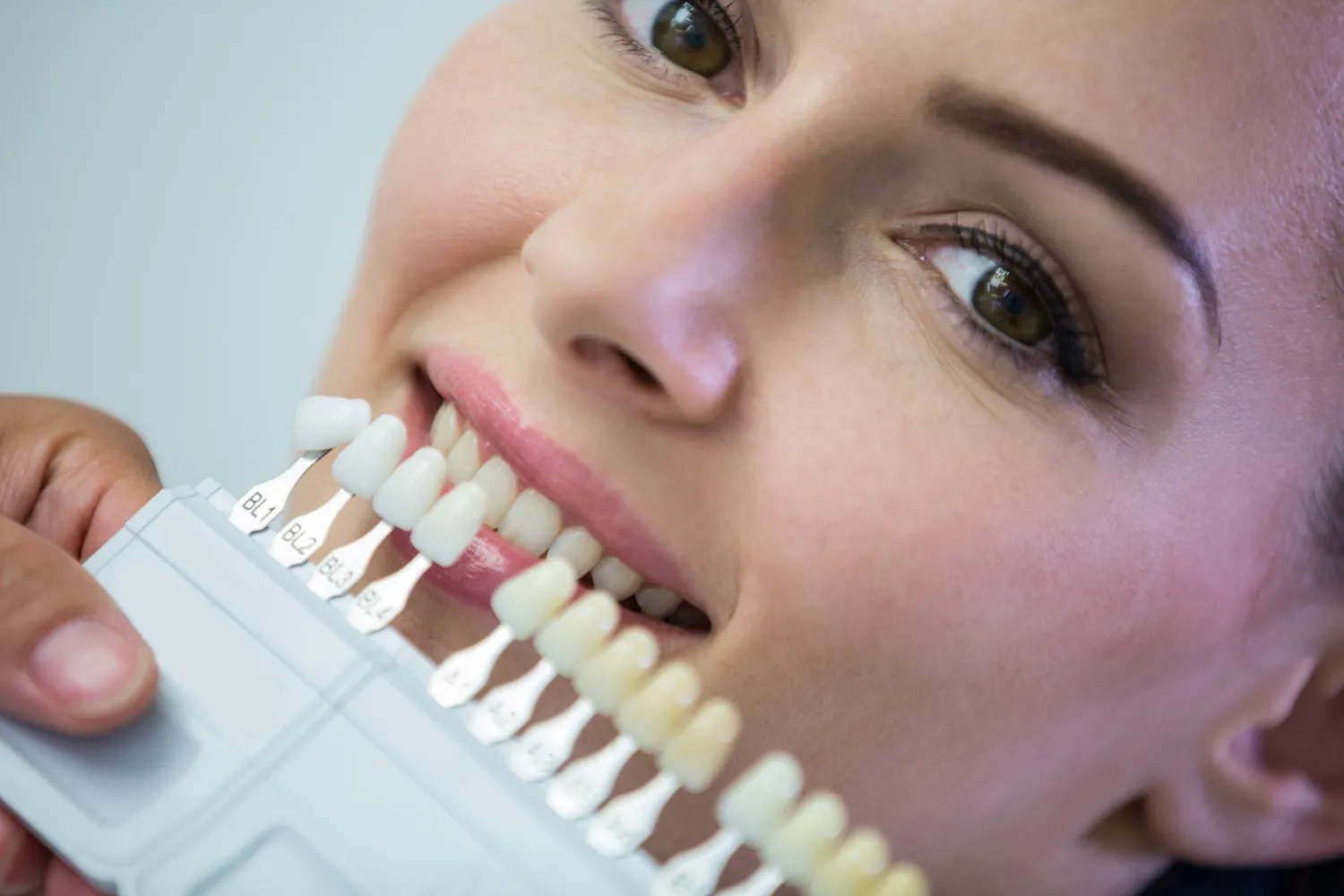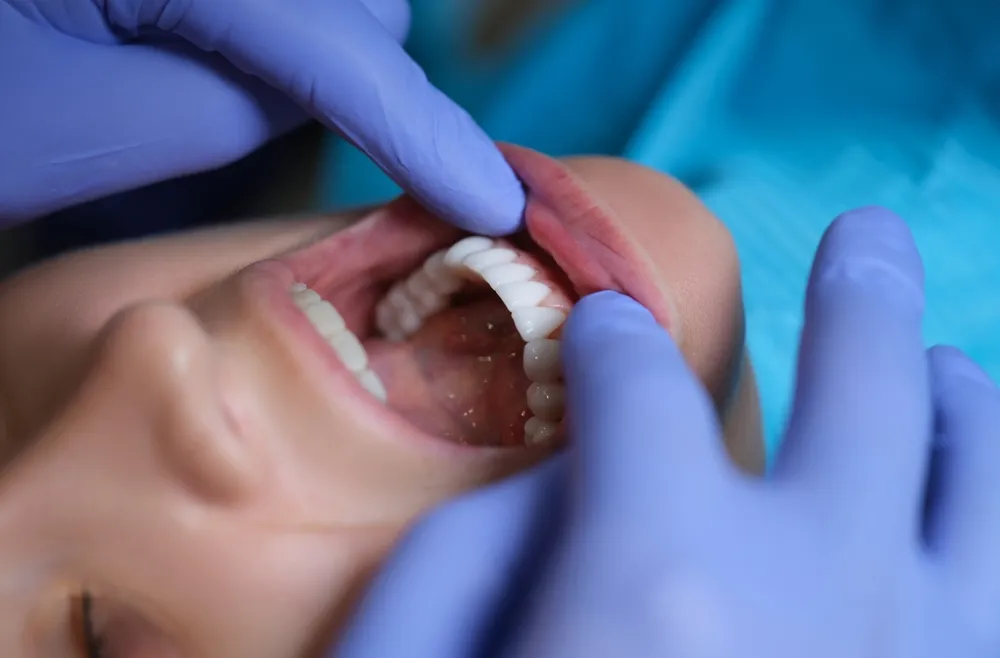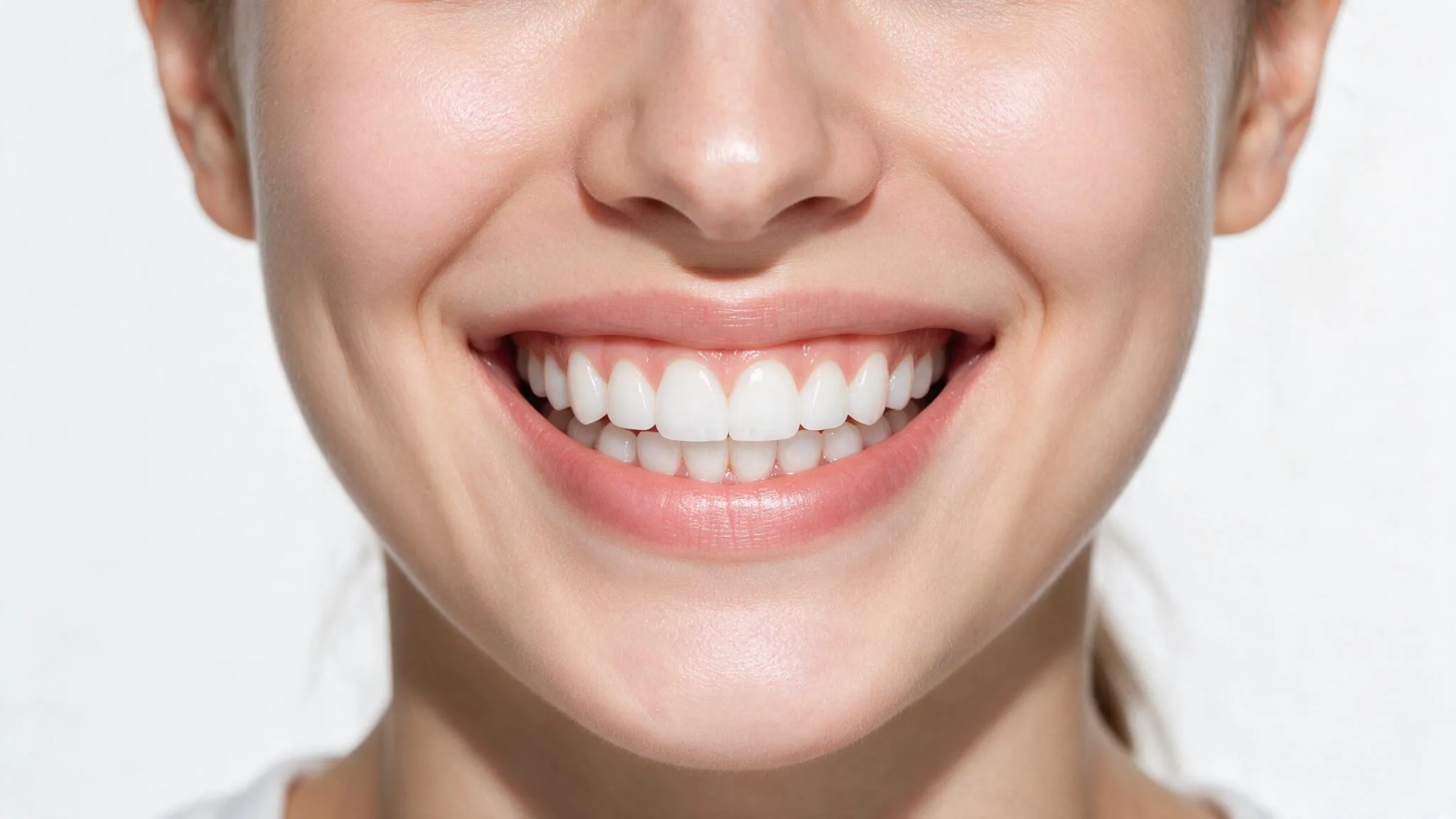
You need between 6 and 10 E.max veneers for most smile makeovers. The exact number depends on your smile width, visible teeth, facial proportions, tooth condition, bite, and aesthetic goals. No single number fits every patient.
A smile makeover transforms your appearance. It improves tooth color, shape, and alignment. But many patients ask the same question at the start: how many E.max veneers do I actually need? The answer surprises many people. You do not need veneers on every visible tooth. You need veneers on the teeth that require aesthetic change. The smile zone defines which teeth show when you smile. Your dentist evaluates this zone during planning. Some patients show 6 teeth. Others show 10 or more. Your individual anatomy drives the final count. This article explains every factor that determines your ideal E.max veneer number.
What Are E.max Veneers?
E.max veneers are thin ceramic shells that dentists bond to the front surfaces of teeth. They improve color, shape, and alignment. The term E.max refers to IPS e.max, a lithium disilicate glass-ceramic material manufactured by Ivoclar Vivadent.
What Is E.max as a Lithium Disilicate Ceramic?
IPS e.max is a lithium disilicate glass-ceramic system. It contains lithium disilicate crystals embedded in a glassy matrix. This composition gives the material both strength and beauty. Researchers tested lithium disilicate materials in multiple studies. They found that IPS e.max CAD reached a flexural strength of 364.64 MPa. IPS e.max Press reached 249.59 MPa. Both values exceed the ISO 6872 requirements for clinical use (Fawakhiri et al. 2023).
The optical properties of E.max stand out. The material comes in multiple translucency levels. These include high translucency, medium translucency, low translucency, and medium opacity. Lithium disilicate achieves its translucency through a matching refractive index between the crystalline and glassy phases. This property allows light to pass through the veneer much like it passes through natural enamel. The result is a restoration that looks alive, not flat or artificial.
How Do E.max Veneers Differ From Conventional Porcelain Veneers?
E.max veneers differ from conventional porcelain veneers in several important ways. The table below compares these two options.
Feature | E.max Veneers | Conventional Porcelain Veneers |
Material | Lithium disilicate glass-ceramic | Feldspathic porcelain |
Flexural strength | 360-380 MPa | 60-100 MPa |
Minimum thickness | 0.3 mm | 0.5-0.7 mm |
Tooth preparation | Conservative, minimal enamel removal | More extensive reduction |
Translucency | Excellent, multiple levels | Good, limited levels |
High survival rates at 10+ years | Moderate, more prone to fracture | |
Fabrication | Pressable or CAD/CAM | Hand-layered or pressed |
E.max offers superior strength. This allows thinner restoration designs. Thinner veneers mean less tooth preparation. Less preparation preserves more natural enamel. The bonding of E.max to enamel creates a strong adhesive connection. This connection contributes directly to long-term success (Klein et al. 2024).
What Is the Difference Between E.max Veneers and E.max Crowns?
E.max veneers cover primarily the facial surface of the tooth. They may extend slightly onto the incisal edge. E.max crowns provide full-coverage restoration. They encase the entire tooth structure above the gumline.
A healthy tooth that can receive a veneer should not automatically receive a crown. Veneers preserve more natural tooth structure. They require less aggressive preparation. Crowns remove significantly more enamel and dentin. Dentists reserve crowns for teeth with extensive damage, large fillings, or structural compromise. If your tooth is healthy and only needs aesthetic improvement, a veneer represents the more conservative choice.
What Determines How Many E.max Veneers You Need?
Several factors determine your ideal E.max veneer count. Your dentist evaluates each factor during the planning phase.
How Many Teeth Show When You Smile?
The smile zone includes all teeth visible during smiling and speaking. Most patients show approximately 6 to 10 upper teeth when they smile naturally. Some patients display fewer teeth. Others display more. A wider smile increases the required veneer count.
Dentists examine both your natural smile and your forced smile. The forced smile reveals the maximum number of visible teeth. Van der Geld et al. found that top lip-line crests in spontaneous smiling are greater than in posed smiles. The amount of maxillary front teeth exposed decreases significantly from spontaneous smiles to posed smiles. Videographic techniques enable accurate reproduction of the spontaneous smile for diagnostic purposes (Van der Geld et al. 2007). Your dentist needs to see the full range of tooth display before deciding how many veneers to place.
How Do Smile Width and Facial Proportions Affect Veneer Count?
Your facial proportions directly influence veneer planning. Dentists assess tooth-to-tooth symmetry. They consider your facial midline, lip line, tooth proportions, and overall facial harmony.
The golden ratio guides many smile designs. The apparent width of the lateral incisor should equal approximately 65% of the apparent width of the central incisors. The canines measure about three quarters of the width of the maxillary incisors in highly aesthetic smiles. Your arch width ratio also matters. Attractive smiles typically show an arch width ratio between 59% and 75%. The average ratio sits at 66% (Duggal 2012).
If your smile is narrow, fewer veneers may suffice. If your smile is broad and shows many teeth, your dentist may recommend more veneers to maintain symmetry.
What Cosmetic Goals Drive the Number of Veneers?
Your personal goals shape the treatment plan. Minor aesthetic correction requires fewer veneers. Complete smile transformation requires more.
Consider what you want to change. Do you want whiter teeth? Do you want to fix chipped edges? Do you want to close gaps? Do you want to change tooth shape or length? Do you want to improve alignment? Each goal affects the veneer count.
If you want a uniform shade across your entire visible smile, your dentist must treat every tooth in the smile zone. If you only want to fix two chipped front teeth, you may need just 2 veneers. More extensive aesthetic changes require treatment of more teeth.
What Condition Are Your Adjacent Natural Teeth In?
Your dentist evaluates neighboring teeth carefully. They look for discoloration, chipping, wear, irregular shape, gaps, and mild alignment problems.
Creating a natural transition between E.max veneers and untreated teeth is essential. If your adjacent natural teeth are dark, stained, or worn, a single bright veneer will stand out. The contrast will look artificial. In these cases, your dentist may recommend treating additional teeth to create a seamless blend.
If your adjacent teeth are healthy and match your desired shade, fewer veneers can work. The condition of your natural enamel determines how easily your dentist can achieve shade harmony.
How Does Your Bite Influence Veneer Planning?
Your bite relationship influences veneer planning significantly. Dentists evaluate how your upper and lower teeth meet. They check for excessive biting forces. They look for signs of bruxism or clenching.
Granell-Ruíz et al. studied 323 veneers placed in 70 patients. They found that bruxism activity significantly increased the risk of failure. Of the 13 fractures and 29 debonding incidents observed, 8 fractures and 22 debonding cases were related to bruxism. The researchers concluded that occlusal splints reduce the risk of fractures in bruxism patients (Granell-Ruíz et al. 2014).
Your dentist must assess your functional bite before placing veneers. If you have a destructive bite pattern, your dentist may need to modify the treatment plan. They may recommend fewer veneers. They may recommend a nightguard. They may address the bite issue first.
How Many E.max Veneers Are Commonly Used for a Smile Makeover?
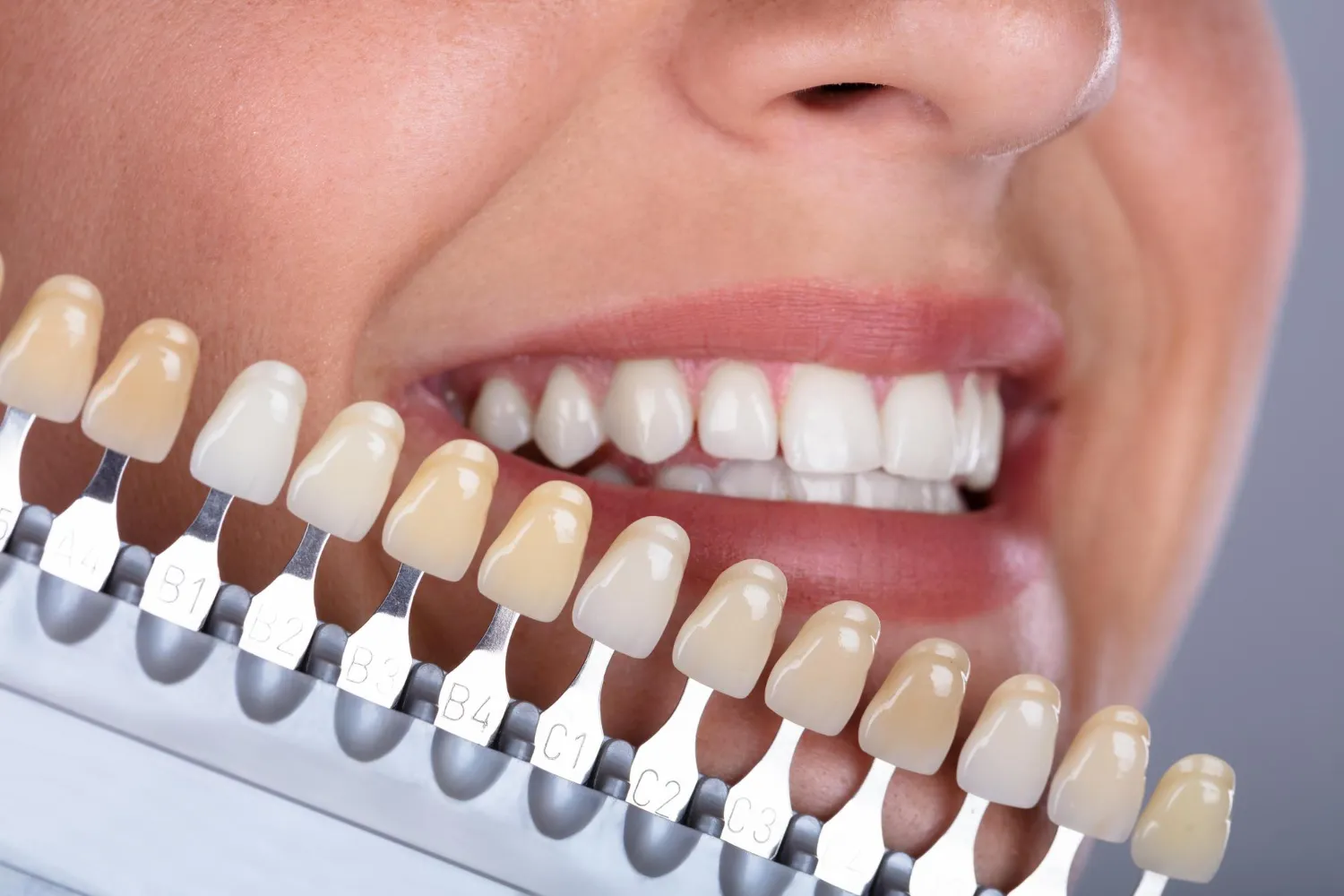
Dentists use different veneer counts depending on the clinical situation. The following sections explain each common configuration.
Can 1–2 E.max Veneers Fix Your Smile?
Yes, 1–2 E.max veneers work well for isolated cosmetic defects. One chipped, stained, or malformed front tooth responds excellently to a single veneer.
However, matching a single veneer to natural enamel presents a challenge. Natural teeth contain multiple shades and translucency levels. A single ceramic veneer must replicate this complexity. Your dentist must select the shade carefully. The laboratory must fabricate the veneer with precise optical properties. When done correctly, a single veneer blends beautifully. When done poorly, it stands out.
Are 4 E.max Veneers Enough?
Four E.max veneers focus on the central incisors. This approach works for limited changes involving the most prominent front teeth.
Four veneers can improve the teeth that people notice first. But this approach carries a risk. The lateral incisors and canines remain untreated. If these adjacent teeth differ in shade or shape, the transition may become visible. Your dentist must evaluate whether four veneers can create a harmonious result or whether the contrast with neighboring teeth will undermine the aesthetic outcome.
What Does a 6 E.max Veneer Makeover Cover?
Six E.max veneers cover the six most visible upper anterior teeth. This typically includes the central incisors, lateral incisors, and canines.
This approach can create a balanced smile for many patients. Six veneers treat the teeth that show during normal conversation and moderate smiling. However, some patients show additional teeth during broad smiling. If your premolars become visible when you laugh, six veneers may leave a visible transition between treated and untreated teeth.
Why Do 8 E.max Veneers Represent a Standard Smile Zone?
Eight E.max veneers cover the teeth from canine to canine. This configuration represents one of the most common smile makeover options.
Eight veneers create symmetry and balanced coverage. They treat the entire anterior segment. This approach works well for patients with average smile width. It reduces the risk of visible transitions. But eight veneers are not a universal standard. Your individual smile width and tooth display determine whether this number suits you.
When Do 10 E.max Veneers Become Necessary?
Ten E.max veneers extend treatment toward the premolars. This option suits patients with a wider smile.
If your smile reveals your first premolars, treating only eight teeth may create a noticeable boundary. The untreated premolars may look darker or shorter. Ten veneers broaden coverage. This reduces visible transitions between treated and untreated teeth. Your dentist evaluates your maximum smile to determine if premolar visibility justifies this extended approach.
Who Needs 12 or More E.max Veneers?
Some patients require 12 or more E.max veneers. This applies to patients with very wide smiles and extensive cosmetic goals.
If your smile shows teeth far back into your premolar region, broader coverage makes sense. If you have extensive discoloration across many teeth, treating more teeth creates uniform shade. But increasing veneer count should always have a clear clinical and aesthetic rationale. Your dentist should not recommend more veneers simply to increase treatment scope. Each veneer should serve a specific purpose.
What Is the 4–8–10 Veneer Planning Concept?
The 4-8-10 framework serves as a planning guideline, not a fixed clinical rule. Four veneers treat the central incisors. Eight veneers cover canine-to-canine. Ten veneers extend toward the premolars. Some patients may need 12 veneers.
This framework helps dentists and patients discuss treatment options. It provides a starting point for conversation. But the visible smile and individual anatomy determine the final number. Your dentist should not force your treatment into a predetermined category. They should customize the plan to your specific needs.
Do You Need E.max Veneers on Both Upper and Lower Teeth?
Most smile makeovers focus on the upper teeth. But some patients benefit from lower veneers too.
Why Do Most Smile Makeovers Start With Upper Teeth?
Upper anterior teeth show more during smiling and speaking. They receive more visual attention. Upper-only treatment often provides a complete aesthetic change.
When you smile, your upper teeth dominate the frame. Your lower teeth hide behind your lower lip during most social interaction. For this reason, dentists typically address the upper arch first. Many patients achieve their desired result without treating the lower teeth at all.
When Should You Consider Lower E.max Veneers?
Lower E.max veneers become appropriate in specific situations. Consider lower veneers if your lower teeth show significantly during smiling. Consider them if you have lower tooth discoloration or wear. Consider them if you need improved shade harmony between arches. Consider them if you want a comprehensive smile transformation.
Your dentist evaluates lower tooth visibility during speech and smiling. If your lower teeth compete for attention, treating them may improve overall balance.
What Are the Alternatives to Lower Veneers?
Professional teeth whitening offers an excellent alternative. Whitening lightens lower teeth without removing enamel. Minor enamel reshaping can improve lower tooth contours where clinically appropriate. Composite bonding repairs limited imperfections on lower teeth.
These alternatives preserve tooth structure. They cost less than veneers. They may provide sufficient improvement without the need for ceramic restorations.
When Are Fewer E.max Veneers the Better Choice?
Fewer veneers preserve healthy natural tooth structure. They avoid unnecessary preparation. They maintain a natural transition between ceramic and enamel. They treat only teeth that require aesthetic correction.
The smallest appropriate treatment sometimes produces the most natural result. Every veneer requires some enamel removal. Even minimal preparation removes irreplaceable tooth structure. If your adjacent teeth are healthy and attractive, leaving them untouched makes sense.
Gurel et al. demonstrated that enamel preservation directly affects veneer survival. Their research showed that veneers bonded primarily to enamel demonstrate higher long-term success rates than those extending onto dentin. Preserving enamel should guide every treatment decision (Gurel et al. 2013).
Smielak et al. conducted a prospective comparative analysis over 9 years. They found that no-prep and minimally invasive veneers achieved a 100% survival rate. Conventional veneers showed only 9.67% survival over the same period. The mean success period was 10.28 years for minimally invasive veneers versus 9.32 years for conventional veneers (Smielak et al. 2022). These findings support conservative approaches.
When Does a Larger Number of E.max Veneers Work Better?
More veneers make sense when you have extensive discoloration across the smile. They help when you have multiple chipped or worn teeth. They improve situations with significant differences in tooth shape or length. They benefit patients with broad smiles and many visible teeth. They serve patients who desire uniform shade throughout the smile. They address cases where multiple adjacent teeth require aesthetic correction.
If your natural teeth vary widely in color or condition, treating only a few teeth may create a patchwork appearance. In these cases, broader coverage produces a more cohesive result.
How Do Dentists Determine Your Ideal E.max Veneer Count?
Your dentist follows a systematic process to determine your ideal veneer count. This process combines clinical examination, functional assessment, and digital planning.
What Happens During a Comprehensive Dental Examination?
Your dentist assesses your teeth, enamel, gums, existing restorations, and overall oral health. They identify caries and periodontal disease before cosmetic treatment. They examine each tooth for structural integrity. They evaluate your gum tissue for health and symmetry.
This examination reveals which teeth can support veneers. It identifies teeth that need alternative treatment. It establishes the foundation for aesthetic planning.
Why Does Bite Assessment Matter?
Your dentist evaluates your occlusion. They check for bruxism, clenching, and excessive functional forces. They analyze how your teeth contact during chewing and at rest.
Bite assessment prevents future veneer failure. If your bite places excessive stress on certain teeth, your dentist may modify the veneer design. They may recommend a protective nightguard. They may suggest orthodontic adjustment before veneer placement.
How Does Digital Smile Design Help?
Digital Smile Design uses digital scans, photographs, and smile simulations. It assesses tooth proportions and the relationship between the teeth and face. It previews different veneer configurations before definitive treatment.
Ortensi et al. evaluated the accuracy of digital planning for customized veneers. They found that final composite customized veneers were comparable with 2D and 3D plans, confirming the clinical adequacy of the final prosthetic pieces. Digital planning enables predictable outcomes (Ortensi et al. 2022).
Verniani et al. conducted a randomized controlled clinical trial comparing digital and hybrid workflows for lithium disilicate veneers. They found no statistically significant differences between the two groups after follow-up assessments. Both digital and hybrid workflows produce reliable results (Verniani et al. 2024).
Digital Smile Design lets you see your future smile. You can evaluate different tooth shapes, sizes, and arrangements. You can provide feedback before any tooth preparation begins. This technology improves communication between you, your dentist, and the dental laboratory.
What Is Shade and Tooth-Proportion Analysis?
Your dentist selects veneer shade according to your surrounding teeth and desired aesthetic outcome. They evaluate tooth width-to-length ratios and symmetry.
Natural central incisors typically show a width-to-length ratio near 75% to 80%. Lateral incisors are smaller. Canines have specific proportions. Your dentist measures these ratios. They plan veneers that harmonize with your facial features. They avoid oversized or undersized restorations.
What Is a Mock-Up and Try-In?
A diagnostic mock-up helps assess the proposed number, shape, and size of veneers. Your dentist creates a temporary version of your new smile. You wear this mock-up for a short period. You evaluate the appearance in real life. You test function during speaking and eating.
The mock-up allows modifications before final fabrication. You can request changes to tooth length or shape. Your dentist can adjust the plan based on your feedback. This step reduces surprises and increases satisfaction.
How Does E.max Veneer Count Affect Natural-Looking Results?
Excessive or insufficient coverage affects aesthetic harmony. Too few veneers may leave untreated teeth visible. Too many veneers may remove healthy enamel unnecessarily.
Shade matching between E.max veneers and natural enamel requires careful attention. E.max offers excellent translucency, opalescence, and light reflection. But material quality alone does not determine the final result. The dentist's preparation design, the laboratory's fabrication technique, and the cementation protocol all contribute to the outcome.
When your dentist plans the correct number of veneers, the transition between ceramic and natural tooth becomes invisible. Your smile looks unified. Your teeth look like they belong together.
Does More E.max Veneers Always Mean a Better Smile?
No, veneer quantity does not automatically improve the outcome. More veneers do not guarantee a better smile. Balance matters more than count.
Your dentist should weigh aesthetic goals against tooth preservation. They should treat only clinically and aesthetically justified teeth. Individualized smile design always beats a predetermined veneer count. A skilled dentist creates beauty through precision, not through volume.
What Factors May Affect E.max Veneer Suitability?
Not every patient qualifies for E.max veneers. Several conditions may require alternative treatment.
Can Active Tooth Decay Prevent Veneer Placement?
Yes, active tooth decay must receive treatment first. Your dentist must remove decay and restore the tooth before placing any veneer. A veneer placed over decay will fail. The decay will progress underneath the ceramic.
Does Untreated Gum Disease Affect Veneer Candidacy?
Yes, untreated gum disease compromises veneer success. Inflamed gums bleed. They recede. They create uneven margins. Your dentist must establish periodontal health before cosmetic treatment. Healthy gums frame beautiful veneers.
What Happens If You Have Insufficient Enamel?
Veneers bond best to enamel. If your teeth lack sufficient enamel, the adhesive connection weakens. This increases the risk of debonding. Your dentist may recommend crowns instead. Crowns grip the tooth through mechanical retention, not just adhesive bonding.
How Does Severe Bruxism Impact Veneer Success?
Severe bruxism significantly increases veneer failure risk. Grinding and clenching generate forces far beyond normal chewing. These forces crack ceramic. They break adhesive bonds.
Research confirms this risk. Studies show that bruxism patients experience more fractures and debonding. Nightguards reduce but do not eliminate this risk. If you have uncontrolled bruxism, your dentist may recommend alternative treatments (Granell-Ruíz et al. 2014).
Can Significant Malocclusion Rule Out Veneers?
Yes, significant malocclusion may require orthodontic treatment first. If your teeth are severely crowded or misaligned, placing veneers may require excessive tooth reduction. Orthodontics moves teeth into better positions. This allows more conservative veneer preparation later.
What If Your Teeth Are Heavily Damaged?
Heavily damaged or structurally compromised teeth need crowns, not veneers. Crowns provide full coverage. They protect weakened tooth structure. Veneers only cover the facial surface. They cannot support a tooth with extensive loss.
How Long Do E.max Veneers Last and How Do You Maintain Them?
E.max veneers demonstrate excellent longevity. But no restoration lasts forever.
Klein et al. conducted a systematic review and meta-analysis of ceramic laminate veneers. They found that lithium disilicate veneers showed a 96.8% survival rate at 10.4 years. This makes lithium disilicate one of the most reliable materials for long-term veneer success (Klein et al. 2024).
Malchiodi et al. evaluated 79 lithium disilicate multilayered anterior veneers over three years. They reported a 98.7% survival rate. Only one restoration detached during the follow-up period (Malchiodi et al. 2019).
Imburgia et al. performed a retrospective study on 1075 lithium disilicate CAD/CAM veneers. They observed a 99.83% survival rate over an average period of 30.8 months. The restorations performed well in terms of color matching, ceramic surface, marginal discoloration, and integrity (Imburgia et al. 2021).
Nejatidanesh et al. studied chairside CAD/CAM lithium disilicate veneers over five years. They found a 97.8% survival rate. This confirms that CAD/CAM lithium disilicate offers high survival rates (Nejatidanesh et al. 2018).
Demirekin et al. conducted a retrospective study on IPS e.max Press veneers. They reported a remarkable 99.7% survival rate after 10 years. This data supports the long-term reliability of pressed lithium disilicate restorations (Demirekin et al. 2022).
Beier et al. analyzed porcelain laminate veneers for up to 20 years. Their data showed cumulative survival rates of 96% at 10 years and 91% at 15 years. Well-placed ceramic veneers can last well beyond 15 years with proper care (Beier et al. 2012).
Alghazzawi reviewed clinical survival rates and laboratory failures of dental veneers in a narrative literature review. The analysis confirmed that ceramic veneers outperform composite veneers in long-term survival. Ceramic veneers showed lower annual failure rates compared to direct composite restorations (Alghazzawi 2024).
You maintain E.max veneers through excellent oral hygiene. Brush twice daily. Floss between veneers and natural teeth. Visit your dentist for regular examinations and cleanings. Avoid biting hard objects. Do not use your teeth as tools. If you grind your teeth, wear a nightguard consistently.
Veneers may eventually require replacement. This is normal. Plan for long-term maintenance. Budget for future replacement.
Does the Number of E.max Veneers Affect the Total Cost?
Yes, treatment cost generally increases with the number of restorations. Each veneer requires laboratory fabrication time. Each veneer requires clinical preparation and cementation. Each veneer requires materials.
But comparing treatment solely by price per veneer misleads patients. You must evaluate the material quality, laboratory craftsmanship, dentist expertise, preparation approach, and treatment plan. A cheap veneer placed poorly costs more over time. It may fail. It may damage your tooth. It may require replacement sooner.
Invest in quality. Choose experienced dentists and reputable laboratories. The initial investment pays dividends through longevity and aesthetics.
What Is the Quick Decision Guide for E.max Veneer Count?
The table below provides general planning examples. These ranges help you understand typical configurations. They do not represent fixed treatment recommendations. Your dentist determines your final number after examination.
Treatment Goal | Typical Number | Main Purpose |
Single-tooth correction | 1–2 | Repair or improve isolated defects |
Limited front-tooth makeover | 4 | Improve central incisors |
Anterior smile enhancement | 6 | Cover highly visible upper teeth |
Standardized smile-zone makeover | 8 | Create canine-to-canine symmetry |
Wider smile makeover | 10 | Extend coverage toward premolars |
Extensive smile transformation | 12+ | Cover a broader visible smile |
How Many E.max Veneers Do You Really Need?
You really need the smallest number that achieves your desired aesthetic and functional result while preserving healthy tooth structure. Most smile makeovers involve approximately 6 to 10 upper veneers. But the appropriate number varies according to your smile width, visible teeth, facial proportions, tooth condition, bite, and aesthetic objectives.
Your dentist determines the final number after a comprehensive examination and smile-design assessment. Conservative treatment preserves healthy natural tooth structure. This principle should guide every decision.
What Are the Most Common Questions About E.max Veneers?
Patients ask many questions about E.max veneers. The following answers address the most common concerns.
How many E.max veneers are usually needed for a full smile makeover?
Most full smile makeovers use 6 to 10 upper veneers. Individual variation is significant. Your dentist evaluates your specific smile to recommend the right number.
Are 4 E.max veneers enough for a smile makeover?
Four veneers can produce an effective result when you only need central incisor improvement. But four veneers may create visible transitions if your adjacent teeth differ in shade or shape.
Is 8 E.max veneers a full smile makeover?
Eight veneers cover canine-to-canine. This represents a common smile-zone approach. But it has limitations for wider smiles. If your premolars show, you may need more.
Do I need 10 E.max veneers for a wide smile?
If your premolars are visible during smiling, extending coverage to 10 veneers may improve harmony. Your dentist evaluates premolar visibility during your examination.
Do I need E.max veneers on my lower teeth?
Lower veneers contribute when lower teeth show significantly or when lower tooth discoloration disrupts overall harmony. Many patients achieve excellent results with upper veneers only.
Can I get only one E.max veneer?
Yes, single veneers work for isolated defects. Shade and shape matching become critical. Your dentist and laboratory must replicate the optical properties of your natural enamel precisely.
Are E.max veneers better than traditional porcelain veneers?
E.max offers higher strength, thinner design, and excellent translucency. Traditional feldspathic porcelain offers beautiful aesthetics but lower durability. Neither material is universally superior. Your dentist selects the material based on your specific case.
How long do E.max veneers last?
Clinical studies report survival rates of 96% to 99% over 5 to 10 years. Longevity depends on oral hygiene, bite forces, and maintenance. Veneers may last 15 years or longer with proper care.
Can E.max veneers look natural?
Yes, E.max veneers look natural when properly planned and fabricated. Translucency, shade selection, tooth morphology, and professional fabrication all contribute to a lifelike result.
Can you get E.max veneers without shaving your teeth?
Minimal-preparation and no-prep veneers exist. But suitability depends on tooth position, enamel thickness, and the planned restoration. Most cases require at least minimal enamel reduction to achieve optimal aesthetics and fit.
What Is the Final Word on E.max Veneer Count?
The ideal number of E.max veneers depends on your unique smile. There is no universal number that fits every patient. Your smile width, tooth display, facial proportions, cosmetic goals, and oral health all influence the decision.
Remember this principle: the ideal number is the smallest number that achieves the desired aesthetic and functional result while preserving healthy tooth structure. Work with a qualified dentist. Demand digital planning. Request a mock-up. Ask questions. Your smile deserves personalized attention, not a one-size-fits-all approach.
References
Alghazzawi, Tariq F. "Clinical Survival Rate and Laboratory Failure of Dental Veneers: A Narrative Literature Review." Journal of Functional Biomaterials, vol. 15, 2024, pp. 131.
Beier, Ulrike S., et al. "Clinical Performance of Porcelain Laminate Veneers for up to 20 Years." International Journal of Prosthodontics, vol. 25, no. 1, 2012, pp. 79-85.
Demirekin, Zeynep, et al. "Retrospective Clinical Study on IPS e.max Press Veneers." Journal of Esthetic and Restorative Dentistry, 2022.
Duggal, Sonia. "The Esthetic Zone of Smile." Virtual Journal of Orthodontics, vol. 9, no. 4, 2012, pp. 10-22.
Fawakhiri, Hiba A., et al. "A 3-year Controlled Clinical Trial Comparing High-Translucency Zirconia (Cubic Zirconia) with Lithium Disilicate Glass Ceramic (e.max)." Clinical and Experimental Dental Research, vol. 9, no. 6, 2023, pp. 1078-1088.
Granell-Ruíz, María, et al. "Influence of Bruxism on Survival of Porcelain Laminate Veneers." Medicina Oral, Patología Oral y Cirugía Bucal, vol. 19, no. 5, 2014, pp. 426-432.
Gurel, Galip, et al. "Influence of Enamel Preservation on Failure Rates of Porcelain Laminate Veneers." International Journal of Periodontics and Restorative Dentistry, vol. 33, no. 1, 2013, pp. 31-39.
Imburgia, Mario, et al. "A Retrospective Clinical Study on 1075 Lithium Disilicate CAD/CAM Veneers with Feather-Edge Margins Cemented on 105 Patients." European Journal of Prosthodontics and Restorative Dentistry, vol. 29, 2021, pp. P54-P63.
Klein, Petra, et al. "Survival and Complication Rates of Feldspathic, Leucite-Reinforced, Lithium Disilicate and Zirconia Ceramic Laminate Veneers: A Systematic Review and Meta-Analysis." Journal of Esthetic and Restorative Dentistry, 2024.
Malchiodi, Luca, et al. "Clinical and Esthetical Evaluation of 79 Lithium Disilicate Multilayered Anterior Veneers with a Medium Follow-Up of 3 Years." European Journal of Dentistry, vol. 13, 2019, pp. 581-588.
Nejatidanesh, Faramarz, et al. "Five Year Clinical Outcomes and Survival of Chairside CAD/CAM Ceramic Laminate Veneers - A Retrospective Study." Journal of Prosthodontic Research, vol. 62, 2018, pp. 462-467.
Ortensi, Luca, et al. "Digital Planning of Composite Customized Veneers Using Digital Smile Design: Evaluation of Its Accuracy and Manufacturing." Clinical and Experimental Dental Research, vol. 8, 2022, pp. 537-543.
Smielak, Katarzyna, et al. "A Prospective Comparative Analysis of the Survival Rates of Conventional vs No-Prep/Minimally Invasive Veneers over a Mean Period of 9 Years." Journal of Dentistry, 2022.
Van der Geld, Paul, et al. "Smile Attractiveness: Self-perception and Influence on Personality." The Angle Orthodontist, vol. 77, no. 5, 2007, pp. 759-765.
Verniani, G., et al. "A Randomized Controlled Clinical Trial on Lithium Disilicate Veneers Manufactured by the CAD–CAM Method: Digital Versus Hybrid Workflow." Prosthesis, vol. 6, 2024, pp. 329-340.