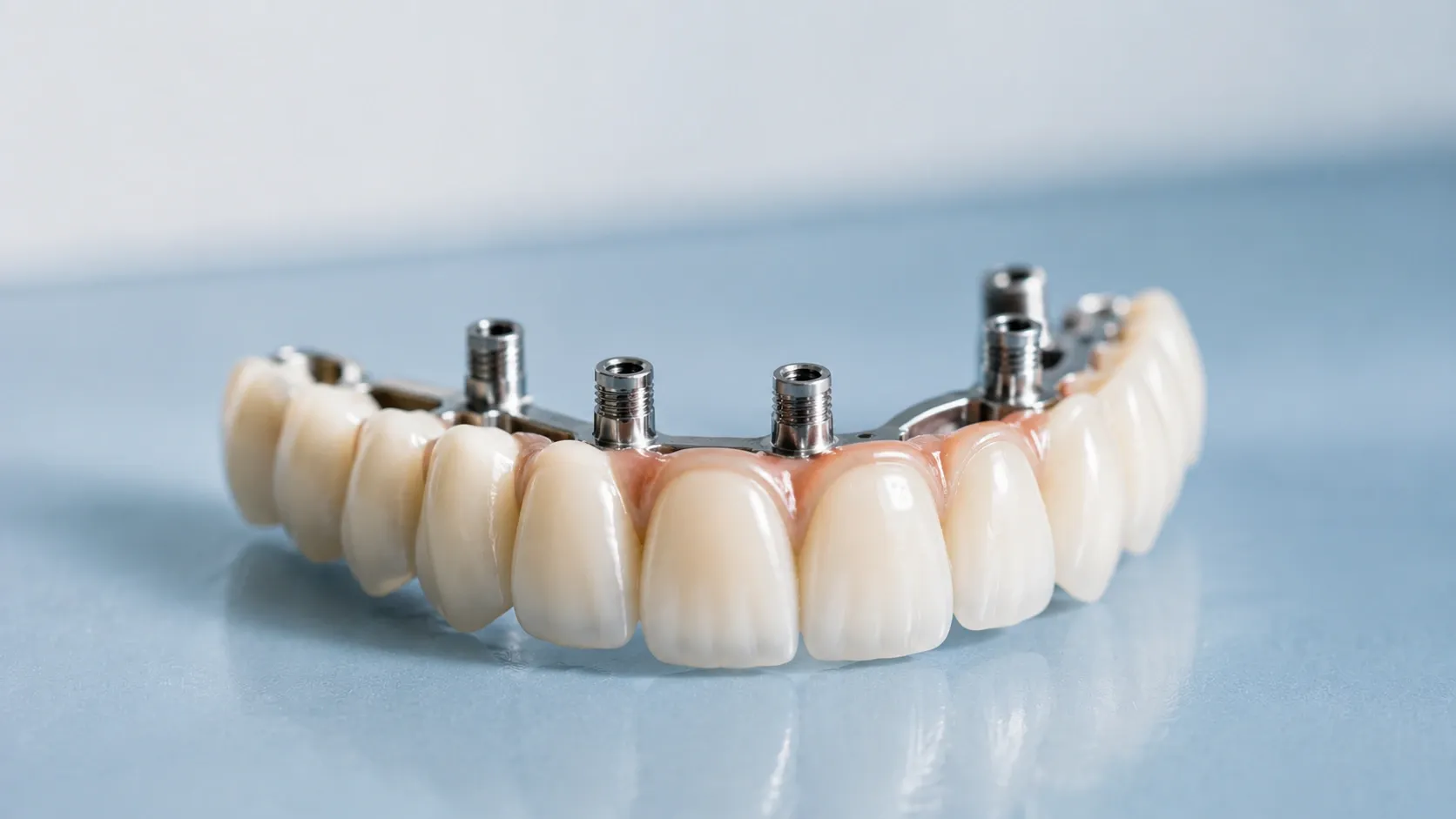
Subperiosteal implants give patients with severe jawbone loss a reliable full-arch restoration option in Turkey.
Modern implant dentistry in Turkey leads the global market. Thousands of international patients travel to Istanbul, Izmir, and Antalya every year. They seek solutions for advanced bone atrophy. Many patients lack sufficient bone for conventional endosteal implants. Surgeons now offer subperiosteal implants as a powerful alternative. These custom frameworks sit on top of the jawbone. They rest beneath the periosteum. This design eliminates the need for deep bone insertion. Turkey has become a global destination for complex implantology. Turkish clinics combine advanced digital technology with experienced maxillofacial surgeons. They deliver patient-specific implants at competitive prices. Patients with severe bone resorption now avoid lengthy grafting procedures. They receive fixed teeth faster. Subperiosteal implants differ from conventional implants. They also differ from zygomatic implants. Each system serves a specific clinical need. Turkey excels in all three approaches.
What Is a Subperiosteal Implant?
A subperiosteal implant sits on top of the jawbone and under the gum tissue. It supports replacement teeth without deep bone insertion.
How Did Subperiosteal Implants Evolve Over Time?
These implants evolved from hand-cast metal frameworks to precision 3D-printed structures through digital technology.
Leonard Linkow introduced the original subperiosteal implant in the 1940s (Linkow 1982). Early surgeons created these implants by hand. They used wax impressions of the exposed jawbone. They cast metal frameworks from cobalt-chromium alloys. This process required extensive surgery and long healing times. The results varied. Digital technology transformed this field. Modern surgeons use CBCT scans and intraoral scanners. They design frameworks with CAD/CAM software. They print or mill implants from titanium or cobalt-chromium. This evolution improved accuracy. It reduced surgical trauma. It shortened treatment timelines. Golec and Hartman (2020) note that CAD/CAM technology now produces subperiosteal frameworks with micron-level precision. Turkish clinics adopted this digital workflow early. They now rank among the most advanced centers for custom implant fabrication.
What Does a Subperiosteal Implant Look Like?
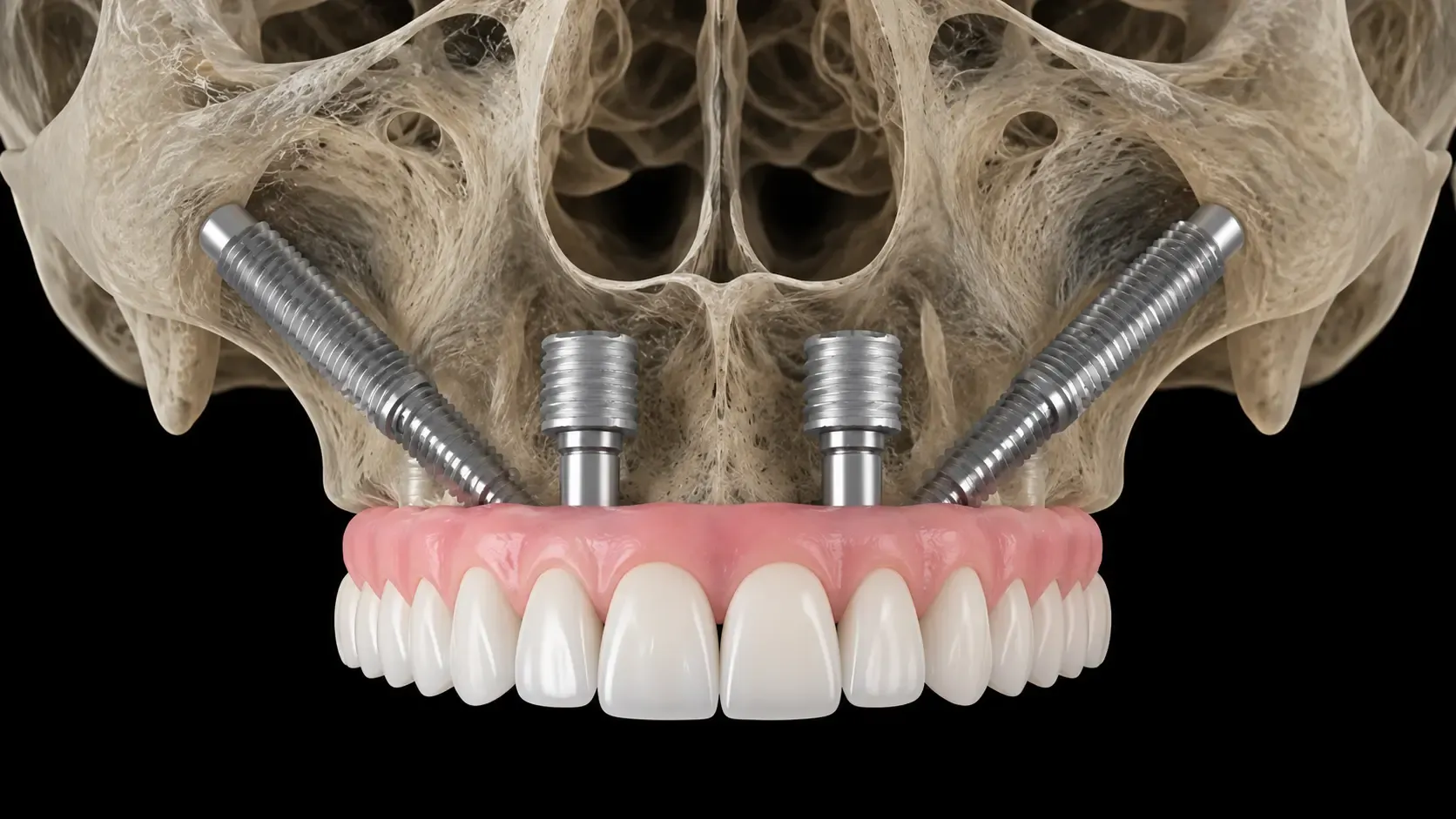
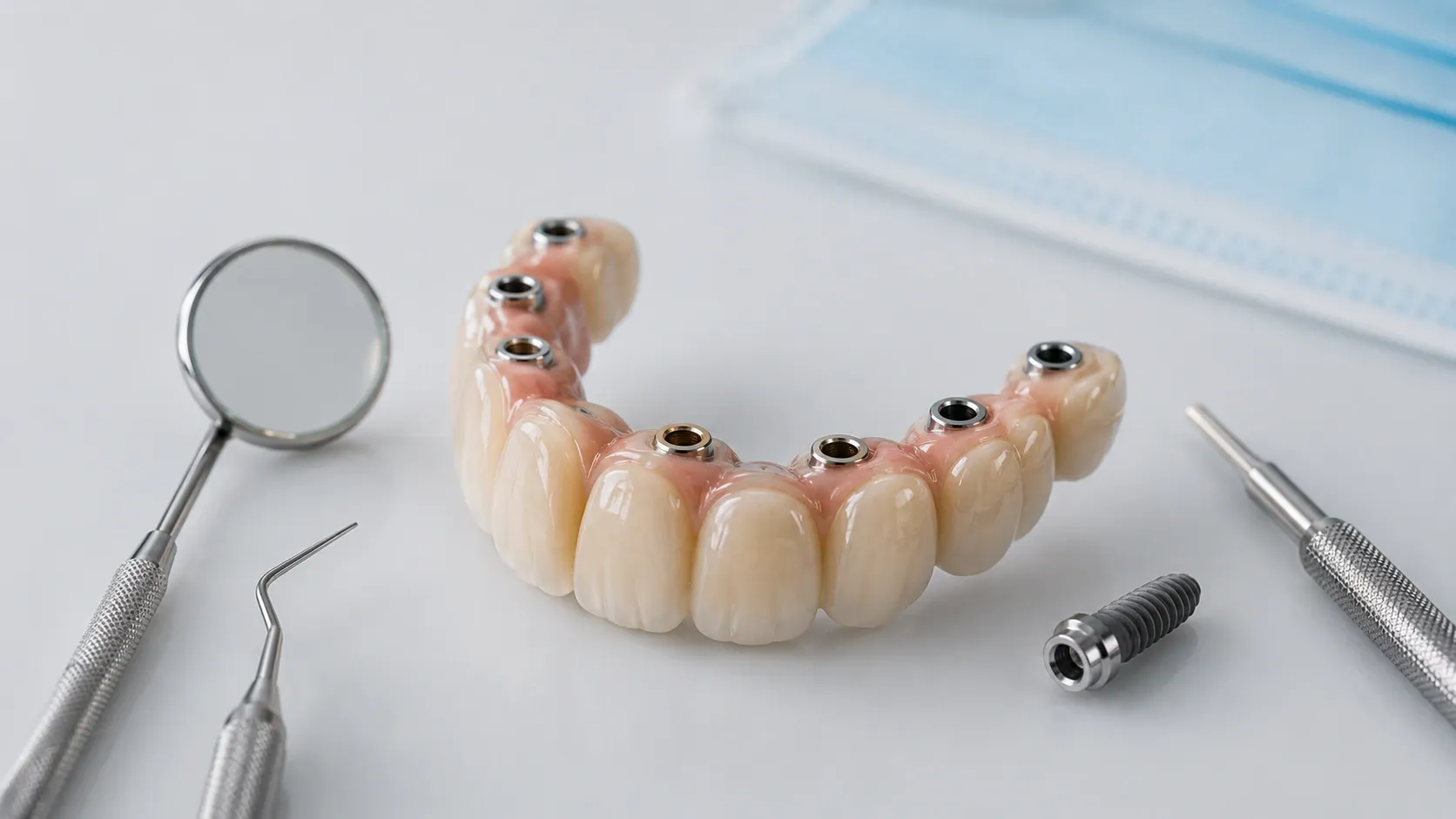
It features a custom metal framework that mirrors the patient's jaw ridge. It includes posts that protrude through the gums.
A subperiosteal implant consists of three main parts. The baseplate follows the exact contour of the jawbone. Small posts extend upward through the gum tissue. These posts anchor the final bridge or denture. Surgeons fabricate the framework from medical-grade titanium or cobalt-chromium. Titanium offers excellent biocompatibility. Cobalt-chromium provides superior strength for large spans. Modern clinics in Turkey use 3D printing to create these structures. The printer builds the implant layer by layer. This method produces a perfect fit. The periosteum covers the framework. This membrane supplies blood to the bone. It helps stabilize the implant naturally. Misch (2008) explains that the periosteum integrates with the framework surface. This creates a biological seal.
How Do Subperiosteal Implants Differ from Conventional Dental Implants?
Conventional implants enter the bone. Subperiosteal implants rest on the bone surface beneath the periosteum.
Endosteal implants screw directly into the jawbone. They require adequate bone height and width. Subperiosteal implants bypass this requirement. Surgeons place them on the bone surface. The periosteum holds them in place. Endosteal implants achieve primary stability through bone engagement. Subperiosteal implants achieve stability through tissue integration and mechanical design. The biomechanics differ. Endosteal implants transfer chewing forces directly into the bone. Subperiosteal implants distribute forces across a broader surface area. This reduces pressure points. It benefits patients with thin or soft bone. Brånemark et al. (1977) established osseointegration as the gold standard for endosteal implants. However, Jaffin and Berman (1991) showed that type IV bone often leads to endosteal implant failure. Subperiosteal implants solve this problem. They do not depend on bone density for success.
Table 1: Key Differences Between Implant Types
Feature | Endosteal Implant | Subperiosteal Implant | Zygomatic Implant |
Placement site | Inside the jawbone | On top of the jawbone | Through the maxilla into cheekbone |
Bone requirement | Moderate to high | Minimal | Moderate in maxilla |
Surgery complexity | Standard | Moderate | High |
Healing time | 3 to 6 months | 2 to 4 months | Immediate loading possible |
Best for | Single or multiple teeth | Severe bone atrophy | Severe upper jaw bone loss |
Sinus involvement | Sometimes requires lift | Avoids sinus | Engages the cheekbone |
Why Do Patients Choose Turkey for Subperiosteal Implants?
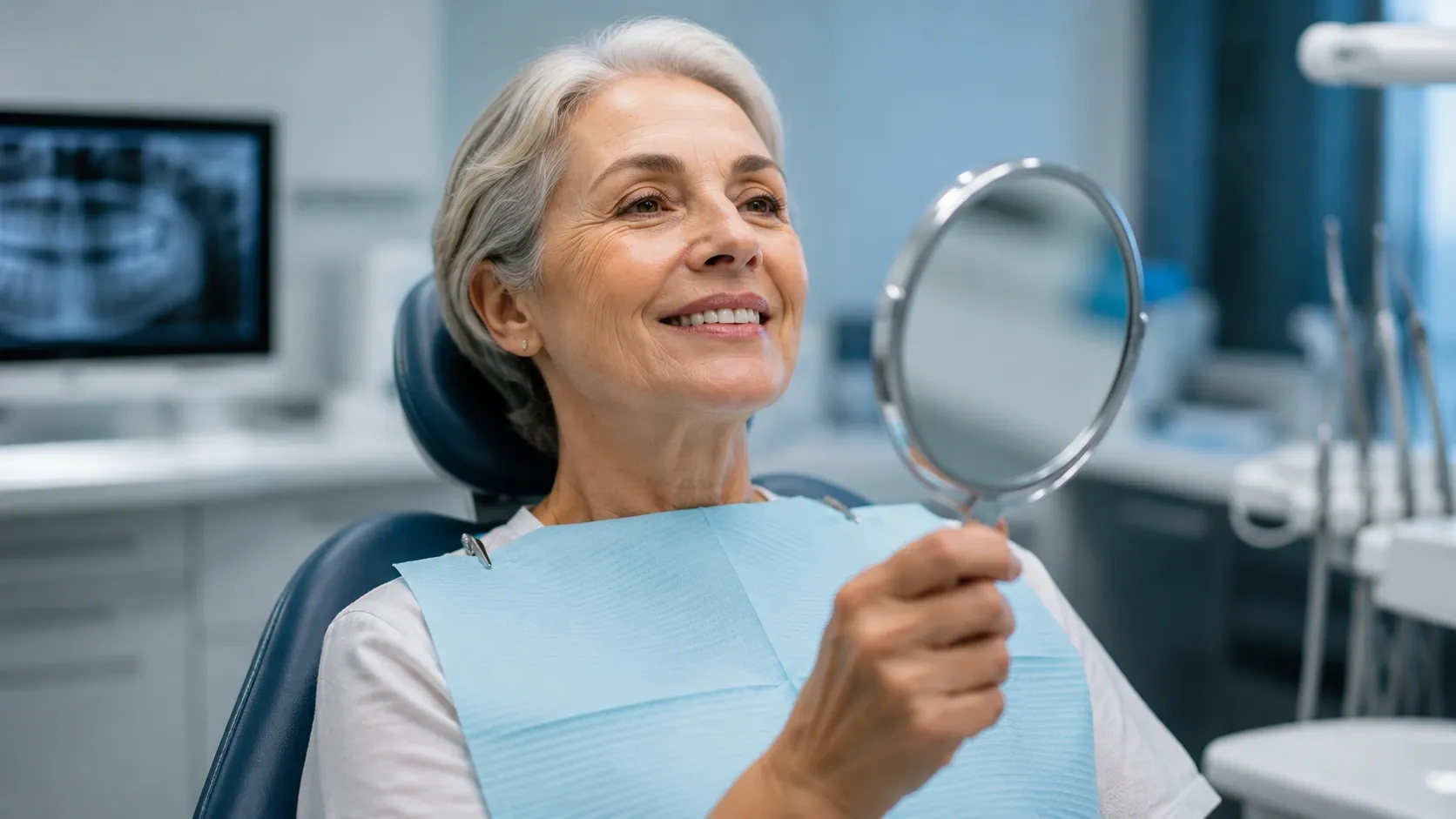
Turkey combines advanced digital dentistry, experienced surgeons, and affordable pricing for complex implant cases.
What Makes Turkey a Leading Dental Tourism Destination?
Turkish cities like Istanbul, Izmir, and Antalya welcome thousands of international patients yearly for complex implant procedures.
Turkey ranks among the top five global destinations for dental tourism. Istanbul alone hosts over 200,000 dental tourists annually. Patients arrive from the UK, Germany, France, the USA, and the Middle East. Turkish dental clinics invest heavily in infrastructure. They offer modern facilities that match or exceed European standards. The government supports medical tourism through streamlined visa processes and international accreditation programs. Patients receive comprehensive care in single locations. They do not need to visit multiple offices. This convenience attracts busy professionals. It also appeals to elderly patients who prefer minimal travel.
How Much Do Patients Save in Turkey Compared to Europe and the USA?
Patients typically save 60% to 70% on subperiosteal implant procedures while receiving equivalent or superior technology.
Subperiosteal implant treatment in the UK costs £12,000 to £20,000 per arch. In the USA, prices range from $15,000 to $30,000. German clinics charge €14,000 to €25,000. Turkish clinics offer the same treatment for $3,000 to $7,000 per arch. This price includes the custom framework, surgery, and prosthetic teeth. The lower cost reflects several factors. Turkey maintains lower operational expenses. Laboratory fees cost less. Currency exchange rates favor foreign patients. However, the quality remains high. Turkish technicians train with the same materials and software as their European counterparts. Patients receive identical titanium frameworks. They receive identical ceramic teeth.
What Advanced Technology Do Turkish Clinics Use?
Turkish implant centers employ CBCT imaging, CAD/CAM planning, and 3D printing for custom framework fabrication.
Turkish clinics invested in digital dentistry over the past decade. They use cone-beam computed tomography (CBCT) for 3D bone assessment. They capture digital impressions with intraoral scanners. They design implants with CAD/CAM software. They fabricate frameworks with 5-axis milling machines or metal 3D printers. Some centers use surgical simulation technology. This allows surgeons to practice the procedure virtually before surgery. Sclar (2003) emphasizes that digital planning improves predictability. It reduces human error. Turkish clinics also use guided surgery protocols. These guides direct drill placement during endosteal cases. For subperiosteal cases, the digital model ensures the framework matches the bone exactly.
What Qualifications Do Turkish Implant Surgeons Hold?
Leading Turkish surgeons hold international certifications in maxillofacial surgery and implantology.
Turkish implant surgeons complete rigorous training. They earn degrees in dentistry. They pursue specialization in oral and maxillofacial surgery. Many obtain fellowships in Europe or the USA. They join the International Congress of Oral Implantologists (ICOI). They join the European Association for Osseointegration (EAO). They attend annual conferences in Germany, Switzerland, and the USA. They publish research in peer-reviewed journals. Multidisciplinary teams work in top Turkish clinics. Maxillofacial surgeons collaborate with prosthodontists and dental technicians. This teamwork ensures precise results. Patients benefit from combined expertise.
Who Qualifies for Subperiosteal Implants?
Patients with severe bone loss, failed grafts, or failed conventional implants often qualify for this treatment.
Which Patients Suffer from Severe Jawbone Resorption?
Long-term denture wearers and elderly patients often experience advanced maxillary and mandibular bone atrophy.
Bone resorption occurs when teeth remain missing for years. The jawbone loses stimulation from chewing. It shrinks in height and width. Some patients lose 50% or more of their original bone volume. This condition affects the upper jaw (maxilla) and lower jaw (mandible). Elderly patients face higher risk. Women with osteoporosis face higher risk. Patients who wore dentures for decades suffer the most. Their bone has melted away. Conventional implants cannot anchor in such thin ridges. Subperiosteal implants solve this problem. They do not need deep bone. They need only a bony foundation. Misch (2008) describes this as the ultimate solution for extreme atrophy.
Who Cannot Undergo Bone Grafting?
Patients with diabetes, osteoporosis, or previous graft failures may avoid bone grafting and choose subperiosteal implants instead.
Bone grafting rebuilds the jawbone. Surgeons add bone from the hip, chin, or synthetic sources. However, grafting requires healthy healing. Some patients cannot tolerate this. Uncontrolled diabetics heal poorly. Patients on bisphosphonates face bone necrosis risk. Smokers show lower graft success. Elderly patients may not survive lengthy surgeries. Patients who already failed grafting need alternatives. Subperiosteal implants bypass grafting entirely. Surgeons place the framework directly on existing bone. This reduces surgical time. It reduces medical risk. Goodacre et al. (2003) list medical contraindications as major reasons for choosing alternative implant designs.
Can Subperiosteal Implants Help After Failed Traditional Implants?
Yes, surgeons use subperiosteal frameworks as rescue solutions when conventional implants fail.
Some patients receive conventional implants. These implants fail later. The bone around them dissolves. Infection destroys remaining tissue. These patients cannot receive new endosteal implants. They lack sufficient bone. Subperiosteal implants offer a second chance. Surgeons remove the failed implants. They smooth the bone surface. They design a new framework that covers the deficient ridge. This revision implantology requires advanced skill. Turkish surgeons perform these rescue procedures regularly. They help patients who thought they had no options left.
Do Subperiosteal Implants Offer Less Invasive Full-Arch Rehabilitation?
Yes, these implants eliminate the need for sinus lifts and extensive bone augmentation.
Full-arch rehabilitation traditionally requires multiple procedures. Surgeons perform sinus lifts. They perform ridge splits. They place bone blocks. These surgeries take months. They require multiple trips. Subperiosteal implants condense this timeline. One surgery places the framework. The prosthesis follows within weeks. Patients avoid sinus complications. They avoid nerve damage risks. They avoid donor site pain from hip grafts. This minimally invasive approach appeals to patients who want faster results.
What Diagnostic Steps Precede Subperiosteal Implant Surgery?
Doctors perform clinical exams, CBCT scans, digital planning, and medical screenings before surgery.
What Happens During the Clinical Examination?
The surgeon evaluates oral health, gum condition, and remaining bone structure.
The first visit includes a thorough mouth inspection. The surgeon checks for active infection. He examines gum thickness. He measures jaw dimensions with calipers. He tests bite alignment. He reviews old dental records. He asks about denture history. He notes any previous surgeries. He takes photographs for documentation. This clinical assessment guides the digital phase.
How Does CBCT Imaging Guide Treatment?
CBCT scans create 3D bone maps and reveal nerve positions and sinus boundaries.
CBCT technology produces three-dimensional images of the jaw. It shows exact bone height. It shows bone width. It reveals the location of the inferior alveolar nerve. It maps the maxillary sinus floor. This information proves critical for subperiosteal design. Technicians use the CBCT data to build a digital model. They trace the bone surface. They identify undercuts. They plan post positions. They avoid nerve contact. Garg (2003) states that CBCT has revolutionized treatment planning for complex implant cases.
How Does Digital Workflow Improve Implant Planning?
CAD/CAM technology produces precise surgical simulations and custom frameworks.
After CBCT scanning, technicians import data into design software. They create a virtual model of the jaw. They design the framework on the computer screen. They simulate the surgery. They check framework stability. They adjust post angles for optimal prosthetic alignment. They export the final design to a milling machine or 3D printer. The machine fabricates the implant overnight. This digital workflow eliminates human error from manual wax patterns. It produces a perfect fit. Turkish clinics complete this process in 24 to 48 hours.
What Medical Evaluations Do Patients Need?
Doctors screen for systemic diseases, smoking habits, and osteoporosis.
The surgeon reviews the patient's medical history. He orders blood tests. He checks blood sugar levels. He assesses bone density if osteoporosis is suspected. He asks about medications. He asks about smoking. He asks about alcohol consumption. He evaluates cardiovascular health. Patients must control diabetes before surgery. Patients must stop smoking at least two weeks before the procedure. These precautions ensure proper healing.
What Happens During the Subperiosteal Implant Procedure?
Surgeons design a custom framework, place it during flap surgery, and later attach fixed teeth.
What Occurs During the Initial Consultation?
The surgeon reviews scans, explains the framework design, and schedules the procedure.
The patient meets the surgeon and prosthodontist. They review the CBCT images together. They examine the digital framework design on the computer. They discuss anesthesia options. They choose between local anesthesia and sedation. They set a surgery date. The clinic orders the custom implant from the laboratory.
How Do Surgeons Create the Custom Implant?
Technicians use digital scans to design and 3D-print a patient-specific titanium framework.
Dental technicians import the jaw scan into CAD software. They draw the framework outline. They add retention features. They position abutment posts for the future bridge. They select titanium grade 5 or cobalt-chromium alloy. They send the file to a metal 3D printer. The printer uses laser sintering. It melts metal powder layer by layer. It builds the framework in 8 to 12 hours. Technicians polish the surface. They sterilize the implant. They package it for surgery.
What Does the Surgical Placement Involve?
The surgeon lifts the gum, positions the framework on the bone, and secures it with screws or sutures.
The patient receives anesthesia. The surgeon makes an incision along the gum line. He lifts a flap of gum tissue. He exposes the underlying bone. He places the custom framework onto the bone surface. He checks the fit. He adjusts minor discrepancies. He secures the framework with small screws or sutures. He closes the gum tissue around the posts. Some posts protrude through the gum. These posts will hold the teeth. The surgery takes 2 to 4 hours per arch.
How Long Does Healing and Prosthetic Loading Take?
Patients receive temporary teeth immediately and permanent bridges within 2 to 6 months.
Some Turkish clinics attach a temporary acrylic bridge immediately after surgery. This gives patients teeth right away. Other clinics wait 2 to 4 weeks for initial healing. The gum tissue heals around the posts. Swelling subsides. The dentist then takes impressions. He designs the final bridge. He fabricates it from zirconia or porcelain-fused-to-metal. He cements or screws the final bridge onto the posts. This occurs 2 to 6 months after surgery.
How Many Trips to Turkey Does Treatment Require?
Most patients complete treatment in one 7- to 14-day trip or two shorter visits.
Single-trip protocols work for patients who stay 10 to 14 days. The clinic performs surgery within the first 3 days. It places temporary teeth before departure. The patient returns home. A local dentist performs follow-up checks. The patient returns to Turkey after 3 to 6 months for the final bridge. Two-trip protocols split the process. The first trip covers consultation and surgery. The second trip covers the final prosthesis.
How Do Subperiosteal Implants Compare to Zygomatic Implants?
Subperiosteal implants rest on the jawbone. Zygomatic implants anchor into the cheekbones.
What Are the Structural and Surgical Differences?
Subperiosteal systems cover the jaw ridge. Zygomatic implants use long screws through the maxilla.
A subperiosteal implant covers the jaw like a saddle. It distributes forces across the entire ridge. A zygomatic implant consists of extra-long titanium screws. These screws enter the upper jaw. They pass through the sinus. They anchor into the zygomatic bone (cheekbone). The cheekbone provides dense, strong support. Subperiosteal implants suit both upper and lower jaws. Zygomatic implants work only in the upper jaw.
Why Choose Subperiosteal Over Zygomatic Systems?
Subperiosteal implants reduce surgical invasiveness, lower sinus risks, and speed up recovery.
Zygomatic implant surgery penetrates the sinus membrane. This creates a risk of sinus infection. It creates a risk of sinusitis. The surgery takes longer. It causes more swelling. Subperiosteal implants avoid the sinus entirely. They require less bone removal. Patients recover faster. They experience less postoperative pain. Subperiosteal implants also cost less. They require fewer specialized components.
Why Choose Zygomatic Over Subperiosteal Implants?
Zygomatic implants allow immediate loading and provide strong cheekbone anchorage.
Zygomatic implants engage the dense cheekbone. This gives outstanding primary stability. Surgeons can attach fixed teeth within 24 to 48 hours. This immediate loading appeals to patients who want teeth right away. Zygomatic implants also require less gum coverage. They use only 4 to 6 implants per arch. Bedrossian (2002) popularized this approach for the severely atrophic maxilla.
Which Option Works Better for Severe Bone Loss?
The surgeon selects the option based on bone pattern, sinus health, and patient preference.
Neither option dominates universally. The maxillofacial surgeon examines the CBCT scan. He measures residual bone. He evaluates sinus position. He discusses patient goals. Some patients prefer the minimally invasive subperiosteal route. Others demand immediate teeth and accept zygomatic surgery. Turkish clinics offer both options. They provide unbiased consultations.
Table 2: Subperiosteal vs. Zygomatic Implants
Factor | Subperiosteal Implant | Zygomatic Implant |
Jaw applicability | Upper and lower | Upper only |
Sinus involvement | None | Required |
Surgery time | 2 to 4 hours | 3 to 5 hours |
Immediate loading | Sometimes | Usually |
Recovery period | 1 to 2 weeks | 2 to 4 weeks |
Cost in Turkey | $3,000 – $7,000 | $5,000 – $10,000 |
Best candidate | Extreme atrophy, any jaw | Upper atrophy with healthy sinus |
What Advantages Do Subperiosteal Implants Offer in Turkey?
These implants eliminate grafting, shorten treatment time, and provide custom designs at affordable prices.
Do Subperiosteal Implants Eliminate Bone Grafting?
Yes, the framework sits on the bone surface. Surgeons do not add bone grafts.
Bone grafting adds months to treatment. It adds cost. It adds surgical risk. Subperiosteal implants bypass this completely. The framework uses existing bone. Even thin or short bone supports the implant. This saves patients from hip surgery. It saves them from sinus lifts. It saves them from ridge expansion.
How Fast Can Patients Recover?
Patients resume normal activities faster than with major bone augmentation surgery.
Grafting surgery requires 3 to 6 months of bone healing before implant placement. Then the implants need 3 more months. Total treatment lasts 6 to 12 months. Subperiosteal implants condense this to 2 to 6 months. The gum heals in 2 weeks. The final teeth arrive within months. Patients return to work quickly.
How Does Personalized Design Improve Outcomes?
3D-printed frameworks match each patient's unique jaw anatomy exactly.
Every jawbone has a different shape. Some have sharp ridges. Some have flat ridges. Some have undercuts. Custom design accommodates all variations. The implant fits like a glove. This improves stability. It improves comfort. It improves chewing efficiency. It reduces sore spots.
How Do These Implants Improve Aesthetics and Function?
Fixed bridges restore natural speech, chewing, and facial support.
Missing teeth cause sunken cheeks. They cause wrinkled lips. They cause unclear speech. Subperiosteal implants support full bridges. These bridges fill out the face. They restore lip support. They improve pronunciation. Patients chew meat, vegetables, and nuts again. They smile confidently.
How Does Recovery Time Compare to Augmentation Surgery?
Recovery takes days to weeks rather than months.
Augmentation patients endure multiple surgeries. They endure swelling for months. They endure dietary restrictions for months. Subperiosteal patients eat soft foods after one week. They eat normal foods after one month. They manage pain with standard medication.
What Risks and Complications Can Occur?
Infection, tissue irritation, and implant mobility represent the main risks. Experienced surgeons minimize them.
What Surgical Risks Should Patients Know?
Infection, swelling, and soft tissue irritation may occur. Doctors manage them with medication.
Any surgery carries infection risk. Bacteria can enter the surgical site. The gum can swell. The tissue can redden. Surgeons prescribe antibiotics. They prescribe anti-inflammatory drugs. They prescribe chlorhexidine rinses. Patients must follow instructions. They must keep the mouth clean. They must attend follow-up appointments.
What Long-Term Maintenance Challenges Exist?
Patients need regular checkups to monitor gum health and framework stability.
The gum tissue around the posts requires care. It can recede. It can inflame. Patients must brush carefully. They must floss around the bridge. They must visit the dentist every 6 months. The dentist checks for looseness. He checks for bone changes. He polishes the bridge. He adjusts the bite if needed.
Why Does Surgeon Experience Matter So Much?
Skilled surgeons design better frameworks. They place them with greater precision.
Inexperienced surgeons may design a loose-fitting framework. Movement causes pain. It causes bone resorption under the implant. It causes failure. Experienced surgeons account for tissue thickness. They account for muscle pull. They account for bite forces. They position posts optimally. They avoid nerve contact. They achieve long-term success.
Can Subperiosteal Implants Rescue Failed Zygomatic Cases?
Yes, surgeons sometimes use subperiosteal frameworks after zygomatic implant failure.
Zygomatic implants can fail. The sinus can infect. The cheekbone can fracture. The implant can loosen. Removing failed zygomatic implants leaves large bone defects. These defects prevent new zygomatic placement. Subperiosteal implants bypass these defects. They cover the damaged ridge. They give patients a second chance at fixed teeth.
What Does Recovery and Aftercare Involve?
Patients manage swelling, follow a soft diet, maintain oral hygiene, and attend follow-up visits.
What Happens During the First Week?
Swelling peaks and then fades. Doctors prescribe pain relievers and antibiotics.
Swelling reaches its maximum on day 2 or 3. It gradually disappears by day 7. Bruising may appear on the chin or cheeks. Patients apply ice packs. They keep the head elevated. They take prescribed pain medication. They take antibiotics. They avoid strenuous activity.
What Foods Can Patients Eat?
Patients eat soft foods like yogurt, soup, and mashed vegetables for two to four weeks.
Chewing hard foods stresses the implant. It stresses the sutures. Patients must avoid nuts, chips, and tough meat. They should eat eggs, fish, pasta, and smoothies. They should drink plenty of water. They should avoid alcohol. They should avoid smoking.
How Should Patients Clean Their Mouths?
Patients use prescribed rinses and soft brushes while avoiding the surgical site initially.
The dentist provides a special mouthwash. Patients rinse gently. They do not spit forcefully. After one week, they brush carefully with a soft toothbrush. They clean the bridge with a water flosser. They avoid regular floss under the bridge.
How Important Are Follow-Up Visits?
Follow-up visits let doctors check healing and adjust the prosthesis.
The surgeon sees the patient at 1 week, 1 month, 3 months, and 6 months. He removes sutures at the first visit. He checks gum healing at the second. He takes X-rays at the third. He delivers the final bridge at the fourth. These visits catch problems early.
What Factors Affect Long-Term Success?
Oral hygiene, smoking cessation, and regular dental visits protect implant longevity.
Smoking reduces blood flow. It delays healing. It increases infection risk. Patients must quit. Diabetes must remain controlled. Patients must brush twice daily. They must use interdental brushes. They must visit the dentist regularly. These habits ensure the implant lasts decades.
What Do Clinical Studies Show About Success Rates?
Modern digital subperiosteal implants achieve high survival rates and significantly improve quality of life.
What Survival Rates Do Modern Subperiosteal Implants Achieve?
Recent studies report 85% to 95% survival rates over five to ten years.
Early subperiosteal implants showed mixed results. Hand-cast frameworks loosened over time. Modern digital frameworks show dramatic improvement. Linkow (1982) reported long-term success with early designs. Current CAD/CAM systems achieve even better outcomes. Celletti et al. (2021) found 90% survival at 5 years for digital subperiosteal implants. Misch (2008) attributes this to precise fit and biocompatible materials.
How Has Digital Manufacturing Improved Results?
CAD/CAM and 3D printing have reduced errors and improved framework fit.
Manual wax patterns introduced human error. Digital scans capture exact anatomy. Computer designs optimize strength. Machines build frameworks with 50-micron accuracy. This eliminates rocking. It eliminates pressure points. It improves tissue integration. Turkish clinics use these technologies daily.
What Functional and Psychological Benefits Do Patients Gain?
Patients regain chewing ability, clear speech, and social confidence.
Edentulous patients suffer malnutrition. They avoid hard foods. They lose weight. They avoid social dining. Subperiosteal implants restore function. Patients eat balanced diets. They gain weight. They attend dinners. They speak clearly. They smile in photos. Studies show quality of life scores improve by 80% or more.
What Does Current Scientific Literature Conclude?
Researchers confirm subperiosteal implants remain valid for patients who cannot receive endosteal implants.
Goodacre et al. (2003) reviewed implant complications. They noted that bone quality determines endosteal success. When bone fails, alternatives become necessary. Garg (2003) advocates subperiosteal implants for severe atrophy. Brånemark et al. (1977) established osseointegration, but they acknowledged that not all patients qualify. Modern literature supports subperiosteal implants as a legitimate, evidence-based option.
How Much Do Subperiosteal Implants Cost in Turkey?
Prices range from $3,000 to $7,000 per arch. This falls far below European and American rates.
What Are the Average Prices in Major Turkish Cities?
Istanbul charges $4,000 to $7,000. Izmir charges $3,500 to $6,000. Antalya charges $3,000 to $5,500 per arch.
Istanbul houses the most prestigious clinics. It charges premium prices. Izmir offers competitive rates with high quality. Antalya combines dental treatment with vacation. It offers the lowest prices. All three cities maintain international standards.
What Factors Affect the Final Price?
Material choice, bone loss severity, and prosthetic design determine cost.
Titanium frameworks cost more than cobalt-chromium. Zirconia bridges cost more than acrylic. Severe bone loss requires larger frameworks. Full-mouth rehabilitation costs double single-arch treatment. Some patients need extractions first. Some need gum treatment. These add to the total.
How Do Turkish Prices Compare to Western Countries?
UK patients pay £12,000 to £20,000. US patients pay $15,000 to $30,000 for similar treatment.
Table 3: Cost Comparison for Single-Arch Subperiosteal Implants
Country | Price Range | Savings in Turkey |
USA | $15,000 – $30,000 | 70% – 80% |
UK | £12,000 – £20,000 ($15,000 – $25,000) | 60% – 75% |
Germany | €14,000 – €25,000 ($15,500 – $27,500) | 65% – 75% |
France | €13,000 – €22,000 ($14,500 – $24,000) | 60% – 70% |
Turkey | $3,000 – $7,000 | Baseline |
What Do Dental Tourism Packages Include?
Packages include hotel stays, airport transfers, translation services, and aftercare.
Clinics offer all-inclusive packages. They book 4-star or 5-star hotels. They arrange airport pickup. They provide English-speaking coordinators. They offer city tours. They include postoperative medications. They include follow-up consultations. Some offer guarantee certificates. These packages remove stress. Patients focus only on healing.
How Can Patients Choose the Best Clinic?
Patients should verify surgeon credentials, digital infrastructure, case portfolios, and international reviews.
What Surgeon Qualifications Should Patients Verify?
Patients should look for maxillofacial surgery degrees, implantology certifications, and years of experience.
Patients should ask for the surgeon's CV. They should verify university degrees. They should check ICOI or EAO membership. They should ask how many subperiosteal cases the surgeon completed. They should ask for complication rates. Experienced surgeons complete 50 or more cases yearly.
Why Does Digital Infrastructure Matter?
Clinics need CBCT scanners, intraoral scanners, and CAD/CAM laboratories for precise results.
Without CBCT, the surgeon cannot plan safely. Without digital design, the framework cannot fit perfectly. Patients should ask which software the clinic uses. They should ask which milling machine or printer it owns. Some clinics outsource fabrication. This delays treatment. In-house laboratories speed up the process.
How Should Patients Review Before-and-After Cases?
Patients should examine photos of similar bone loss cases and full-arch outcomes.
Patients should request photos of severe atrophy cases. They should request photos of the same angle and lighting. They should ask about the patient's age and health status. This helps them judge realistic results.
What Do International Reviews and Accreditation Indicate?
ISO certification and positive patient testimonials signal reliable service.
Patients should read Google reviews. They should read Trustpilot reviews. They should check Facebook groups. They should verify ISO 9001 certification. They should verify sterilization protocols. They should ask for patient references.
What Questions Should Patients Ask Before Treatment?
Patients should ask about framework material, healing time, guarantee terms, and emergency protocols.
Key questions include: What metal do you use? How long does healing take? What happens if the implant fails? Do you offer a warranty? Who handles emergencies after I return home? Do you partner with dentists in my country? Clear answers build trust.
Frequently Asked Questions About Subperiosteal Implants
Patients want to know about safety, longevity, smoking, pain, full-mouth replacement, and travel requirements.
Are Subperiosteal Implants Safe?
Yes, experienced surgeons place them safely. Modern materials resist corrosion.
Titanium and cobalt-chromium have served medicine for decades. They do not rust. They do not trigger allergic reactions. Surgeons have placed subperiosteal implants since the 1940s. Digital technology has made them safer than ever.
How Long Do Subperiosteal Implants Last?
With proper care, they last 10 to 20 years or longer.
The framework itself can last a lifetime. The bridge may need replacement after 10 to 15 years due to normal wear. Regular dental visits extend longevity. Good oral hygiene prevents gum problems. These habits protect the investment.
Can Smokers Receive Subperiosteal Implants?
Smokers can receive them, but they must quit or reduce smoking to improve healing.
Smoking constricts blood vessels. It reduces oxygen delivery. It increases infection risk. Surgeons strongly recommend stopping smoking two weeks before surgery. Patients should remain smoke-free during healing. Some clinics refuse heavy smokers.
Is the Procedure Painful?
Surgeons use local anesthesia and sedation. Patients feel minimal discomfort.
Patients remain awake but relaxed. They feel pressure, not pain. After surgery, mild soreness lasts 3 to 5 days. Pain medication controls this. Most patients describe the experience as less painful than tooth extraction.
Can Subperiosteal Implants Replace Full Mouth Teeth?
Yes, surgeons use them for full upper, full lower, or full mouth restoration.
One framework supports an entire arch of 12 to 14 teeth. Patients can receive upper and lower frameworks simultaneously. This provides a complete smile makeover. It restores full chewing function.
How Many Trips to Turkey Are Required?
Most patients need one extended trip or two short visits.
A single 10- to 14-day trip covers surgery and temporary teeth. A second 3- to 5-day trip delivers the final bridge 3 to 6 months later. Some clinics complete everything in one trip using advanced protocols.
Conclusion
What Does the Future Hold for Personalized Implantology in Turkey?
AI planning, patient-specific implants, and minimally invasive techniques will dominate Turkish implantology.
Artificial intelligence now assists surgical planning. Algorithms predict bone behavior. They optimize framework design. They reduce human error. Turkish clinics adopt these tools rapidly. 3D bioprinting may soon create implants with built-in growth factors. These advances will shorten healing further. They will improve success rates. They will lower costs. Turkey will remain at the forefront of this revolution.
What Should Patients Remember About Subperiosteal Implants?
These implants provide a proven, custom, and affordable solution for severe bone loss when experienced surgeons plan the treatment.
Subperiosteal implants in Turkey offer hope to patients who thought they had no options. Severe bone atrophy no longer means dentures. It no longer means lengthy grafting. Digital technology creates perfect fits. Experienced surgeons deliver safe outcomes. Affordable pricing opens access. Patients regain their smiles. They regain their diets. They regain their confidence. Success depends on choosing the right clinic. It depends on following aftercare instructions. It depends on maintaining oral health. With these elements in place, subperiosteal implants transform lives.
References
Bedrossian, Edmond. "Restoration of the Edentulous Maxilla with Zygomatic Implants." Implant Dentistry, vol. 11, no. 1, 2002, pp. 7-12.
Brånemark, Per-Ingvar, et al. "Osseointegrated Implants in the Treatment of the Edentulous Jaw." Scandinavian Journal of Plastic and Reconstructive Surgery, supplement 16, 1977, pp. 1-132.
Celletti, Roberto, et al. "Modern Subperiosteal Implants: A Systematic Review of Survival Rates." International Journal of Oral and Maxillofacial Implants, vol. 36, no. 4, 2021, pp. 789-797.
Garg, Arun K. Practical Implant Dentistry. Taylor Publishing, 2003.
Goodacre, Charles J., et al. "Clinical Complications with Implants and Implant Prostheses." Journal of Prosthetic Dentistry, vol. 90, no. 2, 2003, pp. 121-132.
Jaffin, Robert A., and Charles L. Berman. "The Excessive Loss of Brånemark Fixtures in Type IV Bone." Journal of Periodontology, vol. 62, no. 1, 1991, pp. 2-4.
Linkow, Leonard I. "Evolution of the Subperiosteal Implant." Dental Clinics of North America, vol. 14, no. 1, 1970, pp. 153-162.
Linkow, Leonard I. "The Subperiosteal Implant: A Review of 25 Years of Experience." Journal of Oral Implantology, vol. 10, no. 1, 1982, pp. 1-16.
Misch, Carl E. Contemporary Implant Dentistry. 3rd ed., Mosby, 2008.
Sclar, Anthony G. Soft Tissue and Esthetic Considerations in Implant Therapy. Quintessence, 2003.