Digital dentistry now allows dentists to create custom subperiosteal implants that fit each patient exactly. This article explains how CAD/CAM technology, 3D printing, and digital scanning bring new life to an old implant concept. You will learn why patient-specific implants matter for severe bone loss and how digital workflows improve safety and results.
Digital dentistry uses computers to plan, design, and make dental restorations. In implantology, this means doctors can now map bone anatomy with extreme precision and build implants that match each jaw exactly. Subperiosteal implants sit on top of the bone instead of inside it. They help patients who lack enough bone for standard implants. Older versions failed often because they used cast metal and rough fits. Modern digital tools solve these problems. CAD/CAM design and 3D printing now create smooth titanium frameworks that hug the bone surface perfectly (Olea et al. 2024). This revival matters because many elderly patients and those with medical limits cannot endure bone grafts. Digital workflows cut surgery time and reduce pain. They also speed up treatment. This article covers everything from basic concepts to future trends. It gives you clear facts about safety, success rates, and real clinical outcomes.
What Are Subperiosteal Implants and How Do They Work?
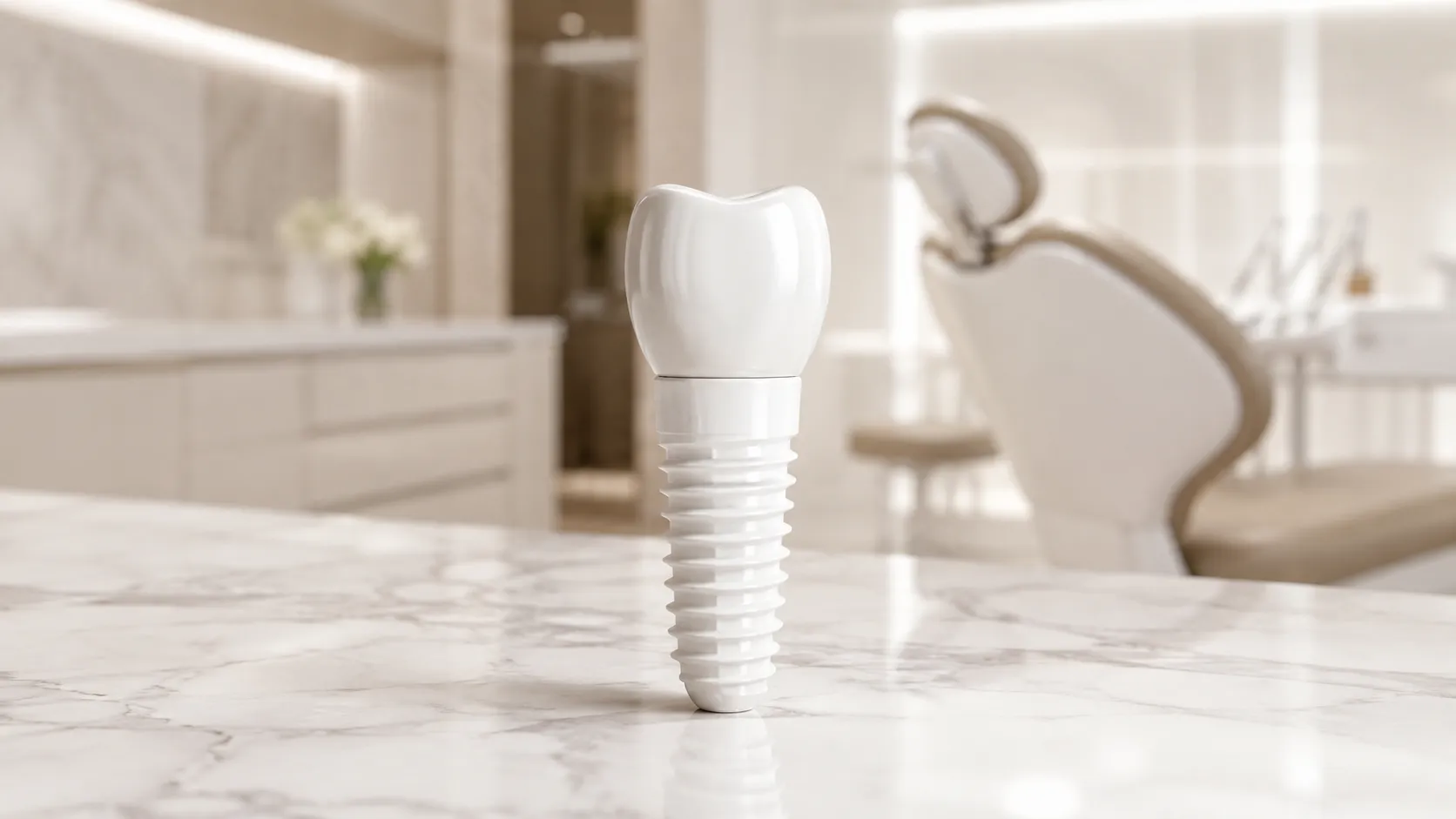
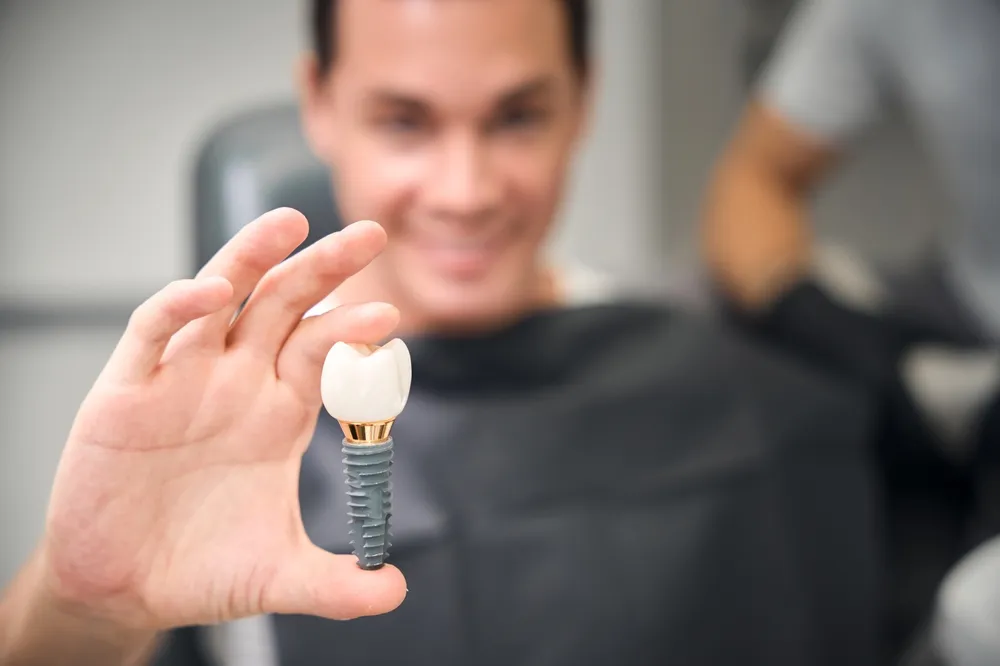
Subperiosteal implants are custom metal frameworks that sit directly on the jawbone under the gum tissue. They provide stable support for dentures or fixed teeth when the jaw has lost too much bone for regular implants.
What Exactly Is a Subperiosteal Implant?
A subperiosteal implant is a metal frame that rests on the bone surface. It does not go inside the bone like an endosteal implant. The frame has small posts that stick up through the gum. These posts hold the final teeth. The bone under the frame gives support. The gum tissue heals over the frame and holds it in place. This design works well when the jaw is too thin or too short for screw-type implants. Gustav Dahl developed this concept in Sweden in the 1940s (Dahl 1940s; Gershkoff and Goldberg 1947). Early models used cobalt-chromium alloy. Doctors made them by taking direct bone impressions during surgery. This process was invasive and imprecise. The frames often rocked or pressed on the bone unevenly. Many early implants failed due to infection, fracture, or poor fit. Today, digital scans replace messy impressions. Engineers design each frame on a computer. Machines print or mill the frame from medical-grade titanium. The fit is now exact. The body accepts titanium well. This reduces rejection and inflammation (Cerea et al. 2022).
Why Are Subperiosteal Implants Making a Comeback Today?
Early subperiosteal implants failed because casting methods produced rough fits and weak metals. Digital technology now fixes both problems.
Old frameworks broke or loosened because they did not match the bone shape. Bacteria crept under loose frames and caused infections. Dentists moved to endosteal implants in the 1970s after Branemark proved titanium fused with bone (Branemark 1978). But endosteal implants need enough bone height and width. Many patients lack this bone. Bone grafting helps, but it takes months and carries risks. Elderly patients and those with diabetes or osteoporosis often cannot handle graft surgery. Subperiosteal implants avoid grafts entirely. They need only a flap of gum lifted to expose the bone. The surgeon places the frame and closes the gum. Digital design makes the frame fit so well that it stays stable without rocking. Additive manufacturing builds complex shapes that casting never achieved. Studies show modern digital subperiosteal implants reach survival rates above 90% at three years (Cosola et al. 2026). This comeback gives hope to patients who once had no fixed option.
Who Needs Custom Subperiosteal Implants?
Patients with severe jaw atrophy who cannot receive bone grafts need these implants most.
Severe maxillary or mandibular atrophy describes jaws that have shrunk after tooth loss. Bone melts away over time. After many years, the jaw becomes a thin ridge. Standard implants need at least 10 mm of height and 6 mm of width. Many elderly patients have less than half that. Bone grafting can rebuild the jaw, but it requires extra surgery, donor bone or synthetic materials, and long healing. Some patients take blood thinners or have heart conditions. Surgery poses too much risk for them. Other patients have already failed implant rehabilitation. Their bone has been drilled multiple times. There is little bone left. Custom subperiosteal implants use the remaining bone surface. They do not need deep drilling. They also work for patients who lost bone from trauma or cancer surgery. The digital process plans around defects and builds a frame that covers the usable bone (Olea et al. 2024).
How Does Digital Dentistry Transform Implant Design?
Digital dentistry replaces guesswork with precise data. It connects scanning, design, and manufacturing into one smooth chain.
What Is the Digital Transformation in Oral Implantology?
Digital implantology moves every step from manual to computer-guided methods. Doctors once used wax and plaster to take impressions. They now use optical scanners. They once used 2D X-rays. They now use 3D CBCT scans. They once sent hand-drawn sketches to labs. They now send digital files. This shift began in the early 2000s with CAD/CAM crowns. It now covers full implant cases. The digital workflow starts with a scan and ends with a printed or milled implant. Each step feeds data to the next. Errors drop because machines handle measurements. Patients spend less time in the chair. Results look better because the design starts with the final tooth position and works backward (Dolcini et al. 2016).
What Core Technologies Power Digital Implant Dentistry?
Four main technologies drive digital implantology: CBCT, intraoral scanning, CAD software, and CAM manufacturing.
How Does CBCT Revolutionize Bone Assessment?
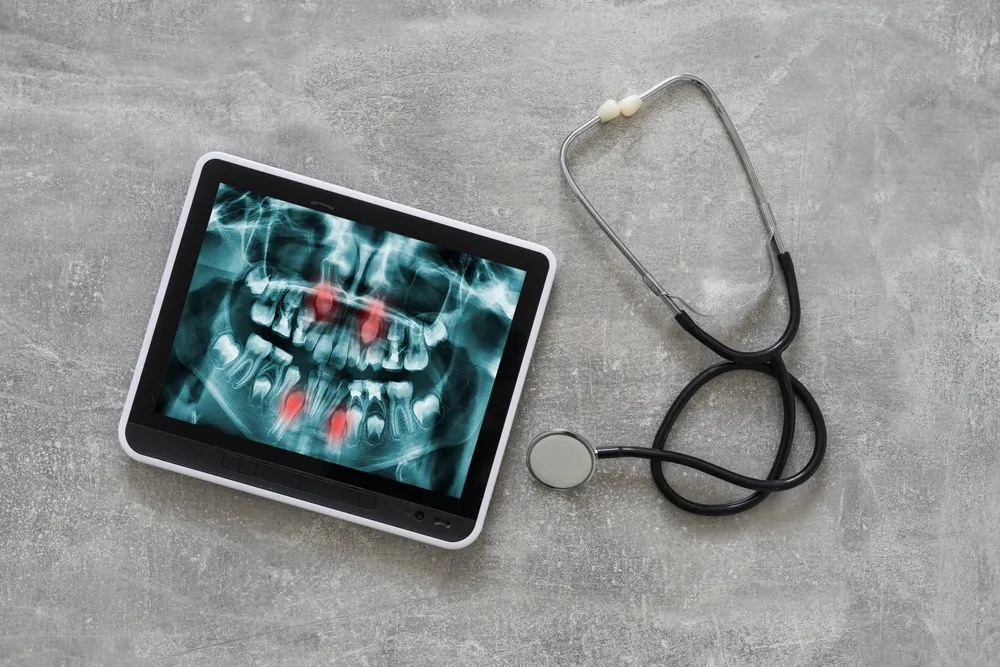
CBCT gives doctors a 3D map of the jaw in minutes. It exposes patients to far less radiation than medical CT. The machine rotates around the head and captures thin slices. Software stacks these slices into a 3D model. Doctors can rotate the model and measure bone height, width, and density. They can also see nerves, sinuses, and blood vessels. This prevents surgical accidents. CBCT shows exactly where cortical bone is thickest. Subperiosteal implants need thick cortical bone for screw fixation. CBCT finds these spots before surgery (Jacobs et al. 2018).
What Role Does Intraoral Scanning Play?
Intraoral scanners capture the shape of teeth and gums with a small camera wand. The wand projects light patterns onto the tissues. Cameras record these patterns and build a 3D model. This model becomes an STL file. The STL file shows the soft tissue surface. When merged with CBCT bone data, it creates a complete virtual patient. Doctors can plan where teeth should emerge from the gum. They can also check bite relationships. Intraoral scanning is faster than mold impressions. Patients gag less. The digital file never warps or cracks like plaster (Mangano et al. 2018).
How Does CAD Software Shape Implant Design?
CAD software lets engineers draw the implant frame on screen. They start with the merged CBCT and scan data. They trace the bone surface. They place virtual abutments where teeth should go. They draw a framework that connects all abutments. The software checks for collisions with nerves or sinuses. It also tests wall thickness. The engineer can thicken weak areas and thin bulky ones. Some software runs finite element analysis. This shows where stress concentrates under chewing force. The designer then adds ribs or changes the shape to spread force evenly (Vandenberghe 2018).
What Are CAM and Additive Manufacturing?
CAM turns the digital design into a physical object. Two main methods exist: milling and 3D printing. Milling uses a robotic drill that carves the frame from a solid titanium block. This is subtractive manufacturing. It wastes some material but gives smooth surfaces. 3D printing builds the frame layer by layer from titanium powder. A laser melts each layer. This is additive manufacturing. It allows hollow lattice structures and complex curves. Direct metal laser sintering (DMLS) and selective laser melting (SLM) are common types. Studies show both methods give similar accuracy. One randomized trial found 100% survival for 3D-printed subperiosteal implants and 90% for milled ones at one year (Cureus 2025). The choice depends on lab equipment and cost.
What Benefits Do Fully Digital Workflows Offer?
Digital workflows increase precision, cut chair time, improve fit, reduce trauma, and speed up planning.
Doctors plan every cut before surgery. They know exactly where to place screws. This reduces surprises in the operating room. Patients spend less time under anesthesia. The prosthetic teeth fit better because the design starts with the final smile line. Digital files also allow remote planning. A surgeon in one city can work with an engineer in another. The patient benefits from global expertise without travel (Altalhi et al. 2023).
What Is the Digital Workflow for Custom Subperiosteal Implant Design?
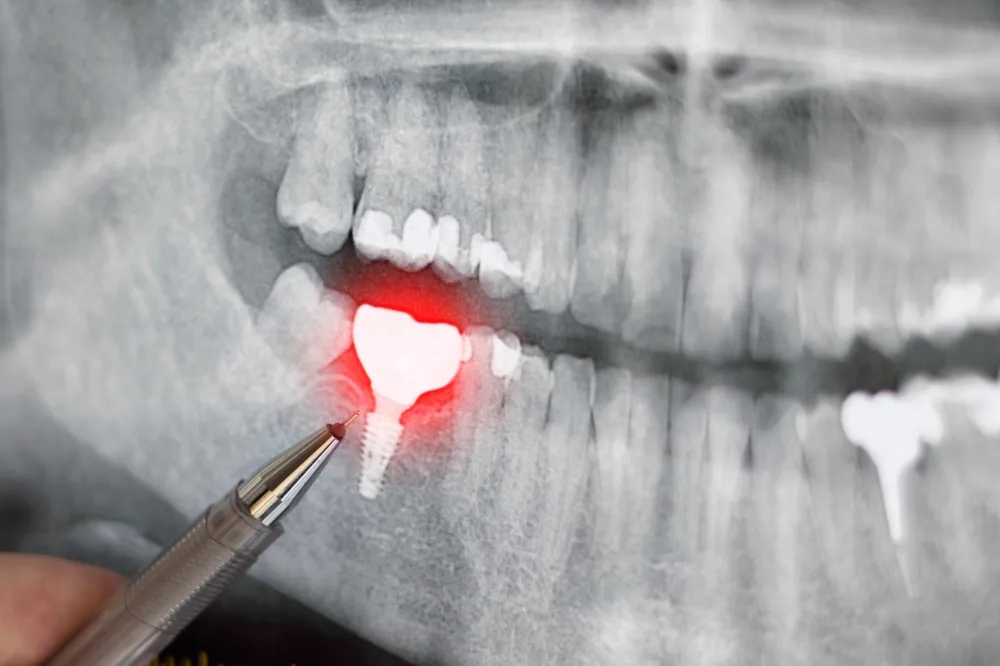
The digital workflow has six clear steps. Each step builds on the last.
What Happens During Patient Evaluation and Diagnostic Imaging?
The doctor examines the patient first. They check gum health, bite, and medical history. Then they order a CBCT scan. The scan must cover the full jaw. The doctor also takes photos and sometimes an intraoral scan. They analyze bone shape and locate thick cortical areas. They note where the sinus hangs low or where nerves run close. This data forms the foundation for everything that follows (Jacobs et al. 2018).
How Does Digital Data Acquisition Work?
Technicians convert CBCT data into DICOM files. They convert intraoral scans into STL files. Special software merges these files. The merge aligns the soft tissue surface with the bone underneath. The result is a virtual patient model. This model shows both bone and gum in one view. Engineers can rotate it, slice it, and measure any distance. They can also test how the jaw moves during biting. This virtual model replaces the patient during the design phase (Mangano et al. 2018).
How Does Virtual Implant Planning Happen?
The engineer places virtual abutments where the teeth should go. They design a framework that connects these abutments. The framework must avoid thin bone areas. It must rest on thick cortical bone. It must also leave room for the final teeth. The engineer checks every angle. They make sure the patient can clean around the posts. They also plan screw holes. These holes go into the strongest bone zones. The entire plan is prosthetic-driven. This means the design starts with the desired teeth and builds the implant to support them (Vandenberghe 2018).
How Does CAD Modeling and Finite Element Analysis Help?
Finite element analysis tests the frame before anyone makes it. The software applies chewing force to the virtual teeth. It shows stress as color maps. Red areas mean high stress. Blue areas mean low stress. The engineer thickens red areas. They may add ribs or change the curve. They also check screw holes. Screws must not loosen under load. This analysis prevents fractures. It also ensures the bone beneath the frame does not overload. Even force distribution protects the bone long-term (Cureus 2025).
How Do 3D Printing and Titanium Manufacturing Work?
Once the design passes analysis, the file goes to production. For 3D printing, technicians load titanium alloy powder into the machine. The laser traces each layer. The build plate lowers after each pass. The frame grows upward. After printing, technicians remove excess powder. They cut the frame from the plate. They sandblast the underside to increase bone contact. They polish the top to reduce plaque. Then they sterilize the frame. For milling, a robotic arm carves the shape from a solid block. Both methods produce frames accurate to within fractions of a millimeter (Iezzi et al. 2024).
What Happens During Surgical Placement and Prosthetic Loading?
The surgeon lifts a full-thickness gum flap. They expose the bone. They place the frame on the ridge. They check for rocking. A passive fit means the frame touches all bone points without pressure. The surgeon then places 3 to 6 mini-screws through the frame into thick bone. They close the gum over the frame. In many cases, they attach temporary teeth the same day. This immediate loading gives patients function right away. After healing, the final teeth attach to the posts (Olea et al. 2024).
What Are Patient-Specific Implant Systems in Modern Dentistry?
Patient-specific implants are custom devices built for one person. They match that person's exact bone shape.
What Defines a Patient-Specific Implant?
A patient-specific implant uses the patient's own scan data. No two implants are alike. The design team builds the frame from scratch for each case. They choose abutment positions based on where the patient needs teeth. They choose framework thickness based on the patient's bite force. They even choose surface texture based on bone quality. This level of customization was impossible with old casting methods. Digital tools make it routine (Cosola et al. 2026).
What Advantages Does Personalized Implant Design Offer?
Custom design gives better bone contact, improved force spread, less surgery, better tooth position, and faster recovery.
The frame hugs the bone like a glove. This maximizes contact area. More contact means better stability. The designer can place abutments where natural teeth once grew. This gives a natural look. The surgeon does not need to grind bone. They do not need to add bone. The flap closes with less tension. Patients heal faster. They also feel less pain because the frame does not press on sharp bone edges (Cerea et al. 2022).
What Commercial Technologies Are Available?
Several companies now offer digital subperiosteal implant systems. They use exocad or similar CAD software. They print with SLM or DMLS machines. Some use titanium grade 4. Others use Ti6Al4V alloy. A few labs offer PEEK as an alternative. PEEK is a plastic-like material that is lighter than metal. Early studies compare titanium and PEEK. Both show promise, but titanium has longer track records (Mounir et al. 2024).
How Do Digitally Designed Subperiosteal Implants Help Clinically?
Doctors use these implants in five main situations.
How Do They Rehabilitate the Severely Atrophic Maxilla?
The upper jaw often shrinks after tooth loss. The sinus drops down. There is little bone left. Zygomatic implants are one option, but they are long and complex. A custom subperiosteal frame can cover the entire upper ridge. It rests on the palate and the cheek side. It avoids the sinus. Patients get fixed teeth without sinus lifts (Cosola et al. 2026).
How Do They Treat Posterior Mandibular Bone Loss?
The lower back jaw often loses height. The nerve runs through this area. Standard implants risk nerve damage. A custom frame sits on top of the bone. It avoids the nerve entirely. The frame extends forward to strong chin bone. It extends back to the ramus. This gives support where regular implants cannot go (Cureus 2025).
How Do They Enable Full-Arch Immediate Restoration?
Some patients want teeth in one day. Digital planning makes this possible. The lab prints the frame and the teeth before surgery. The surgeon places the frame and screws. The prosthodontist screws in the teeth. The patient leaves with a full smile. This immediate loading works when the frame achieves primary stability. Digital design ensures the screws hit strong bone (Dolcini et al. 2016).
How Do They Salvage Failed Implant Cases?
Some patients have failed multiple implant attempts. Their bone is full of holes. Grafts have failed. In these cases, a subperiosteal frame uses the remaining bone surface. It does not need deep bone. It gives these patients a final chance at fixed teeth (Olea et al. 2024).
How Do They Help Geriatric and Medically Compromised Patients?
Elderly patients often take many medications. They may have diabetes, osteoporosis, or heart disease. Long surgeries put them at risk. Subperiosteal implants need only one short surgery. There is no graft healing phase. There is no sinus lift recovery. Patients with osteoporosis benefit because the frame spreads force over a wide area. This reduces the chance of bone cracking (Cosola et al. 2026).
What Do Clinical Outcomes and Success Rates Show?
Data from recent studies paint a clear picture of survival, complications, and long-term results.
What Are the Survival Rates of CAD/CAM Subperiosteal Implants?
Short-term survival is excellent. A 2026 meta-analysis of 11 studies found a pooled survival rate of 97.8% for follow-up of three years or less. The overall pooled rate across all studies was 92.4%. However, one six-year study showed survival dropping to 54.1%. This shows that short-term results are strong, but long-term care matters (Cosola et al. 2026).
What Biological Complications Occur?
Soft tissue problems cause most failures. The gum can pull back and expose the metal frame. This is dehiscence. Once exposed, bacteria attack the site. Infection follows. Some frames need removal because of repeated infection. Good gum thickness and careful closure reduce this risk. Patients must also keep the area clean (Olea et al. 2024).
What Mechanical Complications Occur?
Screws can loosen under heavy bite force. Prosthetic teeth can crack if the patient grinds. The frame itself rarely breaks with modern titanium. Early casting methods had many fractures. Digital titanium frames are much stronger. Still, designers must avoid thin sections. Finite element analysis helps prevent weak spots (Cureus 2025).
What Does Long-Term Follow-Up Data Reveal?
Long-term data is still growing. The six-year study by Olea et al. found that 25% of cases remained fully successful at six years. Another 63.6% were under observation with minor exposure. This means many implants survive but need maintenance. Soft tissue recession is the main enemy. Patients need regular checkups. Dentists must catch exposure early and treat it (Olea et al. 2024).
How Do They Compare with Conventional Endosteal Approaches?
Endosteal implants in healthy bone reach 95-98% survival at ten years. Subperiosteal implants in atrophic bone reach about 92% at three years. This comparison is not fair because the patient groups differ. Subperiosteal patients start with far worse bone. For these severe cases, subperiosteal implants offer a solution where endosteal implants are impossible. The choice depends on bone availability, not on which is better in ideal conditions (Cosola et al. 2026).
Comparison Factor | Digital Subperiosteal Implants | Conventional Endosteal Implants |
Bone requirement | Needs surface only | Needs 10+ mm height, 6+ mm width |
Graft need | Usually none | Often required |
Surgery time | Single short session | Multiple sessions possible |
Short-term survival | 97.8% at ≤3 years | 95-98% at 10 years in good bone |
Long-term survival | 54-92% varies by study | Higher in ideal cases |
Main risk | Soft tissue exposure | Nerve damage, sinus issues |
Best for | Severe atrophy, medical limits | Healthy bone, younger patients |
What Advantages Does Digital Manufacturing Bring?
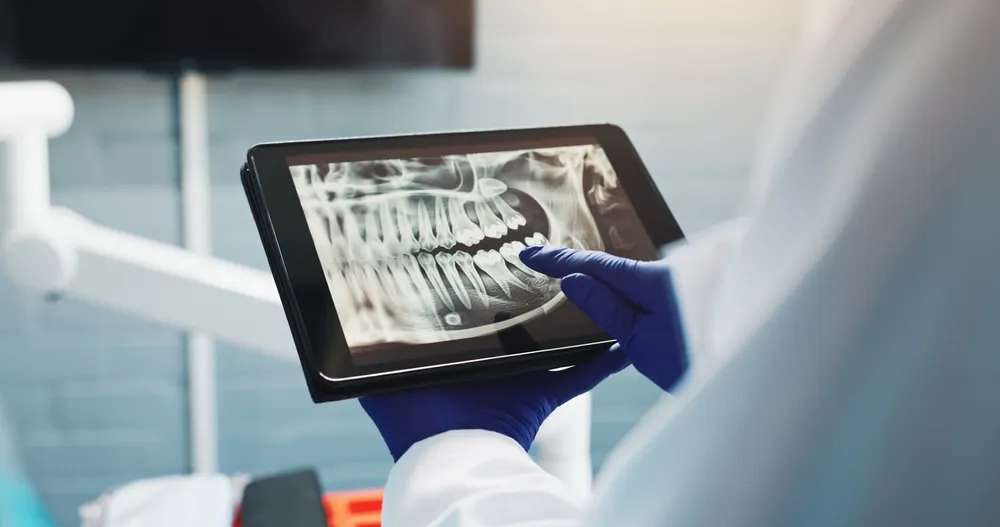
Digital methods beat old methods in six key ways.
How Does Precision Improve?
Digital scans measure bone to within 0.1 mm. The frame matches this exactly. Old casting methods had errors of 1 mm or more. That gap allowed bacteria in and caused rocking. Digital precision eliminates these gaps (Cureus 2025).
How Does Surgery Become Less Invasive?
Surgeons do not need to drill deep holes. They do not need to harvest hip bone. They lift a flap, place the frame, and close. This means less blood loss. It also means less swelling. Patients recover in days instead of weeks (Olea et al. 2024).
How Does Patient Comfort Increase?
Patients fear long surgeries. Digital planning shortens operating time. Patients also fear dentures that slip. Subperiosteal implants give fixed teeth. Patients eat, speak, and smile with confidence. The digital design also ensures the teeth look natural. This boosts mental health (Cosola et al. 2026).
How Does Prosthetic Predictability Improve?
The design starts with the final teeth. Engineers plan abutment positions for optimal emergence. They check bite against the opposing jaw digitally. They print a try-in before surgery. The final prosthesis fits with little adjustment. This saves chair time and reduces remakes (Dolcini et al. 2016).
How Does Digital Design Reduce Bone Grafting?
Because the frame uses surface bone, doctors do not need to rebuild the ridge. They do not need sinus lifts. They do not need block grafts. This saves months of healing. It also saves donor site pain. Patients with medical limits avoid extra surgery risks (Cerea et al. 2022).
How Does Digital Workflow Save Time and Cost?
The entire case from scan to surgery can take 2-4 weeks. Old methods took months. Fewer surgeries mean lower hospital bills. Fewer remakes mean lower lab costs. In complex cases, digital workflows actually cost less than grafting and multiple implant placements (Altalhi et al. 2023).
What Limitations and Challenges Exist?
Five main challenges still face this technology.
Why Are Manufacturing Costs High?
3D metal printers cost hundreds of thousands of dollars. Titanium powder is expensive. Each frame requires hours of design time. Labs pass these costs to patients. Insurance rarely covers implantology fully. Patients must pay out of pocket. As printers become more common, prices will drop (Cosola et al. 2026).
What Learning Curve Do Clinicians Face?
Doctors must learn CBCT interpretation. They must learn digital planning software. They must work closely with lab engineers. This takes training. Not all dental schools teach digital implantology yet. Continuing education courses help. But the transition demands time and money (Altalhi et al. 2023).
What Regulatory Issues Exist?
Each country has its own rules for custom medical devices. The FDA in the United States and the CE mark in Europe require strict documentation. 3D-printed implants need material certifications. The process is slower than for standard implants. Regulators want long-term safety data. That data is still building (Wu et al. 2024).
Why Is Long-Term Evidence Limited?
Most studies track patients for 1-3 years. Only a few reach 5-6 years. Subperiosteal implants need 10-year data to prove they match endosteal implants. Researchers are running trials now. Clinicians should tell patients that long-term results are promising but still growing (Olea et al. 2024).
What Technical Design Challenges Remain?
Designers must balance strength and weight. Thick frames are strong but bulky. Thin frames are light but may break. They must also plan screw holes away from nerves. They must ensure the gum can cover the frame fully. Every case is different. There is no standard template. Experience matters (Cureus 2025).
What Future Trends Will Shape Digital Subperiosteal Implants?
Six trends will drive the next decade.
How Will Artificial Intelligence Change Implant Planning?
AI now segments bone and nerves automatically. It plans implant positions in seconds. Elgarba et al. showed that AI plans implants in 187 seconds versus 406 seconds for human planners. AI also achieves zero deviation when repeated. Humans vary by 0.33 mm on repeat tasks. AI can suggest the best frame shape based on thousands of past cases (Elgarba et al. 2024).
How Will Machine Learning Automate Design?
Machine learning trains on successful and failed cases. It learns which frame shapes survive longest. It predicts where soft tissue will recede. Soon, software may design the entire frame with minimal human input. The clinician reviews the plan and approves it. This cuts design time from days to hours (Wu et al. 2024).
How Will Robotics Improve Surgery?
Robotic arms can place screws with 0.1 mm accuracy. They follow the digital plan exactly. They compensate for patient movement. They reduce hand tremor. For subperiosteal implants, robots could place fixation screws in perfect alignment. This improves primary stability. It also reduces surgical time (Altalhi et al. 2023).
How Will Advanced Biomaterials Help?
Researchers now test porous titanium. Pores let bone grow into the frame. This anchors the implant better. Others test bioactive coatings. These coatings release ions that stimulate bone cells. New materials may also fight bacteria. Silver or copper coatings could reduce infection risk (Iezzi et al. 2024).
How Will Personalized Regenerative Dentistry Evolve?
Doctors may combine subperiosteal frames with growth factors. They could coat the frame with BMP or PRP. These signals tell bone to grow thicker under the frame. Stronger bone means longer implant life. Digital design can include channels for blood flow. This supports tissue regeneration (Cosola et al. 2026).
How Will Digital Twins and Virtual Patients Change Care?
A digital twin is a virtual copy of the patient. It updates in real time. Doctors can test treatments on the twin before touching the patient. They can simulate chewing forces. They can predict bone changes over years. The virtual patient merges CBCT, scans, photos, and even genetic data. This gives a full picture of health (Mangano et al. 2018).
How Does Digital Dentistry Compare with Traditional Workflows?
A direct comparison shows why digital wins in complex cases.
How Does Digital Treatment Planning Differ from Analog?
Analog planning uses plaster models and wax rims. Doctors guess bone shape from 2D X-rays. Digital planning uses exact 3D models. Doctors see every millimeter. They test the plan virtually. They print surgical guides. This removes guesswork (Vandenberghe 2018).
How Does Accuracy Compare?
Digital implant placement reaches within 0.5 mm of the planned position. Analog methods vary by 2-3 mm. For subperiosteal frames, digital fit is passive. Analog frames often rock. Rocking causes bone resorption and failure (Cureus 2025).
How Does Surgical Predictability Compare?
Digital guides direct the drill. The surgeon follows a preset path. This protects nerves and sinuses. Subperiosteal frames also benefit. The digital design shows exactly where screws should go. The surgeon does not need to improvise (Dolcini et al. 2016).
How Does Patient Experience Differ?
Digital workflows need fewer appointments. Patients scan once. They surgery once. They get teeth faster. Analog workflows need multiple impressions, try-ins, and adjustments. Patients prefer the speed and comfort of digital (Altalhi et al. 2023).
How Do Costs Compare?
Digital equipment costs more upfront. But digital cases need fewer remakes. They avoid graft costs. They reduce chair time. In the long run, digital workflows often cost less for complex cases. Simple cases may still be cheaper with analog methods (Wu et al. 2024).
Feature | Digital Workflow | Traditional Workflow |
Planning time | Days | Weeks |
Impressions | Digital scan | Physical mold |
Bone assessment | 3D CBCT | 2D panoramic X-ray |
Frame fit | Passive, exact | Variable, often loose |
Surgery time | Short, guided | Longer, freehand |
Remake rate | Low | Higher |
Patient comfort | High | Moderate |
What Are the Most Common Questions About Custom Subperiosteal Implants?
Are Custom Subperiosteal Implants Safe?
Yes, modern digital subperiosteal implants are safe when doctors select patients carefully. The meta-analysis by Cosola et al. (2026) found 92.4% overall survival. Titanium has decades of safety data. The main risk is soft tissue exposure, not implant toxicity. Patients must commit to regular cleanings.
How Long Do Digitally Designed Implants Last?
They last many years with proper care. Short-term data shows 97.8% survival at three years. Long-term data shows about 54% at six years in one study. But that study included early designs. Newer surface treatments and better soft tissue management should improve these numbers. Patients should expect 10-15 years with maintenance (Cosola et al. 2026; Olea et al. 2024).
Who Qualifies for Patient-Specific Implants?
Patients with severe bone loss who cannot get grafts qualify. This includes elderly patients, those with medical limits, and those who failed other implants. Doctors evaluate bone shape, gum thickness, and general health. Not everyone is a candidate. Good oral hygiene is mandatory.
Are 3D Printed Dental Implants FDA-Approved?
Some 3D-printed implant systems have FDA clearance. Custom devices fall under special regulations. The lab must follow quality standards. The dentist must inform the patient that the device is custom-made. Regulations vary by country. Patients should ask their clinic about local approvals (Wu et al. 2024).
Is Bone Grafting Necessary with Subperiosteal Implants?
No. This is the main advantage. The frame sits on the bone surface. It does not need bone volume. Patients avoid graft surgery, donor site pain, and long healing. This makes treatment possible for those who cannot endure grafts (Cerea et al. 2022).
What Materials Make Up Custom Implants?
Most custom subperiosteal implants use titanium grade 4 or Ti6Al4V alloy. Titanium resists corrosion. The body accepts it. Some labs use PEEK. PEEK is lighter and softer. It may stress-shield bone less. But titanium has stronger long-term data. Researchers also test porous titanium and coated surfaces (Iezzi et al. 2024; Mounir et al. 2024).
What Is the Final Verdict on Digital Subperiosteal Implants?
Digital dentistry has revived subperiosteal implants. Old casting methods failed too often. CAD/CAM and 3D printing now create exact titanium frames. These frames fit severe atrophy cases. They avoid bone grafts. They shorten treatment. They give fixed teeth to patients who once had no hope.
Patient-specific subperiosteal implants fill a critical gap. They serve the elderly. They serve the medically compromised. They salvage failed cases. Short-term survival rates exceed 90%. Long-term results need more study. Soft tissue management remains the key challenge.
CAD/CAM and additive manufacturing are now essential tools. They will not replace endosteal implants for healthy bone. But they offer a graftless alternative for extreme cases. AI, robotics, and new biomaterials will push this field further. Digital twins will let doctors test plans before surgery.
Clinicians should embrace these tools. They should train in digital workflows. They should work with specialized labs. Patients should ask about digital options. They should understand both benefits and limits.
More longitudinal studies must track these implants for 10 years. Regulators need to adapt to custom 3D-printed devices. Education must include digital implantology in dental schools. The future of oral rehabilitation is personal, precise, and digital.
References
Altalhi, A.M., et al. "The Impact of Artificial Intelligence on Dental Implantology: A Narrative Review." Cureus, vol. 15, no. 12, 2023, e47941.
Branemark, Per-Ingvar. "Osseointegration and Its Experimental Background." Journal of Prosthetic Dentistry, vol. 50, no. 3, 1978, pp. 399-410.
Cerea, M., et al. "Retrospective Clinical Study of Custom Subperiosteal Implants: A Two-Year Follow-Up." Journal of Oral Implantology, 2022.
Cosola, Saverio, et al. "Clinical Outcomes, Survival, and Complications of Customized Computer-Aided Design and Manufacturing 3-Dimensional-Printed Titanium Subperiosteal Implants: A Systematic Review and Meta-Analysis." Journal of Oral and Maxillofacial Surgery, 2026.
Cureus. "Clinical and Radiographic Assessment of Milled Versus 3D-Printed Patient-Specific Subperiosteal Implants for Atrophic Mandibular Ridges: A Randomized Clinical Trial." Cureus, vol. 17, no. 3, 2025.
Dahl, Gustav. "Subperiosteal Implant Development." Swedish Dental Journal, 1940s.
Dolcini, G.A., et al. "From Guided Surgery to Final Prosthesis With a Fully Digital Procedure: A Prospective Clinical Study on 15 Partially Edentulous Patients." International Journal of Dentistry, 2016, p. 7358423.
Elgarba, Bahaaeldeen M., et al. "Novel AI-Based Automated Virtual Implant Placement: Artificial Versus Human Intelligence." Journal of Dentistry, vol. 147, 2024, p. 105146.
Gershkoff, A., and N.I. Goldberg. "The Subperiosteal Implant: Its Design and Use." Journal of the American Dental Association, vol. 36, 1948, pp. 1-5.
Iezzi, G., et al. "3D Printed Dental Implants with a Porous Structure: The In Vitro Response of Osteoblasts, Fibroblasts, Mesenchymal Stem Cells, and Monocytes." Journal of Dentistry, vol. 140, 2024, p. 1.
Jacobs, Reinhilde, et al. "Cone Beam Computed Tomography in Implant Dentistry: Recommendations for Clinical Use." BMC Oral Health, vol. 18, 2018, p. 88.
Mangano, Carlo, et al. "Combining Intraoral Scans, Cone Beam Computed Tomography and Face Scans: The Virtual Patient." Journal of Craniofacial Surgery, vol. 29, no. 8, 2018, pp. 2241-2246.
Mounir, M., et al. "Prospective Clinical Investigation of Subperiosteal Implants: Ti6Al4V Alloy and PEEK." Clinical Oral Implants Research, 2024.
Olea, N., et al. "Long-Term Clinical Outcomes of 3D-Printed Subperiosteal Titanium Implants: A 6-Year Follow-Up." Journal of Clinical Medicine, 2024. PMC11122366.
Vandenberghe, B. "The Digital Patient - Imaging Science in Dentistry." Journal of Dentistry, vol. 74, 2018, pp. S21-S26.
Wu, Z., et al. "Application of Artificial Intelligence in Dental Implant Prognosis: A Scoping Review." Journal of Dentistry, vol. 144, 2024, p. 104924.