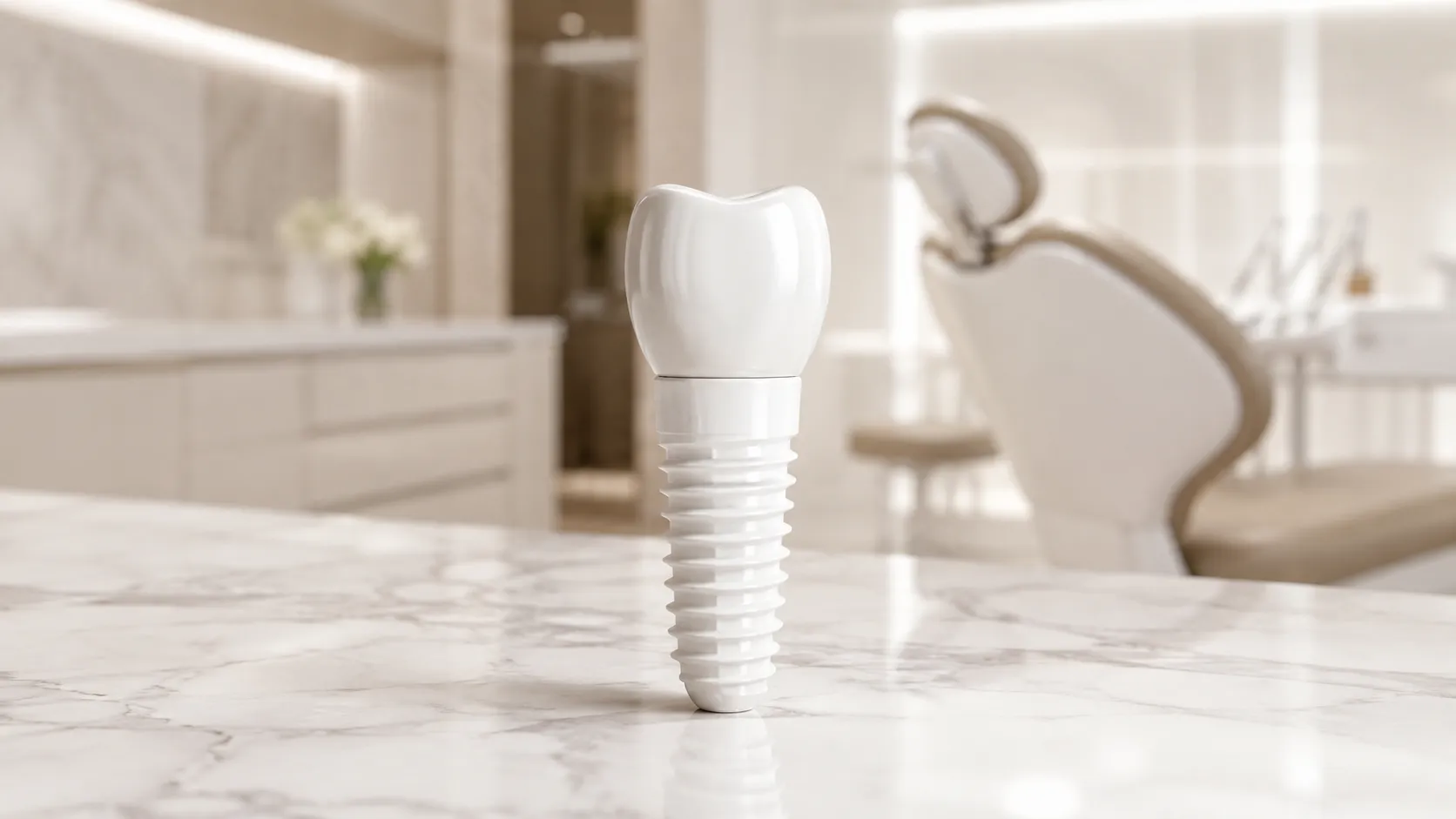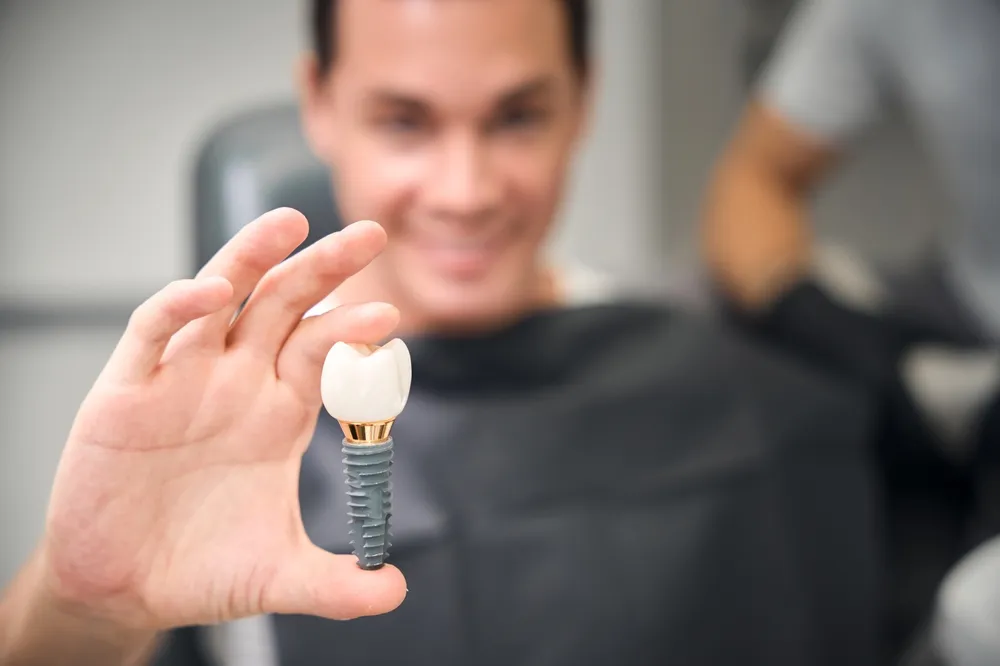
More patients than ever want dental implants. Many of these patients also deal with receding gums. This combination creates real concerns. Patients worry about eligibility. They worry about risks. They worry about whether implants will last. Healthy gum tissue plays a critical role in implant stability. Gums form a protective seal around implants. This seal blocks bacteria. It supports the surrounding bone. It keeps the implant firmly in place. But receding gums do not automatically disqualify patients. Modern periodontal and implant solutions can restore lost tissue. They can rebuild bone. They can create conditions where implants thrive. This guide explains everything patients need to know about dental implants and receding gums. It covers causes, treatments, risks, success rates, and recovery. It uses the latest clinical research. It answers the questions patients actually ask.
What Are Receding Gums?
Receding gums affect millions of adults worldwide. They change the appearance of smiles. They increase sensitivity. They threaten tooth stability. Understanding gum recession helps patients make informed decisions about implant treatment.
What Is Gum Recession?
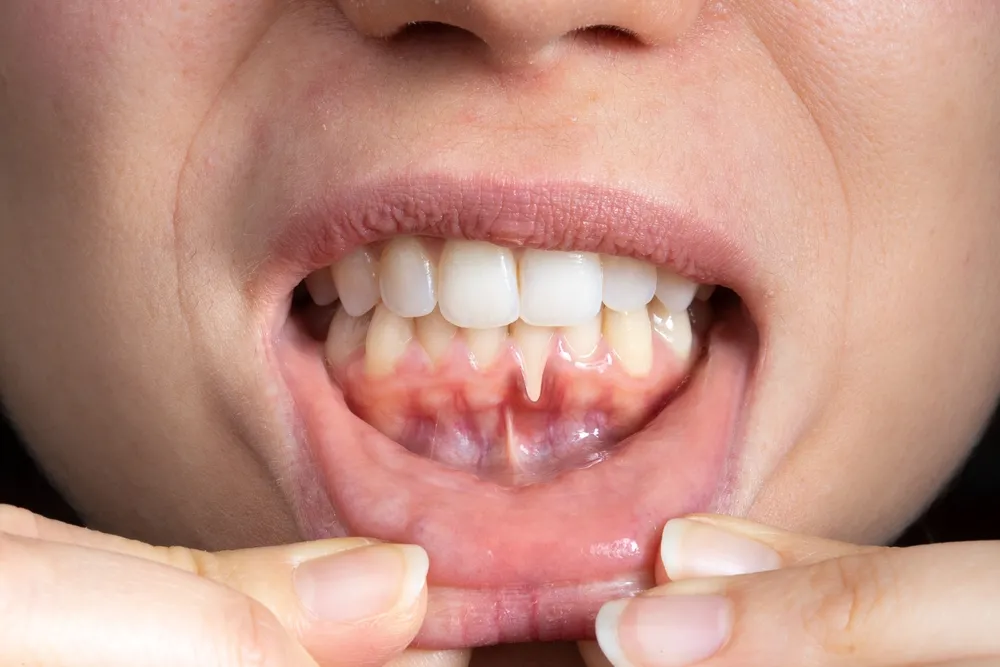
Gum recession means the gum tissue pulls away from the tooth and exposes the root. This exposure increases sensitivity and raises cavity risk.
Clinicians measure recession from the cementoenamel junction to the gum margin. Even one millimeter of recession matters. It signals tissue loss. It signals potential underlying problems. Dentists classify recession using systems like Miller or Cairo. These systems help them predict treatment outcomes. They help them decide whether gum grafting will work. Cairo et al. (2011) established a classification system that links recession severity to predictable treatment outcomes. Patients with exposed roots face higher risks of root caries and abrasion. They also face esthetic concerns that affect confidence.
What Causes Gums to Recede?
Several factors cause gum recession. Periodontal disease tops the list. Aggressive brushing and tobacco use also contribute.
Bacterial infection destroys gum tissue. It destroys the ligaments that hold teeth. It destroys underlying bone. Aggressive brushing also causes recession. Patients who scrub hard with stiff brushes wear away gum tissue over time. Tobacco use restricts blood flow to gums. It impairs healing. It makes gums more susceptible to disease. Teeth grinding, or bruxism, places excessive force on teeth. This pressure traumatizes the periodontal ligament. It pushes gums away from the tooth surface. Genetics play a role too. Some patients inherit thin gum biotypes. Thin tissue breaks down faster. It recedes more easily. Poor oral hygiene allows plaque buildup. Plaque triggers inflammation. Chronic inflammation leads to tissue destruction.
What Symptoms Indicate Gum Recession?
Patients notice longer-looking teeth, sharp sensitivity, and bleeding gums. These warning signs demand immediate dental evaluation.
Teeth look longer than before. This visual change disturbs many patients. Tooth sensitivity increases sharply. Hot coffee, cold ice water, and sweet foods trigger pain. Gums bleed during brushing or flossing. This bleeding signals inflammation. Root surfaces become visible. They look yellowish compared to white enamel. Teeth feel loose in advanced cases. This mobility indicates bone loss. Patients should seek dental evaluation immediately when these symptoms appear. Early intervention prevents further damage. It preserves more tissue. It improves future implant options.
How Does Gum Health Affect Dental Implant Success?
Gum health directly determines implant outcomes. Implants need more than just bone. They need healthy soft tissue around them. This tissue forms a biological barrier. It protects the underlying structures. It maintains the implant's position in the mouth.
What Role Do Healthy Gums Play in Implant Stability?
Healthy gums create a soft tissue seal around implants. This seal prevents bacteria from invading the underlying bone.
Thick, keratinized gum tissue works best around implants. It resists mechanical trauma from chewing. It resists abrasion from toothbrushes. It maintains its position long-term. Research shows that implants surrounded by adequate keratinized mucosa experience fewer complications. Tavelli et al. (2021) found that soft tissue phenotype modification significantly impacts peri-implant health. Patients with thin tissue need extra attention. They need grafting more often. They need careful maintenance.
Why Does Adequate Jawbone Support Matter?
Bone supports the implant physically. It anchors the titanium post. It distributes chewing forces.
Without enough bone, implants lack stability. They wobble. They fail to integrate. They eventually fall out. Bone volume matters as much as bone density. Wide, tall ridges accommodate implants better. Narrow, shrunken ridges complicate placement. Bone loss often accompanies gum recession. The same bacteria destroy both tissues. The same inflammatory process attacks both structures. Patients with receding gums frequently need bone evaluation before implant planning.
What Is Osseointegration and Why Does It Matter?
Osseointegration means bone fuses directly to the implant surface. This fusion creates a solid anchor that transforms the implant into a functional root.
The process takes three to six months. During this time, bone cells grow onto the titanium surface. They form a tight bond. Several factors influence success. Bone quality matters. Smoking harms the process. Systemic diseases like diabetes slow healing. Active gum inflammation poisons the environment. It releases inflammatory chemicals. These chemicals interfere with bone cell activity. Healthy gums and sufficient bone volume create the best conditions for predictable osseointegration. Active inflammation increases implant complications. It raises failure rates. It demands attention before surgery.
Can You Get Dental Implants With Receding Gums?
This question troubles many patients. They fear rejection. They fear permanent disqualification. The reality offers more hope than they expect.
What Is the Short Answer?
Yes, many patients with receding gums can still get implants. Recession alone does not block treatment.
Dentists evaluate the whole situation. They look at the cause of recession. They look at remaining tissue. They look at bone levels. They look at oral hygiene habits. A comprehensive periodontal evaluation reveals the truth. Some patients need preliminary treatment first. Others proceed directly to implant placement. The key lies in proper assessment. It lies in honest communication between patient and clinician.
What Factors Do Dentists Evaluate Before Treatment?
Dentists examine recession severity, active disease, bone density, smoking status, and systemic health. Each factor weighs into the treatment decision.
They measure the severity of recession. They check for active gum disease. They assess bone density and volume using imaging. They review overall oral health. They ask about smoking status. They investigate systemic health conditions like diabetes or osteoporosis. Severe recession with good bone may need grafting. Moderate recession with excellent hygiene may proceed without grafting. Active infection always requires postponement. Dentists use this information to build personalized treatment plans. They explain realistic timelines. They set proper expectations.
When Might Receding Gums Delay Implant Placement?
Active infection, severe tissue loss, and significant bone deterioration all force dentists to postpone implant surgery.
Placing implants in infected sites wastes money and time. The implant will likely fail. Severe tissue loss also causes delays. When gums have receded dramatically, grafting must come first. Significant bone deterioration creates similar barriers. Bone grafting needs months of healing. Only after stabilization can implant surgery proceed safely. Most patients with gum recession receive implants eventually. They simply need appropriate periodontal treatment and stabilization first. Patience improves outcomes. Rushing creates disasters.
Why Must Active Gum Disease Be Treated First?
Gum disease and implants do not mix. Active infection creates a hostile environment. It dooms implants from the start.
What Is Periodontal Disease?
Periodontal disease means infection and inflammation of the supporting structures around teeth. It starts as gingivitis and can progress to destructive periodontitis.
Gingivitis affects only the gum tissue. It causes redness and bleeding. It remains reversible with proper cleaning. If left untreated, it progresses to periodontitis. Periodontitis attacks deeper structures. It destroys the periodontal ligament. It erodes alveolar bone. Teeth become loose. They may fall out. The bacteria responsible for periodontitis also threaten implants. They cause peri-implantitis. This condition mirrors periodontitis but affects implant sites. Herrera et al. (2023) emphasize that prevention of peri-implant diseases starts with controlling periodontal infection before implant placement.
How Does Gum Disease Cause Bone Loss?
Bacterial plaque triggers the immune system to release destructive enzymes. These chemicals literally melt away the supporting bone.
The body sends inflammatory cells to attack the bacteria. These cells release enzymes and chemicals. These substances destroy gum tissue. They destroy the fibers that connect teeth to bone. Eventually they destroy the bone itself. This process happens gradually. Patients often notice nothing until teeth shift or loosen. Bone loss complicates implant placement. Implants need solid bone foundations. Without enough bone, surgeons must graft. This adds time and expense. It adds surgical complexity.
What Are the Risks of Placing Implants During Active Infection?
Implants placed during active infection face integration failure, poor healing, and severe peri-implantitis risk.
Bacteria colonize the implant surface. They prevent bone cells from contacting it. The implant may heal poorly. Inflammation delays wound closure. It increases pain and swelling. Most dangerously, active infection raises peri-implantitis risk. Peri-implantitis causes progressive bone loss around implants. It often leads to implant loss. Studies show that patients with untreated periodontitis experience significantly higher implant failure rates. Sanz et al. (2012) confirmed that periodontal health and dental implant success correlate strongly with post-treatment maintenance.
What Periodontal Treatments Come Before Implants?
Dentists use scaling, antibiotics, and surgery to control gum disease. These treatments create a healthy foundation for implants.
Scaling and root planing removes plaque and tartar from root surfaces. It smooths the roots. It helps gums reattach. Antibiotic therapy fights persistent bacteria. Dentists place antibiotics directly into gum pockets. They may prescribe oral antibiotics too. Periodontal surgery becomes necessary in advanced cases. Surgeons lift the gum tissue. They clean the roots directly. They reshape bone. They may apply regenerative materials. Jepsen et al. (2015) reviewed periodontal regeneration techniques and confirmed their effectiveness in rebuilding lost support. These treatments create a healthy foundation. They give implants the best chance for success. Active periodontal infection remains one of the leading causes of implant complications. Resolving it before surgery protects the investment.
What Diagnostic Evaluation Happens Before Implant Placement?
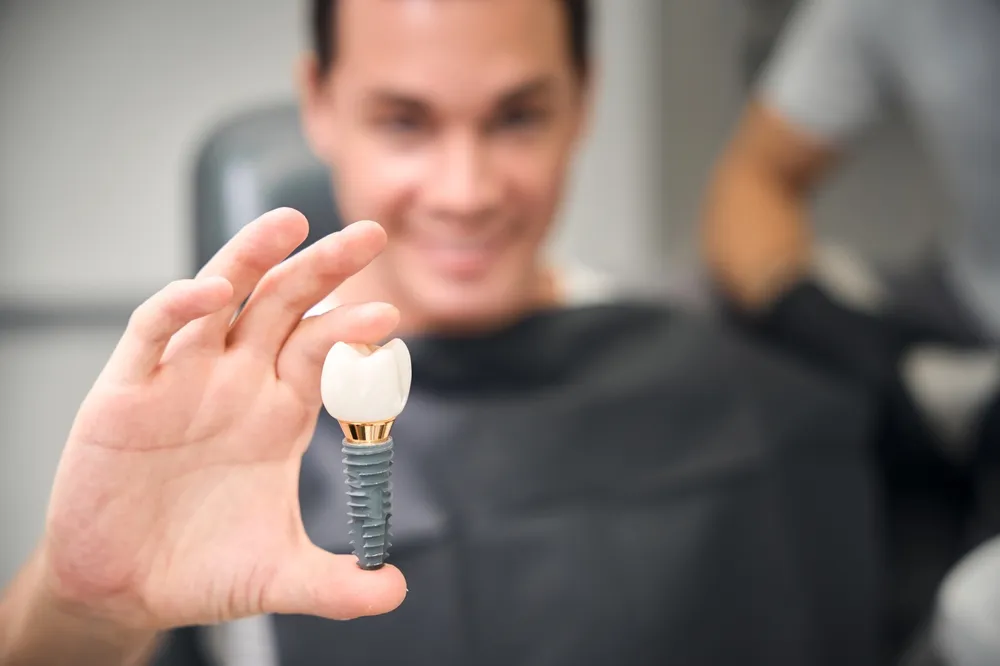
Proper diagnosis prevents surprises. It reveals hidden problems. It guides surgical planning. It improves predictability.
What Does a Comprehensive Periodontal Examination Include?
The dentist inspects pockets, recession, bleeding, and tooth mobility. This examination maps the entire oral environment.
The dentist inspects every tooth and gum area. They measure pocket depths around each tooth. They check for bleeding on probing. They assess gum recession levels. They evaluate tooth mobility. They look for plaque and tartar accumulation. They examine the bite. They check for signs of grinding or clenching. This examination maps the battlefield. It shows where disease hides. It shows where tissue has been lost. It establishes a baseline for future comparison.
How Do Digital X-Rays and CBCT Imaging Help?
Standard X-rays and CBCT scans reveal bone levels, root positions, and anatomical structures. This imaging guides precise implant planning.
Standard X-rays show bone levels around teeth. They reveal hidden bone loss. They show root positions. They help dentists estimate remaining bone volume. CBCT scans provide three-dimensional views. CBCT means Cone Beam Computed Tomography. This technology shows bone width, height, and density. It reveals anatomical structures like nerves and sinuses. It shows exactly where bone is thin or thick. It allows virtual implant placement. Surgeons plan the exact position, angle, and depth before touching the patient. This precision reduces complications. It improves outcomes.
How Do Clinicians Measure Bone Density and Volume?
CBCT software calculates density using Hounsfield units and measures volume through 3D reconstruction. These numbers determine implant size and grafting needs.
CBCT software calculates bone density automatically. It uses Hounsfield units. These units classify bone as dense, moderately dense, or porous. Volume measurements come from the 3D reconstruction. The software measures height from the ridge top to important landmarks. It measures width at several levels. These numbers determine implant size. They determine whether grafting is needed. They determine whether short or narrow implants will work.
Why Is Soft Tissue Thickness Important?
Thick gum tissue protects implants better than thin tissue. It resists recession and maintains a stronger biological seal.
Dentists measure tissue thickness with periodontal probes. They may use transgingival probing. This means gently pushing the probe through the gum to feel the underlying bone. Thin tissue often requires grafting before or during implant placement. Thick tissue may proceed without augmentation. Tavelli et al. (2021) found that thin gingival phenotype increases risk for peri-implant complications.
How Do Bite Forces and Bruxism Affect Planning?
Heavy bite forces and bruxism stress implants. Dentists must check for these forces before surgery.
Bruxism generates extreme forces. These forces can crack restorations. They can overload implants. They can cause bone loss around implants. Dentists check for wear patterns on teeth. They ask about jaw pain or morning headaches. They may recommend night guards. They may plan splinted restorations. They may place additional implants to distribute forces. Ignoring bruxism invites implant failure.
What Treatment Options Exist for Patients With Receding Gums?
Modern dentistry offers multiple solutions for tissue and bone loss. These solutions rebuild what disease destroyed. They create conditions where implants succeed.
What Is Gum Graft Surgery?
Gum grafting adds tissue where recession has occurred. It covers exposed roots and thickens thin gums.
Several graft types exist. Each suits different situations. Chambrone et al. (2010) systematically reviewed root coverage procedures and confirmed their high predictability in appropriate cases.
What Are Connective Tissue Grafts?
Surgeons harvest connective tissue from the palate and place it under a flap at the recession site. This technique provides excellent root coverage and remains the gold standard for many cases.
Surgeons harvest connective tissue from the roof of the mouth. They place this tissue under a flap at the recession site. They secure it with sutures. This technique provides excellent root coverage. It creates natural-looking results. Success rates exceed 90% in most clinical studies.
What Are Free Gingival Grafts?
Free gingival grafts transfer surface and connective tissue from the palate directly onto the recipient site. This method works best for increasing tissue thickness.
Surgeons place this graft directly on the prepared recipient site. This technique works best for increasing tissue thickness. It works well in areas where appearance matters less. It creates a strong band of keratinized tissue. This band resists future recession.
What Are Pedicle Grafts?
Pedicle grafts move adjacent gum tissue to cover recession while preserving blood supply. This technique avoids creating a second donor site.
The tissue remains attached at one end. This preserves blood supply. It improves healing. It works only when nearby tissue is thick and abundant. It avoids creating a second surgical site on the palate.
Gum Graft Type | Best Use Case | Root Coverage | Tissue Thickness Increase | Donor Site Needed |
Connective Tissue Graft | Moderate recession, esthetic zones | Excellent | Moderate | Yes (palate) |
Free Gingival Graft | Thin tissue, non-esthetic areas | Fair | Excellent | Yes (palate) |
Pedicle Graft | Adjacent thick tissue available | Good | Moderate | No |
What Bone Grafting Procedures Are Available?
Bone grafting rebuilds lost alveolar bone. It restores height and width for implant placement.
What Is Socket Preservation?
Socket preservation happens immediately after extraction. The dentist fills the empty socket with graft material to prevent collapse.
This prevents the socket from collapsing. It maintains bone volume. It simplifies future implant placement. It reduces the need for additional grafting later.
What Is Guided Bone Regeneration?
Guided bone regeneration rebuilds bone in areas where it has been lost. Surgeons use graft material and barrier membranes to guide new bone growth.
Surgeons place bone graft material in the defect. They cover it with a barrier membrane. This membrane blocks fast-growing gum tissue from invading the space. It gives bone cells time to repopulate the area. GBR works predictably for small to moderate defects. Jensen and Terheyden (2009) reviewed bone augmentation procedures and confirmed high predictability for localized ridge defects.
What Are Sinus Lift Procedures?
Sinus lifts add bone beneath the sinus membrane in the upper jaw. This creates enough bone for posterior implants.
The sinus membrane lifts upward. Graft material fills the space below it. This creates enough bone for implant placement in the posterior maxilla. Sinus lifts have high success rates. They open implant options for patients who previously had none.
What Is Regenerative Periodontal Therapy?
Regenerative therapy aims to regrow lost bone and ligament. It uses membranes, growth factors, or enamel matrix proteins.
These materials stimulate the body's own healing cells. They encourage true regeneration rather than simple repair. This approach works best in certain defect shapes. It requires excellent surgical skill. It offers hope for rebuilding what seemed permanently lost. Jepsen et al. (2015) confirmed that regenerative procedures can significantly improve clinical attachment levels in intrabony defects.
How Does Laser-Assisted Periodontal Treatment Work?
Lasers remove diseased tissue and kill bacteria precisely. They reduce bleeding and discomfort compared to traditional surgery.
Lasers remove diseased gum tissue precisely. They kill bacteria in pockets. They promote gum reattachment. They cause less bleeding than traditional surgery. They reduce postoperative discomfort. However, lasers do not regrow bone. They work best for early to moderate gum disease. They serve as adjuncts to other treatments. They do not replace grafting when significant tissue loss exists.
What Dental Implant Options Work for Patients With Previous Gum Disease?
Patients with treated gum disease have several implant options. The choice depends on missing teeth, bone availability, and budget.
What Are Single-Tooth Dental Implants?
Single-tooth implants replace individual missing teeth without grinding adjacent teeth. They preserve bone and function like natural teeth.
They consist of one implant post, one abutment, and one crown. They do not require grinding adjacent teeth. They preserve bone at the site. They function like natural teeth. Patients with localized gum recession often choose this option. They may need grafting around the implant for optimal tissue architecture.
What Are Multiple Dental Implants?
Multiple implants replace several missing teeth. Each tooth gets its own implant for maximum stability.
Each missing tooth gets its own implant. This approach provides maximum stability. It distributes chewing forces evenly. It allows easy cleaning between implants. It works well when bone is adequate throughout the arch. It costs more than bridges. It provides superior long-term results.
What Are Implant-Supported Bridges?
Implant-supported bridges use fewer implants than missing teeth. Two implants may support a three-tooth bridge.
This reduces surgical sites. It reduces costs. It works well when bone is limited in certain areas. It requires careful planning. The bridge must withstand chewing forces. The implants must be positioned strategically.
What Are Full-Arch Solutions Like All-on-4 and All-on-6?
Full-arch solutions replace all teeth in an arch using four or six implants. These support a fixed prosthesis immediately.
All-on-4 uses four implants per arch. All-on-6 uses six implants. These implants support a fixed prosthesis. The prosthesis replaces all teeth immediately. This approach suits patients with widespread tooth loss. It suits patients with significant bone loss. Angled posterior implants avoid sinus areas. They avoid nerve areas. They maximize use of available bone. Patients with severe gum disease often lose all teeth eventually. Full-arch solutions restore their smiles completely.
What Is the Difference Between Immediate and Delayed Implant Placement?
Immediate placement happens at extraction. Delayed placement waits months for healing. Most patients with gum disease benefit from delayed placement.
Immediate placement happens at the same visit as tooth extraction. It reduces total treatment time. It preserves gum architecture better. However, it carries higher risks. Infection at the extraction site may compromise the implant. Primary stability may be harder to achieve. Delayed placement waits several months after extraction. This allows socket healing. It allows infection resolution. It improves bone quality at the site. Most patients with active or recent gum disease benefit from delayed placement. It gives tissues time to recover.
Placement Timing | Advantages | Risks | Best For |
Immediate | Faster treatment, better esthetics | Higher failure risk, infection concerns | Healthy extraction sites |
Delayed | Better bone quality, lower infection risk | Longer treatment time | Sites with infection or bone loss |
What Risks Come With Getting Dental Implants With Receding Gums?
All surgical procedures carry risks. Implants in patients with receding gums face specific challenges. Understanding these risks helps patients protect their investment.
What Is Peri-Implantitis?
Peri-implantitis means inflammation and bone loss around an implant. It resembles periodontitis and threatens implant survival.
Plaque accumulation triggers it. Smoking accelerates it. Previous periodontal disease increases susceptibility. Signs include bleeding gums, swelling, pus discharge, and implant mobility. Early detection saves implants. Regular monitoring catches it before catastrophic bone loss occurs. Heitz-Mayfield et al. (2020) report that peri-implantitis affects approximately 9.6% of implants, while peri-implant mucositis affects 18.8%.
What Is Implant Exposure?
Implant exposure happens when the implant head becomes visible through the gum. This signals tissue seal failure.
This occurs when gum tissue recedes after placement. It creates an esthetic problem. It creates a cleaning challenge. It increases infection risk. Exposure often requires soft tissue grafting to cover the implant. It signals that the tissue seal has failed.
Can Soft Tissue Recession Occur Around Implants?
Yes, recession can happen around implants just as it happens around natural teeth. Thin tissue and trauma increase this risk.
Thin tissue recedes more easily. Aggressive brushing traumatizes implant-site tissue. Poorly positioned implants may lack tissue coverage. Recession around implants looks unattractive. It may expose the metal abutment or the implant itself. It compromises the biological seal. It demands prompt attention.
Can Bone Loss Happen Around Implants?
Yes, bone loss around implants threatens stability. It starts at the crest and moves downward.
Causes include peri-implantitis, overload, poor positioning, and systemic disease. Some initial bone loss during the first year is normal. It should remain below 1.5 millimeters. Further loss signals trouble. Annual X-rays track bone levels. They reveal problems early.
What Causes Implant Failure?
Implant failure means the implant must be removed. Early failure happens during osseointegration. Late failure happens after years.
Early failure happens during osseointegration. The implant never bonds with bone. Causes include infection, poor bone quality, overheating during surgery, and premature loading. Late failure happens after years of function. Peri-implantitis causes most late failures. Other causes include mechanical overload, loose abutments, and cement trapped under the gum. Untreated recession and periodontal disease increase the risk of peri-implantitis, tissue loss, and implant failure.
What Is Peri-Implantitis in Detail?
Peri-implantitis deserves special attention. It destroys implants silently. It progresses without pain in many cases. Patients must understand it thoroughly.
What Causes Peri-Implantitis?
Bacterial plaque causes peri-implantitis. Smoking and previous periodontal disease increase susceptibility.
The same bacteria that cause gum disease attack implants. They colonize the implant surface. They form biofilms. These biofilms resist removal. Smoking reduces blood flow. It impairs immune response. It makes biofilm control harder. Previous periodontal disease changes the bacterial flora in the mouth. It leaves patients more susceptible. Diabetes and poor oral hygiene compound the risk. Herrera et al. (2023) identify plaque accumulation and smoking as primary preventable causes.
What Are the Symptoms of Peri-Implantitis?
Patients notice bleeding, swelling, and possible pus. Pain is often absent, which fools patients into delaying care.
Patients notice bleeding when brushing around the implant. They see swelling. They may taste pus. The implant feels loose in advanced cases. Pain is often absent. This absence fools patients. They delay treatment. They mistake silence for health. Dentists detect bone loss on X-rays. They measure increasing pocket depths. They see receding gums around the implant. Any of these signs demands immediate professional evaluation.
What Treatment Options Address Peri-Implantitis?
Treatment ranges from professional cleaning to laser therapy to surgery. Early treatment always works better.
Professional cleaning removes plaque and tartar. It disrupts biofilms. It reduces bacterial load. Laser therapy targets infected tissue precisely. It sterilizes the implant surface. It promotes healing. Surgical intervention becomes necessary for advanced cases. Surgeons lift the gum flap. They clean the implant surface thoroughly. They may apply antimicrobial agents. They may graft bone into the defect. They may use barrier membranes. Success rates vary. Early treatment always works better than late intervention. Renvert and Polyzois (2015) reviewed clinical approaches and emphasized that mechanical debridement forms the foundation of peri-implantitis management.
What Do Research Studies Show About Success Rates?
Research reassures patients. Implants work well even after gum disease when clinicians control the disease properly.
What Does Current Research Reveal?
Dental implants show excellent survival rates across populations. Studies consistently report success above 95%.
Howe et al. (2019) analyzed 18 prospective studies and found a 10-year implant survival estimate of 96.4%. Moraschini et al. (2015) reported similar high survival rates in their systematic review. Pjetursson et al. (2012) confirmed that implant survival rates remain high even in patients with previous periodontal disease when clinicians maintain strict protocols. These numbers prove that implants remain the most predictable tooth replacement option available today.
What Factors Link to Higher Success Rates?
Controlled periodontal disease, adequate bone, non-smoking status, and excellent hygiene all improve outcomes.
Controlled periodontal disease tops the list. Patients who maintain excellent oral hygiene after treatment do well. Adequate bone support provides physical stability. Non-smoking status dramatically improves healing. Smokers experience higher failure rates. Chrcanovic et al. (2014) demonstrated that smoking significantly increases implant failure risk. Excellent oral hygiene prevents peri-implantitis. It preserves bone. It maintains tissue health. Regular maintenance visits allow early intervention.
What Is the Long-Term Prognosis?
Implants that survive the first year usually last decades. The osseointegration bond resists normal function.
The osseointegration process creates a permanent bond. This bond resists normal chewing forces. It resists daily function. Long-term prognosis depends on maintenance. Patients who skip dental visits risk undetected peri-implantitis. They risk bone loss. They risk late failure. Patients who follow maintenance programs enjoy predictable function for 20 years or more.
Why Are Maintenance Programs Critical?
Maintenance programs provide professional cleaning and early detection. They catch peri-implant mucositis before it becomes peri-implantitis.
Dentists use special instruments. They avoid scratching the implant surface. They measure pocket depths. They take annual X-rays. They compare bone levels over time. They catch problems early. They treat peri-implant mucositis before it becomes peri-implantitis. This vigilance separates successful cases from failures. Patients with a history of gum disease need maintenance every three to four months. This frequency prevents recurrence. It protects the implant investment.
What Does Recovery and Healing Look Like After Implant Surgery?
Patients want to know what to expect. They want to plan their lives. They want to avoid complications.
What Is the Typical Healing Timeline?
Initial healing takes one to two weeks. Osseointegration takes three to six months. Total treatment ranges from four months to over a year.
The gum tissue closes over the implant. Swelling subsides. Bruising fades. Osseointegration takes three to six months. During this time, patients eat carefully. They avoid chewing on the implant site. They keep the area clean. Final restoration happens after integration completes. The dentist takes impressions. They attach the abutment. They place the crown. Total treatment time ranges from four months to over a year depending on grafting needs.
How Long Does Healing Take After Gum Grafting?
Gum grafts heal in stages over three to six months. Dentists usually wait for full maturation before placing implants.
The first week brings swelling and discomfort. Patients eat soft foods. They avoid disturbing the graft. By two weeks, the graft stabilizes. Blood vessels grow into it. By one month, it looks pink and healthy. Complete maturation takes three to six months. The graft thickens. It blends with surrounding tissue. Dentists usually wait until full maturation before placing implants. This patience ensures the graft survives implant surgery.
How Long Does Healing Take After Bone Grafting?
Bone grafts need more time than soft tissue. Healing ranges from three to nine months depending on the procedure.
Socket preservation heals in three to four months. Guided bone regeneration needs four to six months. Sinus lifts need six to nine months. The body replaces graft material with living bone. This process cannot be rushed. Premature implant placement risks failure. Dentists verify bone maturity with X-rays or CBCT before proceeding.
What Postoperative Instructions Should Patients Follow?
Patients should eat soft foods, rinse gently, and avoid strenuous activity. These instructions prevent complications.
Patients eat soft foods for the first week. They avoid hot, spicy, or crunchy items. They avoid straws. The sucking motion dislodges clots. Patients rinse gently with salt water. They brush carefully around the area. They avoid direct contact with the surgical site for several days. Patients avoid strenuous exercise for three to five days. They keep their heads elevated when sleeping. They apply ice packs to reduce swelling. Following these instructions prevents complications. It speeds healing.
How Can Patients Protect Dental Implants From Future Gum Recession?
Prevention works better than treatment. Patients with implants must protect their investment. They must avoid the habits that caused original recession.
What Brushing Techniques Protect Implants?
Patients should use soft-bristled brushes and gentle circular motions. Proper technique removes plaque without traumatizing tissue.
Patients should apply gentle pressure. They should avoid horizontal scrubbing. Electric brushes with pressure sensors help. Patients should brush twice daily. They should spend two minutes each time. They should angle the bristles toward the gumline at 45 degrees.
Why Is Daily Flossing Essential?
Flossing removes plaque between implants and teeth. Daily cleaning prevents peri-implantitis.
Standard floss works for some patients. Interdental brushes clean wider spaces better. Water flossers help patients with dexterity challenges. Daily cleaning prevents plaque accumulation. It prevents inflammation. It prevents peri-implantitis. Patients who skip interdental cleaning face higher complication rates.
How Does Smoking Cessation Help?
Smoking harms implants by reducing blood flow and impairing healing. Smokers experience twice the failure rate of non-smokers.
Smoking reduces blood flow to gums. It impairs immune cell function. It increases bacterial virulence. It delays healing. Smokers experience twice the failure rate of non-smokers. They experience more peri-implantitis. They experience more bone loss. Quitting smoking before implant surgery improves outcomes dramatically. Continuing to smoke after placement wastes money and risks health.
Why Are Regular Periodontal Maintenance Visits Necessary?
Professional cleanings remove calculus that patients cannot reach. Frequent monitoring catches issues early.
Dentists polish implant restorations. They check bite forces. They assess tissue health. They update home care instructions. Patients with a history of gum disease need these visits every three to four months. Six-month intervals may be too long. Problems can escalate between visits. Frequent monitoring catches issues early.
How Do Night Guards Manage Bruxism?
Night guards absorb grinding forces. They protect implants from overload and reduce jaw pain.
Custom guards fit better than store-bought versions. They stay in place. They distribute forces evenly. Patients with bruxism should wear them every night. They should bring them to dental appointments for inspection and adjustment.
What Early Signs of Peri-Implant Disease Should Patients Watch?
Patients should watch for bleeding, swelling, bad taste, or looseness. Early signs allow simple treatment.
Patients should look for bleeding when brushing around the implant. They should watch for swelling or redness. They should notice bad taste or odor. They should feel for looseness. They should report pain or sensitivity immediately. Early signs often precede visible bone loss. Catching them early allows simple treatment. Ignoring them invites implant loss.
What Alternative Options Exist if Implants Are Not Yet Suitable?
Some patients need time before implants become possible. Alternative options still restore function and appearance.
What Are Dental Bridges?
Dental bridges replace missing teeth using adjacent teeth as supports. They work quickly and require no surgery.
The dentist prepares the neighboring teeth. They place crowns on these teeth. They attach artificial teeth between them. Bridges work quickly. They require no surgery. They cost less than implants. However, they require grinding healthy teeth. They do not preserve bone at the missing tooth site. They may need replacement after 10 to 15 years.
What Are Partial Dentures?
Partial dentures are removable appliances that replace several missing teeth. They cost less than fixed options.
They clip onto remaining teeth with metal clasps. Patients remove them for cleaning. They cost less than bridges or implants. They work well for patients with multiple missing teeth. They do not feel as natural as fixed options. They require adaptation. They need periodic adjustment.
Can Patients Get Implants After Periodontal Rehabilitation?
Yes, many patients who initially disqualify eventually become candidates. Periodontal rehabilitation rebuilds what disease destroyed.
Periodontal rehabilitation controls disease. It rebuilds lost tissue. It rebuilds lost bone. It establishes healthy oral conditions. After stabilization, dentists reassess implant candidacy. Patients who commit to maintenance often qualify within months. This pathway demands patience. It demands discipline. It rewards patients with permanent solutions.
Frequently Asked Questions About Dental Implants and Receding Gums
Patients ask practical questions. They deserve clear answers.
Can Severe Gum Recession Be Reversed Before Implants?
Yes, gum grafting can reverse recession in many cases. Complete reversal depends on severity and defect type.
It covers exposed roots. It thickens tissue. It creates a healthier environment. Miller Class I and II defects respond best. Class III and IV defects achieve partial improvement. Even partial improvement helps implant outcomes.
Is Gum Grafting Always Necessary?
No, not every patient needs gum grafting before implants. The dentist evaluates tissue quality and quantity for each case.
Patients with thick tissue and minimal recession may proceed directly. Patients with thin tissue or deep recession usually benefit from grafting. The dentist evaluates tissue quality and quantity. They recommend grafting when it improves long-term stability. They skip it when risks are low.
How Much Bone Is Needed for a Dental Implant?
Implants need adequate width and height. Generally, dentists want at least one millimeter of bone surrounding the implant on all sides.
They want the implant platform level with or slightly below the bone crest. They want enough vertical height to engage several millimeters of bone. When natural bone falls short, grafting builds it up. CBCT scans measure exact requirements for each case.
Can Implants Fail Because of Gum Disease?
Yes, gum disease causes implant failure. Active infection prevents osseointegration and triggers peri-implantitis.
Active infection prevents osseointegration. It causes peri-implantitis. It destroys supporting bone. It loosens implants. Treated and controlled gum disease does not doom implants. But uncontrolled or recurrent disease threatens them. Maintenance and hygiene prevent this outcome.
Are Dental Implants Safe After Periodontitis Treatment?
Yes, implants are safe after successful periodontitis treatment. Research shows comparable success rates to healthy patients.
The key word is "treated." Active disease must be eliminated. Maintenance must be rigorous. Sanz et al. (2012) confirmed that periodontal health and dental implant success correlate strongly with post-treatment maintenance.
How Long Should Patients Wait After Gum Grafting Before Implant Placement?
Patients usually wait three to six months after gum grafting. This interval allows complete tissue maturation.
This interval allows complete tissue maturation. It allows blood supply to stabilize. It ensures the graft can withstand surgical manipulation. Rushing risks graft failure. It risks poor implant positioning. The dentist verifies graft readiness before scheduling implant surgery.
Can Receding Gums Occur Around Implants?
Yes, recession can happen around implants. Thin tissue, poor positioning, trauma, or infection may cause it.
Recession exposes the implant or abutment. It creates esthetic problems. It increases peri-implantitis risk. Soft tissue grafting around implants can correct this problem. It can re-establish protection.
What Is the Success Rate of Implants in Periodontal Patients?
Success rates remain high. Patients with controlled periodontal disease achieve 90% to 95% survival over 10 years.
This rate approaches that of healthy patients. The difference lies in maintenance. Periodontal patients need more frequent cleanings. They need closer monitoring. They need impeccable home care. Those who commit to these habits enjoy excellent outcomes.
What Is the Bottom Line for Patients With Receding Gums?
Receding gums do not automatically prevent dental implant treatment. Periodontal stabilization forms the foundation of implant success.
Modern grafting and regenerative procedures rebuild lost support. Careful planning, maintenance, and ongoing periodontal care significantly improve long-term outcomes. Patients should consult a periodontist and implant specialist. These professionals create individualized treatment plans. They address specific tissue and bone needs. They set realistic timelines. They deliver predictable results.
Patients should remember several key points. Active gum disease must be treated first. Diagnostic imaging reveals hidden bone loss. Gum grafting and bone grafting restore lost structures. Implant options range from single teeth to full arches. Peri-implantitis poses the main long-term threat. Success rates exceed 95% with proper care. Recovery takes months but rewards patience. Daily home care and professional maintenance protect the investment. Alternative options exist for patients who need time. Science supports implant treatment after periodontal disease. The future of implant dentistry looks bright for patients who commit to their oral health.
References
Cairo, F., et al. "Classification of Gingival Recession." Journal of Clinical Periodontology, vol. 38, no. 11, 2011, pp. 973-979.
Chambrone, L., et al. "Root-Coverage Procedures for the Treatment of Localized Recession-Type Defects." Journal of Periodontology, vol. 81, no. 11, 2010, pp. 1529-1538.
Chrcanovic, B. R., et al. "Smoking and Dental Implants: A Systematic Review and Meta-Analysis." Journal of Dentistry, vol. 43, no. 5, 2014, pp. 487-498.
Heitz-Mayfield, L. J. A., et al. "Peri-Implant Diseases: A Systematic Review and Meta-Analysis." Journal of Clinical Periodontology, vol. 47, 2020, pp. 283-302.
Herrera, D., et al. "Prevention and Treatment of Peri-Implant Diseases—The EFP S3 Level Clinical Practice Guideline." Journal of Clinical Periodontology, vol. 50, no. S26, 2023, pp. 4-76.
Howe, M. S., et al. "Ten-Year Survival Estimates of Dental Implants: A Systematic Review and Sensitivity Meta-Analysis." Journal of Dentistry, vol. 84, 2019, pp. 9-17.
Jensen, S. S., and H. Terheyden. "Bone Augmentation Procedures in Localized Defects in the Alveolar Ridge." European Journal of Oral Implantology, vol. 2, no. 1, 2009, pp. 5-17.
Jepsen, S., et al. "Periodontal Regeneration: A Systematic Review and Meta-Analysis." Journal of Clinical Periodontology, vol. 42, 2015, pp. S146-S147.
Moraschini, V., et al. "Long-Term Survival and Success Rates of Dental Implants: A Systematic Review and Meta-Analysis." Journal of Dentistry, vol. 43, no. 7, 2015, pp. 776-783.
Pjetursson, B. E., et al. "Dental Implants in Patients with Previous Periodontal Disease." Clinical Oral Implants Research, vol. 23, 2012, pp. 1-8.
Renvert, S., and I. Polyzois. "Clinical Approaches to Treat Peri-Implant Mucositis and Peri-Implantitis." Periodontology 2000, vol. 68, no. 1, 2015, pp. 241-266.
Sanz, M., et al. "Periodontal Health and Dental Implants: A Consensus Report." Journal of Clinical Periodontology, vol. 39, 2012, pp. 233-240.
Tavelli, L., et al. "Peri-Implant Soft Tissue Phenotype Modification and Its Impact on Peri-Implant Health: A Systematic Review and Network Meta-Analysis." Journal of Periodontology, vol. 92, no. 1, 2021, pp. 18-31.