Turkey offers dental implants at prices up to 70% lower than those in the UK, the USA, and Western Europe. Economic factors drive these lower prices, not lower quality.
Turkey has become a leading destination for dental tourism. Thousands of international patients travel to Turkish cities each year for affordable dental implant treatment. These patients seek permanent solutions for missing teeth without paying the high prices they face at home. Turkey delivers these solutions through modern clinics, experienced dentists, and advanced technology. The lower cost of living, favorable exchange rates, and government support for health tourism create an environment where high-quality dental care costs less. This article explains why dental implants cost less in Turkey. It examines the economic, operational, and clinical factors behind these prices. It also shows how patients can save money while receiving safe, effective treatment.
What Are Dental Implants?
Dental implants are artificial tooth roots that dentists place into the jawbone. They support replacement teeth that look and function like natural teeth.
Dental implants provide a permanent solution for people who have lost one or more teeth. Unlike dentures or bridges, implants fuse with the jawbone. This fusion creates a stable foundation for chewing, speaking, and smiling. The treatment has transformed modern dentistry. It gives patients a long-term alternative to removable prosthetics.
What Are the Main Components of a Dental Implant?
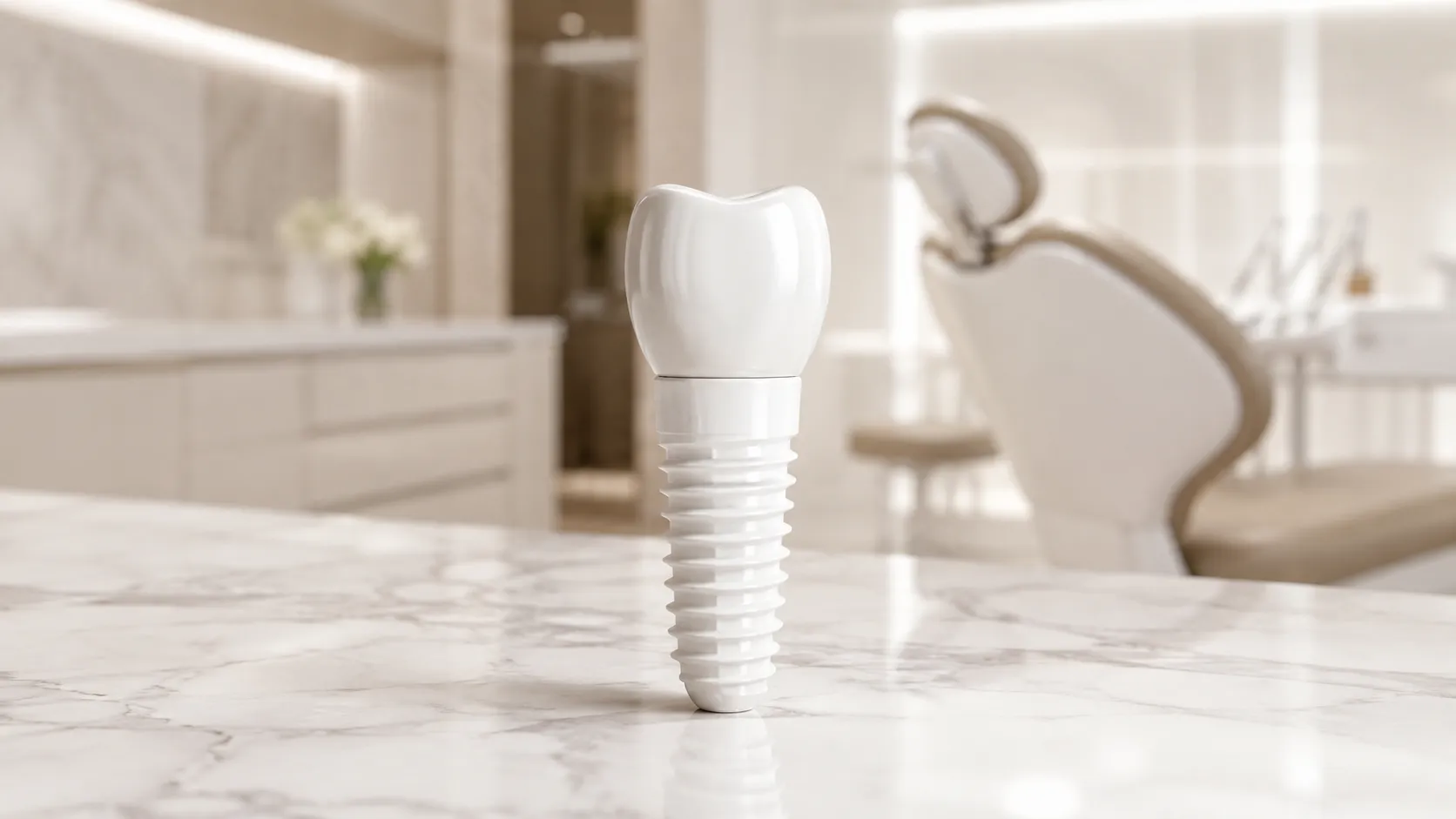
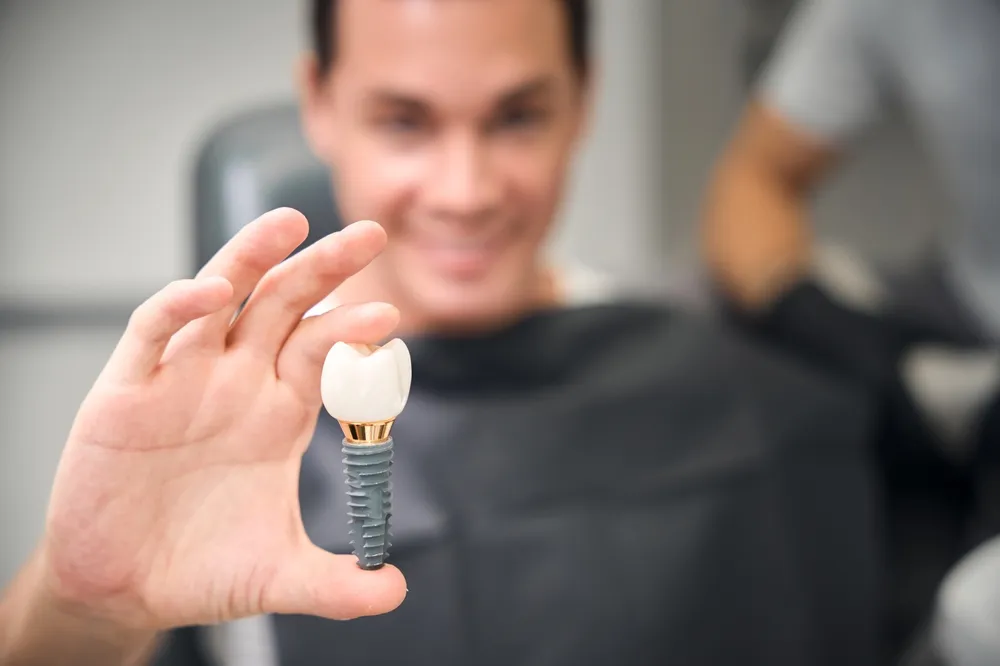
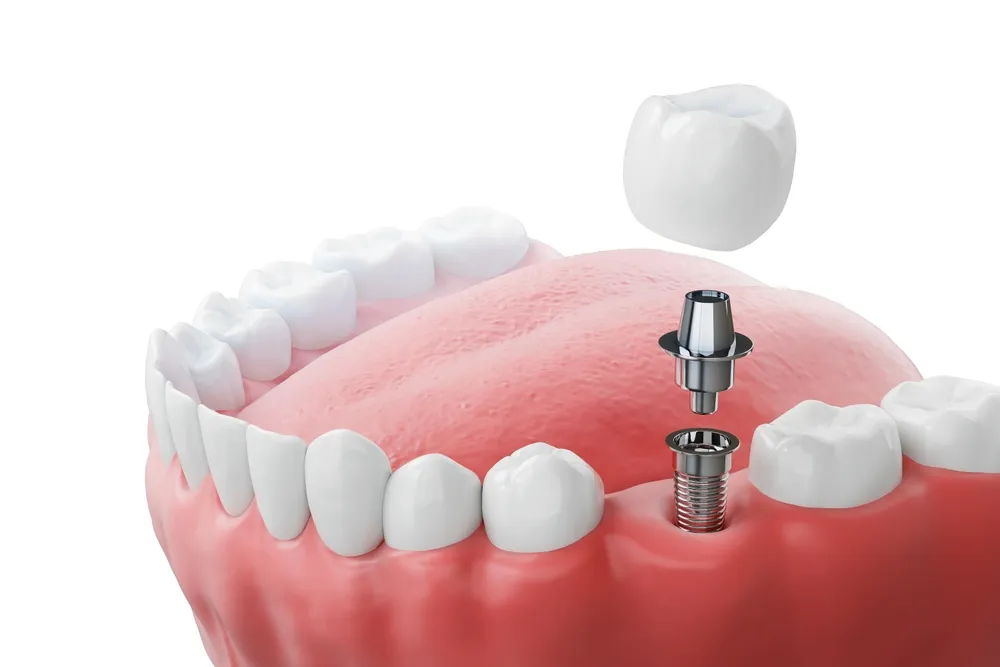
A dental implant consists of three parts. The implant fixture acts as the root. The abutment connects the fixture to the crown. The dental crown serves as the visible tooth.
The implant fixture is a small titanium screw. The dentist inserts this screw directly into the jawbone. Titanium bonds with bone tissue through a process called osseointegration (Branemark 399). This bond creates a solid anchor. The abutment sits on top of the fixture. It protrudes slightly above the gum line. The dental crown attaches to the abutment. Crowns can be made of porcelain, zirconia, or ceramic compounds. These materials mimic the color and strength of natural teeth. Misch explains that each component must meet strict biocompatibility standards to ensure long-term success (Misch 45).
Why Do Experts Consider Dental Implants the Gold Standard for Tooth Replacement?
Experts call dental implants the gold standard because implants preserve bone, restore full chewing power, and last for decades. No other tooth replacement method matches these benefits.
When a patient loses a tooth, the jawbone beneath that tooth begins to shrink. This process is called bone resorption. Dental implants stimulate the bone and prevent this shrinkage. Removable dentures rest on the gums. They do not stimulate the bone. Traditional bridges require dentists to grind down healthy adjacent teeth. Implants do not damage neighboring teeth. Patients with implants eat apples, steak, and nuts without worry. Implants also improve speech clarity. These advantages make implants superior to other options (Albrektsson et al. 11).
What Factors Influence Dental Implant Costs Worldwide?
Several factors drive implant prices globally. These factors include the implant brand, the dentist's expertise, the clinic's location, the technology used, and any additional procedures like bone grafting.
Premium implant brands such as Straumann, Nobel Biocare, and Zimmer Biomet cost more than generic alternatives. Experienced implantologists charge higher fees for their skill and precision. Clinics in major cities often pay higher rent and utilities. They pass these costs to patients. Advanced imaging technology like CBCT and guided surgery adds to the total cost. Some patients need bone grafting or sinus lift procedures before implant placement. These extra steps increase the final price.
Why Are Dental Implants Cheaper in Turkey?
Economic advantages allow Turkey to offer lower prices. The country combines lower living costs, competitive wages, and high patient volume to reduce treatment expenses.
Turkey has built a robust dental tourism industry. This industry serves patients from the UK, the USA, Germany, France, and the Middle East. Turkish clinics operate with lower overhead than their Western counterparts. They purchase materials in bulk. They treat large numbers of patients daily. These efficiencies translate into savings for international visitors. The following sections break down each factor.
How Does the Lower Cost of Living in Turkey Reduce Implant Prices?
The cost of living in Turkey sits well below that of the UK, the USA, Canada, and Western Europe. This difference directly lowers dental implant prices.
Housing costs less in Turkish cities. Clinic owners pay lower rent for their office spaces. Utilities such as electricity, water, and internet cost less. Transportation expenses remain affordable. Staff members spend less on daily commuting and meals. All these savings accumulate. Clinic owners do not need to charge high fees to cover basic expenses. A dental clinic in Istanbul pays a fraction of the rent that a London clinic pays. This rent difference alone can reduce overhead by 60% or more. Lower operational costs allow clinics to offer competitive pricing without sacrificing quality.
Why Do Turkish Clinics Have Lower Operating Costs?
Turkish clinics spend less on rent, administration, and staffing. They pass these savings directly to patients.
Commercial real estate in Turkey costs less per square meter than in London, New York, or Paris. Clinic owners secure modern, well-equipped facilities at reasonable rates. Administrative costs also drop. Insurance, licensing, and compliance expenses cost less in Turkey. Staff salaries reflect the local economy. Receptionists, dental assistants, and hygienists earn fair wages that align with Turkish living standards. These wages are lower than those in Western countries, but they support a comfortable lifestyle locally. Clinics redirect these savings into better equipment and patient care. The result is a lower price tag for the same procedures.
How Do Competitive Labor Costs Maintain High Expertise in Turkey?
Turkish dentists earn competitive salaries within their local economy. They complete rigorous training programs that match international standards.
Dental schools in Turkey follow a six-year curriculum. Students study anatomy, physiology, pathology, and clinical dentistry. Graduates must pass national licensing exams. Implantologists pursue additional postgraduate training in oral surgery and implantology. Many Turkish dentists attend international conferences and workshops. They earn certifications from global implant organizations. Their expertise rivals that of dentists in Western Europe. However, wage structures differ between countries. A dentist in Turkey earns a strong professional income relative to local costs. This income does not need to match the salary of a London dentist to attract top talent. Patients benefit from this wage difference. They receive expert care at a fraction of the cost.
How Do Favorable Exchange Rates Benefit International Patients?
The Turkish Lira trades at favorable rates against the Euro, Pound Sterling, and US Dollar. Foreign visitors gain significant purchasing power.
When a patient from the UK converts pounds to Turkish Lira, their money stretches further. A single dental implant that costs £2,500 in London might cost the equivalent of £600 in Istanbul. This exchange rate advantage makes luxury-level dental care accessible to middle-income patients. Patients from the USA experience similar benefits. The strong dollar buys more services in Turkey than at home. This currency dynamic has fueled the growth of dental tourism. Patients combine essential dental work with a vacation. They spend less than they would for treatment alone in their home country.
What Government Support Does Turkey Provide for Dental Tourism?
The Turkish government actively promotes health tourism. It offers incentives, infrastructure investment, and streamlined visa processes for medical travelers.
Turkey's Ministry of Health oversees a national health tourism program. This program certifies clinics that meet strict quality standards. Certified clinics receive support in marketing and international outreach. The government has improved airport connections, city transportation, and hotel infrastructure. Visa requirements remain simple for many nationalities. International patients enter Turkey easily. The government also monitors clinic standards. It ensures that facilities maintain hygiene, safety, and patient rights. This support has helped Turkey become one of the top five global destinations for medical tourism.
How Does High Patient Volume Create Economies of Scale?
Turkish implant clinics treat thousands of international patients each year. This high volume reduces costs through bulk purchasing and operational efficiency.
A clinic that places five hundred implants per month negotiates better prices with implant manufacturers than a clinic that places fifty. Turkish clinics buy implant systems, abutments, and crowns in large quantities. Suppliers offer volume discounts. These discounts reach 30% or 40% below standard retail prices. Clinics also refine their workflows. Surgical teams perform implant procedures daily. They develop speed and precision without cutting corners. Laboratory technicians produce crowns in high volume. They optimize their processes. All these efficiencies lower the per-patient cost.
Why Are Dental Laboratory Costs Lower in Turkey?
Turkey maintains a strong local dental laboratory industry. These labs produce crowns, bridges, and prosthetics at lower prices than European or American labs.
Dental technicians in Turkey train in digital design and ceramic work. They operate modern CAD/CAM systems. Local labor costs allow labs to charge less for their products. A zirconia crown that costs $400 in a German lab might cost $120 in a Turkish lab. Turnaround times also improve. Local labs sit near the clinics. Technicians deliver crowns within 24 to 48 hours. Faster production reduces the number of appointments a patient needs. Fewer appointments mean lower overall treatment costs.
How Much Can Patients Save on Dental Implants in Turkey?
Patients typically save 50% to 75% on dental implants in Turkey. These savings apply to single implants, multiple implants, and full mouth reconstructions.
The exact savings depend on the patient's home country and the complexity of their case. A patient from the USA or the UK usually sees the largest percentage savings. European patients also benefit, though the gap may be smaller. The following sections provide detailed cost comparisons.
What Are the Average Dental Implant Costs in Turkey?
A single dental implant in Turkey costs between $400 and $800. This price includes the implant fixture, abutment, and crown.
The price varies based on the brand and the clinic. Premium brands like Straumann or Nobel Biocare sit at the higher end of this range. Budget-friendly brands cost less. Even at the higher end, Turkish prices remain far below Western standards. The table below shows typical single implant costs.
Component | Turkey Price Range | UK Price Range | USA Price Range |
Implant Fixture | $300 – $500 | $1,200 – $2,000 | $1,500 – $2,500 |
Abutment | $50 – $100 | $300 – $500 | $400 – $600 |
$100 – $200 | $800 – $1,200 | $1,000 – $1,500 | |
Total Single Implant | $450 – $800 | $2,300 – $3,700 | $2,900 – $4,600 |
These figures show the dramatic difference. A patient from the USA might pay $4,000 for one implant at home. The same patient pays less than $800 in Turkey.
How Do Implant Costs in Turkey Compare with UK Prices?
UK patients pay three to four times more for dental implants than Turkish patients pay. The NHS rarely covers implant treatment. Patients must use private dentists.
A single implant in London costs £2,000 to £3,000. In Turkey, the same implant costs £400 to £700. Full mouth restoration in the UK can exceed £25,000. Turkish clinics offer full mouth solutions for £5,000 to £8,000. British patients save thousands of pounds. They also avoid long NHS waiting lists. Private UK clinics often schedule appointments weeks in advance. Turkish clinics offer next-day starts.
How Do Implant Costs in Turkey Compare with USA Prices?
American patients face the highest dental implant prices in the world. Turkey offers them massive savings.
A single implant in New York or Los Angeles costs $3,000 to $5,000. This price often excludes consultations, imaging, and follow-up visits. In Turkey, patients pay $450 to $800 for the complete single implant package. Dental insurance in the USA rarely covers implants fully. Patients pay out of pocket. A full mouth of implants in the USA can cost $60,000 to $80,000. Turkish clinics charge $7,000 to $12,000 for similar full mouth treatments. American patients save enough money to cover their travel, hotel, and vacation expenses.
How Do Implant Costs in Turkey Compare with European Prices?
European patients from Germany, France, Italy, and Spain also find Turkey more affordable. The savings range from 50% to 65%.
German patients pay €2,500 to €3,500 for a single implant. French patients pay similar amounts. Turkish clinics charge €400 to €700. European dental insurance systems sometimes cover implants partially. However, patients still face significant co-pays. Travel to Turkey costs less than these co-pays in many cases. European patients also appreciate the short flight times. Istanbul sits within three hours of most major European cities.
What Are the Full Mouth Implant Cost Differences?
Full mouth reconstruction costs vary widely based on the technique. All-on-4, All-on-6, and traditional full-arch implants each carry different price tags.
The All-on-4 concept uses four implants to support a full arch of teeth. The All-on-6 concept uses six implants for added stability. Traditional approaches may use eight or more implants per arch. The table below compares full mouth costs.
Treatment Type | Turkey Cost | UK Cost | USA Cost | Europe Cost |
All-on-4 (One Arch) | $3,500 – $5,000 | $12,000 – $18,000 | $15,000 – $25,000 | $10,000 – $16,000 |
All-on-6 (One Arch) | $4,500 – $6,500 | $15,000 – $22,000 | $20,000 – $30,000 | $14,000 – $20,000 |
Full Mouth All-on-4 | $7,000 – $10,000 | $24,000 – $36,000 | $30,000 – $50,000 | $20,000 – $32,000 |
Full Mouth All-on-6 | $9,000 – $13,000 | $30,000 – $44,000 | $40,000 – $60,000 | $28,000 – $40,000 |
These numbers confirm the value. Patients save tens of thousands of dollars or pounds by choosing Turkey (Malo et al. S88). Sailer and colleagues confirm that the All-on-4 protocol delivers predictable results across multiple clinical settings (Sailer et al. 447).
Are Cheaper Dental Implants in Turkey Lower Quality?
Lower prices in Turkey do not indicate lower quality. Turkish clinics use the same implant brands, technology, and standards as Western clinics.
Many patients worry that cheap dental implants might compromise safety. This worry is natural. However, Turkish dental clinics operate under strict regulations. They import implants from the same Swiss, German, and American manufacturers that supply UK and USA clinics. They use modern sterilization, digital planning, and guided surgery. The quality matches international benchmarks.
Which Implant Brands Do Turkish Clinics Use?
Turkish clinics use internationally recognized implant brands. These brands include Straumann, Nobel Biocare, Zimmer Biomet, Dentsply Sirona, and Osstem.
Premium clinics in Turkey prefer Swiss and German implant systems. These systems have decades of clinical research behind them. They offer high survival rates and long-term warranties. Some clinics also offer Korean or Turkish brands at lower prices. These brands meet CE and FDA standards. They provide reliable results for budget-conscious patients. Patients should always ask their dentist which brand they will receive. Reputable clinics disclose this information openly.
What International Standards and Certifications Do Turkish Clinics Hold?
Turkish dental clinics hold ISO certifications, Ministry of Health licenses, and international accreditation. These certifications ensure patient safety and treatment quality.
The Turkish Ministry of Health inspects clinics regularly. Clinics must meet hygiene, equipment, and staff qualification standards. Many top clinics seek ISO 9001 certification for quality management. Some clinics also hold accreditation from the Joint Commission International (JCI). JCI accreditation means the clinic meets the same standards as major American hospitals. Dentists in Turkey must hold valid licenses from the Turkish Dental Association. They must complete continuing education requirements. These layers of oversight protect patients.
What Modern Dental Technologies Do Turkish Clinics Use?
Turkish clinics invest in CBCT imaging, digital smile design, CAD/CAM systems, and guided implant surgery. These technologies improve precision and outcomes.
Cone Beam Computed Tomography (CBCT) creates 3D images of the jawbone. Dentists use these images to plan exact implant placement. They avoid nerves, sinuses, and weak bone areas. Digital smile design software shows patients their expected results before surgery begins. CAD/CAM technology mills crowns from ceramic blocks with computer precision. These crowns fit better than hand-made alternatives. Guided implant surgery uses 3D-printed surgical guides. The dentist places the implant at the perfect angle and depth. These tools reduce surgery time and recovery pain (Bornstein et al. 77).
What Qualifications Do Turkish Implant Dentists Possess?
Turkish implant dentists hold dental degrees, specialization certificates, and international training credentials. Many speak multiple languages to serve foreign patients.
Dental education in Turkey requires six years of university study. Graduates earn a Doctor of Dental Surgery (DDS) or equivalent degree. Implantologists complete additional residency programs in oral and maxillofacial surgery. They attend courses from the International Congress of Oral Implantologists (ICOI) and the European Association for Osseointegration (EAO). Many dentists publish research in peer-reviewed journals. They present cases at international conferences. Their qualifications match those of dentists in Western Europe and North America.
Why Do Prices Differ Between Turkish Dental Clinics?
Not all Turkish clinics charge the same price. Brand choices, dentist experience, location, case complexity, and package inclusions all create price variation.
Patients should understand these differences. A clinic in central Istanbul might charge more than a clinic in a smaller city. A surgeon with twenty years of experience might charge more than a recent graduate. A case requiring bone grafting costs more than a straightforward implant. All-inclusive packages that cover hotels and transfers cost more than treatment-only quotes.
How Does Implant Brand Selection Affect Prices?
Premium brands cost more than standard brands. Turkish clinics offer both options.
Swiss and German implant brands like Straumann and Nobel Biocare carry higher price tags. These brands invest heavily in research and development. They offer extensive warranties. Korean brands like Osstem or Dentium provide quality at lower prices. Turkish manufacturers also produce certified implants. Patients should ask about the brand before they book. The brand choice affects the long-term success rate. It also affects the warranty terms. Pjetursson and colleagues found that prostheses supported by premium brands show higher survival rates over five-year observation periods (Pjetursson et al. 22).
How Does Dentist Experience Influence Treatment Costs?
Experienced implantologists charge higher fees. Their expertise reduces complications and improves aesthetics.
A dentist who has placed ten thousand implants has seen virtually every clinical situation. This dentist handles complex cases with confidence. They manage bone deficiencies, sinus issues, and aesthetic challenges. Patients pay more for this experience. However, even the most experienced Turkish dentists charge less than average dentists in the UK or USA. Patients should review the dentist's portfolio. They should ask about success rates. They should verify years of practice.
How Does Clinic Location Impact Pricing in Turkey?
Clinics in Istanbul, Antalya, Izmir, and Ankara set different prices based on local costs and tourist demand.
Istanbul hosts the largest number of dental tourists. Clinics in upscale districts like Nişantaşı or Levent pay higher rent. They charge slightly more than clinics in suburban areas. Antalya attracts patients who want beach vacations with their dental work. Resorts there offer package deals. Izmir provides a relaxed coastal atmosphere. Prices in Izmir often sit below Istanbul prices. Ankara, the capital city, has many university-trained dentists. It offers competitive pricing with strong clinical standards. Patients should choose a location that balances cost, convenience, and travel preferences.
How Does Case Complexity Change the Final Price?
Complex cases require additional procedures. These procedures add to the total cost.
Some patients have lost bone mass in their jaws. They need bone grafting before implant placement. Bone grafting uses natural or synthetic material to rebuild the jaw. This step adds $200 to $500 per site. Other patients need sinus lift surgery. This procedure raises the sinus floor to create room for upper jaw implants. It adds $300 to $600. Immediate loading implants allow dentists to place a temporary crown on the same day. This technique requires advanced planning and costs more than traditional two-stage implants. Esposito and colleagues note that immediate loading protocols demand careful patient selection and precise surgical technique (Esposito et al. CD005968). Patients should request a full diagnostic workup. This workup reveals all necessary procedures and their costs.
What Services Do Treatment Packages Include?
Dental tourism packages often include treatment, accommodation, airport transfers, translation, and follow-up care. These inclusions affect the quoted price.
Basic treatment quotes cover only the dental work. Premium packages add comfort and convenience. A typical package includes:
Initial consultation and CBCT scan
All implant surgery and crown placement
Hotel stay for 7 to 10 nights
Airport pickup and drop-off
A personal translator or patient coordinator
Post-operative medications and care kits
Follow-up appointments
Patients should compare what each package includes. A higher price might offer better value if it covers essential extras.
What Advantages Does Turkey Offer for Dental Implant Treatment?
Turkey offers significant cost savings, expert specialists, short waiting times, comprehensive packages, and travel opportunities.
Patients choose Turkey for more than just low prices. They choose Turkey because it delivers a complete experience. The combination of professional care, modern facilities, and hospitality makes the journey worthwhile.
How Much Can Patients Save in Turkey?
Patients save thousands of dollars or pounds on their dental implant treatment. These savings allow them to afford full mouth restoration.
A patient who needs six implants saves approximately $15,000 by choosing Turkey over the USA. A patient who needs All-on-4 treatment saves $20,000 or more. These savings are real. They come from economic factors, not from cutting corners. Patients can use part of their savings to enjoy a vacation in Istanbul or Antalya.
What Access Do Patients Have to Experienced Specialists?
Turkey has a high concentration of implant specialists. Patients can book appointments with leading experts quickly.
Turkish dental clinics employ oral surgeons, prosthodontists, and periodontists who focus exclusively on implants. These specialists perform implant procedures daily. They stay current with the latest techniques. Patients from countries with dentist shortages appreciate this access. They receive treatment from dentists who have more hands-on implant experience than many general dentists in their home countries.
How Long Are the Waiting Times in Turkey?
Turkish clinics offer short waiting times. Patients often start treatment within days of their arrival.
In the UK, NHS patients wait months for dental appointments. Private patients wait weeks. In the USA, popular dentists book months in advance. Turkish clinics serving dental tourists prioritize quick scheduling. They understand that international patients have limited time. They arrange consultations, surgery, and follow-up within a single week-long visit. This efficiency appeals to busy professionals.
What Do Comprehensive Dental Tourism Packages Include?
Packages include dental treatment, travel logistics, and patient support. They simplify the entire process.
Patients receive a single quote that covers everything. They do not need to book hotels separately. They do not need to arrange taxis. They do not need to worry about language barriers. Clinic coordinators handle these details. This convenience reduces stress. It allows patients to focus on their recovery.
Can Patients Combine Treatment with Travel?
Patients can explore Turkish culture, history, and cuisine during their dental visit. This combination turns medical travel into a rewarding experience.
Istanbul offers the Hagia Sophia, the Blue Mosque, and the Grand Bazaar. Antalya offers Mediterranean beaches and ancient ruins. Cappadocia offers hot air balloon rides over fairy chimneys. Patients schedule their sightseeing between dental appointments. They recover in beautiful surroundings. This aspect of dental tourism adds value beyond the clinical savings.
What Risks Come with Choosing the Cheapest Dental Implant Provider?
The cheapest providers sometimes cut corners on planning, materials, or aftercare. Patients must balance cost with quality.
Every market has providers who offer unrealistically low prices. These providers attract patients with rock-bottom quotes. They then deliver substandard results. Patients must learn to spot these risks. They must choose clinics based on reputation, not just price.
Why Should Patients Avoid Unrealistically Low Prices?
Prices that seem too good to be true usually hide problems. These problems include untrained staff, outdated equipment, or counterfeit implants.
A clinic that offers a $200 implant likely uses unbranded or copied implants. These implants lack proper certification. They may fail within months. The clinic might skip essential diagnostic steps. It might avoid CBCT scans to save money. It might reuse single-use instruments. Patients who choose these clinics risk infections, implant failure, and additional costs to fix the damage.
What Problems Arise from Lack of Transparent Planning?
Some clinics provide vague quotes. They add hidden fees after the patient arrives. This practice creates stress and financial strain.
Transparent planning means the clinic explains every step before treatment begins. It lists all costs. It shows the patient their CBCT results. It discusses bone grafting needs upfront. Clinics that lack transparency might quote a low price for the implant alone. They then charge extra for the abutment, the crown, anesthesia, and medications. Patients should demand a written treatment plan. This plan should list every procedure and every cost.
Why Do Inferior Implant Brands Create Risks?
Uncertified implant brands may break, corrode, or fail to bond with bone. These failures require costly removal and replacement.
Reputable implant brands undergo strict testing. They use medical-grade titanium or zirconia. They publish long-term survival data. Generic brands skip this testing. They use cheaper alloys. They offer no warranty. If an implant fails, the patient must pay for a new one. They must also pay for additional surgery. The initial savings disappear. The patient faces pain, inconvenience, and expense.
What Happens When Aftercare Support Is Insufficient?
Aftercare ensures implants heal properly. Clinics that neglect follow-up care put patients at risk.
Osseointegration takes three to six months. During this period, the patient needs check-ups. The dentist monitors healing. They adjust the bite if needed. They treat any early signs of infection. Clinics that focus only on surgery may ignore follow-up. They may not provide clear instructions. They may not answer questions after the patient returns home. This neglect can lead to peri-implantitis. This condition causes bone loss around the implant. It can lead to implant failure. Jemt documented early complication patterns in implant prostheses and emphasized the critical role of structured follow-up protocols (Jemt 270).
How Can Patients Identify a Reputable Dental Clinic?
Reputable clinics display credentials, show real case photos, and provide clear communication. Patients should verify these signs.
Patients should check the dentist's license number. They should look for ISO or JCI certification. They should read independent reviews on Google, Trustpilot, or dental forums. They should ask for before-and-after photos of actual patients. They should request a video consultation before traveling. They should ask about the implant brand and warranty. A reputable clinic welcomes these questions. It provides honest answers. It does not pressure the patient to book immediately.
How Can Patients Choose the Right Dental Implant Clinic in Turkey?
Patients should verify credentials, review cases, read testimonials, ask about brands, understand plans, and confirm follow-up. These steps ensure a safe choice.
Choosing a clinic requires research. Patients should not rely on a single Instagram post or advertisement. They should dig deeper. They should confirm that the clinic meets their standards for safety, quality, and transparency.
How Should Patients Verify Dentist Credentials?
Patients should ask for the dentist's full name, university, degree, and specialization. They should check these details online.
Most Turkish dentists have LinkedIn profiles or clinic biographies. Patients can verify university affiliations. They can check membership in the Turkish Dental Association. They can look for ICOI or EAO memberships. They can search for published research. Some dentists have YouTube channels where they explain procedures. These resources help patients assess expertise.
Why Should Patients Review Before-and-After Cases?
Before-and-after photos show the dentist's skill level. They reveal the quality of aesthetics and function.
Patients should look for photos of cases similar to their own. They should check gum line symmetry. They should check tooth color matching. They should check bite alignment. Good dentists document their work carefully. They obtain patient consent for photos. They maintain organized portfolios. A clinic that refuses to show photos raises a red flag.
How Do Patient Reviews Help in Clinic Selection?
Reviews reveal the real patient experience. They cover communication, comfort, results, and problem resolution.
Patients should read reviews from multiple sources. They should look for patterns. Do many reviewers mention friendly staff? Do they mention clean facilities? Do they complain about hidden costs? Do they praise the final results? Reviews provide insights that marketing materials cannot. Patients should focus on detailed reviews rather than one-word ratings.
What Questions Should Patients Ask About Implant Brands and Warranties?
Patients should ask which brand the clinic will use. They should ask about the warranty length and coverage.
Key questions include: What implant brand do you recommend for my case? Why do you recommend this brand? What is the survival rate for this brand? Do you offer a lifetime warranty on the implant fixture? What does the warranty cover? Does the warranty include the crown and abutment? A good clinic answers these questions with confidence. It provides written warranty documents.
Why Must Patients Understand the Full Treatment Plan?
The treatment plan outlines every step. It prevents surprises and ensures the patient knows what to expect.
The plan should include the number of implants, the need for bone grafting, the type of anesthesia, the number of visits, and the healing timeline. It should list all costs. Patients should read this plan carefully. They should ask questions about anything they do not understand. They should confirm that the plan matches their goals.
How Important Is Long-Term Follow-Up?
Long-term follow-up protects the investment. It catches problems early and maintains implant health.
Patients should ask how the clinic handles follow-up after they return home. Does the clinic partner with a local dentist in the patient's country? Does it offer remote consultations? Does it provide a clear protocol for annual check-ups? Implants can last a lifetime with proper care. Follow-up ensures this longevity. Goodacre and colleagues stress that long-term monitoring reduces the risk of peri-implant complications and prosthetic failure (Goodacre et al. 121).
What Do Patients Frequently Ask About Cheap Dental Implants in Turkey?
Patients often ask about safety, brands, travel worth, stay duration, packages, warranties, and hidden costs. Clear answers build confidence.
These questions reflect common concerns. Patients want to know if they are making a smart decision. They want to understand the logistics. They want to protect themselves from fraud.
Why Are Dental Implants Up to 70% Cheaper in Turkey?
Economic factors create this gap. Lower living costs, competitive wages, and bulk purchasing all reduce prices.
Turkey does not subsidize implants directly. Instead, the overall economic environment keeps costs down. A dentist in Turkey pays less for rent, staff, and lab work. Suppliers offer volume discounts. Currency exchange rates favor foreign patients. These factors combine to create the 70% savings figure. The quality of the implant itself remains identical.
Are Dental Implants in Turkey Safe?
Yes, dental implants in Turkey are safe when patients choose reputable clinics. These clinics follow international standards.
Safety depends on clinic choice, not country choice. Turkey has world-class facilities. It also has substandard providers. Patients who research their clinic, verify credentials, and choose certified facilities receive safe treatment. They face the same risks they would face in London or New York. Sterilization protocols, surgical techniques, and implant materials match global benchmarks.
Do Turkish Clinics Use Internationally Recognized Implant Brands?
Yes, top Turkish clinics use the same brands that American and European dentists use. These brands include Straumann, Nobel Biocare, and Zimmer Biomet.
Clinics display their implant brand partnerships openly. They provide certificates of authenticity. Patients can verify the brand by checking the implant packaging or registration card. Some clinics offer a choice between premium and mid-range brands. This flexibility helps patients balance cost and quality.
Is It Worth Traveling to Turkey for Dental Implants?
Traveling to Turkey is worth it for patients who need extensive work or face high home-country prices. The savings usually exceed travel costs.
A patient who needs a single implant might save $2,000. This saving covers the flight and hotel. A patient who needs full mouth restoration saves $30,000 or more. This saving transforms their financial situation. Patients also gain access to specialists and technology that might be unavailable locally. The trip adds value beyond pure cost savings.
How Long Do Patients Need to Stay in Turkey for Implant Treatment?
Most patients stay 7 to 10 days for standard implant treatment. Full mouth cases might require 10 to 14 days.
The first visit includes consultation, CBCT scanning, and surgery. The dentist places the implant fixtures. Patients rest for a few days. The dentist checks healing before departure. Some patients receive immediate loading crowns. Others return home with temporary teeth. They return after three to six months for permanent crowns. Some clinics offer single-visit solutions for eligible patients.
What Do Dental Implant Packages Include?
Packages typically include consultation, imaging, surgery, crowns, accommodation, transfers, and follow-up. Specific inclusions vary by clinic.
Patients should read the package details carefully. They should confirm the hotel category. They should confirm the number of transfer trips. They should ask if meals are included. They should verify the number of follow-up appointments. A complete package removes guesswork. It provides a clear total cost.
Can Patients Get a Warranty on Dental Implants?
Yes, reputable clinics offer warranties on implants and prosthetics. These warranties range from five years to lifetime coverage.
The warranty should cover implant failure due to manufacturing defects. It should cover the replacement cost. Some warranties also cover the crown. Patients should request a written warranty document. They should understand the terms. They should know if the warranty requires them to return to Turkey for repairs.
Are There Hidden Costs Patients Should Know About?
Transparent clinics disclose all costs upfront. Patients should watch for potential extras like medications, special anesthesia, or unexpected bone grafting.
Some clinics quote a low base price. They then charge extra for sedation, pain medication, or night guards. Patients should ask for an all-inclusive quote. They should confirm what happens if the dentist discovers unexpected bone loss during surgery. Reputable clinics build contingency plans into their quotes.
What Is the Final Verdict on Dental Implant Costs in Turkey?
Turkey offers affordable dental implants because of economic advantages, not because of lower quality. Smart patients choose reputable clinics and enjoy world-class care at reasonable prices.
Lower costs in Turkey stem from reduced living expenses, competitive labor markets, favorable exchange rates, government support, and high patient volume. Turkish clinics use the same implant brands, technology, and standards as Western clinics. Their dentists hold impressive qualifications. Patients who research their options, verify credentials, and avoid unrealistically cheap providers receive excellent results. Dental implants in Turkey represent a smart choice for patients who balance cost, quality, and safety. The savings are real. The quality is real. The key lies in choosing the right clinic.
References
Albrektsson, Tomas, et al. "The Long-Term Efficacy of Currently Used Dental Implants: A Review and Proposed Criteria of Success." The International Journal of Oral & Maxillofacial Implants, vol. 1, no. 1, 1986, pp. 11-25.
Bornstein, Michael M., et al. "Cone Beam Computed Tomography in Implant Dentistry: A Systematic Review." Clinical Oral Implants Research, vol. 25, Suppl. 11, 2014, pp. 77-83.
Branemark, P. I. "Osseointegration and Its Experimental Background." Journal of Prosthetic Dentistry, vol. 50, no. 3, 1983, pp. 399-410.
Esposito, Marco, et al. "Interventions for Replacing Missing Teeth: Dental Implants in Fresh Extraction Sockets." Cochrane Database of Systematic Reviews, no. 3, 2010, CD005968.
Goodacre, Charles J., et al. "Clinical Complications with Implants and Implant Prostheses." Journal of Prosthetic Dentistry, vol. 90, no. 2, 2003, pp. 121-132.
Jemt, Torsten. "Failures and Complications in 391 Consecutively Inserted Fixed Prostheses Supported by Branemark Implants in Edentulous Jaws: A Study of Treatment from the Time of Prosthesis Placement to the First Annual Checkup." The International Journal of Oral & Maxillofacial Implants, vol. 6, no. 3, 1991, pp. 270-276.
Malo, Paulo, et al. "All-on-4 Immediate-Function Concept with Branemark System Implants for Completely Edentulous Maxillae: A 1-Year Retrospective Clinical Study." Clinical Implant Dentistry and Related Research, vol. 7, Suppl. 1, 2005, pp. S88-S94.
Misch, Carl E. Contemporary Implant Dentistry. 3rd ed., Mosby, 2008.
Pjetursson, Bjarni E., et al. "A Systematic Review of the Survival and Complication Rates of Fixed Dental Prostheses (FDPs) after a Mean Observation Period of At Least 5 Years." Clinical Oral Implants Research, vol. 23, Suppl. 6, 2012, pp. 22-38.
Sailer, Irena, et al. "The All-on-4 Treatment Concept: Systematic Review." Journal of Clinical Periodontology, vol. 40, no. 5, 2013, pp. 447-461.